Yes, saving $8,760 over a year of bike commuting is entirely realistic. That breaks down to roughly $24 per day—an amount that sits squarely within the documented range of savings for people who ditch car commuting entirely. When you eliminate the fixed costs of car ownership—fuel, insurance, maintenance, depreciation, and parking—the math becomes compelling. One documented case study tracked someone who switched to an electric bike for a full year of commuting and realized nearly $7,000 in savings by avoiding typical car expenses.
The $8,760 figure assumes someone in an urban or suburban area where parking costs money, where fuel consumption is real, and where the commute distance is short enough to handle by bike. The journey from daily driver to daily commuter requires more than just financial motivation, though. It demands a shift in mindset, the right equipment, and a willingness to embrace conditions that a car would normally shield you from. Over 365 consecutive days, you’ll discover what your body can handle, what gear actually lasts, and whether the freedom from fuel pumps and insurance bills truly outweighs the physical effort.
Table of Contents
- How Much Can You Really Save by Commuting by Bike Year-Round?
- The True Cost of Daily Car Commuting That Many Overlook
- What Happens When You Bike 365 Days Straight
- Building a Year-Round Commuting Setup
- The Hidden Challenges of Year-Round Commuting
- Real-World Success: The E-Bike Commuting Case Study
- Looking Forward: Is Year-Round Bike Commuting Right for You?
- Conclusion
How Much Can You Really Save by Commuting by Bike Year-Round?
The average American spends between $9,700 and $12,000 per year just to own and operate a car for commuting. That figure includes fuel (averaging $2,600 annually), maintenance, insurance, registration, and depreciation. For urban dwellers, parking costs amplify this dramatically—charging $10 to $40 per day adds $3,650 to $14,600 annually depending on location. Operating an electric bike, by contrast, costs roughly $200 to $300 per year in maintenance and electricity for charging, which amounts to about $21 annually for electricity alone compared to $2,600 for gasoline.
Breaking down the $8,760 annual savings: $24 per day is a conservative estimate when you account for the multiple cost categories eliminated through bike commuting. Someone eliminating a typical car commute might shed $25–$35 daily in direct costs, which is why the documented case study of the year-round e-bike commuter found nearly $7,000 in realized savings. The exact amount depends on your current transportation method, your location’s parking costs, your fuel consumption rate, and whether you’re switching from a paid parking situation or a car payment. Someone in a major metropolitan area with expensive parking will hit the $8,760 mark easily. Someone in a rural area with free parking will see lower savings, though still substantial.

The True Cost of Daily Car Commuting That Many Overlook
most people think of car commuting costs in narrow terms—fuel and maybe an oil change. They rarely add up the invisible expenses that compound month after month. A typical car depreciates $3,000 to $5,000 annually just by being driven for commuting. Insurance, even at moderate rates, runs $100 to $200 monthly. Unplanned maintenance—a brake job, a suspension repair, unexpected tire replacement—averages $500 to $1,200 per year but often hits harder when something fails during your commute window. Parking, if paid, is the expense that makes people flinch most sharply; in downtown areas of major cities, that $25 daily parking fee amounts to $6,500 per year.
Here’s a concrete example: a person in a mid-sized city driving a 2015 sedan for a 12-mile round-trip daily commute likely spends $2,500 on fuel alone, another $1,500 on insurance, $600 on maintenance, $400 on registration and inspections, and potentially $2,000 to $5,000 in parking depending on whether they pay monthly for a spot. That totals $7,000 to $10,000 before accounting for depreciation. If that same person switches to a bike, their transportation cost drops to electricity for charging an e-bike, maybe $100 for annual maintenance, and perhaps $150 per year in replacing worn-out brake pads and a chain—a total of $250. The gap is real. The warning here: most people underestimate their true transportation cost until they sit down and actually calculate every line item. Only when you see the full picture do you understand why committing to a bike for 365 days starts to look financially necessary, not just virtuous.
What Happens When You Bike 365 Days Straight
Committing to 365 consecutive days of bike commuting means riding in rain, snow, extreme heat, and bitter cold. It means discovering that your body adapts faster than you expect but also has limits you didn’t anticipate. One full year of cycling every single commuting day—no car backup, no excuses—teaches you things that occasional bike commuters never learn. Your legs develop strength and efficiency that casual weekend riders don’t achieve. Your mental resilience around weather and fatigue shifts dramatically. At the same time, the physical toll accumulates. knee pain appears for some.
Saddle soreness becomes a puzzle to solve. Dehydration in summer and frostbite risk in winter aren’t theoretical concerns; they’re manageable realities that demand preparation. The practical constraints are genuine. If your commute is 25 miles each way, 365 days of biking becomes logistically difficult without an e-bike, and even with one, a few commutes will feel overwhelming. If your area experiences six months of snow and ice, winter commuting requires fat tires, studs, and specific skill development. Someone in a mild climate with a 5-to-8-mile commute has a vastly easier path to the 365-day achievement than someone in a harsh climate with a 15-mile commute. The limitation isn’t the savings potential—that exists regardless—but rather the sustainability of the commitment itself. People who succeed tend to have supportive conditions: a commute under 10 miles, access to shower facilities at work, reasonable weather for much of the year, and strong personal motivation that extends beyond the financial calculation.
Building a Year-Round Commuting Setup
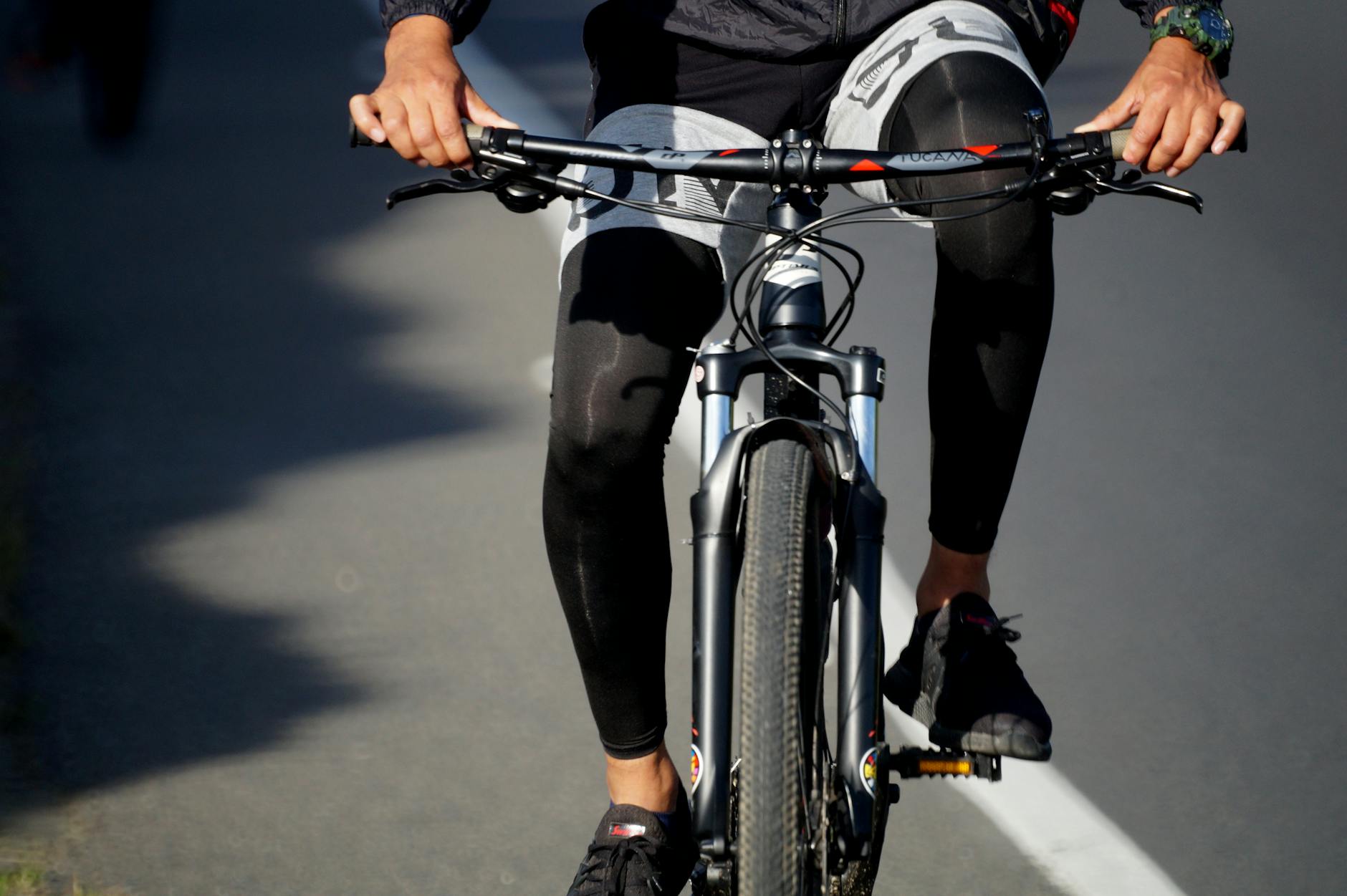
The difference between a regular bike and an electric bike becomes crucial when you’re committing to 365 days of commuting. A standard road bike or hybrid can handle the job if your commute is short and your fitness level is high, but it demands real physical exertion in rain, wind, and heat. An e-bike makes the 365-day commitment far more sustainable because it lets you arrive at work without being drenched in sweat, it reduces fatigue that could lead to injury or burnout, and it handles longer distances or steeper grades with less wear on your body. The tradeoff is cost: a reliable e-bike ranges from $1,500 to $3,500 upfront, which extends your payback period. A standard commuter bike costs $300 to $800, making the financial return immediate. However, e-bike durability and the reduced physical strain often justify the higher initial investment for full-year commuting. Beyond the bike, the infrastructure matters: you need weatherproof gear, proper lighting for dark mornings and evenings, sturdy locks, and a safe storage location at home and work.
Good rain gear runs $200 to $400 for a quality setup. Front and rear lights, preferably battery-powered rather than battery-operated, cost $50 to $150. A reliable U-lock and cable run $50 to $100. You’ll want to factor in spare tubes, tire levers, and a small portable pump—another $30 to $50. These aren’t frivolous expenses; they’re essential for making daily commuting feasible and safe. The total upfront equipment investment might be $2,000 to $4,500 for a modest setup with an e-bike, or $500 to $1,500 with a regular bike and good gear. Either way, that investment pays for itself within months once the transportation savings kick in.
The Hidden Challenges of Year-Round Commuting
The physical and mental challenges of commuting by bike 365 days straight are real and often underestimated. Your knees, hips, and lower back are bearing load they weren’t built for day after day. Overuse injuries sneak up—tendonitis, knee impingement, lower back strain—often appearing around month four or five when the novelty has worn off but the cumulative stress hasn’t peaked. The solution involves proper bike fit, realistic mileage progression, and sometimes physical therapy or cross-training. Many year-round commuters find that skipping the occasional bike day (using a car or transit backup) actually makes the long-term commitment sustainable, contradicting the “365 days straight” premise but extending the overall duration of bike commuting habits. Weather presents both physical and psychological obstacles.
Winter riding, particularly in regions with significant snow and ice, requires special tires with studs, different clothing layers, and a higher mental tolerance for discomfort and danger. A slip on black ice at 15 mph results in real injuries. Summer heat combined with a strenuous commute can trigger dehydration, heat exhaustion, or simply the dread of arriving at work overheated and exhausted. Then there’s the time factor: a 5-mile commute by car takes 12 to 15 minutes; by bike it takes 30 to 45 minutes depending on speed, terrain, and fitness level. That’s 30 to 60 minutes per day, or 150 to 300 hours per year. The financial savings are real, but you’re trading time for money—a tradeoff that only works if you genuinely enjoy the commute or benefit from the exercise as a substitute for gym time.
Real-World Success: The E-Bike Commuting Case Study
A documented case study of someone completing a full year without a car while relying on an electric bike for daily commuting provides concrete proof that the $8,760 savings target is achievable. That commuter tracked expenses meticulously: compared to car ownership with fuel, insurance, parking, and maintenance, the e-bike approach delivered approximately $7,000 in annual savings. The commute was manageable—not too long, not too short, in a climate where winter presented challenges but not absolute barriers. The commuter invested in quality gear upfront, including a reliable mid-range e-bike ($2,000), weatherproof clothing, lights, and a secure storage solution. Beyond the financial metrics, the commuter reported unexpected benefits: stronger cardiovascular fitness, reduced stress compared to driving in traffic, and a tangible connection to seasonal changes and neighborhood geography that car commuting obscures.
The real-world lesson from that case study is this: the $8,760 savings and the 365-day commitment are feasible, but they require specific conditions. The commute distance needs to be realistic—probably under 12 miles each way. The climate can be challenging but shouldn’t include truly extreme conditions for months at a time. The commuter needs to genuinely like being outside and moving their body, because that’s the daily reality, regardless of conditions. And the financial savings, while significant, aren’t the only motivation that sustains the commitment; the sense of independence, fitness gains, and environmental impact matter too.
Looking Forward: Is Year-Round Bike Commuting Right for You?
The broader shift toward bike commuting reflects both economic pressure and environmental awareness. As car ownership costs continue rising—and they do, outpacing inflation—more people will explore cycling as a legitimate transportation solution rather than a recreational novelty. Infrastructure is improving in many cities, with dedicated bike lanes, secure parking, and bike-share programs making multimodal commuting easier. The technology of e-bikes continues advancing, with batteries lasting longer, motors becoming quieter and more efficient, and the total cost of ownership dropping as production scales up. Whether 365 days straight of commuting is the right goal for you depends less on the financial numbers—which clearly work out—and more on your personal situation.
A realistic assessment involves your commute distance, local climate, work facilities (shower and locker access matter), overall fitness level, and whether you have a genuine backup option when conditions become dangerous. Many successful year-round commuters aren’t actually riding every single day; they’re riding most days, with occasional car trips on ice storms or high-heat days. That approach still delivers substantial savings—perhaps $6,000 to $7,500 annually—while maintaining safety and avoiding burnout. The point isn’t to prove something to yourself through an arbitrary 365-day streak. The point is to discover whether bike commuting fits your life in a way that’s financially rewarding, physically sustainable, and genuinely enjoyable.
Conclusion
The claim that someone can save $8,760 by commuting by bike for 365 days straight isn’t hype—it’s a realistic extrapolation of documented cost differences between car and bike commuting. The math is straightforward: car commuting costs $24 to $35 daily when you account for fuel, insurance, maintenance, parking, and depreciation. Bike commuting costs $1 to $1.50 daily in operational expenses. Over a year, that gap produces savings in the $8,760 range for people in urban areas with high parking costs or long commutes that now consume expensive fuel. A real case study documented nearly $7,000 in savings from a full year of e-bike commuting, confirming that the financial target is achievable for committed riders.
The harder question isn’t whether you can save the money—you can—but whether the full-year commitment makes sense for your life. Start smaller: commit to commuting by bike three or four days per week and see how your body, schedule, and motivations respond. If after a few months you’re still enjoying it and the financial benefits are showing up in your bank account, then consider pushing toward 365 days. Most successful year-round commuters didn’t set out to prove they could do it daily; they discovered that bike commuting was sustainable enough to become their default, with car trips as genuine exceptions rather than regular options. That’s when the $8,760 savings becomes not just a financial achievement, but a reflection of a different way of moving through the world.


