The 11% property value increase claim is real—but only in one city. Indianapolis’s Monon Trail does show that homes within proximity to this bike facility sold for approximately 11% more than similar homes farther away. This single figure has become the most-cited statistic in discussions about how biking infrastructure affects property values, fueling claims that this pattern holds “in most cities.” However, recent comprehensive research tells a different story: a 2024-2025 study analyzing data from 11 U.S. cities (covering 2000-2019) found mixed results—increases, decreases, and null effects on property values near bike facilities.
The research shows that while bike lanes can improve property values in some markets, the impact varies significantly depending on location, bike facility quality, neighborhood context, and property type. The takeaway is straightforward: bike lanes boost property values in some cities by meaningful amounts, while in others the effect is negligible or even slightly negative. The 11% figure is Indianapolis’s story, not a universal pattern. Understanding what actually drives these variations matters if you’re considering the real-estate angle of cycling infrastructure investments.
Table of Contents
- Why Did the 11% Claim Become So Popular?
- What Do Recent Multi-City Studies Actually Show?
- Where Do We See the Strongest Property Value Effects?
- What’s the Realistic Range of Property Value Changes?
- When Do Bike Lanes Fail to Increase Property Values—or Worse?
- Commercial Properties and Business Districts
- What Does This Mean for Future Bike Infrastructure Investment?
- Conclusion
Why Did the 11% Claim Become So Popular?
The Monon trail in Indianapolis is an exceptional case study that’s earned its place in real estate and urban planning literature. When researchers documented that homes within proximity to this converted railroad greenway sold for 11% more than comparable homes elsewhere, it provided concrete evidence that bike infrastructure could be a real property value driver. The finding was attractive to city planners, developers, and cycling advocates because it quantified something intuitive: safe, accessible trails and bike facilities make neighborhoods more desirable, and that desirability translates to market value. What made the Monon Trail result even more compelling was the broader context. From 2008 to 2015, properties within one block of the Indianapolis Cultural Trail—another major cycling project in the city—saw property values increase by 148%, generating roughly $1 billion in additional assessed property value from a $63 million investment.
These two Indianapolis examples created a powerful narrative: invest in biking infrastructure, and property values soar. The problem is that Indianapolis’s successes appear to be outliers, not the norm across the country. The appeal of the 11% figure is partly why it spread so widely. It’s concrete, memorable, and tells a positive story about cycling infrastructure that resonates with both advocates and policymakers. However, when researchers expanded their analysis to include multiple cities with different demographics, existing infrastructure, and economic conditions, the picture became far more complicated.

What Do Recent Multi-City Studies Actually Show?
The 2024-2025 research analyzing 11 U.S. cities is the most comprehensive recent examination of how both on-street and off-street bike facilities affect property values. The key finding: results are highly variable and context-dependent. Some properties near bike facilities increased in value, others decreased, and many showed no meaningful change. This variation underscores an important limitation: the relationship between bike infrastructure and property values isn’t automatic. A bike lane in a neighborhood experiencing economic decline won’t suddenly reverse that trend. A poorly maintained trail through an already gentrifying area might contribute to rising prices, but it’s not the sole—or even primary—driver. Consider location-specific factors that shape outcomes: new bike facilities in affluent neighborhoods with existing demand for walkability tend to show positive price effects.
In transitional or economically challenged areas, a new bike lane might be ignored if broader neighborhood conditions don’t support demand for cycling-friendly living. The quality of the facility also matters. A well-designed, protected bike lane with good connectivity performs differently than a painted bike lane squeezed onto a street with heavy traffic. Similarly, off-street trails (like the Monon) function differently than on-street facilities. The Monon’s success partly reflects its status as a high-quality, scenic amenity in a growing city—not just its presence as a biking route. A critical warning for anyone interpreting this research: correlation isn’t causation. In many cases, properties near new bike facilities are in neighborhoods that were already improving. Developers and buyers might be drawn to an area because it’s becoming more livable and mixed-use, and the new bike lane is part of that broader development pattern rather than the primary cause of value increases. Separating what the bike facility actually contributes from broader neighborhood trends is methodologically challenging, and studies don’t always account for this cleanly.
Where Do We See the Strongest Property Value Effects?
Portland, Oregon offers one of the clearest examples of measurable bike-infrastructure-to-property-value connections. Research from Portland State University found that each quarter mile closer to an advanced bike facility correlates with a $690 premium for single-family homes. More impressively, increasing bike facility density within a half-mile radius corresponded with a $4,000 value increase for single-family homes and $4,700 for multi-family units. Portland’s results are notably stronger than the national average partly because the city has spent decades building an integrated network of bike facilities, creating a cycling culture that affects neighborhood desirability broadly. The Union Square bike lane redesign in New York City provides another compelling example, though focused on commercial rather than residential property.
After the installation of a protected bike lane, the area saw 49% fewer commercial vacancies compared to a 5% vacancy increase citywide during the same period. This suggests that cycling infrastructure can influence commercial leasing decisions and small business confidence in a neighborhood. These successes point to an important pattern: strong property value effects tend to appear when bike infrastructure is part of a larger neighborhood investment or when it addresses a genuine market demand for cycling-friendly living. Portland spent decades building its reputation and network; Indianapolis’s Monon Trail and Cultural Trail succeeded in a city actively reimagining its urban core. Simply adding a bike lane to a neighborhood with weak demand for cycling amenities won’t produce similar results. The infrastructure works best when it aligns with what residents and businesses already want.
What’s the Realistic Range of Property Value Changes?
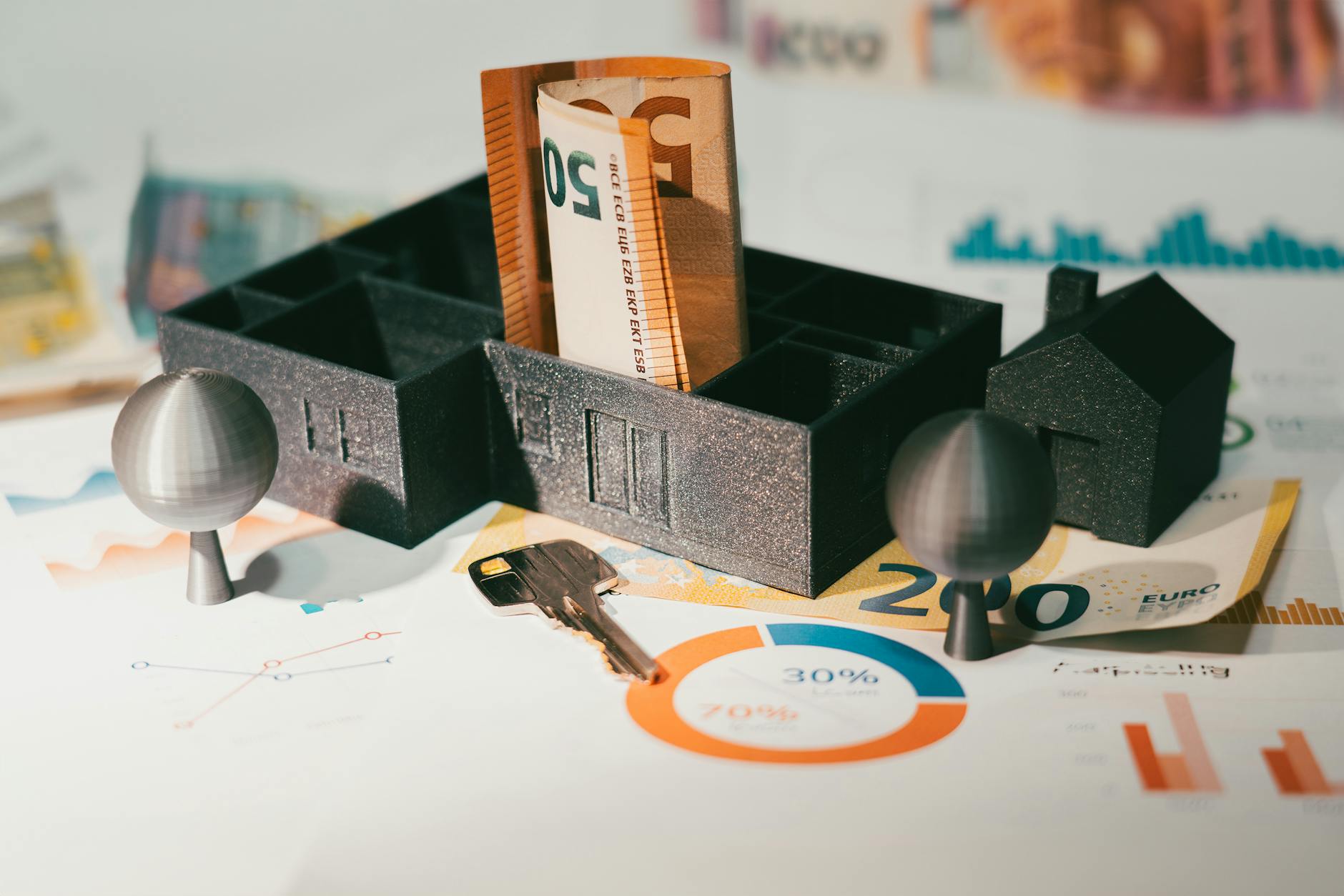
Research showing positive effects on property values typically documents increases ranging from 2% to 14%, depending on the study, location, and property type measured. This range demonstrates that property value gains from bike facilities are real in many cases but modest and inconsistent. The 2% figure might seem underwhelming, while 14% would be substantial; most studies cluster somewhere in the middle. For context, a 2% increase on a $400,000 home equals $8,000, while a 10% increase represents $40,000—meaningful but not transformative. The practical implication: if you’re considering a property near a new bike facility as a real estate investment, don’t count on automatic appreciation.
Examine whether the neighborhood shows other signs of demand—new restaurants, renovations, population growth. A bike lane is a positive signal, but it’s rarely the primary driver of property value in established neighborhoods. Conversely, if you’re a city planner evaluating the economic case for bike infrastructure, the modest but real property value gains (where they occur) can be a secondary benefit on top of cycling mode share, public health, and equity outcomes that don’t require property value appreciation to justify. One important comparison: the variability in bike-facility effects actually mirrors the variability in other neighborhood improvements. A new park, transit station, or restaurant district also shows mixed effects depending on context. The difference is that cycling infrastructure also provides direct transportation and health benefits whether or not property values rise, making the investment defensible on multiple fronts.
When Do Bike Lanes Fail to Increase Property Values—or Worse?
The 2024-2025 multi-city study documented cases where property values near bike facilities either remained flat or declined. This might occur when a bike lane is perceived as taking away street parking, when it serves a low-demand market, or when neighborhood economic conditions overwhelm the effect of the infrastructure itself. A warning worth emphasizing: bike lanes can become targets for controversy in car-dependent neighborhoods where cycling isn’t culturally established, and that friction might dampen the neighborhood’s desirability in the short term. Additionally, some of the strongest negative reactions occur when bike lanes are added to streets experiencing other problems—high traffic, pollution, or economic stagnation. Residents or business owners may view the bike lane as government prioritizing cyclists over drivers without addressing their core concerns about safety, livability, or economic viability. In these contexts, bike infrastructure alone can’t overcome deeper neighborhood challenges.
The lesson: bike lanes are most likely to boost property values when they’re part of a neighborhood story of improvement and when they respond to actual demand or help generate demand. A bike lane appearing randomly on a declining street may be ignored or resented. Another limitation: measurement timeframes matter. Some studies measure effects months after a facility opens, when adoption is still ramping up. Others look at five-year or ten-year data. The Indianapolis examples benefited from years of population growth, business investment, and cultural shifts that made cycling-friendly neighborhoods desirable. Short-term studies might miss these effects, while long-term studies show what actually sticks after the novelty wears off.
Commercial Properties and Business Districts
While residential property value is most commonly discussed, bike lanes can also affect commercial real estate. The Union Square example showed reduced vacancies, and other research suggests that pedestrian-oriented improvements including bike facilities can increase foot traffic and sales for nearby retailers. Portland’s multi-family housing saw even stronger property value gains ($4,700 in density areas) than single-family homes ($4,000), suggesting that denser, mixed-use neighborhoods with bike infrastructure may appeal more strongly to renters and buyers seeking walkable lifestyles.
Business owners in some neighborhoods have noted that protected bike lanes reduce parking but increase visibility and customer access by bike. This is a genuine tradeoff: fewer parking spots might hurt businesses reliant on car traffic, while businesses catering to cyclists or walkable-neighborhood residents benefit. The net effect depends heavily on what customers your business serves and whether the bike lane customer base exceeds the lost car-parking customer base.
What Does This Mean for Future Bike Infrastructure Investment?
As cities expand bike networks, the research suggests that expecting uniform 11% property value increases across all locations is unrealistic. Instead, cities are learning to target bike infrastructure investments in areas with favorable conditions: neighborhoods showing other signs of demand, areas with existing density to support cycling, or communities where cycling mode share is rising. This strategic approach means property value gains won’t be universal, but they’re more likely where infrastructure meets genuine market signals.
The broader takeaway is that bike infrastructure provides multiple benefits—safer transportation, public health improvements, reduced emissions, and improved livability—that justify investment independent of property value effects. Property value gains, where they occur, are a bonus rather than the primary rationale. For residents, a home near a good bike facility might appreciate modestly if the neighborhood is improving overall, but buying based solely on an 11% expectation is a mistake. For cities, the focus should remain on building networks that serve actual cycling demand and complement larger neighborhood improvement strategies.
Conclusion
The 11% property value increase claim is a real finding from Indianapolis—but it’s a specific result tied to a particular city’s economic context, not a universal pattern across most cities. Recent comprehensive research shows that bike lanes can boost property values, but the effect ranges widely from small increases to no effect at all, depending on location, facility quality, neighborhood conditions, and market demand. Portland’s $4,000 to $4,700 gains and Indianapolis’s Cultural Trail’s 148% increases represent successes, not the norm.
If you’re evaluating cycling infrastructure from an economic perspective, focus on the multiple benefits it provides beyond property value: safer streets, healthier communities, reduced traffic congestion, and improved neighborhood livability. Property value increases may follow in the right conditions, but they shouldn’t be the primary expectation or justification. For real estate decisions, treat bike infrastructure as one positive signal among many—valuable, but not a guarantee of appreciation.


