New research confirms what many city cyclists have long suspected: riding a bike through urban traffic is substantially healthier than sitting behind the wheel. A systematic review of studies examining pollutant exposure found that drivers inhale approximately 23% more air pollution than cyclists on the same routes—a significant margin that compounds over years of commuting. The finding aligns with multiple independent studies across different cities and methodologies, suggesting this isn’t an anomaly but rather a consistent pattern rooted in the way vehicle cabins trap and recirculate polluted air while cyclists move through the environment more directly.
The advantage cyclists enjoy isn’t just about the type of transportation—it’s about physics and exposure time. A 2018 Leeds study found that cyclists complete a 4-kilometer trip in roughly half the time car or bus drivers need for the same journey, which substantially reduces their cumulative exposure to pollutants even when accounting for slightly elevated breathing rates from physical exertion. This combination of lower absolute pollution levels and shorter commute times creates a meaningful health difference between the two groups.
Table of Contents
- How Much Cleaner Is the Air Cyclists Actually Breathe?
- Understanding the Pollution Paradox: Why Cars Trap More Pollution Than You’d Expect
- Real-World Examples: What This Means in Different Cities
- Should Cyclists Be Concerned About Higher Breathing Rates During Exercise?
- The Pollution Measurement Reality: Different Pollutants Matter Differently
- Infrastructure Makes a Measurable Difference
- Looking Forward—How Cycling Could Shape Urban Air Quality
- Conclusion
How Much Cleaner Is the Air Cyclists Actually Breathe?
The numbers vary slightly depending on the study and the specific pollutants measured, but the trend is consistent and striking. A Sheffield-based BBC investigation measuring fine particulate matter (PM2.5) found that drivers inhaled particulates at 44% above WHO baseline levels, while cyclists measured 28.1% above baseline on identical routes—a meaningful gap that reflects the protected environment car cabins create. A Copenhagen study from 2001 went further, measuring multiple pollutants including fine particles and volatile organic compounds (BTEX). Inside car cabins, concentrations were 2 to 4 times higher than in cyclists’ breathing zones on the same roads. This dramatic difference stems from a straightforward reason: cars recirculate and concentrate polluted air in an enclosed cabin, while cyclists are moving through the open atmosphere where pollutants disperse.
The type of congestion matters as well. Drivers sitting in gridlock have no choice but to breathe the exhaust and emissions that accumulate around slow-moving vehicles. Cyclists, even when sharing the road with traffic, position themselves differently relative to tailpipe emissions and benefit from their movement through the air. Research shows that pollutant concentrations inside vehicles are at least 25% higher than the same area where a cyclist rides, a gap that persists regardless of whether the driver uses air conditioning or filters. In heavily congested urban centers—think downtown cores during rush hour—the advantage for cyclists becomes even more pronounced.

Understanding the Pollution Paradox: Why Cars Trap More Pollution Than You’d Expect
most drivers assume their enclosed cabin protects them from air quality problems. In reality, the opposite occurs. Vehicle interiors concentrate pollutants through a combination of sealed environments and recirculation systems. When traffic is heavy and movement is slow, the cabin’s ventilation system pulls in high-concentration exhaust from surrounding vehicles and concentrates it in a small space where the driver spends hours each week.
Cyclists, despite being more exposed to the raw urban environment, actually experience lower concentrations because they’re not sitting in that accumulation zone. The limitation worth acknowledging: cyclists do breathe harder during exertion, which increases the volume of pollutants their lungs process with each breath. A person cycling at moderate intensity breathes roughly 3 to 4 times more air than someone sitting in traffic. However, this elevated breathing rate is more than offset by the lower concentration of pollutants they’re breathing and the reduced time spent commuting. It’s a trade-off that favors cycling, but it’s not because cycling somehow creates clean air—it’s because driving creates concentrations of polluted air that far exceed what cyclists encounter even with accelerated breathing rates.
Real-World Examples: What This Means in Different Cities
In Berlin, researchers specifically tracked how cycling infrastructure affected exposure levels. Cyclists using dedicated bike lanes showed notably lower NO2 exposure compared to those riding in mixed traffic, demonstrating that route choice matters significantly. This finding suggests that cities investing in separated cycling infrastructure don’t just make cycling safer—they measurably reduce the pollution cyclists breathe. A committed cyclist choosing a route with protected bike lanes versus a main road might see a 10-20% additional reduction in exposure compared to their main-street alternative.
Copenhagen, one of the world’s most cycling-friendly cities, provides another useful case study. Despite high cycling numbers and dense urban traffic, cyclists consistently show lower pollution exposure than drivers across multiple studies. The infrastructure designed around cycling accommodates high volumes of riders, which paradoxically makes cycling a less isolated mode of transport while still maintaining the pollution advantage. For riders in North American and UK cities without equivalent cycling infrastructure, the baseline advantage persists—but riders taking side streets or quieter routes gain even more benefit than those on main thoroughfares where more vehicles concentrate pollutants.

Should Cyclists Be Concerned About Higher Breathing Rates During Exercise?
The short answer is no—for the cardiovascular benefits alone, cycling outdoors in polluted urban environments remains healthier than driving. Regular cycling strengthens the heart and lungs, improves fitness, and reduces the chronic disease risk associated with sedentary driving. The pollution exposure from cycling in even moderately polluted cities is substantially lower than the health penalty from the inactivity, obesity, and cardiovascular deconditioning that result from daily car commuting. That said, riders can make strategic choices to minimize their exposure.
Timing commutes to avoid peak traffic hours can significantly reduce pollutant concentrations, since pollution spikes align closely with rush-hour emissions. Choosing quieter residential or dedicated cycling routes instead of main roads reduces exposure further. For cyclists in very heavily polluted cities or anyone with respiratory conditions, these route choices become more important, though they don’t negate cycling’s overall health advantage. A cyclist in Los Angeles choosing a route with bike infrastructure away from freeways will have substantially lower pollution exposure than one riding alongside freeway on-ramps, despite both still benefiting from the comparison to driving.
The Pollution Measurement Reality: Different Pollutants Matter Differently
When comparing cyclist and driver pollution exposure, studies measure different pollutants—PM2.5, PM10, NO2, ozone, and volatile organic compounds each tell part of the story. The comprehensive systematic review of literature found that across pollutant types, drivers consistently experienced higher exposure, but the magnitude varied. NO2 (a traffic-related pollutant from vehicle exhaust) showed some of the largest differences favoring cyclists, which makes sense since it’s a direct product of combustion engines that accumulate in vehicle cabins.
One limitation of this research that’s important to understand: most studies examine short-term snapshot exposure—measurements taken during specific commute periods. Long-term chronic health outcomes require years of research to establish, and while the mechanism is clear (lower pollutant exposure should lead to better respiratory and cardiovascular outcomes), formal epidemiological studies tracking cyclists versus drivers over decades remain limited. The evidence strongly suggests the advantage is real and substantial, but researchers continue studying how these exposure differences translate to measurable long-term health outcomes in population-level studies.
Infrastructure Makes a Measurable Difference
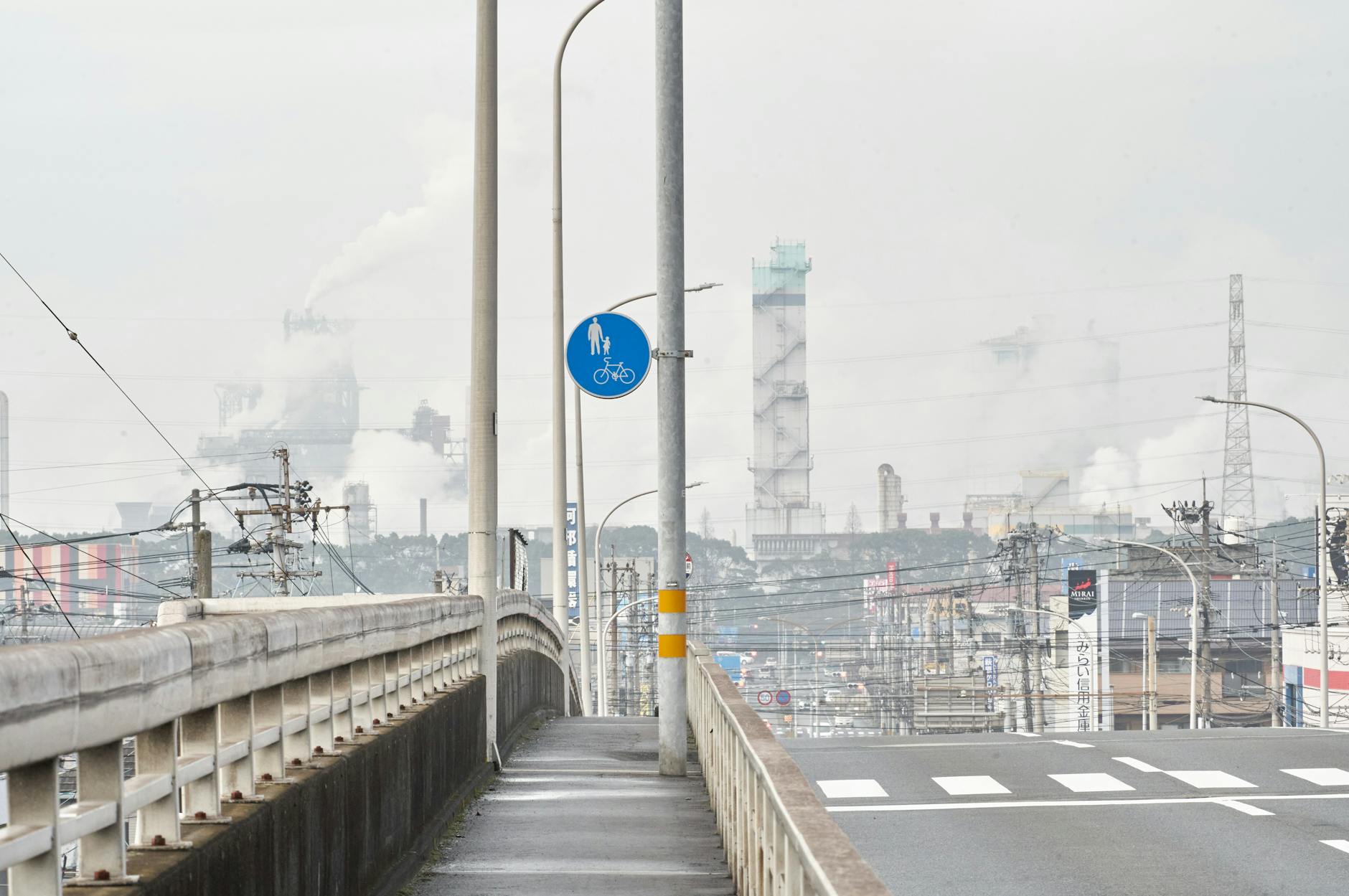
Cities that invest in protected cycling infrastructure see lower pollution exposure for cyclists compared to those riding in mixed traffic, according to research from Berlin and other European cities. This suggests an opportunity: as cities redesign streets to accommodate cycling, they can structure those routes to further reduce pollution exposure.
Cycle tracks separated from main traffic flows expose riders to lower concentrations than riding alongside congested car lanes. Protected cycling infrastructure also increases overall cycling rates in cities, which creates a positive feedback loop—more cyclists means fewer cars, which improves air quality for everyone. Cities like Copenhagen and Amsterdam demonstrate this dynamic at scale, with high cycling rates correlating with better air quality than comparable cities with lower cycling adoption.
Looking Forward—How Cycling Could Shape Urban Air Quality
As cities continue building cycling infrastructure and electric vehicle adoption increases, the comparison between cycling and driving may evolve. EVs don’t produce exhaust, but they still kick up particulate matter from tire and brake wear, and in dense traffic, that recirculated cabin air remains a factor. Cycling advantage should persist even in a future with more electric vehicles, though the absolute pollution concentrations in cities may decrease.
The real opportunity lies in recognizing that cycling infrastructure isn’t just an environmental amenity—it’s a public health intervention that measurably improves air quality exposure for thousands of daily commuters. The research suggests a straightforward message for urban planners and transportation officials: every cyclist on the road represents someone who’s choosing an activity with substantially lower pollution exposure than driving, while simultaneously contributing to lower overall urban pollution levels. That combination makes cycling infrastructure one of the most cost-effective public health investments cities can make.
Conclusion
The evidence is clear and consistent across multiple cities and studies: cyclists inhale significantly less pollution than drivers stuck in traffic, despite their higher breathing rates. The advantage stems from the physics of vehicle cabins trapping and concentrating pollutants, while cyclists move through the open environment where emissions disperse. A 23% reduction in pollution exposure represents a meaningful health difference over years of commuting.
For anyone with the ability to cycle, the pollution advantage combines with proven cardiovascular benefits to make it a substantially healthier choice than driving. Route selection matters—quieter streets and dedicated bike infrastructure reduce exposure further—but even cyclists on busy roads still benefit from lower pollution exposure than drivers on the same routes. As cities invest in cycling infrastructure, they’re not just improving safety and accessibility; they’re actively improving the air quality that urban commuters breathe.


