The widely repeated claim that tire pressure is costing cyclists 12% of their speed doesn’t hold up to scrutiny. Current cycling research shows that optimal tire pressure affects performance by far smaller margins—roughly 0.1 to 0.2 km/h differences—yet this doesn’t mean pressure is unimportant. What most cyclists actually don’t know is that their tire pressure decisions are based on outdated myths rather than science, and correcting these misconceptions can improve both speed and comfort in measurable ways.
A rider pumping tires to the 160+ PSI standard from decades past is making a choice that hurts performance and ride quality, but not in the dramatic way the headline suggests. The real story is more nuanced and, for serious cyclists, more actionable. Tire pressure optimization involves understanding that your ideal pressure depends on your weight, tire width, and terrain—not a one-size-fits-all number. The science reveals something counterintuitive: medium tire pressures (around 100 PSI on a road bike) often produce slower rolling than either softer or firmer pressures, creating what researchers call “dual optimization zones.” This means you might be riding at the worst possible pressure without realizing it.
Table of Contents
- Why Higher Tire Pressure Doesn’t Mean Faster Bikes
- The Weight and Width Variables That Most Cyclists Ignore
- The Dual Optimization Zones and What They Mean for Your Riding
- How to Find Your Optimal Pressure Through Testing
- The Pressure Maintenance Problem Most Cyclists Overlook
- Temperature, Altitude, and Environmental Factors
- The Evolution of Tire Technology and What’s Coming Next
- Conclusion
Why Higher Tire Pressure Doesn’t Mean Faster Bikes
For decades, cyclists believed the simplest rule: higher pressure equals lower rolling resistance equals faster speed. This logic seems sound, but real-world testing by manufacturers like Rene Herse Cycles proved it wrong. When they measured actual rolling resistance across different pressures, they found that resistance increases at medium pressures but decreases again at both lower and higher pressures. This creates a U-shaped curve with two “sweet spots.” A cyclist running 100 PSI might actually roll faster at either 80 PSI or 120 PSI, depending on their specific setup.
The misconception persists because the relationship between tire deformation and rolling resistance is more complex than early cycling engineers understood. A slightly softer tire deforms more as it rolls, but that deformation actually dampens vibrations and reduces energy waste through the bike frame. Meanwhile, extremely high pressure creates a harder contact patch that can skip over surface irregularities, paradoxically increasing overall resistance. This is why modern tire pressure recommendations have shifted dramatically downward—British Cycling now recommends 80-100 PSI for road bikes, versus the 160+ PSI standard from the 1980s and 1990s.
The Weight and Width Variables That Most Cyclists Ignore
Your optimal tire pressure isn’t universal—it’s personal. A 140-pound rider needs different pressure than a 200-pound rider, yet many cyclists use a standard number across their entire team or training group. Heavier riders compress tires more, requiring higher pressure to maintain the same deflection and rolling characteristics. Similarly, tire width dramatically affects the calculation: a 25mm tire at 90 PSI behaves differently than a 28mm tire at the same pressure. This is where tools like the Wolf Tooth Components tire pressure calculator become valuable.
They account for your actual body weight, tire width, and rim type to recommend a personalized range rather than a single number. The limitation here is that cyclists often ignore these variables in favor of simplicity. A common mistake is borrowing pressure recommendations from heavier or lighter friends, or copying numbers from online forums. Temperature also matters—tire pressure fluctuates 1-2 PSI for every 10-degree Celsius change, which means your carefully calibrated pressure from a cool morning ride is already off by the afternoon. Weekly pressure checks aren’t optional if you’re trying to maintain optimal conditions.
The Dual Optimization Zones and What They Mean for Your Riding
The discovery of dual optimization zones—soft and firm pressures both performing better than medium pressures—has real implications for how you should approach tire setup. If you’re currently riding at a “safe middle ground” around 95-100 PSI, you might actually be at the worst point on the performance curve. Testing suggests that either dropping to 80-85 PSI or increasing to 110-120 PSI could improve your rolling resistance, though the effect is measured in small increments rather than percentages.
For example, a gravel cyclist weighing 165 pounds on 32mm tires might find that 85 PSI offers better compliance and traction on rough surfaces, while a 160-pound road cyclist on 25mm tires might prefer 115 PSI for a firmer feel and faster rolling on smooth pavement. The gap between these two setups seems wide, but each rider is positioned in an optimization zone where their specific combination of body weight, tire size, and riding surface performs best. This is why generic advice fails—you need to experiment within your own constraints.
How to Find Your Optimal Pressure Through Testing
Finding your ideal tire pressure requires a methodical approach rather than guesswork. Start by calculating your recommended range using a tire pressure calculator, then test pressures at 5-PSI increments over several rides on similar terrain. Pay attention not just to speed but to how the bike handles and how much effort you’re expending. A pressure that feels harsh and transfers every road vibration to your hands and seat might be technically faster in a lab, but if it causes fatigue and discomfort, it’s not optimal for real-world cycling. The tradeoff to understand is that lower pressure offers better comfort and grip, while higher pressure reduces rolling resistance and offers more responsive handling.
A commuter prioritizing comfort might choose 80-85 PSI even if 110 PSI would theoretically be slightly faster. A time trialist chasing every advantage might tolerate the rougher ride of 115 PSI for marginal speed gains. There’s no universally correct answer—only the pressure that balances your priorities. Once you identify your range, check pressure before every ride, especially if temperatures have changed significantly or more than a few days have passed. Road bike tires lose 1-2 PSI daily from normal temperature cycles, meaning a tire that was perfect on Tuesday morning might be underinflated by Thursday.
The Pressure Maintenance Problem Most Cyclists Overlook
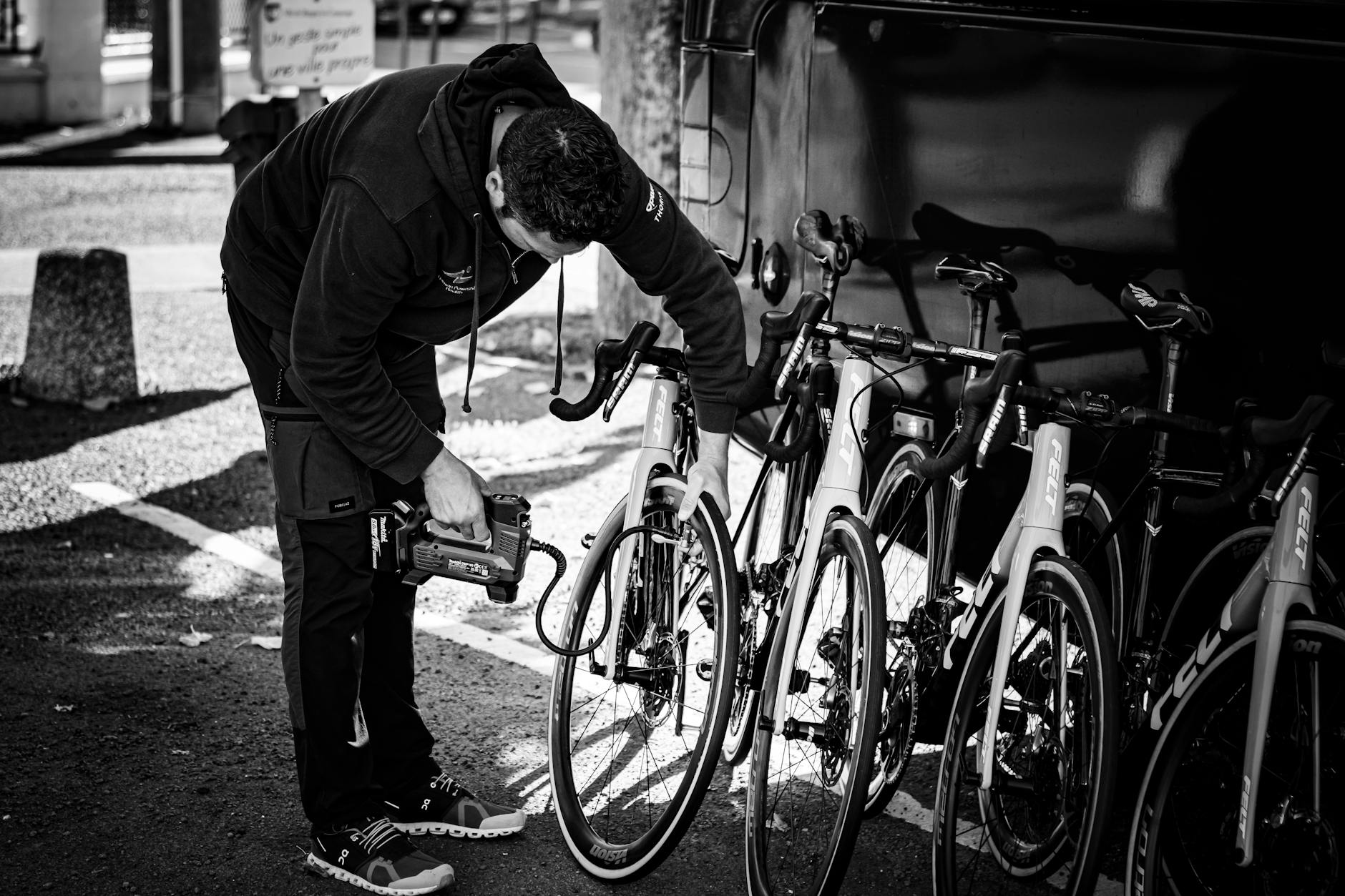
Many cyclists treat tire pressure as a set-it-and-forget-it variable, checking only when they notice sluggish performance. This is a mistake. Road bike tires lose pressure predictably and consistently—not from pinch flats or punctures, but simply through the rubber compound. A tire pumped to 100 PSI on Monday might drop to 98 PSI by Wednesday and 96 PSI by Friday. Over weeks, significant pressure loss accumulates. A warning: riding on underinflated tires doesn’t just compromise speed—it increases rolling resistance, generates more heat in the tire, and raises your risk of pinch flats if you hit a pothole hard.
The solution is a regular pressure-checking routine. High-quality floor pumps with integrated gauges make this easy, and a quick weekly check takes under a minute. Some cyclists set phone reminders for Sunday evenings. Others check before every ride, especially during temperature swings in spring and fall. The seasonal pressure question is often overlooked: if you ride in a climate with significant temperature variation, your optimal winter pressure might differ from your summer pressure by 3-5 PSI. Riding on auto-pilot with the same pressure year-round means you’re probably off in one season or the other.
Temperature, Altitude, and Environmental Factors
Environmental conditions affect tire pressure in ways that catch many cyclists off-guard. A tire pumped indoors in a 70°F room will have higher pressure than it does outdoors on a 45°F morning—roughly a 2-3 PSI difference. If you pump tires at home and ride outdoors immediately, you’re starting too high.
Conversely, if you pump tires after a ride, the heat in the tire inflates pressure artificially, and your “perfect” reading will be wrong once the tire cools. Altitude also plays a minor role. A cyclist who pumps tires at sea level and drives to a higher elevation will experience lower atmospheric pressure, though the effect is too small to worry about for most riders. The practical takeaway is to pump tires in conditions similar to when you’ll ride—or pump slightly lower than you think you need, accounting for the temperature change.
The Evolution of Tire Technology and What’s Coming Next
Tire technology has shifted considerably over the past decade, and pressure recommendations have followed. Wider tires (28mm and 32mm) became mainstream on road bikes, allowing for lower pressures without sacrificing speed. Tubeless tire systems, which use sealant instead of inner tubes, require different pressure calculations and offer the advantage of running even lower pressures without pinch-flat risk.
Modern tire compounds are also more forgiving of sub-optimal pressures than older designs. Looking ahead, the trend toward gravel bikes and mixed-surface riding suggests that tire pressure recommendations will continue to emphasize range and flexibility over precision. The obsession with running the absolute highest pressure for theoretical speed gains is fading. Instead, cyclists are learning that the sweet spot often lies in a moderate range that balances speed, comfort, durability, and confidence on varied terrain.
Conclusion
The 12% speed claim is overstated, but tire pressure is far from irrelevant to cycling performance. What most cyclists don’t know is that their pressure decisions are often based on outdated rules rather than personal testing and current science.
The real opportunity lies in understanding that optimal pressure depends on your weight, tire size, and terrain, and that checking pressure weekly is as important as choosing the right initial number. Start by calculating your personalized pressure range, test within that range over several rides, and establish a weekly checking routine. The speed gains might be measured in tenths of kilometers per hour rather than percentages, but improved comfort, handling, and reduced flat risk make proper tire pressure one of the easiest performance investments you can make on a bike.


