The best reflective gear for cyclists riding at dusk and dawn combines fluorescent and retroreflective materials in garments designed for maximum visibility from multiple angles. When you’re cycling during these transitional hours—when drivers are adjusting to changing light and your visibility drops dramatically—a reflective jacket or vest can make the difference between being seen and becoming a statistic. Research shows that cyclists with reflective ankle or torso gear are detected up to 250% faster by drivers at night, which translates directly to more time for motorists to brake if something goes wrong.
The critical insight is that dusk and dawn require different solutions than full darkness or bright daylight. A material that glows bright yellow in the early morning sun becomes nearly invisible in low-light conditions unless it also contains retroreflective properties. This article covers the science behind why reflective gear works, which specific products deliver the best protection, and how to layer visibility into your cycling routine so you’re protected whether you’re commuting at 6 a.m. or riding home at 5 p.m.
Table of Contents
- Why Reflective Visibility Matters for Dusk and Dawn Cycling
- Retroreflective vs. Fluorescent Materials—Understanding What Works When
- Moving Reflectives Attract Driver Attention Better Than Static Clothing
- Choosing the Right Reflective Jacket for Dusk and Dawn Commutes
- The Limitations of Reflective Gear and When to Add Lights
- Reflective Accessories Beyond Jackets and Vests
- The Future of Cyclist Visibility: Smart and Integrated Systems
- Conclusion
Why Reflective Visibility Matters for Dusk and Dawn Cycling
Seventy-seven percent of pedestrian and cyclist fatalities occur in darkness according to the National Highway traffic Safety Administration, and the dusk and dawn hours fall squarely into this danger zone. These transitional periods between day and night create an optical illusion for drivers—their eyes haven’t fully adjusted, street lighting is often inadequate, and cyclists fade into the background of trees, buildings, and other road features. The human brain struggles to detect movement and contrast during these specific hours more than at any other time. A randomized controlled trial involving 6,793 cyclists found that those wearing a yellow bicycle jacket had 47% fewer multiparty accidents with personal injury and 55% fewer accidents involving motorized vehicles compared to those without high-visibility clothing.
This wasn’t a small study with uncertain results—it was a large, peer-reviewed analysis that directly measured the impact of visibility gear on accident rates. The mechanism is straightforward: when a driver can see you sooner, they have more time to react, more distance to adjust their speed, and a better chance of avoiding you entirely. Retroreflective materials can be seen from 100 meters away or more, providing drivers with critical extra seconds to brake safely. To put that in perspective, a car traveling at 35 mph covers roughly 50 feet per second, so 100 meters of visibility can mean the difference between a near-miss and a collision.
Retroreflective vs. Fluorescent Materials—Understanding What Works When
This is where many cyclists make a critical mistake: they assume any bright yellow or orange gear will protect them at dusk and dawn. Fluorescent colors are highly effective during daylight and early dusk when ambient light is still available, but they become useless in low-light conditions. A fluorescent yellow vest that’s brilliant in the afternoon sun becomes virtually invisible as darkness approaches because fluorescent materials work by absorbing UV light and re-emitting it as visible light—a process that requires ambient light to function. Once that light disappears, so does the visibility. Retroreflective materials, by contrast, work in complete darkness by reflecting light directly back toward its source.
When a car’s headlights hit a retroreflective surface, the material acts like a mirror, bouncing that light back at the driver. This is why bicycle reflectors on wheels and frames are so effective at night but essentially invisible during the day. The best solution for dusk and dawn riding is combining both materials in a single garment—this gives you the high-visibility benefit of fluorescence when light is available and the life-saving reflectivity of retroreflective material as darkness falls. However, if you’re choosing between one material or the other because of budget or comfort constraints, prioritize retroreflectivity for dusk and dawn riding. These hours occur near the end of visibility, and you need gear that works as ambient light drops. Full darkness gear can always be supplemented with lights, but there’s no substitute for reflective clothing during twilight hours.
Moving Reflectives Attract Driver Attention Better Than Static Clothing
A cyclist wearing a completely stationary reflective vest is visible, but not as visible as one whose reflective elements are moving. Research from cycling safety experts shows that moving reflectives are most effective at catching driver attention because motion draws the human eye far more effectively than a static object. This is why ankle straps, pedal lights, and spoke clips are particularly valuable—they create a dynamic visual pattern that’s nearly impossible for drivers to ignore. An ankle strap worn while cycling creates a pulsing light pattern with each pedal stroke, essentially creating a visual beacon.
Spoke-mounted lights work similarly, creating a rotating circle of light that’s highly distinctive. These moving elements work in conjunction with stationary reflective clothing to create a layered visibility system. A cyclist wearing a Proviz Reflect360 Men’s Performance Cycling Jacket, which is rated as top-tier for its 360-degree reflectivity, would be well-protected with static reflectivity, but adding ankle straps or pedal lights would significantly increase detection time. The practical implication is that you shouldn’t rely on one visibility strategy. Instead, build a system: reflective jacket or vest as your base layer, then add moving elements like ankle straps or lights to amplify your visibility as light conditions worsen.
Choosing the Right Reflective Jacket for Dusk and Dawn Commutes
When selecting a reflective jacket for transitional light hours, you’re looking for three qualities: it should combine fluorescent and retroreflective materials, it should offer coverage on areas drivers are most likely to see (torso, shoulders, and arms), and it should be comfortable enough to wear consistently. The Proviz Reflect360 Men’s Performance Cycling Jacket is recognized across multiple cycling publications as the leading option in this category, offering 360-degree reflectivity that works from any angle. A dedicated cycling jacket differs from generic high-visibility workwear in that it’s designed for the range of motion and conditions cyclists encounter. A reflective vest designed for construction workers won’t necessarily accommodate the forward-leaning position of cycling or account for wind resistance at speed.
Cycling-specific jackets also tend to include features like mesh panels for ventilation and pocket placement that works with bike positioning. The tradeoff is that cycling-specific reflective jackets cost more than generic vests—expect to spend $100 to $200 for a quality option—but the durability and tailored fit make it worth the investment if you’re commuting regularly. For cyclists on a tighter budget, a well-fitted reflective vest combined with reflective ankle straps often provides comparable coverage at a fraction of the cost. A quality vest with both fluorescent and retroreflective materials runs $30 to $50, and ankle straps add another $15 to $25, giving you $45 to $75 of layered protection.
The Limitations of Reflective Gear and When to Add Lights
Reflective gear is powerful, but it has real limitations. First, it only works when light sources illuminate it—typically a car’s headlights. Reflective materials cannot generate their own light, so in complete darkness on an unlit road with no approaching traffic, they provide no visibility at all. This is where lights become essential. A front light makes you visible to oncoming traffic and helps you see the road, while a rear light alerts vehicles behind you. Second, reflective gear works best when it’s clean and maintained.
Dirt, dust, and road grime reduce the effectiveness of reflective materials significantly. A jacket that’s been worn for weeks in urban traffic without cleaning might perform 30 to 40 percent worse than when new. This doesn’t mean you need to obsess over cleaning—a quick wipe with a damp cloth monthly is sufficient—but it’s worth remembering that your reflective gear’s effectiveness degrades with neglect. Third, be aware that reflective gear alone doesn’t make cycling at dusk and dawn safe. It addresses visibility from a driver’s perspective, but you still need to ride predictably, follow traffic laws, and assume drivers might not see you even with reflective clothing. Use reflective gear as one layer of a broader safety approach that includes lights, safe road positioning, and attentive riding.
Reflective Accessories Beyond Jackets and Vests
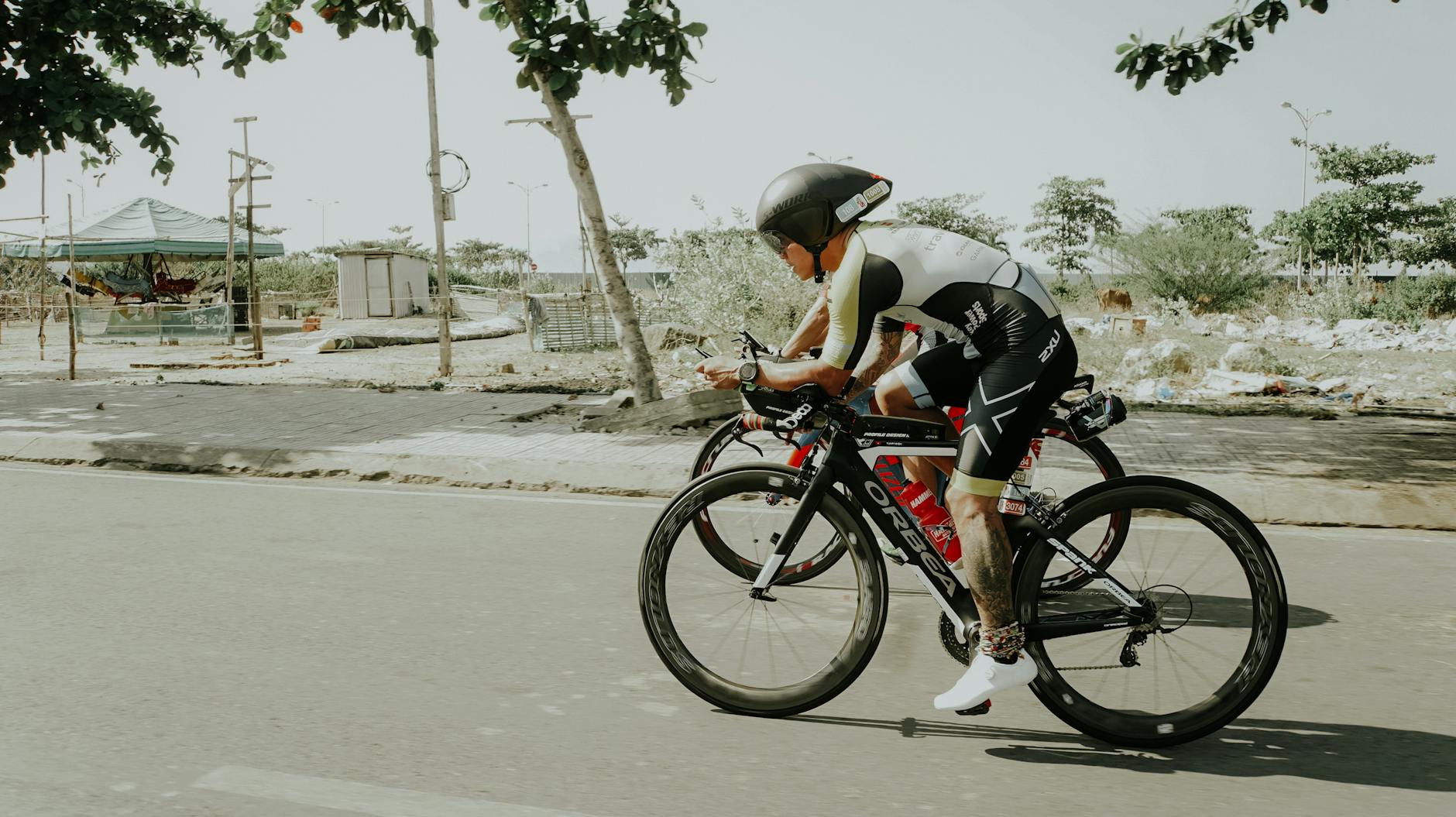
Beyond full jackets and vests, there are numerous reflective accessories designed specifically for the parts of your body that move most noticeably. Reflective arm bands, ankle straps, and wrist bands are inexpensive ways to add moving visibility to your cycling. An ankle strap worn on both legs as you pedal creates a dual pulsing pattern that’s remarkably effective at catching driver attention—more so than a stationary torso-coverage vest alone.
Spoke reflectors or clip-on spoke lights serve the same purpose, creating a rotating visual pattern. Some cyclists layer these together: a reflective jacket for base coverage, ankle straps for moving visibility, and spoke lights or pedal lights for additional emphasis. The cumulative effect is a cyclist who is visible from multiple angles and whose visibility increases with motion.
The Future of Cyclist Visibility: Smart and Integrated Systems
The reflective gear market continues to evolve beyond traditional materials. Some manufacturers are beginning to integrate LED lighting into reflective jackets, combining active light generation with passive reflectivity for 24-hour visibility. Wearable tech companies are developing connected visibility systems where your jacket communicates with your lights to adjust brightness based on ambient conditions.
While these innovations aren’t yet mainstream, they represent where cyclist safety is heading. For now, the most reliable approach remains the layered strategy: a high-quality reflective jacket combining fluorescent and retroreflective materials, enhanced with moving elements like ankle straps and lights. This combination addresses the specific challenges of dusk and dawn riding when visibility drops rapidly and drivers are most prone to missing cyclists.
Conclusion
The best reflective gear for dusk and dawn cycling combines fluorescent materials for daytime visibility with retroreflective elements that activate as darkness falls. A quality reflective jacket—such as the Proviz Reflect360 or equivalent—serves as your foundation, providing 360-degree visibility from torso and shoulders. Supplement this with moving reflectives like ankle straps or spoke lights to create a dynamic visibility system that catches driver attention more effectively than static clothing alone.
Make reflective gear part of your routine rather than an occasional addition. Research shows the impact is substantial—cyclists with reflective gear are detected 250% faster, and studies document measurable reductions in accident rates. During the specific hours of dusk and dawn when 77% of cyclist fatalities occur, reflective visibility is not optional. Wear it consistently, keep it clean, and layer your visibility strategy so you’re protected from every angle as light conditions change.