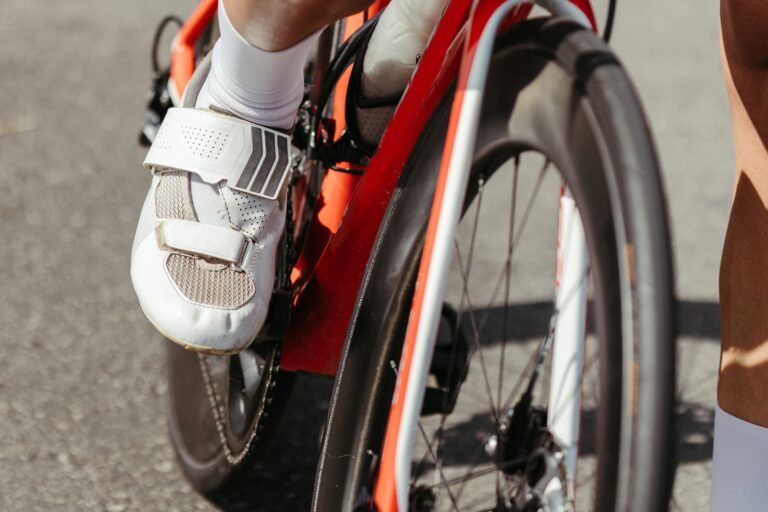
Fenders are the curved guards over your wheels that block spray and grit, and they rattle when a mount loosens or clearance disappears. Tightening the mounting bolts and restoring even tire clearance usually stops the noise. Left alone, the shaking can wear paint, crack supports, or let a fender drop toward the tire. A short check in order finds the loose point without removing everything.
Table of Contents
- Where Is The Rattle Coming From?
- How Do You Tighten Loose Mounts?
- What If The Fender Itself Vibrates?
- When Should You Space, Trim, or Replace Parts?
Where Is The Rattle Coming From?
Most rattles start at four joints: fork crown, brake bridge or seatstay bridge, dropout eyelets, and the small bolts where supports meet the fender. Fender supports are the thin metal rods or struts that hold each fender centered over the wheel. If any joint can shift by hand, bumps will make it buzz. Park the bike, squeeze each fender lightly, then tap it with a finger.
A loose bolt clicks sharply at its joint, while a clearance problem sounds like a light scrape near the tire. Work front to rear so you do not chase the same noise twice. A steady rattle over small bumps points to loose hardware. An occasional loud knock points to the fender hitting the tire or frame under load.
How Do You Tighten Loose Mounts?
Start with the wheel centered and the tire pumped to normal pressure. Check that the fender sits centered with a finger-width gap all around. Off-center fenders hit sooner and sound loose even when bolts feel tight.
Use the correct wrench size and stop when the joint no longer moves. Over-tightening can strip threads, crack plastic, or crush a light alloy stay. If a bolt keeps loosening, remove it, clean dirt from the threads, reinstall it, and check it again after one ride.
- Snug the dropout eyelet bolts first, one side at a time.
- Snug the crown or bridge bolt next, holding the fender centered.
- Snug the support-to-fender bolts last.
- Re-check centering after each bolt, then bounce the bike.
What If The Fender Itself Vibrates?
Some fenders buzz even with tight bolts because a support is bent or too flexible. Sight down the fender from the end and look for a twist, dip, or side that runs closer to the tire. Gently bend paired supports by equal amounts to bring the fender back to center. Add damping where metal meets metal.
A thin rubber or fiber washer under the bridge and support bolts can quiet high-frequency buzz. Keep washers thin at the dropout so the support stays firmly clamped. Wide tires, knobby tread, or a wheel that is slightly out of true can close the gap. If you see rub marks inside the fender, you need more clearance, not more bolt force.
When Should You Space, Trim, or Replace Parts?
Replace cracked plastic, split edges, broken clips, or a support with a sharp kink. Those parts flex more with every bump and often fail near the bolt hole. A fender that has rubbed through to bright metal or frayed edges is also due for replacement. A missing bolt, sleeve, or clip deserves prompt attention because load shifts to the remaining mounts.
Carry the old part to match length, width, and mounting style. Mismatched supports can hold the fender crooked and restart the rattle. Never ride with a fender that can touch the tire under braking or over a large bump. A jammed front fender can stop the wheel suddenly. Re-center, add space, or remove the fender for the ride home, then fix the mount before the next wet ride.