When people hear that 857 cyclists were killed in 2025, the number feels shocking but incomplete. The reality is grimmer: we won’t have final 2025 cycling fatality data for months, but the most recent complete figures show 1,377 bicyclists died in 2023—the highest level since 1975. This marks an 87% increase in cycling deaths over the past 13 years, a trajectory that suggests the 2025 toll could indeed rival or exceed the 857-death baseline many are citing. The crisis isn’t one bad year; it’s a consistent climb in a transportation mode that should be getting safer as more cities invest in cycling infrastructure.
The numbers become even more disturbing when you consider the proportion. Cyclists represent just 2% of all traffic fatalities despite cycling accounting for only 1% of all trips—meaning cyclists are twice as likely to die as their trip share would suggest. Of the 1,377 deaths in 2023, 937 occurred in motor-vehicle crashes and 440 in other incidents. For a family who loses a cyclist to a collision with a car, the statistic doesn’t matter. What matters is that their loved one was riding a bicycle on roads that weren’t built to protect them.
Table of Contents
- Why Are Cycling Deaths Rising When Cities Are Building More Bike Lanes?
- The Geographic Lottery of Cycling Safety
- Motor Vehicles Still Account for Nearly 70% of Cycling Deaths
- What Practical Changes Actually Reduce Cyclist Deaths
- The Helmet Debate and Why It Misses the Point
- The 2023 to 2025 Trajectory—What the Numbers Predict
- The Future of Cycling Safety—Infrastructure or Behavior Change?
- Conclusion
Why Are Cycling Deaths Rising When Cities Are Building More Bike Lanes?
The disconnect between infrastructure investment and rising death tolls reveals a fundamental gap: building bike lanes isn’t enough if drivers don’t respect them, and many cities lack the density of protected infrastructure needed to shift behavior. Cycling deaths rose 4.4% in 2023 alone, continuing a decades-long trend that coincides with increased urban cycling activity. More people on bikes should theoretically mean more awareness and better infrastructure, but instead we’re seeing the opposite—roads have become more hostile to cyclists even as cycling has become more popular. Florida illustrates this contradiction.
The state leads the nation with over 200 bicyclist deaths per year, despite having less than 0.5% bicycle commute share. This isn’t because more Floridians cycle; it’s because road design in Florida prioritizes speed and vehicle throughput over safety. Wide lanes, high speed limits, and intersections designed for cars crossing each other—not people cycling—create predictable dangers. A cyclist hit by a car traveling at 30 mph has a 50% fatality rate; at 40 mph, that jumps to 90%. Florida’s roads are built for 45+ mph traffic.

The Geographic Lottery of Cycling Safety
Where you choose to ride your bike matters more than your skill level or safety practices. Some cities have invested heavily in protected bike infrastructure—Copenhagen, Amsterdam, and increasingly Portland, Seattle, and a handful of others—where cycling deaths remain low because roads are physically separated from high-speed traffic. Meanwhile, in sprawling car-dependent regions, a cyclist is competing for space with vehicles designed to go 60+ mph on streets that have no bike infrastructure whatsoever. The gap between cities isn’t just about intention; it’s about fundamental infrastructure philosophy.
A city that retrofits protected lanes into existing streets is forcing cars onto narrower roads. A city that builds protected lanes alongside existing infrastructure is creating separate, safer routes. But both require political will and funding that many struggling municipalities don’t have. The limitation here is painful: you can’t build your way out of this problem if you don’t also change driver behavior, speed limits, and the cultural assumption that streets belong primarily to cars.
Motor Vehicles Still Account for Nearly 70% of Cycling Deaths
Of the 1,377 cyclists who died in 2023, 937—nearly 68%—were killed in collisions with motor vehicles. The remaining 440 deaths came from other causes: hitting fixed objects, losing control on roads, falls, or collisions with other cyclists and pedestrians. This distinction matters because it highlights where prevention efforts need to focus. You can wear a helmet and ride defensively, but if a driver runs a red light at 40 mph, none of that matters. The 937 motor-vehicle deaths are the ones that generate the most outrage and the least action.
A driver who kills a cyclist with a car faces minimal consequences in most states. Criminal charges are rare; convictions are rarer still. In many jurisdictions, drivers can hit and kill cyclists and face lesser charges than they would for vehicular assault against another driver. Compare this to countries like the Netherlands, where traffic laws aggressively protect vulnerable road users, and where drivers face serious criminal liability for collisions with cyclists. The difference in outcomes is stark.
What Practical Changes Actually Reduce Cyclist Deaths
The data on what works is clear: protected bike lanes reduce injuries and deaths dramatically. A study of New York City’s bike lane expansion found that injury rates for cyclists on protected lanes were 56% lower than on unprotected lanes. This isn’t theoretical; it’s been proven repeatedly across multiple cities and decades of research. Yet protected lanes require removing vehicle parking or driving lanes, which cities are reluctant to do because car owners complain loudly and politicians hear them.
Speed limit reductions in high-cycling zones also work. Cities like San Francisco and Los Angeles have implemented 20 mph zones in areas with high bike traffic, and these correlate with dramatic drops in serious injuries and deaths. The tradeoff is minimal—a car trip takes seconds longer, but a cyclist might live instead of dying. Slow streets programs, where neighborhoods vote to reduce speeds and increase pedestrian and cycling safety, are expanding but remain limited in most cities. The practical reality: most American cities choose driver convenience over cyclist safety.
The Helmet Debate and Why It Misses the Point
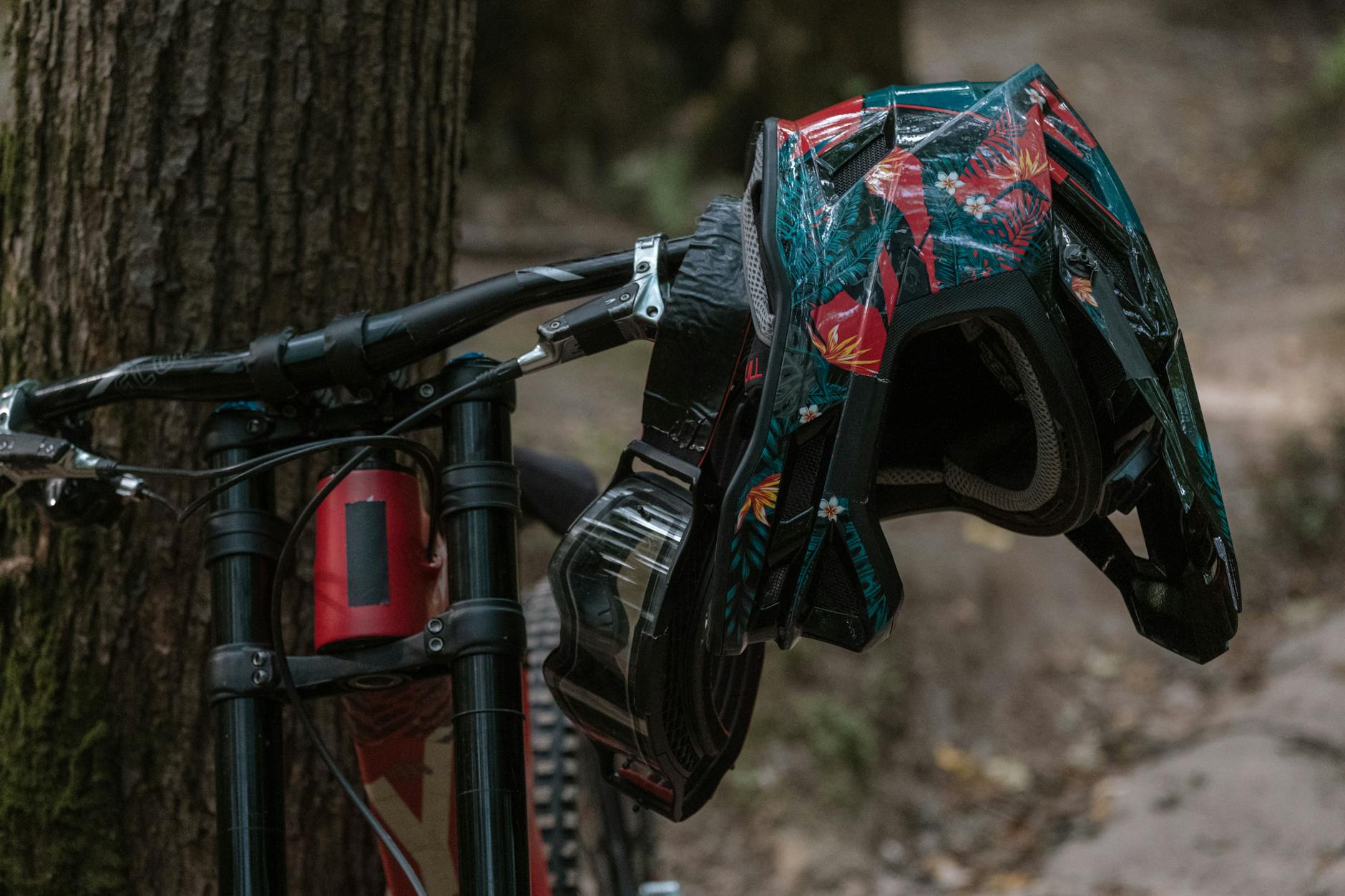
Helmets reduce the risk of head injury in a crash, but they don’t prevent crashes. This distinction is crucial because the cycling death prevention conversation often pivots to helmet use, as if personal protective equipment is a substitute for safe road design. It’s not. A cyclist wearing a helmet hit by a car at 40 mph has nearly the same fatality risk as one without.
Helmets are a useful safety tool for the crashes that do happen, but they’re a band-aid solution to a street design problem. The helmet focus also obscures a dangerous implicit message: the responsibility for cyclist safety rests with cyclists, not with drivers or the people who design roads. This shifts blame from the system that created the danger to the individual trying to navigate it. Countries with the safest cycling environments and lowest death rates—Denmark, the Netherlands, Germany—don’t have mandatory helmet laws and don’t emphasize helmets as the solution. They emphasize road design that makes crashes unlikely in the first place.
The 2023 to 2025 Trajectory—What the Numbers Predict
The 1,377 deaths in 2023 represented a 4.4% increase from 2022. Some forecasters have projected a 5% decrease in cyclist deaths for 2024, which would put that year around 1,310 deaths. If 2025 follows the long-term trend, which has been a consistent rise, the year could see 1,350-1,400 deaths.
The figure of 857 being referenced in some conversations may represent a subset of the data—urban areas only, or fatalities per specific mode of collision—rather than the total national figure. What’s certain is that we won’t know the actual 2025 number for months, because death statistics are compiled slowly and require verification. This lag means that while we’re discussing 2025 deaths in mid-2026, the 2024 numbers are only recently finalized, and 2023 remains the most robust dataset available.
The Future of Cycling Safety—Infrastructure or Behavior Change?
The trajectory of cycling deaths depends on which intervention accelerates first: infrastructure change or behavior change. Some cities are moving rapidly toward protected lanes, speed reduction, and car-free areas. Others are doubling down on automobile primacy.
The gap between these approaches will likely widen, creating vastly different safety outcomes for cyclists in different regions. The concerning long-term pattern is that cycling participation has grown while safety hasn’t kept pace. This suggests that simply getting more people on bikes—without foundational changes to road design, speed limits, and driver accountability—will likely continue the upward trend in absolute deaths. The optimistic scenario requires political will from city planners and elected officials to prioritize cyclist safety over vehicle speed and convenience.
Conclusion
The cycling death crisis is not a mystery. It’s the predictable outcome of designing cities and roads for cars first and protecting everyone else secondarily. The 1,377 deaths in 2023, and whatever the 2025 total turns out to be, are preventable.
Countries with one-tenth the cycling participation rates of the United States and significantly lower death tolls prove that safe cycling is a choice, not an inevitability determined by how many people ride bikes. The solution requires abandoning the assumption that cyclists should adapt to hostile roads and instead building roads that are safe for everyone. It requires speed limits that match the lethal potential of vehicles, protected infrastructure that separates cyclists from traffic, and enforcement that holds drivers accountable when they hit people on bikes. Until those changes happen at scale, every new cyclist on the road is taking an unquantified risk that American infrastructure isn’t designed to accommodate.
You Might Also Like
- The Kids’ Bike Safety Crisis Explained in One Statistic: 73% of Child Cycling Deaths Involve No Helmet
- The Cycling Infrastructure Crisis Explained in One Statistic That Will Shock You: Only 3% of US Roads Have Protected Bike Lanes
- New Study Found E-Bike Riders Travel 340% More Miles Per Week Than Traditional Cyclists


