Your stationary bike’s display is likely overestimating your calorie burn. Research on indoor cycling equipment shows that the calorie counters on exercise bikes systematically overestimate energy expenditure, with studies documenting inaccuracies ranging from 7% to 30% depending on the machine and methodology. A rider who believes they’ve burned 600 calories might have actually burned somewhere between 420 and 558 calories—a significant gap that matters whether you’re training for endurance or managing your overall fitness goals.
The issue stems from how stationary bikes calculate calorie burn. Most machines use basic algorithms that account for your entered weight, resistance level, and duration, but they don’t measure your actual oxygen consumption, heart rate variability, or muscle efficiency. A study published in the Journal of Sports Sciences found that stationary bikes specifically overestimate calorie burn by 20-30%, while the broader category of cardio equipment shows a 20-30% variance range. What this means in practical terms: if you’re using those numbers to guide your nutrition or judge your workout intensity, you’re working with incomplete data.
Table of Contents
- Why Do Stationary Bike Displays Overestimate Calorie Burn?
- The Harvard Data: Indoor Cycling Burns Less Than Outdoor Cycling
- What the Research Actually Measures
- How to Get More Accurate Calorie Estimates
- The Heart Rate Problem: Why Your Heart Rate Matters More Than the Machine Thinks
- Indoor Cycling Still Works—Despite the Numbers
- What This Means for Your Training Going Forward
- Conclusion
Why Do Stationary Bike Displays Overestimate Calorie Burn?
The root cause is mechanical simplicity. A stationary bike can measure your power output—the watts you’re producing—but it can’t measure your metabolic efficiency. Two riders of the same weight doing the same workout might burn calories at completely different rates depending on fitness level, muscle composition, age, hormonal factors, and dozens of other variables. The bike’s algorithm assumes standardized efficiency that may not apply to you specifically. When exercise science researchers compare the bike’s estimate to laboratory-measured calorie expenditure using indirect calorimetry or oxygen consumption tests, they consistently find discrepancies. One analysis across multiple cardio equipment types found that stationary bikes specifically overestimate by approximately 7% when measured under controlled conditions—though other studies report much higher errors.
The variation between studies partly reflects differences in bike quality, calibration, and the fitness level of test subjects. A well-maintained, commercial-grade bike might be more accurate than a consumer model in a home gym. Environmental factors also play a role. The stationary bike can’t account for air resistance, ground friction, or the muscular inefficiencies that come from maintaining balance and stability. During outdoor cycling, you’re constantly making micro-adjustments and fighting air resistance. On a stationary bike, the machine maintains your position and removes these variables—yet many bike displays don’t adjust their estimates downward accordingly.
The Harvard Data: Indoor Cycling Burns Less Than Outdoor Cycling
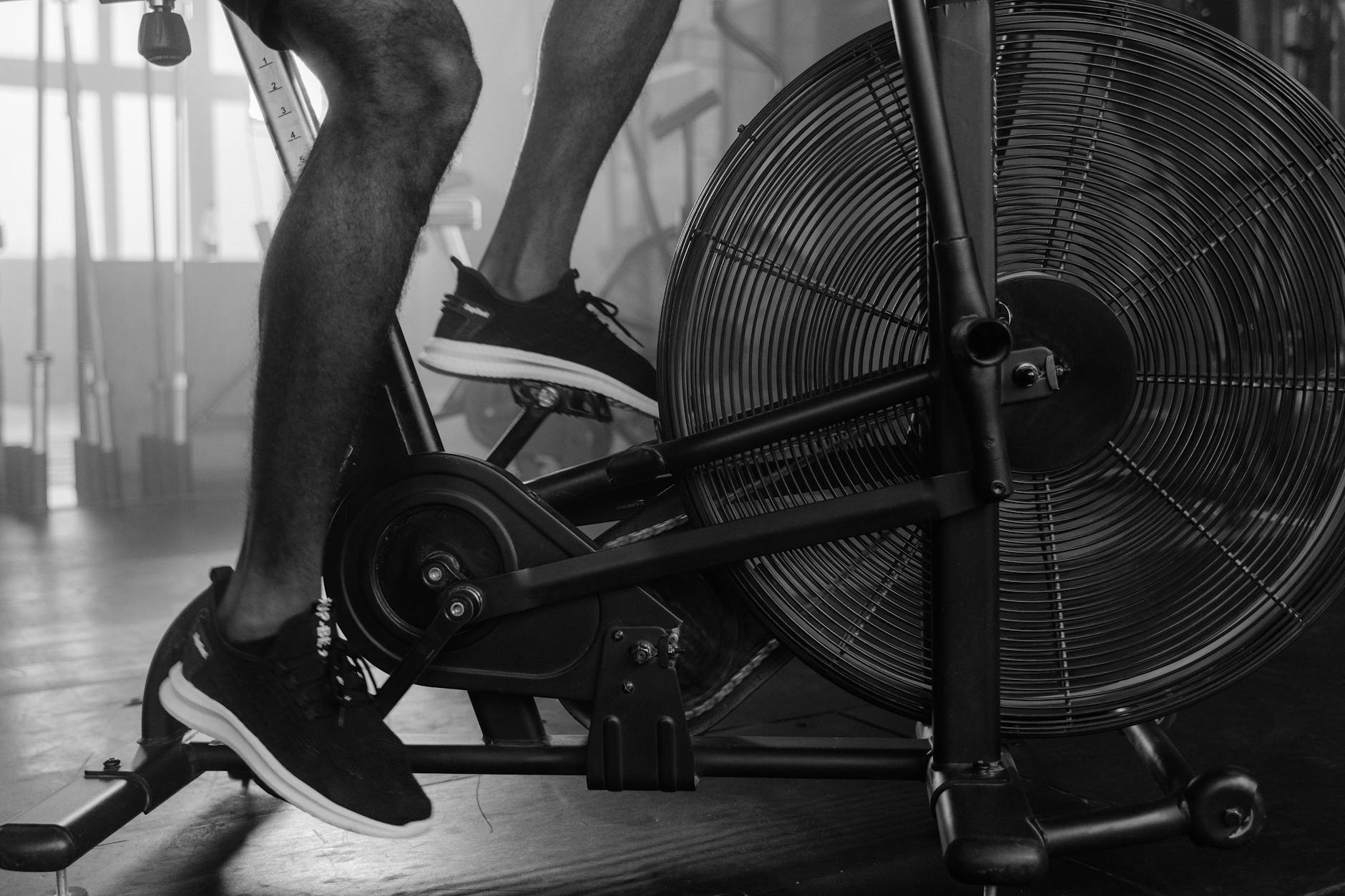
Harvard Health published comparative data showing that a 155-pound person burns approximately 552 calories per hour cycling outdoors at 12-13.9 mph, but only about 504 calories per hour on a stationary bike at the same intensity level. That’s roughly an 8% difference favoring outdoor cycling—meaning indoor cycling is inherently less demanding on your cardiovascular system because you’re not fighting wind resistance or managing uneven terrain. This matters because stationary bike calorie displays often don’t account for this fundamental difference. Many bikes are programmed with generic calorie estimates based on power output, not taking into account that you’re in a controlled environment with constant conditions.
If a bike displays 504 calories and you’re assuming it’s using standard equations, you might think you’ve accomplished the outdoor equivalent—but you may have actually burned less depending on how the algorithm was designed. The limitation here is that different bikes calculate differently, and most consumers don’t know what algorithm their specific machine uses. You might switch between a gym’s bike and your home machine and get wildly different readouts for identical efforts. This unpredictability makes it hard to track progress over time or compare your workout data meaningfully.
What the Research Actually Measures
When researchers study calorie counter accuracy, they use several methods. The gold standard is indirect calorimetry, which measures the amount of oxygen you consume and carbon dioxide you produce to calculate actual energy expenditure. When researchers put cyclists on stationary bikes and measure them this way, they find the bike’s display significantly overestimates calorie burn compared to the measured results. A study in Medicine & Science in Sports & Exercise found that exercise machines overall can be significantly inaccurate, with stationary bikes showing among the better accuracy rates compared to ellipticals but still prone to meaningful errors. Some machines overestimate; others underestimate—but the direction and magnitude varies by manufacturer, by model, and even by individual unit depending on calibration.
A bike that’s been regularly maintained might be 5% off. An older machine that’s never been serviced might be 25% off. The practical implication is that the calorie number on your bike’s display should be treated as a rough estimate rather than a precise measurement. If you’re trying to fuel your workouts accurately or track your overall energy balance for weight management, relying solely on the machine’s number could lead you astray. A 20-30% overestimation compounds quickly across weeks of training.
How to Get More Accurate Calorie Estimates
The most practical solution is to use multiple data points and cross-reference them. If you wear a fitness tracker or smartwatch during your indoor cycling session, compare its calorie estimate to the bike’s number. Most modern wearables use heart rate and movement data to estimate calories, and their algorithms are often more sophisticated than a stationary bike’s. You’ll likely see the wearable reading lower than the bike’s display. If your smartwatch says 450 calories and the bike says 620, the truth is probably somewhere between them—closer to the lower number in most cases. You could also use the bike’s power output (usually displayed in watts) to calculate calories more independently.
The relationship between watts and calorie burn is more direct than resistance and duration. Online calculators can convert watt-hours to calorie estimates, though these still involve assumptions about your efficiency. A 300-watt hour effort burns roughly 1,080 kilojoules, which translates to approximately 258 calories, though individual variation still applies. The trade-off is that more accuracy requires more effort on your part. You’ll be cross-referencing multiple sources, possibly doing manual calculations, and still accepting that precision isn’t possible outside a laboratory setting. Most cyclists find that tracking consistency matters more than absolute accuracy—even if the bike overestimates by 20%, if it overestimates the same way every session, you can still track your improvement and understand whether you’re making progress.
The Heart Rate Problem: Why Your Heart Rate Matters More Than the Machine Thinks
Stationary bikes that incorporate heart rate data into their calorie calculations are better than those that don’t, but they still often overestimate. The reason is that the relationship between heart rate and calorie burn varies enormously between individuals. Your heart rate is influenced by stress, caffeine, sleep quality, humidity, and fitness level. Two people with identical heart rates might be burning calories at very different rates. A critical limitation many cyclists don’t realize: the bikes in most gyms don’t actually measure your heart rate accurately. The handlebar sensors on stationary bikes are notoriously unreliable.
If the sensor misses or misreads your heart rate—which is common if your hands are sweaty, your grip is loose, or you’re moving around—the calorie estimate becomes worse, not better. You’re adding an inaccurate variable to an already simplified algorithm. Wearing a chest-strap heart rate monitor is more reliable, but the bike might not integrate with it. This is why your perceived exertion during the workout is actually more important than chasing the numbers on the display. If you’re working hard, your muscles are engaged, and you’re breathing heavily, you’re burning significant calories regardless of what the display says. The specific number becomes less important than whether you’re consistently challenging yourself.

Indoor Cycling Still Works—Despite the Numbers
Understanding that your bike overestimates calorie burn shouldn’t discourage you from indoor cycling. The exercise itself is excellent regardless of whether the display is perfect. Studies consistently show that stationary cycling improves cardiovascular fitness, builds lower body strength, and burns meaningful energy. You’re still getting the benefit even if the calorie count is inflated.
The key is adjusting your expectations and using the workout metrics differently. Rather than aiming for a specific calorie total, focus on maintaining consistent power output, hitting target heart rate zones, or achieving specific durations of work. These variables matter more for fitness improvement than the absolute calorie number. If you rode for 45 minutes at an average of 250 watts last month, and this month you’re hitting 280 watts for the same duration, you’ve made progress regardless of what the calorie display says.
What This Means for Your Training Going Forward
As equipment manufacturers become more aware of these accuracy issues, some newer machines are improving their algorithms. However, older equipment and budget-friendly bikes will continue to overestimate. The best approach is to stop relying on any single metric and instead use a combination of measures: power output, heart rate, duration, perceived exertion, and even your overall fitness improvements over time.
If you’re training for a cycling event—indoor or outdoor—focus on the physiological adaptations rather than calorie counts. Your cardiovascular system, muscular endurance, and power output are what actually matter for performance. The calorie burn is a byproduct, and chasing an inflated number on a screen is less productive than pushing yourself within appropriate intensity zones and giving your body adequate recovery.
Conclusion
Research confirms that stationary bike displays overestimate calorie burn by 7-30% depending on the machine and study. For a typical 45-minute indoor cycling session that displays 600 calories burned, you might have actually burned 420-558 calories. This gap matters if you’re using calorie numbers to guide nutrition, judge your progress, or claim you’ve earned extra food intake.
The good news is that understanding this limitation is straightforward: treat the number as a rough estimate, cross-reference it with other metrics like power output and heart rate, and focus on consistency and actual fitness improvements rather than chasing perfect calorie accuracy. Your indoor cycling workouts are still effective and valuable. You’re still improving your cardiovascular fitness and building strength regardless of whether the display is slightly inflated. The next time you see that impressive calorie count on your bike, smile at the encouragement, but know that your actual accomplishment is the work you did, not the number the machine generated.