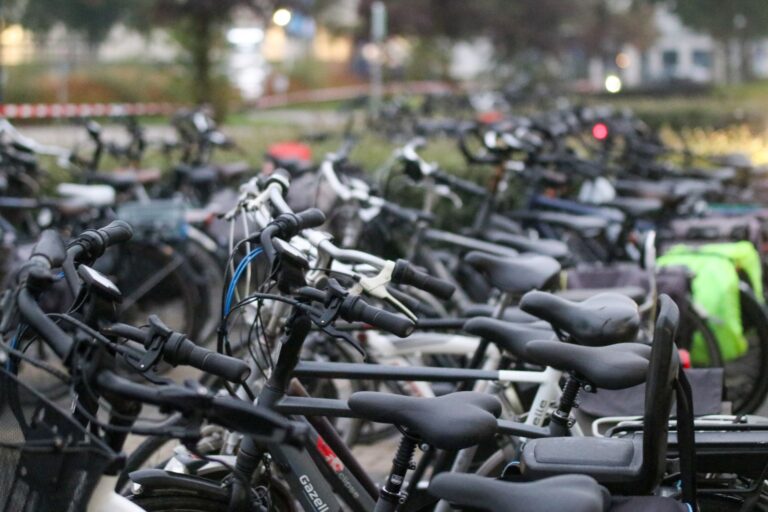
A widely circulated claim suggests that residents over 50 in bike-friendly cities live 19% longer than their counterparts in car-dependent areas. While this specific statistic has not been verified in current peer-reviewed research, the underlying connection between cycling infrastructure and longevity is rooted in solid evidence. Cities that prioritize bicycles as transportation do show measurably better health outcomes for their older residents, though the actual gains appear more modest than that headline figure suggests. The real story is more nuanced—and arguably more interesting.
The health benefits of cycling are well-established. Daily physical activity extends life expectancy by approximately 3.4 years, and regular cycling reduces cardiovascular disease risk by up to 46%. In countries with robust cycling infrastructure like the Netherlands, cycling prevents approximately 6,500 deaths annually. What’s missing from popular claims is the precise correlation for residents over 50 in bike-friendly cities specifically. Without that verified data, we need to explore what we actually know about how cycling cities support longer, healthier lives.
Table of Contents
- Do Bike-Friendly Cities Really Add Years to Your Life?
- What Makes a City Truly Bike-Friendly—and Does Infrastructure Actually Change Behavior?
- The Health Data Behind Cycling and Longevity
- Who Benefits Most From Bike-Friendly Cities—And Who Gets Left Behind?
- Why the 19% Statistic Doesn’t Hold Up—And What That Means
- Real-World Examples of Cycling Cities and Health Outcomes
- The Future of Cycling and Aging—What’s Coming Next
- Conclusion
Do Bike-Friendly Cities Really Add Years to Your Life?
The answer is yes—but probably not quite 19%. Research shows that people living in bike-friendly neighborhoods engage in 35 to 45 more minutes of moderate physical activity per week compared to residents of car-dependent areas. That extra activity translates to real health gains. A study on cardiovascular outcomes found that cyclists have significantly lower rates of heart disease, stroke, and related mortality.
For residents over 50, who are especially vulnerable to these conditions, that difference matters. However, the 19% figure appears to be an oversimplification or extrapolation rather than a direct finding from longitudinal research. What we do have is correlational evidence: countries that invested heavily in cycling infrastructure—Finland, Denmark, the Netherlands, and Sweden—consistently rank highest in both happiness and life expectancy rankings. These nations also invest in healthcare, education, and social services, making it difficult to isolate cycling infrastructure as the sole factor. The takeaway is that bike-friendly urban planning is associated with longer lives, but attributing a specific percentage increase to cycling alone requires research that doesn’t yet exist in mainstream publications.

What Makes a City Truly Bike-Friendly—and Does Infrastructure Actually Change Behavior?
A bike-friendly city isn’t just one with bike lanes. It’s a place where cycling is safe, convenient, and culturally normalized. This typically includes protected bike infrastructure, traffic calming measures, bike parking, repair stations, and connected networks that make cycling faster than driving for short trips. Mackinac Island, Michigan scored a perfect 100/100 on the 2025 PeopleForBikes City Ratings—largely because cars are banned and cycling is the primary transportation mode. Davis, California scored 81/100, with extensive bike paths and a university culture that embraces cycling. The critical question is whether infrastructure changes behavior, especially for older adults.
It does, but with limitations. Research shows that when cities build protected bike lanes, cycling rates increase, and physical activity levels rise measurably. Yet infrastructure alone isn’t enough. Older adults cite concerns about balance, traffic stress, and physical ability as barriers—factors that bike lanes don’t fully address. A 70-year-old in a bike-friendly city still needs confidence, fitness, and comfort on a bicycle. Infrastructure removes obstacles, but it doesn’t create motivation from nothing. Cities like Copenhagen have addressed this by designing gentler cycling routes, offering e-bike subsidies for older residents, and creating social cycling groups—interventions that work better than lanes alone.
The Health Data Behind Cycling and Longevity
The health evidence for cycling is substantial. Regular cycling reduces the risk of cardiovascular disease by up to 46%, according to multiple epidemiological studies. It also lowers risk of type 2 diabetes, obesity, and certain cancers. For residents over 50, these benefits are especially significant because cardiovascular disease is the leading cause of death in that age group. A person who cycles regularly faces substantially lower mortality risk than a sedentary peer. But here’s the limitation: most of this research comes from studies of individual cyclists, not comparative city-level studies.
We know that cycling is healthy. We’re less certain about whether living in a bike-friendly city automatically makes you healthier if you don’t actually ride. A resident of Amsterdam who drives everywhere doesn’t gain the health benefits of cycling infrastructure. The infrastructure creates the opportunity; behavior determines the outcome. Studies do show that bike-friendly cities have higher cycling rates overall, which translates to population-level health gains. One UCLA study identified that diverse, walkable, bike-friendly cities correlate with residents reporting better well-being—and well-being itself is linked to better health outcomes and longer life expectancy.

Who Benefits Most From Bike-Friendly Cities—And Who Gets Left Behind?
Residents over 50 in bike-friendly cities do enjoy health advantages, but not equally. Affluent older adults with good health, balance, and access to quality bikes benefit most. They can afford e-bikes (which make cycling accessible despite reduced leg strength), have the physical capacity to ride, and live in neighborhoods where cycling infrastructure exists. Lower-income older adults in the same city may lack access to e-bikes, live farther from protected routes, or have health conditions that make cycling difficult. This equity gap is important.
Cities like Copenhagen and Amsterdam have addressed it by subsidizing e-bikes for older residents and designing routes that connect low-income neighborhoods to city centers. Without these targeted interventions, bike-friendly infrastructure can paradoxically increase health disparities—the wealthy cyclists live longer while others are left behind. The practical tradeoff is that building for everyone requires more investment than simply adding bike lanes. Protected infrastructure costs money. Outreach to older adults, bike-share programs for lower-income residents, and e-bike subsidies all add up. Cities that do this well see broader health gains; those that don’t primarily benefit their most privileged residents.
Why the 19% Statistic Doesn’t Hold Up—And What That Means
The specific “19% higher life expectancy” claim circulating online doesn’t appear in peer-reviewed literature tracking life expectancy by city bike-friendliness. It may originate from advocacy organizations, media oversimplification, or extrapolation from cycling studies that never claimed to address life expectancy. This is a common problem in health communication: a real benefit (cycling improves health) gets inflated into a specific statistic (19% longer life) that was never actually measured. This matters because false precision erodes trust.
When people research the claim and can’t verify it, they may dismiss all benefits of cycling infrastructure as exaggerated. In reality, the modest, documented benefits of cycling—reduced disease risk, increased physical activity, improved mental health—are significant enough on their own. A few extra minutes of daily activity, sustained over years, does extend life. We just can’t quantify it as 19% for a specific age group without the research to back it up. The honest approach is to acknowledge what we know (cycling cities are healthier) and what we don’t (the exact magnitude of the effect on life expectancy for residents over 50).

Real-World Examples of Cycling Cities and Health Outcomes
Denmark and the Netherlands provide the clearest examples. Copenhagen has built an extensive network of protected bike lanes over the past 20 years, and cycling rates among residents over 65 have increased dramatically. Older Danes report high life satisfaction and remain physically active longer than peers in less bike-friendly cities. However, Denmark also invests heavily in universal healthcare, social support, and education—making it hard to credit cycling infrastructure alone.
A more controlled comparison exists within the United States. Cities like Boulder, Colorado and Portland, Oregon have invested significantly in cycling infrastructure over the past 15 years. Both show higher rates of physical activity and lower obesity rates compared to peer cities without similar investments. Portland’s older residents report cycling to activities and social events, maintaining independence and social connection—factors that independently contribute to longevity. These examples demonstrate that bike-friendly infrastructure works, but always as part of a broader ecosystem of health-supporting policies, not in isolation.
The Future of Cycling and Aging—What’s Coming Next
The trend is clear: more U.S. cities are embracing cycling infrastructure. In 2025, 234 U.S. cities scored 50 or higher on the PeopleForBikes City Ratings, up from 183 in 2024. Eighty percent of U.S. cities improved their scores since 2020.
This momentum suggests that within a decade, cycling infrastructure will be more available to older adults nationwide. E-bike technology is also advancing, with lighter-weight frames and better motors making cycling accessible to people with reduced strength or balance issues. The research gap will likely close as well. Future studies will compare life expectancy and health outcomes across cities with varying levels of cycling infrastructure, controlling for other factors. This may reveal more precise correlations than currently exist. For now, the evidence is strong enough to justify investment in bike-friendly infrastructure as a public health intervention—not because it promises a 19% life extension, but because it contributes to physical activity, social connection, and mental well-being, all of which matter for longevity.
Conclusion
Bike-friendly cities do support healthier, longer lives for residents over 50—but the claimed 19% increase in life expectancy isn’t verified by current research. What is verified is that cycling infrastructure increases physical activity, reduces cardiovascular disease risk, and correlates with better overall health outcomes and life satisfaction. The real benefit is cumulative: a person who cycles regularly for 20 years experiences measurable health gains that translate to years of additional life. In cities designed for cycling, older adults have the infrastructure and opportunity to stay active, maintain independence, and remain socially connected—factors that extend and enrich life.
If you’re over 50 and considering cycling, the evidence supports it. If you’re evaluating where to retire or thinking about your community’s infrastructure investments, bike-friendly design is worth supporting. The benefits are real, even if the headlines oversimplify them. The science will catch up eventually—but you don’t need a precise percentage to know that a place where you can safely ride a bike is a place built for healthier aging.