To inspect a flat-bar road bike before buying, work through frame, wheels, drivetrain, brakes, and fit in order. Look for straight alignment, smooth bearings, clean shifts, even braking, and a position you can hold comfortably. A flat-bar road bike is a road bike with a straight handlebar instead of drop bars. It uses narrow 700c wheels and road gearing, but offers a more upright posture and simpler controls.
Table of Contents
- Is the frame straight and sound?
- Are the wheels true and ready for the road?
- Does the drivetrain run clean?
- Do the brakes stop evenly?
- Does the fit match your riding?
Is the frame straight and sound?
Sight down the top tube and fork from the front for bends, dents, or twists. Check welds and joints for cracks, flaking paint, or bulges that signal impact damage. Pay close attention around the head tube, bottom bracket, and rear dropouts, where stress concentrates.
Hold the front brake and rock the bike forward and back. Any knock or play points to a loose headset, meaning the bearing that lets the fork steer. Lift each end and sight the wheels in line with the frame to catch a bent fork or rear triangle.
Are the wheels true and ready for the road?
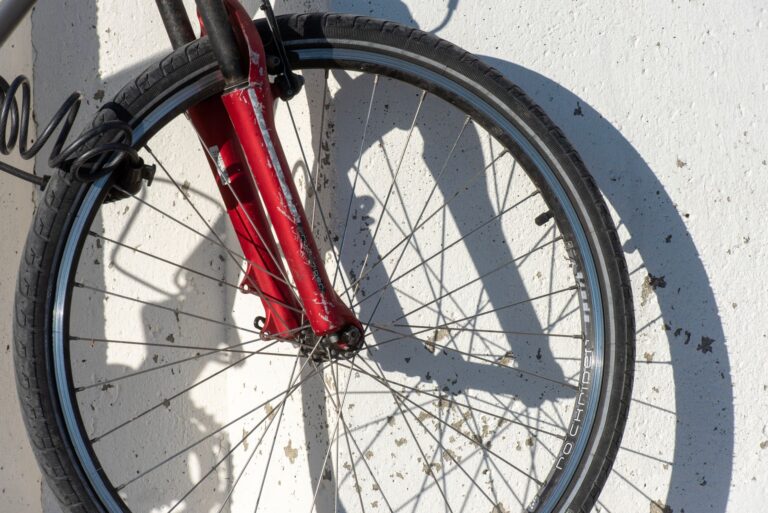
Spin each wheel and watch the rim gap at the brake pads or fork. A side-to-side wobble over a few millimeters, a hop, or a rubbing spot means the wheel needs truing. Squeeze pairs of spokes across the wheel; loose, bent, or missing spokes weaken the whole wheel.
Feel the hub bearings by spinning the wheel with the bike lifted. Grinding, ticking, or early stopping suggests worn bearings or dry grease. Inspect tires for cuts, dry sidewalls, and squared-off tread, and check that quick-releases or thru-axles close firmly and seat fully.
- Rims without deep scratches, cracks at spoke holes, or brake-track grooves
- Tires seated evenly, inflated, with working valves
- Axles tight, with no side play at the hub
Does the drivetrain run clean?
The drivetrain is the chain, chainrings, cassette, and derailleurs that drive and shift the bike. Pedal by hand and shift through every rear cog, then every front ring. Each shift should engage quickly without skipping, rattling, or throwing the chain.
Look at chainring and cassette teeth for sharp, hooked, or broken points. Check the chain for rust, stiff links, and stretch by pulling it away from the front ring; visible daylight means heavy wear. Also confirm the derailleur hanger is straight and the jockey wheels spin freely.
Do the brakes stop evenly?
Identify the brake type: rim brakes squeeze the wheel rim, while mechanical or hydraulic disc brakes squeeze a rotor at the hub. Check rim pads for wear grooves and even contact, or disc pads for thickness and rotors for bends, scoring, and oil contamination.
Squeeze each lever separately while walking beside the bike. Levers should engage firmly before reaching the bar and return quickly when released. Listen for rubbing, squealing, or pulsing, and look for frayed cables, kinked housing, or leaking fluid at calipers and levers.
- Front brake holds the bike with the wheel locked
- Rear brake slows smoothly without grabbing
- Both wheels spin free after you release the levers
Does the fit match your riding?
Set saddle height so your heel rests on the pedal with your leg straight while seated. When you place the ball of your foot on the pedal, you should have a slight knee bend at the bottom. Check reach to the bar: shoulders relaxed, elbows slightly bent, without stretching or crowding.
Take a short test ride in all hand positions you will use. Note pressure in hands, neck, knees, or lower back after a few minutes. Small swaps like stem length, bar width, or saddle fore-aft can fine-tune reach, so ask what parts can change before you buy.