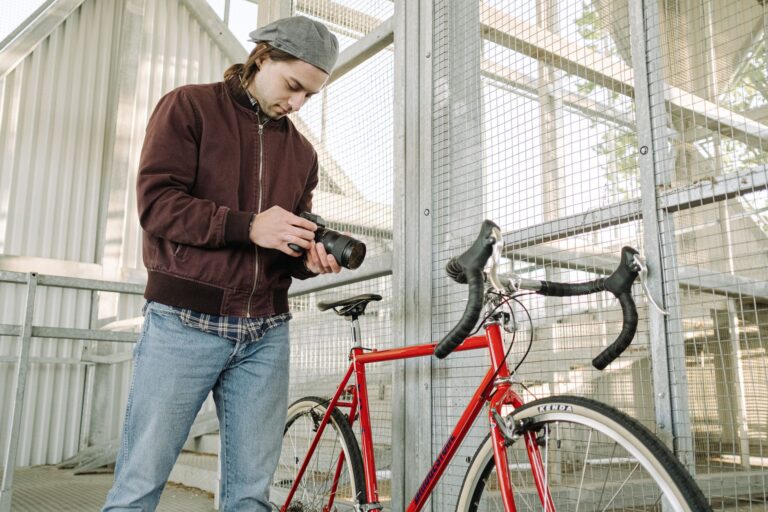
To inspect a step-through city bike before buying, check the frame for damage, spin the wheels for wobble, pedal and shift through all gears, squeeze both brakes hard, then confirm you can mount and reach the bars with ease. A step-through city bike is a town bike with a low top tube that lets you step forward through the frame instead of swinging a leg over. Walk around the bike in good light and touch each part as you check it. Small flaws like loose bolts or dry chains are easy to fix, while bent frames, cracked welds, or buckled wheels are reasons to walk away.
Table of Contents
- Is the frame sound and easy to mount?
- Are the wheels straight and secure?
- Does the drivetrain pedal and shift cleanly?
- Do the brakes stop evenly and predictably?
- Does the riding position fit your daily use?
Is the frame sound and easy to mount?
Stand beside the bike and look along the low top tube, down tube, and rear stays for bends, dents, or flaking paint. Pay close attention to welds around the head tube, bottom bracket, and seat cluster, where stress collects. Lift the front wheel a few inches and set it down gently to listen for rattles from a loose headset or fork.
Step through the frame in the shoes and clothes you will ride in. You should plant both feet flat while straddling the low tube with room to spare. Check that the seatpost and stem move and clamp firmly, and that fender and rack mounts line up without forcing.
- Cracked paint in a sharp line, rippled metal, or rust bubbling under paint
- Fork blades that curve unevenly or point off-center
- Seatpost stuck, cracked, or extended past its safety mark
Are the wheels straight and secure?
Spin each wheel and watch the rim pass the brake pads or fender edge. A true wheel spins without side-to-side sway or up-and-down hops. Squeeze pairs of spokes to feel for even tension, and look for broken, bent, or badly rusted spokes.
Check the axle fixings and tires while the wheel is still. Quick-release levers should close with firm pressure and point back, and axle nuts should show no stripped edges. Look for dry sidewalls, deep cuts, flat spots, or tread worn smooth in the center.
Does the drivetrain pedal and shift cleanly?
Turn the pedals forward by hand and watch the chain move through the gears. Links should bend smoothly without stiff jumps, heavy rust, or black grit buildup. Lift the rear wheel, pedal, and click through every gear while watching for skips, hesitation, or chain rub.
Rock each crank arm side to side to feel for play in the bottom bracket. Wiggle the pedals on their spindles and spin them to catch grinding bearings. A quiet, responsive shift under light load points to cables and derailleurs that are adjusted and ready for city stops and starts.
Do the brakes stop evenly and predictably?
Squeeze each brake lever separately while standing beside the bike. Pads should meet the rim or rotor at the same time on both sides, without the lever touching the handlebar. Look at pad wear grooves and alignment, and listen for scraping or squealing that signals contamination or a bent rotor.
Push the bike forward and brake hard with the front, then the rear, then both together. The bike should stop in a straight line without shudder in the fork or chatter at the lever. Check that cables slide freely, housings have no splits, and hydraulic lines show no leaks or soft spots.
Does the riding position fit your daily use?
Set the saddle so your knee keeps a slight bend at the bottom of the pedal stroke. Raise or lower the bars so your back, neck, and shoulders feel relaxed with elbows slightly bent.
A city fit favors an upright posture that lets you see traffic and place a foot down fast. Take a short test ride with several starts, stops, and turns: Ask the seller to set saddle height and bar angle before the ride, then loop around the block and use the gears and brakes the way you would between lights.
- Mount and dismount without catching clothing
- Ride no-hands briefly in a safe space to sense pulling to one side
- Shift to the easiest and hardest gears under gentle pressure
- Brake from normal speed with one finger or two, as the levers allow