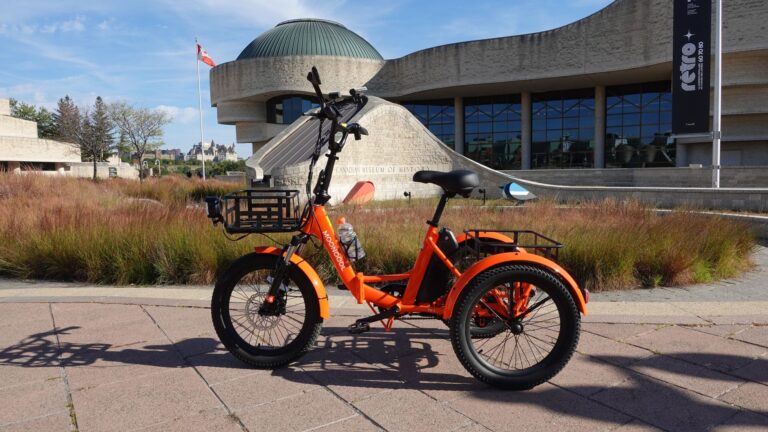
To inspect a front-loader cargo bike before buying, check the frame and steering linkage for cracks and play, spin both wheels for straightness and even spoke tension, shift through every gear, brake hard from speed, and ride it loaded to confirm fit and steering control. A front-loader, often called a box bike, carries children or goods in a low box or platform ahead of the rider, between the handlebar and the front wheel. That layout gives stable handling with heavy loads but adds linkage, cables, and structure you do not find on a regular bike. Work through the bike in the same order every time so you miss nothing.
Table of Contents
- What to check on the frame and box?
- Are the wheels and tires ready for weight?
- Will the gears handle hills with a load?
- Can the brakes stop a heavy bike safely?
- Does the fit work loaded and unloaded?
What to check on the frame and box?
Look at welds, joints, and the area under and behind the cargo box. Look for cracked paint, rust bubbles, dents, or flaking that can signal a bent or fatigued tube. Push down on the box and twist the handlebar gently while holding the front wheel still; excess movement points to worn steering bearings or loose linkage.
Check how the box mounts to the frame and whether bolts, rails, and seat benches sit tight. Lift removable panels and look for soft wood, split boards, or corroded fasteners. Water often collects at drain holes and mounting points, so damp or swollen material there needs repair.
- Walk away or budget for repair if you see a cracked weld, a bent down tube, frozen steering bearings, or a loose box mount
- Ask for a test ride only after these parts feel solid by hand
Are the wheels and tires ready for weight?
Spin each wheel and watch the rim pass the brake pads or frame. A side-to-side wobble wider than a few millimeters, loose or uneven spokes, or a dull thud from one section suggests a weak wheel. Squeeze pairs of spokes around each wheel; they should feel evenly tight, not slack in one area. Look at tire size, tread, and sidewalls.
Cargo bikes use wide, puncture-resistant tires for stability and load support, and the rear tire often wears faster because it carries drive force. Check for flat spots, cuts, bulging, or worn tread indicators, and confirm the valves accept your pump. Sit on the bike and bounce lightly to load the wheels. Creaks, pings, or a wheel that shifts in the dropouts point to loose axles or worn hub bearings.
Will the gears handle hills with a load?
Shift through all gears on flat ground, then up a short rise if possible. Each shift should engage promptly without skipping, grinding, or chain drop. Watch the chain from above while pedaling; heavy side wear, stiff links, or sag suggest a worn chain and cassette. Low gears matter more on a front-loader than on a solo bike.
Try starting from a stop in a low gear with added weight, such as a second rider standing nearby or sandbags in the box. If you must stand and strain to start on mild ground, the gearing may be too tall for school runs or grocery trips. Check shift cables along the long frame run for fraying, kinks, or cracked housing. On hub gears, pause and pedal lightly during shifts; on derailleurs, keep pedaling smoothly and avoid shifting under full force.
Can the brakes stop a heavy bike safely?
Cargo bikes need strong brakes because total weight can easily double with children and goods. Squeeze each lever separately; it should feel firm well before touching the bar. Spongy travel, a lever that pulls to the grip, or uneven power between wheels needs service.
Roll at walking speed, then at riding speed in a clear area, and stop with the front brake, rear brake, and both together. The bike should slow in a straight line without squeal, shudder, or a pulsing lever. Look at pads and rotors or rims: pads should have life left, rotors should run straight without deep scoring, and rim walls should feel flat rather than concave.
- Test the parking brake or lock, if fitted, on a slight slope with load
- Confirm brake cables or hoses route cleanly around the steering linkage without pinching at full turn
Does the fit work loaded and unloaded?
Set saddle height so your leg has a slight bend at the bottom of the pedal stroke, then check reach to the bar. You should steer through a full turn without your knees hitting the box and without stretched arms. Short and tall riders often need different stem or saddle positions on the same box bike.
Ride unloaded first, then add weight similar to your usual load. Steering will feel slower and stopping distances will grow; that is normal, but wandering, harsh pulling to one side, or inability to make a tight turn signals poor setup. Practice lifting the loaded bike off its stand, starting, and parking before you decide. Bring your usual child seat, lock, and bag to the viewing to check box space and mounting points.