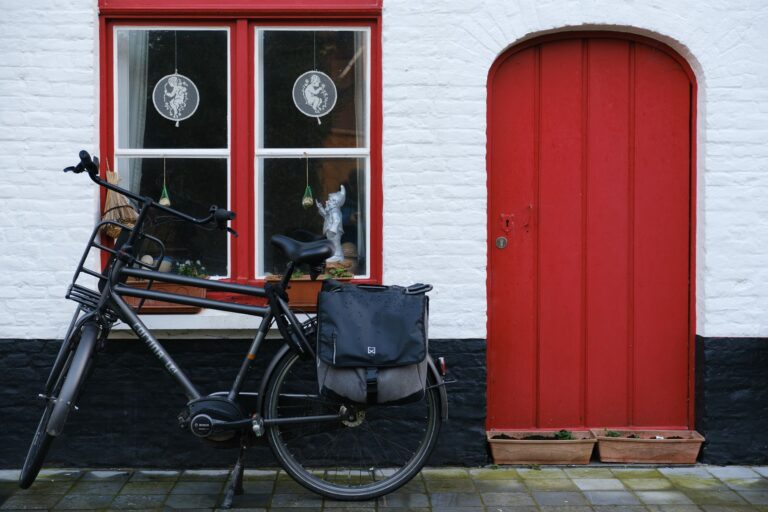
A flat-bar road bike is a road-style bike with straight handlebars that keep the rider upright. Owning one well means setting saddle position and tire pressure, keeping the chain and disc brakes serviced, picking tires and contact points for upgrades, and accepting comfort and control in exchange for some speed. That upright position suits commuting, fitness riding, and shorter leisure rides. The steps below focus on practical setup and ownership choices for those uses.
Table of Contents
- How do you set up fit and tire pressure?
- What maintenance keeps it reliable?
- Which upgrades pay off first?
- What are the tradeoffs against drop bars?
How do you set up fit and tire pressure?
Start with saddle height near inseam x 0.893 and 1–2 inches of standover clearance on road frames. RoadCyclingUK, reporting on Trek fit guidance, describes that starting point with later changes to reach and saddle fore-aft for knee comfort and power starting point for saddle height. Make small changes and test them on normal rides.
Set pressure by total system weight, measured tire width, and road surface, not the sidewall maximum. BikeRadar advises this method and gives about 58 psi front and 61 psi rear for a 65 kg rider on 28mm tubeless tires on rough wet roads tire pressure advice for road bikes. Check pressure weekly because small tires lose air quickly.
- Measure inseam, set saddle height, then check standover clearance
- Adjust saddle fore-aft until pedaling feels smooth through the knees
- Set front pressure slightly lower than rear for grip and comfort
What maintenance keeps it reliable?
Clean and lubricate the chain about every 100–200 miles or after wet or dirty rides. Park Tool guidance, shared through a dealer guide, recommends wiping the outside clean to limit dirt pickup, then replacing 11–12-speed chains at 0.5% wear and 5–10-speed chains at 0.75% wear chain wear indicator guidance. A worn chain wears the cassette faster and shifts worse.
Hydraulic disc brakes need periodic bleeds and clean fluid handling. SRAM describes bleeding through a bottom-caliper Bleeding Edge port so fluid fills upward, with fluid kept off pads. Shimano pads swap after wheel removal and caliper retaining-bolt removal. Keep rotors clean and bed in new pads with repeated firm stops.
Which upgrades pay off first?
Wider tubeless tires bring comfort, grip, and fewer flats on rough roads. Giant notes through dealers that some Escape models accept up to 45mm tires, while SILCA impedance research explains why wider tires can lower rolling resistance on real surfaces. Check frame and fork clearance before buying larger tires.
Next, match saddle, grips, and brake pads to your hands, position, and braking needs. Change the drivetrain only after tires and contact points feel right. A professional fit check can prevent buying parts that fix the wrong discomfort.
- Tires: wider tubeless tires within frame clearance
- Contact points: saddle shape, grip diameter and padding
- Braking: pads matched to rims or rotors and riding conditions
What are the tradeoffs against drop bars?
Flat bars hold the rider more upright, reducing back, neck, and wrist strain. Elite Wheels reports that this position gives a firmer grip for urban braking and low-speed control, but adds aerodynamic drag compared with drop bars. Shorter and slower rides feel easier; fast group rides take more effort.
Drop bars offer several hand positions and a narrower tuck for long or fast rides. A Gumtree UK guide notes that flat bars have one main grip, simpler cables, and often lower cost, suiting commutes and leisure rides. Purpose-built flat-bar frames lengthen the top tube because drop hoods sit well forward of the stem while flat-bar grips sit at or behind it, so converting a drop-bar bike needs stem, shifter, brake, and fit checks.