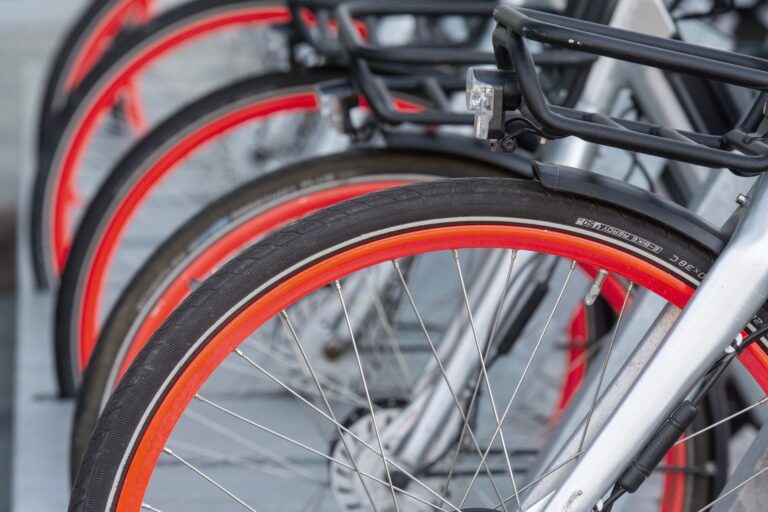
For fall commuting, check your brakes, tires, drivetrain, lights, and fenders before wet weather and shorter days arrive. Repeat quick safety checks weekly, then clean and lubricate the bike after especially dirty rides. Rain reduces traction, road grit accelerates wear, and darkness makes small equipment problems more serious. A few targeted checks can prevent most seasonal breakdowns without requiring a complete overhaul.
Table of Contents
- Start with tires and wheels
- Make sure the bike can stop in rain
- Clean and lubricate the drivetrain
- Prepare lights and visibility equipment
- Control spray, corrosion, and roadside failures
- Use a simple fall inspection schedule
Start with tires and wheels
inspect each tire for cuts, embedded glass, exposed casing, and badly flattened tread. Replace a tire if the casing shows, the sidewall bulges, or cuts expose internal threads. Use the pressure range printed on the tire as a boundary, not an automatic target.
A slightly lower pressure than your dry-road setting may improve wet grip, but excessive pressure reduction can cause rim strikes, unstable handling, or pinch flats. Spin each wheel and watch the gap beside the brake pads or frame. A significant side-to-side wobble, loose spoke, or rough hub bearing deserves attention before regular commuting.
Make sure the bike can stop in rain
Wet rim brakes often take longer to bite because the pads must clear water from the rim. Disc brakes usually handle rain better, but contaminated or worn pads can still lose power.
Check the following before the season changes: Replace pads when they reach the manufacturer's wear limit. Seek a mechanic's help if braking feels weak, a hydraulic lever pulls unusually close to the bar, or cables are frayed or corroded.
- Confirm that each brake lever becomes firm before touching the handlebar.
- Inspect pads for wear, glazing, cracks, and uneven contact.
- Clean rim-brake tracks with a clean cloth and suitable cleaner.
- Keep lubricants away from disc rotors, pads, rims, and braking surfaces.
- Test both brakes at low speed after any cleaning or adjustment.
Clean and lubricate the drivetrain
Water and road grit form an abrasive paste on the chain, cassette, and chainrings. Wipe the chain regularly rather than waiting for shifting to become noisy or rough. After a wet ride, dry the chain with a rag and apply bicycle chain lubricant according to its instructions.
Let it reach the chain's rollers, then wipe away the excess; a wet-looking outer surface attracts more dirt. A wet-condition lubricant generally lasts longer in rain but collects grime more readily. A lighter lubricant stays cleaner yet may need more frequent application, so choose based on ride conditions and cleaning habits.
Prepare lights and visibility equipment
Use a white front light and red rear light whenever visibility is poor, including rain, dusk, and shaded routes. Check local rules because required brightness, mounting positions, and reflector equipment vary. Charge batteries before they run critically low, and carry backup lights if a failed unit would leave you riding in darkness.
Confirm that mounts hold the beam steady over bumps and that bags or clothing do not block the rear light. Aim the headlight low enough to illuminate the road without dazzling approaching riders or drivers. Clean lenses and reflectors because dried spray can reduce their useful output.
Control spray, corrosion, and roadside failures
full-length fenders reduce water and grit reaching the rider, drivetrain, and nearby cyclists. Ensure each fender clears the tire and cannot shift into the wheel; rattling, rubbing, or loose stays require correction. Check exposed bolts, cable housings, pedals, and racks for corrosion or looseness.
Do not spray penetrating oil across the bike, since overspray can contaminate brakes and some products are unsuitable for bearings or finishes. Carry supplies matched to your bicycle: Practice removing the wheels at home, especially if the bike uses axle hardware or internal gearing. Discovering that a tool does not fit is safer in a dry room than beside a dark road.
- A compatible spare tube or tubeless repair plugs
- Tire levers and a working pump
- A correctly sized multitool
- A patch kit as a secondary option
- A phone, payment method, or transit plan for failures you cannot repair
Use a simple fall inspection schedule
Before each ride, squeeze both brakes, press the tires, confirm that the wheels are secure, and test the lights. This takes less effort than diagnosing a problem during a commute. Once a week, inspect tire damage, wipe the chain, check pad wear, and tighten loose accessories.
After heavy rain or gritty roads, clean the bike sooner and listen for new scraping, clicking, or grinding sounds. Book professional service if the bike has persistent shifting problems, wheel play, damaged spokes, headset looseness, or braking faults you cannot confidently correct. Stop riding if a tire bulges, a wheel is insecure, the frame appears cracked, or either brake cannot stop the bike reliably.