A flat-bar road bike is a road-style bike with a straight handlebar instead of curved drop bars. The best options for road speed combine a light, stiff frame with fast-rolling tires, wide-range gears, and strong brakes. This style suits riders who want road pace with a more upright head position and simple brake access. It gives up some aerodynamic tuck, so fit and tire choice matter more for holding speed.
Table of Contents
- What makes a flat-bar bike fast?
- How does upright control change the ride?
- Which parts should you compare side by side?
- How do you dial in fit?
- When is a drop-bar bike the better pick?
What makes a flat-bar bike fast?
A fast frame holds its line when you push hard and still absorbs road buzz. Look for a rigid fork, tight rear triangle, and mounts only for what you will actually carry.
Wheels and tires set much of the pace. Narrower smooth tires roll faster on pavement, while wider tires add grip and comfort at a small speed cost. Choose a wheelset that stays true and spins freely under load.
How does upright control change the ride?
A straight bar puts your hands wide and your chest open. Steering feels direct at low and middle speeds, and traffic and road hazards are easier to see.
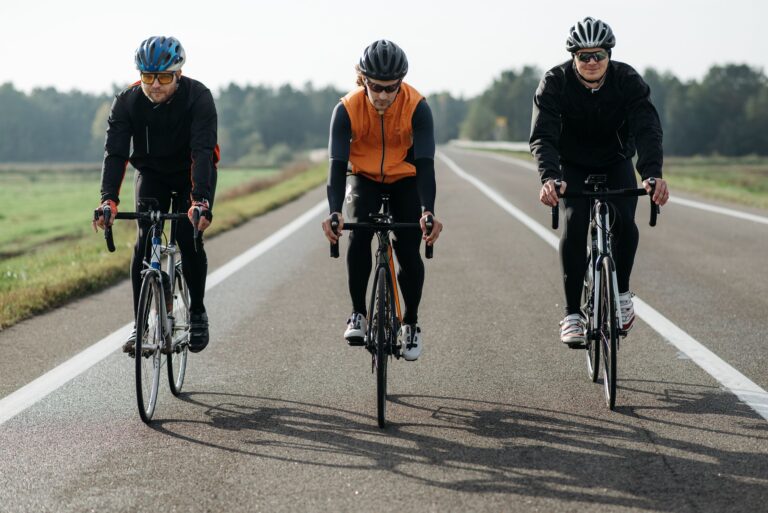
The tradeoff is wind exposure. At higher speeds your body catches more air than in a low drop-bar tuck. Riders who often chase fast groups may feel that limit on descents and headwinds.
Which parts should you compare side by side?
Focus on parts that affect speed, stopping, and daily use. Gearing means the set of chainrings and rear cogs that set easy and hard pedaling limits.
Braking power matters because faster riding needs shorter, controlled stops. A 1x drivetrain, meaning one front chainring, is simpler and often lighter. A 2x drivetrain, meaning two front chainrings, gives closer steps between gears for holding cadence.
- Frame material and fork stiffness for power transfer and comfort
- Gear range for climbs, flats, and loaded starts
- Tire width, puncture layer, and wheel weight
- Hydraulic disc brakes for steady stopping in rain
- Mounts, clearance, and pedal style for your routes
How do you dial in fit?
Start with frame size, then adjust touch points. Reach is the forward distance to the bar, and stack is the vertical height of the front end. A shorter reach and higher stack create a more upright posture.
Set saddle height so your knee keeps a slight bend at the bottom of the stroke. Check bar width, grip shape, and brake-lever reach so you can brake with one or two fingers. Small stem or spacer changes can fix numb hands or sore shoulders.
When is a drop-bar bike the better pick?
Choose drop bars if you often ride fast in wind, join pace lines, or want multiple hand spots on long rides. The lower hooks and hoods give a narrower shape for sustained effort.
Stay with flat bars if upright vision, easy controls, and comfort keep you riding more often. Pick the bike that matches your main roads, then upgrade tires and fit first.