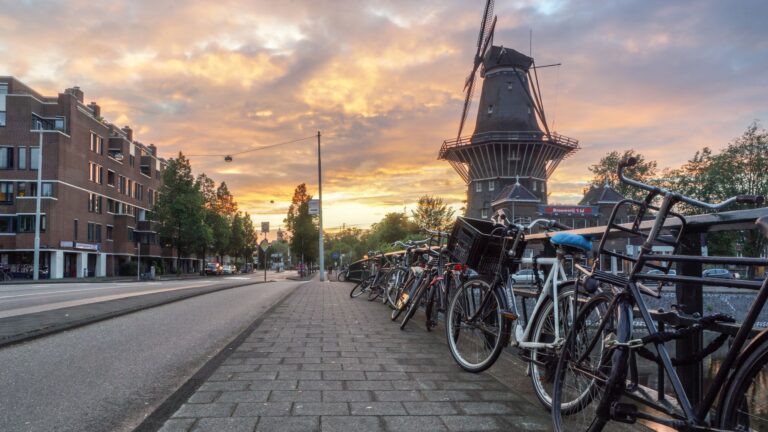
The best Dutch city bikes for upright everyday transportation combine a relaxed riding position, practical equipment, and handling that feels stable at ordinary speeds. Cyclists should compare fit, frame design, gearing, braking, cargo capacity, and the conditions they ride in most often. A Dutch city bike is a utility-focused bicycle built for short, frequent trips in everyday clothes. Its design favors comfort, visibility, and carrying usefulness over low weight or high-speed performance.
Table of Contents
- Start with the upright riding position
- Pick gearing for your terrain
- Compare brakes, tires, and ride stability
- Treat carrying capacity as a core feature
- Match maintenance needs to your routine
- Frequently Asked Questions
Start with the upright riding position
Choose a frame and handlebar setup that lets you sit naturally upright without locking your elbows or reaching far forward. This position reduces strain on the neck, wrists, and lower back for many riders, and it makes it easier to look over traffic. Step-through frames are especially practical for riders who make frequent stops, wear restrictive clothing, carry a child seat, or prefer an easier mount and dismount.
A traditional diamond frame can feel stiffer under hard pedaling, but that benefit matters less on calm city rides. Test fit before comparing components. Check that you can put a foot down confidently at a stop and that the bars do not force you to lean heavily onto your hands.
Pick gearing for your terrain
A single-speed city bike suits flat routes, short trips, and riders who want minimal maintenance. It is simple and clean, but a loaded basket or a steady hill can quickly make one gear limiting. Internal hub gears are a strong everyday option because the mechanism sits inside the rear hub.
They let riders shift while stopped, which helps at lights, and they generally cope well with routine urban use. Derailleur gears offer a wider range and can be easier to service in some areas. They need more regular cleaning and adjustment, especially if the bike is parked outside or ridden through wet, gritty streets.
- Flat city with light loads: single-speed or a small-range hub gear
- Rolling terrain or frequent cargo: wider-range hub or derailleur gearing
- Steep hills: prioritize a low climbing gear over the number of gears
Compare brakes, tires, and ride stability
Reliable braking matters more than a racing-bike feel on an everyday transport bike. Rim brakes are common and straightforward, while disc brakes usually provide more consistent braking in rain and with heavier loads. Look for wider tires with enough air volume to soften broken pavement, curb cuts, and cobblestones.
Very narrow, high-pressure tires may feel quick, but they can make an upright commuter bike harsh and less composed on rough streets. A longer wheelbase and a slightly heavier frame can make a city bike feel steadier when carrying groceries or riding with panniers. The tradeoff is slower acceleration and more effort when lifting the bike upstairs.
Treat carrying capacity as a core feature
For daily transportation, a rack, fenders, chain guard, lights, and a stand are not accessories after the fact; they determine whether the bike works for real errands. A rear rack with panniers keeps weight low and avoids the steering wobble that can come from overloading a front basket. A front rack or basket is useful for small, visible items such as a bag, lock, or light grocery load.
It should attach securely to the frame or fork rather than hanging solely from the handlebars. Full fenders help keep water and road grime off clothes. A chain case or guard also makes an upright city bike more compatible with trousers, skirts, and longer coats.
Match maintenance needs to your routine
A fully equipped city bike often weighs more than a stripped-down commuter. That is worthwhile when it eliminates the need to wear a backpack, carry rain gear separately, or change clothes after a wet ride. If the bike will live outdoors, favor rust-resistant hardware, enclosed gearing where appropriate, durable tires, and a simple lighting system.
Check that replacement tubes, tires, brake pads, and drivetrain parts are easy to obtain locally. Plan for security before buying. A heavy city bike can be an excellent transport tool, but its utility drops sharply if you cannot lock the frame and wheels securely where you park.
Frequently Asked Questions
Are Dutch city bikes good for longer commutes?
They can be, particularly on flatter routes, but their upright position and heavier equipment favor comfort and practicality over speed. Riders covering longer distances may prefer a lighter hybrid with similar upright bars.
Do I need suspension on a city bike?
Usually not. Wider tires at sensible pressure often provide enough comfort with less weight and maintenance. Suspension can help on consistently rough surfaces, but it adds complexity.
Is a front basket or rear pannier better?
Use a front basket for light items you want within view. Use rear panniers for heavier groceries, work gear, or regular loads because they affect steering less.
You Might Also Like
- Best Single-Speed Bikes for Low-Maintenance City Riding: What Cyclists Should Compare
- Best Fixed-Gear Bikes for Simple Urban Riding and Track Practice: What Cyclists Should Compare
- E-bike battery recycling pathways, transport rules, and second-life uses: What Manufacturers, Shops, and Cyclists Should Compare