According to recent data, at least 62% of American adults haven’t ridden a bicycle in over five years—a staggering statistic that reveals how dramatically cycling participation has declined across the country. For millions of people, the bike that once represented freedom and transportation in childhood has been relegated to the garage or sold off entirely. This isn’t a trivial shift in recreational preferences; it reflects fundamental changes in how Americans move through their communities, spend their leisure time, and approach physical activity. The reasons behind this decline are complex and interconnected. A 45-year-old accountant from suburban Ohio might cite the demands of work and family as reasons she hasn’t cycled since college.
A delivery driver in Phoenix might point to the extreme heat and lack of protected bike lanes. A parent in a sprawling suburb might simply lack safe routes to anywhere worth riding. What ties these stories together is a convergence of lifestyle changes, urban design patterns, and infrastructure gaps that have pushed cycling to the margins of American life. This statistic becomes even more meaningful when you consider what those five years represent. For many people, it’s an entire generation of childhood—kids who might have learned to ride from their parents never getting that chance. It’s a period of missed exercise, missed commuting options, and missed opportunities to connect with communities through a humble two-wheeled machine.
Table of Contents
- Why Haven’t American Adults Ridden Bikes in Over Five Years?
- How Car-Centric Infrastructure Shapes Cycling Decline
- Age, Gender, and the Demographics of Cycling Decline
- The Challenge of Returning to Cycling After Years Away
- Safety Concerns and Real Barriers to Cycling
- The Public Health Implications
- Building a Cycling-Friendly Future
- Conclusion
- Frequently Asked Questions
Why Haven’t American Adults Ridden Bikes in Over Five Years?
The decline in adult cycling participation reflects a perfect storm of cultural and practical factors that have accumulated over decades. American suburbanization prioritized the automobile above all else, designing communities where car ownership became essential rather than optional. A study of suburban development patterns shows that neighborhoods built after 1980 typically lack the density, mixed-use zoning, and connected street networks that make cycling practical for daily life. The person living in a typical American suburb faces a 15-mile drive to the grocery store, a 20-mile commute to work, and streets designed exclusively for cars—not the safe, pleasant cycling infrastructure that Europeans often take for granted. Time constraints represent another major barrier.
The average American adult works longer hours than their counterparts in many developed nations, leaving less leisure time for recreational cycling. Work schedules, family obligations, and the complexity of modern life mean that when people do have free time, many gravitate toward activities that don’t require preparation—like streaming a show or scrolling through social media—rather than gearing up, planning a route, and riding somewhere. For people with young children, the logistics of managing kids and bikes simultaneously can feel overwhelming without dedicated family cycling infrastructure. The shift toward indoor exercise and digital entertainment has also played a significant role. Gym memberships, home fitness equipment, and the explosion of online activities have given people more convenient alternatives to outdoor cycling. A person might think, “I could ride for 30 minutes, or I could do a 20-minute workout video and avoid the shower afterward.” The friction involved in outdoor cycling—weather considerations, route planning, security concerns about leaving bikes unattended—creates a natural disadvantage compared to activities designed for maximum convenience.

How Car-Centric Infrastructure Shapes Cycling Decline
American infrastructure has been systematically redesigned around automobile dependency over the past 70 years, creating a self-reinforcing cycle that discourages cycling. When cities removed streetcars and widened roads exclusively for cars, they didn’t just build new infrastructure—they actively demolished the conditions that made cycling safe and appealing. Wide, fast roads with heavy traffic don’t just feel unsafe for cyclists; they genuinely are unsafe. Accident data consistently shows that cyclists face greater injury risk on high-speed roads without dedicated lanes, which is why many people simply choose not to ride. The lack of bike parking and secure storage represents a practical limitation that’s often underestimated. A businessman in a downtown office building might want to cycle commute, but if there’s nowhere secure to store his bike, he faces a genuine dilemma.
Unlike a car, which can be locked in a garage, a bike left on the street becomes vulnerable to theft within minutes in many urban areas. A study of bike theft rates in major cities found that theft accounts for a significant percentage of bikes purchased annually, creating a powerful deterrent for people considering cycling as transportation. Weather considerations also disproportionately affect cycling participation in many parts of the country. Someone in Minnesota faces genuine challenges during winter months when snow and ice make cycling dangerous or impossible. Rather than invest in year-round cycling infrastructure like protected lanes and heated facilities, many communities essentially shut down cycling for three to four months annually. This on-again, off-again relationship with cycling makes it harder for people to maintain consistent habits, and the disruption provides a natural moment when people drift away entirely.
Age, Gender, and the Demographics of Cycling Decline
The statistics on who doesn’t ride bikes reveal important patterns about accessibility and comfort. Adult women participate in cycling at significantly lower rates than men, a gap that persists even in countries with strong cycling cultures. Women report greater concerns about safety—both from traffic and from personal security—and note that cycling infrastructure is often designed by and for men, without consideration for different route preferences, clothing compatibility, or family-oriented cycling. A mother might want to cycle to her daughter’s school, but if the route involves merging with fast traffic on a commercial street, she faces a real safety concern that can’t simply be dismissed as fear. Age creates another stark divide in cycling participation. Adults over 55 represent the fastest-growing age group, yet they have among the lowest cycling rates. Some of this relates to physical limitations and health concerns—arthritis, balance issues, or cardiovascular caution make cycling seem risky.
But much of it also reflects generational patterns. Adults who grew up in car-dependent suburban areas in the 1970s and 1980s never developed cycling as a habit, and changing established transportation patterns later in life requires overcoming significant inertia. A 60-year-old who hasn’t ridden a bike in 40 years faces not just physical uncertainty, but also the awkwardness of learning something they feel they should already know. Income and geography create additional disparities. Wealthier urban areas have invested heavily in cycling infrastructure, creating neighborhoods where cycling is safe and practical. Meanwhile, lower-income neighborhoods and rural areas often lack this infrastructure entirely. A person living in a low-income neighborhood might face greater safety concerns with both cycling and bike theft, fewer resources to purchase quality equipment, and less access to the type of connected cycling networks that make regular riding practical.
The Challenge of Returning to Cycling After Years Away
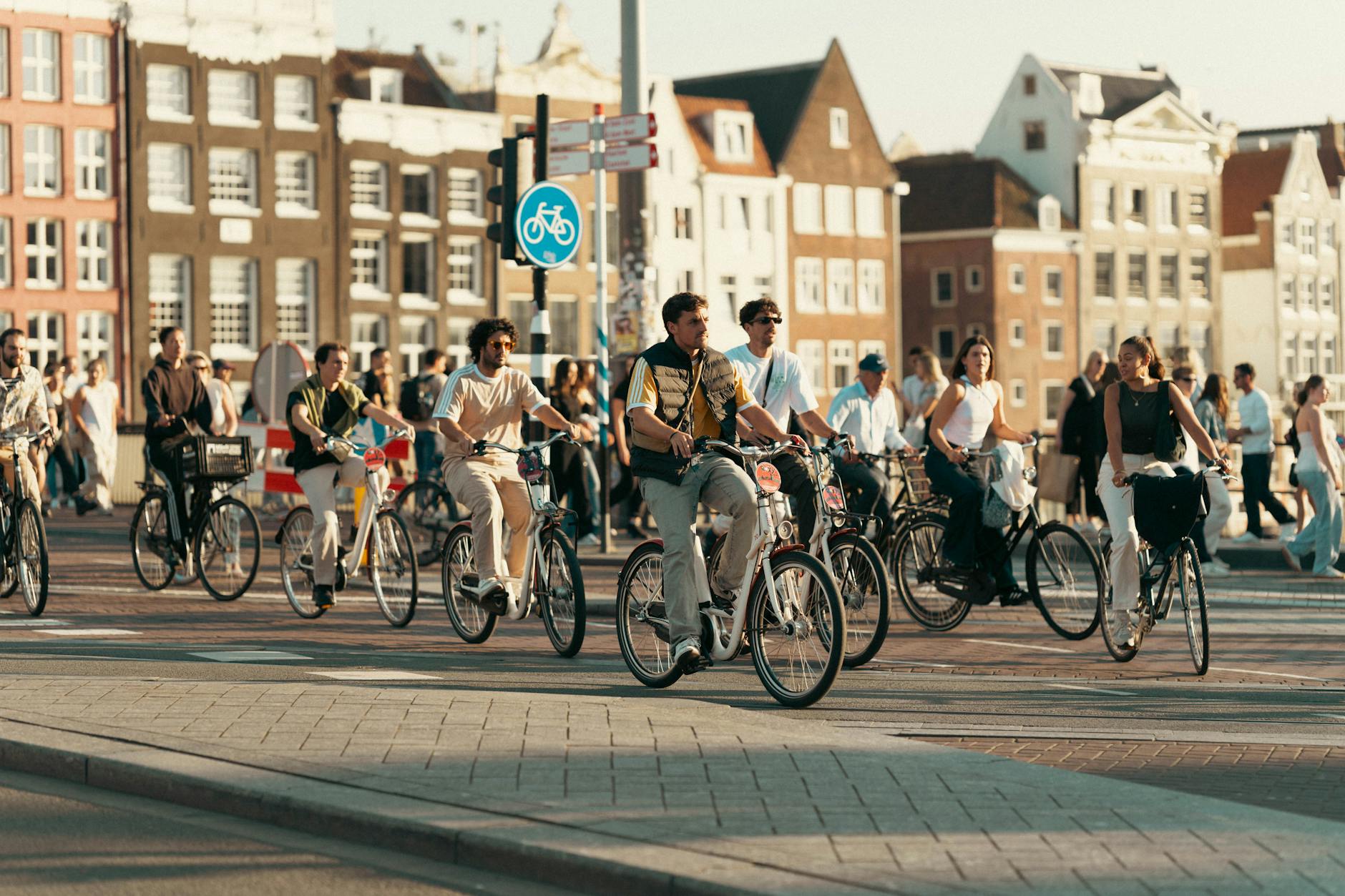
For the millions of people who rode bikes as children but haven’t cycled in five years or more, the prospect of returning to cycling involves psychological and practical barriers that shouldn’t be underestimated. The muscle memory might return within a few rides, but the confidence takes longer. A 50-year-old returning to cycling after 30 years away faces legitimate questions: Is my balance still good? Can my knees handle this? What if I fall? These aren’t irrational fears—they reflect real changes in body composition, flexibility, and bone density that come with aging. The comparison worth making here is to swimming: just like a person might retain the basic ability to swim after decades away, actual return requires gradual retraining. The equipment question presents another layer of complexity. A person’s old bike from 1995 might be completely unsuitable for current riding conditions. Modern bikes are different—lighter, with different braking systems, different gearing.
Someone who spent $150 on a bike 30 years ago might discover that a quality replacement costs $500 or more, creating a financial barrier to return. Entry-level options exist, but the sheer range of choices (road bikes versus mountain bikes versus hybrids versus e-bikes) can overwhelm someone just trying to remember how to ride again. This comparison to returning to other activities highlights why cycling has a disadvantage: you can return to running with just your feet, but returning to cycling requires equipment investment and expertise. The social dimension also matters. A person who cycles alone faces different challenges than someone with a group. Cycling can feel isolating without a community, and building that community takes effort. Someone returning to cycling might be intimidated by local cycling groups that seem to expect particular fitness levels, equipment standards, or riding speeds. The limitation here is that casual cycling—just riding for transportation or gentle recreation—requires different infrastructure and communities than the performance-oriented cycling culture that dominates many areas.
Safety Concerns and Real Barriers to Cycling
The gap between actual cycling danger and perceived danger is worth examining carefully. Statistically, cycling has genuine safety risks—cycling accidents do happen, and impacts with cars can be catastrophic. Yet the actual number of cyclist deaths remains relatively small compared to motor vehicle fatalities overall. Nevertheless, high-profile accidents, news coverage of cyclist deaths, and the visceral fear of being hit by a car create a psychological barrier that often exceeds the statistical risk. A parent considering whether to let their teenager cycle to school faces not just the actual data, but also the emotional weight of worst-case scenarios. This warning is important: the perception of danger can be as effective a deterrent as actual danger. Road conditions present another frequently underestimated hazard. Potholes, debris, oil slicks, and gravel on roadsides don’t make headlines like car accidents, but they cause falls regularly.
A cyclist hitting a pothole at speed can suffer serious injuries—broken bones, road rash, or impact injuries—particularly concerning for older adults who recover from falls more slowly. Infrastructure maintenance is often inconsistent; a bike lane that’s safe one week might be blocked by a delivery truck or deteriorated by weather the next week. The limitation here is that cyclist safety depends heavily on infrastructure quality and maintenance, which varies enormously across communities. Helmet compliance and visibility represent practical challenges that go beyond individual choice. While helmets significantly reduce head injury risk, they add expense, discomfort, and require habit formation. Many adults find helmets uncomfortable or aesthetically displeasing, creating cognitive dissonance between understanding the safety benefit and actually using one consistently. Similarly, visibility challenges—both being seen by drivers and seeing hazards—increase substantially during early morning, evening, and winter cycling. A person commuting during these times faces genuine difficulties that recreational daytime cyclists don’t encounter.
The Public Health Implications
The decline in adult cycling participation contributes meaningfully to broader public health challenges, including obesity, cardiovascular disease, and mental health issues. Cycling provides moderate-intensity aerobic exercise that research suggests is more sustainable long-term than high-intensity gym workouts, yet the percentage of Americans getting adequate exercise remains stubbornly low. A comprehensive study examining exercise patterns found that communities with strong cycling infrastructure had significantly higher rates of physical activity among adults, regardless of age. This suggests that the infrastructure itself—the simple availability of safe places to ride—influences behavior at a population level. Mental health benefits from cycling are equally significant but often overlooked.
Outdoor activity, the meditative aspects of rhythmic pedaling, and the independence that cycling provides contribute to emotional wellbeing. Adults who cycle report better mental health outcomes than sedentary peers, but the causality can work both directions—people with depression might be less likely to initiate cycling, creating a downward spiral. The example worth noting is that communities investing in cycling infrastructure often report unexpected mental health benefits as people reconnect with outdoor activity and movement. The economic implications extend beyond individual health outcomes. Healthcare costs associated with sedentary lifestyles dwarf the public investment needed for cycling infrastructure. Yet infrastructure investment remains chronically underfunded in most American communities, representing a massive gap between what we know about health benefits and what we fund in practice.
Building a Cycling-Friendly Future
The reversal of cycling decline isn’t inevitable, but communities that have prioritized cycling infrastructure demonstrate that change is possible. Cities like Minneapolis and Portland have made deliberate investments in protected bike lanes, secure parking, and community support programs, resulting in measurable increases in cycling participation even among older adults and women—demographics that traditionally cycle at lower rates. These cities provide concrete examples that infrastructure changes create behavioral change over time. The future of cycling participation will likely depend on how seriously communities address the underlying barriers.
This includes not just building isolated bike paths, but creating integrated networks that connect to destinations people actually need to reach. It means secure parking, year-round maintenance, and cultural shifts that position cycling as practical transportation rather than niche recreation. It means designing neighborhoods where cycling is the convenient option, not the heroic one. For individuals considering a return to cycling after years away, the path forward involves recognizing these barriers as real and addressable rather than personal failings. With proper infrastructure, equipment, and community support, cycling can become a sustainable part of adult life—just as it has for millions of people in communities that have chosen to invest in it.
Conclusion
The statistic that at least 62% of American adults haven’t ridden a bike in over five years represents not a personal failing on a massive scale, but rather a systematic failure of infrastructure and community investment. The barriers to adult cycling—car-dependent design, lack of safe infrastructure, time constraints, and legitimate safety concerns—exist outside individual control. Yet this statistic also represents an opportunity: in a country with millions of people who once knew how to ride but have stopped, there’s enormous potential for renewal if communities choose to build the conditions that make cycling safe and practical.
The path forward isn’t mysterious. Other developed nations demonstrate that adults of all ages, abilities, and backgrounds can participate in cycling when communities prioritize the necessary infrastructure and remove the barriers. For the 62% of American adults without a bike ride in five years, the question isn’t whether cycling should be part of American life—it’s whether our communities are willing to rebuild the conditions that make it possible.
Frequently Asked Questions
Why is cycling participation declining when people know it’s healthy?
Knowledge about health benefits doesn’t translate to behavior change without addressing practical barriers like safe infrastructure, time constraints, and legitimate safety concerns. People make daily choices based on convenience and perceived risk, not just health information.
Can older adults safely return to cycling after decades away?
Many can, but it requires acknowledgment of real changes in balance, strength, and bone density. Starting slowly with lower-speed, lower-traffic environments, proper equipment fit, and potentially cycling lessons designed for adults can make return to cycling safe and sustainable.
What infrastructure changes make the biggest difference in cycling participation?
Protected bike lanes separate from traffic consistently show the strongest correlation with increased cycling participation. Secure parking, connected networks, and year-round maintenance are also critical factors that influence whether casual riders feel safe enough to participate.
Is cycling commuting practical for people with long commutes?
For very long commutes (15+ miles), e-bikes have transformed practicality, particularly for older adults or those concerned about arriving sweaty. For moderate distances, cycling is practical with appropriate infrastructure and employer support for showers or clothing storage.
How much does a good bike cost for casual adult riding?
Entry-level bikes suitable for casual riding and commuting range from $300-$800. Used bikes can be found cheaper, but quality and safety considerations make professional fitting important for adult returners.
What’s the actual safety risk of cycling compared to driving?
Per mile traveled, cycling has higher injury rates than driving, but the gap is substantially smaller on protected infrastructure and in communities with high cycling visibility. The absolute number of cyclists remains small enough that total cycling deaths are lower than motor vehicle deaths despite higher risk per rider.


