For winter glare, the best cycling sunglasses pair a low-light-friendly rose, amber, or copper-tinted lens with a polarized or mirrored coating only when the glare is coming off snow or wet road, not off traffic signals and ice patches you need to read. The practical winner for most riders is a photochromic lens in the roughly 20–60% light transmission range, in a vented frame, because winter light swings from flat grey to blinding white within a single ride.
Glare in winter is a different problem than glare in summer. The sun sits low enough to come straight down the road into your eyes for hours, snow and wet pavement throw light up from below, and the same ride can start in fog and end in full sun. The lens that solves one of those can make the others worse.
Table of Contents
- What makes winter glare different
- Lens tint and light transmission
- Should winter cycling lenses be polarized?
- Photochromic lenses, and where they fall short
- Frame fit, fogging, and coverage
- Choosing by the riding you actually do
- Frequently Asked Questions
What makes winter glare different
Winter glare has two sources, and they call for different answers. The first is direct low-angle sun: in the northern hemisphere between about November and February, the sun stays near the horizon all day, so on an east-west road it can sit right at eye level during the hours most people ride. Sunglasses cannot block light that arrives below the frame, which is why coverage and shape matter as much as tint. The second source is reflected light. Snow is the most reflective natural surface most riders encounter, and wet asphalt behaves like a mirror when the sun is low behind you or ahead of you.
This reflected light is largely horizontally polarized, which is the specific thing a polarizing filter removes. The complication is that winter also brings the darkest riding conditions of the year — overcast afternoons, early dusk, tunnels, and tree-shaded descents. A lens dark enough for snow glare is genuinely unsafe on a 4 p.m. ride through traffic. Most riders' mistake is buying for the brightest ten minutes of the ride.
Lens tint and light transmission
Visible light transmission (VLT) is the percentage of light a lens lets through. A clear lens is around 90%; a dark summer lens is often 10–15%. For winter, the useful band is wider and lighter than people expect: Tint colour changes what you see, not just how much.
Rose, amber, and copper tints suppress blue light, which lifts contrast against grey asphalt and makes black ice, potholes, and patchy snow easier to pick out. Neutral grey preserves colour accuracy but flattens detail in flat winter light — better for bright summer glare than for January. Avoid dark blue and dark grey mirrors as your only winter lens. They look the part and perform poorly in exactly the low-contrast conditions winter delivers most often.
- **55–85% VLT (clear, light rose, light yellow)** — overcast, dusk, fog, night. These cut almost no glare but add contrast and keep wind out.
- **35–55% VLT (rose, amber, copper, light brown)** — the single most useful winter range. Enough tint for low sun, light enough for shade.
- **15–35% VLT (copper mirror, grey-green, dark rose)** — bright sun on snow, or long exposed climbs in clear conditions.
- **Under 15% VLT** — snowfield or glacier conditions only; too dark for mixed road riding.
Should winter cycling lenses be polarized?
Polarization is the right tool for one job: killing reflected glare off snow, water, and wet road. If your winter riding is on snow-lined roads or a sunlit coastal route, a polarized lens makes a clear difference that no tint alone matches. It has real costs on a bike, though. Polarized lenses can make ice harder to see, because the sheen that reveals a black-ice patch is itself polarized reflection — the filter removes your warning sign.
They also interfere with LCD screens, so a bar-mounted GPS or phone can dim or go blank at certain head angles. And they can create odd dark banding in car windscreens and some helmet visors. A reasonable rule: polarized for open, snow-bright, low-traffic riding; non-polarized for commuting, freeze-thaw conditions, and anywhere you're reading a screen or watching for ice. A mirrored non-polarized lens gives you much of the brightness control without the ice-detection penalty.
Photochromic lenses, and where they fall short
Photochromic lenses darken in ultraviolet light and clear again when it drops. For winter they are the most practical single-lens answer, because one pair covers a ride that starts in grey mist and ends in low sun. Look for a stated range — something like 20% to 60% VLT — rather than a vague "adaptive" claim. Two limits are worth knowing.
They react to UV, not to visible brightness, so behind a car windscreen or in a UV-filtered environment they stay light. And the transition is not instant: darkening typically takes under a minute, but clearing is slower, often a couple of minutes. Diving from bright sun into a tunnel or a dense pine descent, you will spend that time in a lens darker than you want — which argues for riding photochromics on the lighter end of their range in winter. Cold slows the chemistry slightly in most photochromic systems, so a lens may sit a little darker than its summer behaviour at the same brightness. That happens to be the direction you can live with.
Frame fit, fogging, and coverage
Winter is when frames fail, not lenses. Warm, moist air rising from your face meets a cold lens and condenses, and a fogged lens is worse than no lens at all. Vented frames, lenses with anti-fog coatings, and a gap between lens and cheek all help; a fully sealed goggle-style wrap with a buff pulled over the nose is the classic fogging recipe.
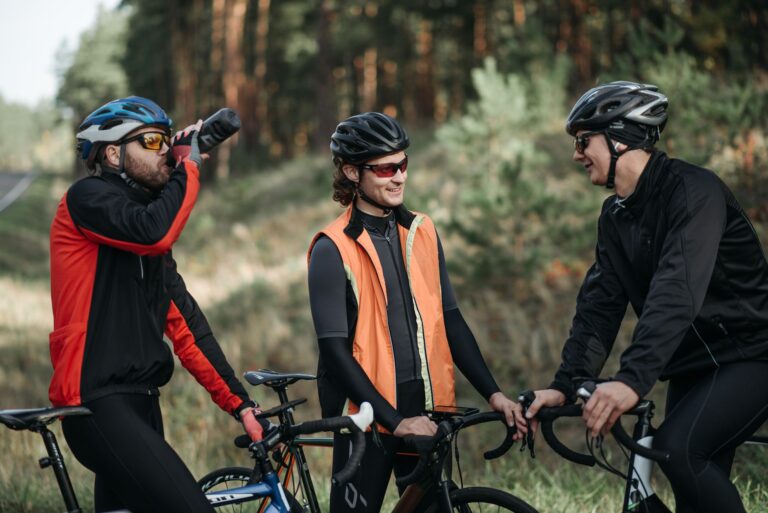
Coverage matters more than in summer because the sun is low. A frame with a tall lens and a brow that extends upward blocks more of a horizon-level sun than a narrow, shallow shape, and a wrapped lens cuts the side light that comes off snowbanks. Rimless-top designs give you an unobstructed view when you're down in the drops with your head low. A few checks before buying:.
- Try the frame with your actual helmet and any winter cap or headband — stacked layers change where arms sit.
- Check the lens clears your cheekbones and eyebrows, so breath and sweat have somewhere to go.
- Confirm the lens is marked for 100% UV or UV400 protection; UV exposure is high over snow regardless of how dark the tint is.
- If you wear contacts, prefer a more enclosed frame — cold, dry wind dries lenses fast.
- Prefer a model with interchangeable lenses if you ride through both dusk commutes and bright weekend rides.
Choosing by the riding you actually do
Match the lens to your most common winter condition, not your best one. A dark-afternoon commuter in a northern city is served by a clear or light-rose lens with good wind coverage and anti-fog treatment, plus nothing else. Buying a mirrored lens for the three sunny rides a year means riding half-blind for the other fifty.
A rider doing daylight weekend rides on snow-lined or coastal roads gets the most from two options: a copper or rose mirror around 15–25% VLT, or a polarized brown lens if ice is not a concern on that route. Mountain and gravel riders moving in and out of tree cover are the clearest case for photochromic, because the swing is constant and no fixed tint covers it. If you buy one pair, buy a photochromic rose or amber in the 20–60% band with a vented, well-wrapped frame. If you buy a second lens, make it clear — the darkest lens is the one you will use least and the one that will catch you out on a descent at dusk.
Frequently Asked Questions
Do I need UV protection in winter?
Yes. UV levels are lower in winter than summer but snow reflects a large share of what arrives, so exposure over snow can be high. A light-tinted lens marked UV400 protects as fully as a dark one; tint and UV blocking are separate properties.
Will clear lenses help at all in daylight?
They help with wind, grit, and tearing, and a light rose or yellow tint adds contrast on flat grey days. They will not reduce glare from direct low sun — for that you need tint, coverage, or a cap brim.
Can I use ski goggles for winter cycling?
On snow or very cold rides, yes — they seal well and resist fog when ventilated. The drawbacks are weight, limited peripheral vision for traffic, and VLT that is often chosen for snowfields rather than roads.
Why do my lenses fog only when I stop?
Airflow across the lens is what clears condensation, and it disappears at a traffic light or on a slow climb. Lifting the glasses onto your helmet for a moment, or pulling a face covering down off your nose, usually fixes it faster than wiping.