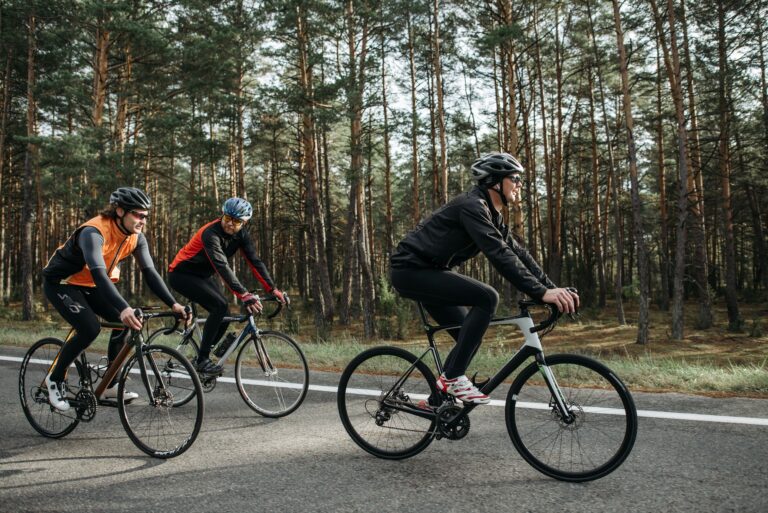
Cyclists improve climbing by choosing the right effort for the hill, riding long enough to build endurance, repeating key sessions each week, and checking progress on the same climbs. Climbing training means practiced riding uphill to raise sustained power, control breathing, and hold good form when the road rises. Short hills reward brief, strong efforts. Long climbs reward steady pacing and efficient use of gears and body position.
Table of Contents
- How hard should climbing efforts feel?
- How long should a climbing session last?
- How often should you train hills each week?
- How do you know climbing is improving?
How hard should climbing efforts feel?
Use easy spins for recovery and steady, hard-but-controlled efforts for fitness. A steady effort lets you speak in short phrases but not chat freely. A short hill repeat should leave you breathing hard by the top, yet still able to hold form.
Save all-out sprints for very short pitches and only when legs feel fresh. Most climbing gains come from repeatable efforts you can finish cleanly. Stop a repeat if form breaks down, knees ache, or breathing turns ragged.
How long should a climbing session last?
Match session length to the climbs you want to ride. A focused hill-repeat workout can last 60 to 90 minutes including warm-up, cool-down, and several uphill efforts. An endurance ride with longer climbs may run two to four hours at a calmer pace.
Begin with fewer repeats or shorter climbs, then add one repeat or extend one climb at a time. Keep total uphill time modest at first so legs recover within a day or two. Longer rides suit weekends, while shorter hill sessions fit weekdays.
How often should you train hills each week?
Ride hills two or three times per week when climbing is the goal. Include one steady climb day, one repeat day with shorter efforts, and one longer ride when time allows. Leave at least one easy day between hard climbing days.
Reduce hill volume when legs stay heavy, sleep suffers, or pace drops on familiar climbs. One easier week after two or three harder weeks helps the body absorb the work. Casual riders often maintain climbing with one weekly hill ride plus regular flat or rolling rides.
How do you know climbing is improving?
Pick one or two test climbs and ride them the same way each time. Use the same bike setup, similar wind and traffic conditions, and the same pacing plan. Faster times at the same effort, easier breathing, or lower perceived effort signal progress.
A simple tracking routine helps: Watch technique too. Smooth cadence, relaxed shoulders, steady breathing, and smart gear shifts often appear before faster times. Test the same hill every two to three weeks under similar conditions.
- Choose a short climb and a longer climb for tests.
- Warm up the same way before each test.
- Record time, gear choices, weather, and how the effort felt.
- Repeat every two to three weeks and compare trends, not single rides.