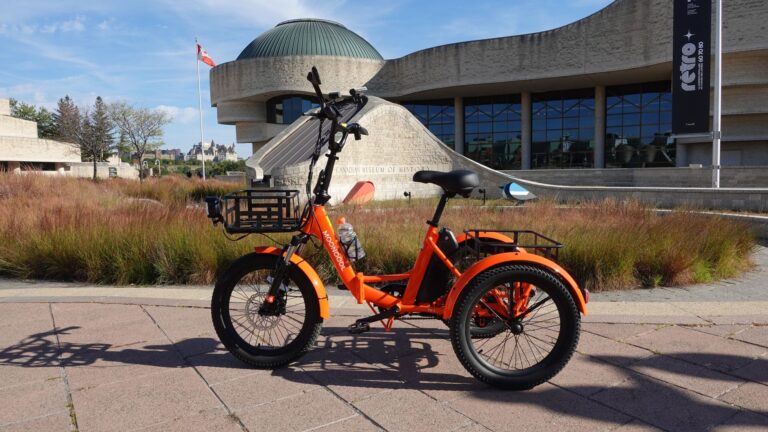
To inspect a mini velo before buying, work through frame, wheels, drivetrain, brakes, and fit in that order. A mini velo is a compact adult bike with small wheels and a short frame made for city riding and easy storage.
Small wheels react fast and leave little room for flex or poor setup. A careful check takes only a few minutes and needs no special tools. Use it to decide between a quick tune and walking away.
Table of Contents
- Is the Frame Sound and Straight?
- Are the Wheels True and Tough Enough?
- Does the Drivetrain Run Smoothly?
- Will the Brakes Stop You Safely?
- Does the Bike Fit Your Body?
Is the Frame Sound and Straight?
Start with the bike on level ground and sight along the tubes for bends, dents, or lifted paint. Lifted or cracked paint often marks a bend underneath. Check the joints around the steering tube, pedal area, and rear wheel slots. Stand behind the bike and check that the front and rear wheels line up.
Turn the handlebar straight and look for twist in the fork or frame. Walk away from these warning signs: Ask to loosen and retighten quick-releases, which are lever clamps for wheels and seatposts, then recheck alignment. A small scratch in paint is cosmetic. A bent tube or cracked joint means pass on the bike.
- sharp dent or crease in any tube
- rust bubbles or flaking under paint
- wheel that will not center after release and re-clamp
Are the Wheels True and Tough Enough?
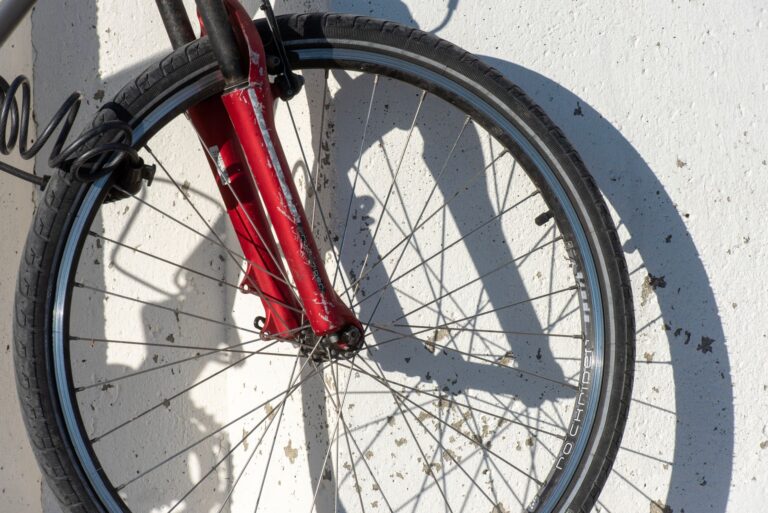
Lift each wheel and spin it to check trueness, which means a straight spin without side-to-side wobble. Watch the rim gap at the brake pads or frame. A hop or rub that you can see needs truing. Squeeze pairs of spokes and listen for even tension.
Grab the rim and push side to side to feel for play in the hub bearings. Clicking, grinding, or looseness means the hub needs service or new bearings. Inspect tires for cuts, dry cracks, and worn flat centers. Mini velo wheels spin faster and wear brake pads and tires quickly in stop-and-go riding. Choose wider tires with puncture protection if you face curbs, rails, or broken pavement.
Does the Drivetrain Run Smoothly?
The drivetrain is the chain, gears, and cranks that drive the rear wheel. Shift through every gear while pedaling and watch for skips, delays, or chain rub. Each shift should click once and settle without noise. Look at chainrings and cogs for hooked or shark-fin teeth.
Pull the chain forward off the front ring; deep lift shows stretch. A stretched chain wears gears fast and will soon need both parts replaced. Spin the cranks backward and listen for stiff links or squeaks. On a single-speed, pull the chain up at the midpoint; it should move only slightly. Pick the setup that fits your hills: gears for slopes, single-speed only for flat routes.
Will the Brakes Stop You Safely?
Squeeze each brake lever separately with the bike still. The lever should feel firm and stop well before the handlebar. Spongy or bottoming levers point to air in the line, stretched cable, or worn pads. Check pads for wear grooves and even contact on rim or disc rotor, which is the steel disc at the hub.
Wipe rims clean and look for deep grooves or a concave surface. Replace thin pads and contaminated rotors before riding in traffic. Test both brakes alone, then together, at slow speed in a safe space. The bike should stop straight without squeal, grab, or fork shudder. Small wheels stop fast but can pitch forward, so keep weight back and brace your arms.
Does the Bike Fit Your Body?
Set saddle height so your knee keeps a slight bend at the bottom of the pedal stroke. Check that seatpost, which is the tube holding the saddle, stays above its minimum-insertion line. If you need extreme saddle or bar height, the frame size is wrong. Ride and note neck, wrist, and knee comfort within a few blocks.
Mini velos often use tall posts and swept bars to fit many riders, but long stems can make steering twitchy. Adjust with these checks: Carry your normal work bag and ride over bumps and a curb cut. A good fit feels stable, not cramped, and lets you start and stop with confidence. Bring the shoes and bag you ride with to the test ride.
- hands rest without locked elbows
- you can turn and signal without rocking hips
- feet touch ground easily when you slide forward