Recent research has challenged the common assumption that painting lines on a street creates meaningful safety improvements for cyclists. A 2024 Rutgers University study found that painted bike lanes reduced driver speeds by only 8% for vehicles traveling straight, a negligible improvement that doesn’t translate to the kind of safety gains cities need. More critically, a 13-year study from the University of Colorado Denver and University of New Mexico revealed something striking: painted bike lanes have essentially no measurable effect on reducing cyclist fatalities and injuries. The 8% speed reduction, while better than nothing, falls far short of protecting vulnerable road users from the real dangers they face on city streets.
This finding has profound implications for cycling infrastructure spending across North America. Countless municipalities have invested millions painting lines on roads, believing they were creating safer conditions for cyclists. Yet the data tells a different story. When researchers compared painted lanes to streets with no bike infrastructure at all, the difference in actual safety outcomes was minimal. The speed reduction achieved doesn’t prevent the kinds of crashes that cause serious injury or death—particularly at intersections, where most bike-car collisions occur.
Table of Contents
- What Does the Research Actually Reveal About Painted Bike Lane Effectiveness?
- Why Painted Lanes Fail to Deliver the Safety Benefits Cities Promise
- Protected Bike Lanes Show Dramatically Better Results
- The Cost and Implementation Debate Behind Infrastructure Choices
- The Intersection Problem and Hidden Vulnerabilities
- Real-World Examples of Painted Lane Limitations
- The Future of Bicycle Infrastructure and Rethinking Safety Standards
- Conclusion
What Does the Research Actually Reveal About Painted Bike Lane Effectiveness?
The gap between perception and reality in bike lane safety is dramatic. city planners and engineers often present painted lanes as a solution to cyclist safety concerns, pointing to the 8% speed reduction as proof of effectiveness. But slowing traffic by 8% doesn’t meaningfully reduce crash severity or frequency.
A driver traveling at 30 mph only slows to 27.6 mph—still fast enough to cause serious injury or death in a collision with a cyclist. The research from the University of Colorado Denver team, which tracked injury and fatality data over 13 years, found no statistically significant reduction in cyclist harm from painted bike lanes alone. The Rutgers study offered additional context: while painted lanes achieved the 8% speed reduction for through traffic, protected bike lanes—those physically separated by bollards, barriers, or curbs—achieved 28% speed reductions in maximum speeds. This threefold difference illustrates a crucial point: the infrastructure type matters far more than simply having “a bike lane.” In cities like Portland and Seattle where painted lanes were among the first infrastructure investments, early adoption didn’t translate into proportionally lower crash rates compared to cities that waited and invested in protected infrastructure instead.

Why Painted Lanes Fail to Deliver the Safety Benefits Cities Promise
The fundamental problem with painted bike lanes is that they offer no physical protection and minimal behavioral change from drivers. A line of paint is a visual cue, but human drivers treat it differently depending on conditions. In heavy traffic, drivers may drift into the painted lane without realizing it. During poor visibility—rain, fog, or darkness—the paint provides almost no guidance. More concerning, studies show painted lanes can create a false sense of security for cyclists, who may take more risks or position themselves more predictably, potentially making them more vulnerable to turning vehicles or doored cars.
Intersections reveal painted lanes’ critical weakness most starkly. A cyclist in a painted lane approaching an intersection has no additional protection from vehicles turning across the lane. The paint stops where the intersection begins, removing whatever minimal buffer existed. This is where most serious bike-car collisions occur—not in mid-block sections where painted lanes might slow traffic slightly, but at the points where vehicle paths cross. A painted lane that provides some separation at the block level offers zero protection when a right-turning truck or a left-turning car enters the intersection. The NCBI study on bike lane types found that painted lanes had mixed effectiveness depending on intersection configuration, meaning the same painted lane could be reasonably safe in one location and dangerous in another.
Protected Bike Lanes Show Dramatically Better Results
When cities invest in actually protecting cyclists—through separated lanes with physical barriers—the safety improvements become undeniable. Research from PeopleForBikes found that protected bike lanes achieve 44% fewer deaths and 50% fewer serious injuries compared to average streets. In cities like New York, Copenhagen, and Montreal that have built extensive networks of protected lanes, the data shows consistent reductions in cyclist injury rates. A 2015 study cited by Streetsblog found protected lanes to be seven times more effective than painted ones—a 700% difference in effectiveness, not the marginal 8% improvement that painted lanes deliver.
The difference in actual protection is tangible when you observe them. In Vancouver, a protected lane uses a concrete curb to completely separate cyclists from car traffic. In Amsterdam, raised and separated lanes are standard for anything beyond local streets. In Minneapolis, where protected lanes have proliferated in recent years, police data shows cyclist crash rates declining as the network expanded. When cyclists have actual physical separation from vehicles, they’re safer—not because they’re better trained or more careful, but because physics prevents collisions rather than relying on driver awareness or a thin line of paint to discourage close passes.

The Cost and Implementation Debate Behind Infrastructure Choices
Cities face real tradeoffs when deciding between painted lanes and protected infrastructure. A painted bike lane might cost $5,000 to $15,000 per mile to install and maintain, while protected lanes often run $200,000 to $500,000 per mile depending on the design and existing street conditions. This massive cost difference explains why many municipalities default to paint—it allows them to claim they’re addressing cycling safety while staying within budget constraints. A city can paint 50 miles of bike lanes for the cost of one mile of protected infrastructure.
However, this math fails when you consider actual outcomes. If painted lanes reduce safety improvements by 8% while protected lanes achieve reductions of 44-50%, the cost-per-safety-improvement of painted lanes becomes wasteful spending. Cities end up building infrastructure that makes their streets look more cycling-friendly without actually making them significantly safer. Some advocates argue for a middle ground: neighborhood greenways with traffic calming, or painted lanes on truly low-traffic streets. But on busy streets where most cyclists need safety—the same streets with high car speeds and volumes—paint alone is insufficient, and the research increasingly shows it’s a poor use of cycling infrastructure budgets.
The Intersection Problem and Hidden Vulnerabilities
Painted bike lanes create a dangerous illusion of safety that breaks down precisely where it’s most needed. Studies consistently show that 40-50% of bike-car crashes occur at intersections, yet this is where painted lane protection completely disappears. A cyclist navigating a painted lane through a residential neighborhood suddenly loses that thin visual buffer when approaching an intersection. A right-turning truck driver may not see a cyclist in the painted lane, particularly in their blind spot. A left-turning driver crossing the bike lane has no additional obstacle slowing them down or making them more cautious.
The paint provides zero physical impedance to a vehicle’s path. The vulnerability becomes worse at complex intersections—those with multiple turn lanes, bike lanes, and vehicle lanes competing for space. In Denver, Chicago, and San Francisco, where painted lane networks are extensive, intersection crashes remain a persistent problem despite years of paint application. Protected lanes solve this partially by extending the physical barrier through intersections or using signal timing to separate vehicles and cyclists. But a painted lane approaching an intersection is essentially a trap waiting to activate: it gives cyclists confidence to proceed, but offers no actual protection when that confidence meets a turning vehicle.
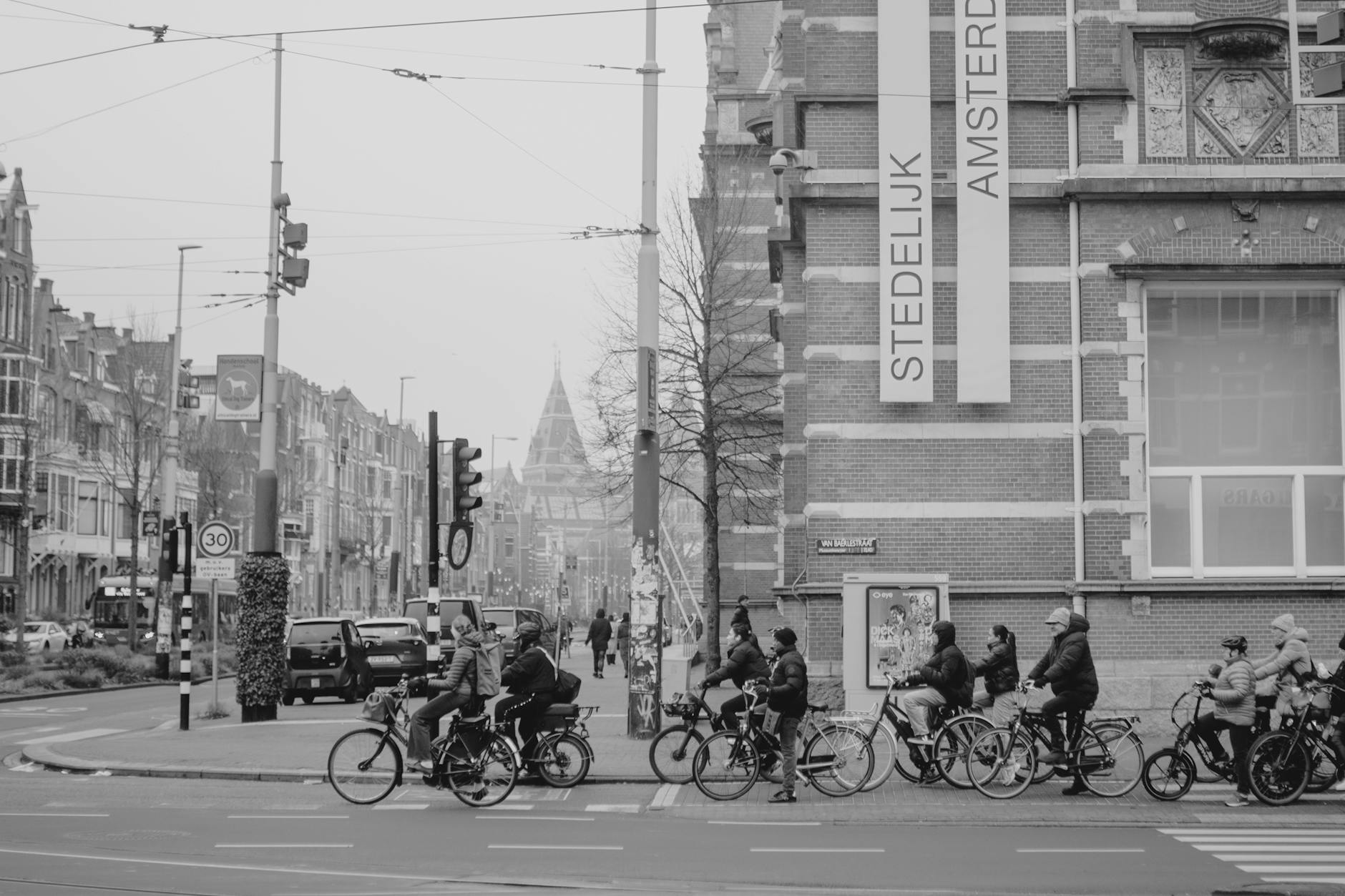
Real-World Examples of Painted Lane Limitations
Portland, Oregon, often celebrated for its bike-friendly culture, illustrates how painted lanes alone fall short. Despite having one of North America’s longest painted bike lane networks, Portland’s cyclist fatality rate hasn’t dropped proportionally to its infrastructure investment. The city’s most serious crashes occur on streets with painted lanes, not because the paint caused the crashes, but because paint-only infrastructure simply isn’t effective at preventing them. When Portland began converting some painted lanes to protected lanes on Williams Avenue and other major streets, crash data improved noticeably. The lesson: paint was the first step, but cities that stopped at paint didn’t achieve the safety outcomes they anticipated.
San Francisco’s experience offers another telling example. The city invested heavily in painted bike lanes throughout the 2010s, creating a visible network that pleased cyclists and politicians alike. Yet serious cyclist injuries continued climbing. Only after San Francisco began building protected lanes on Market Street, Valencia Street, and other major corridors did injury rates begin to improve. The contrast is clear: a painted lane makes cycling feel safer and looks good in promotional photos, but a protected lane actually makes cyclists safer by preventing the collisions from happening in the first place.
The Future of Bicycle Infrastructure and Rethinking Safety Standards
Cities are beginning to reckon with the reality that painted lanes alone don’t meet modern safety standards. The trend among leading cycling cities is shifting away from paint-only solutions toward a hierarchy: neighborhood greenways and low-traffic streets can use paint, painted lanes combined with traffic calming, and major corridors requiring protected infrastructure. This isn’t a rejection of painted lanes entirely, but a recognition that they serve only specific contexts—low-speed, low-traffic environments where the behavioral changes they encourage are actually meaningful. Looking forward, cities must ask themselves whether the goal is creating the appearance of a cycling network or actually protecting cyclist safety.
The research is clear: if safety is the priority, paint doesn’t deliver measurable results on busy streets. Protected lanes, traffic calming, intersection redesigns, and reduced speed limits are what work. New cities planning their cycling infrastructure would be wise to skip the painted-lane phase entirely and invest directly in infrastructure that research shows actually prevents crashes. The 8% speed reduction from paint might seem like progress compared to no bike lanes at all, but it’s negligible compared to the 44-50% injury reduction that protected lanes achieve.
Conclusion
The claim that painted bike lanes provide meaningful safety improvements doesn’t hold up against evidence. The 8% speed reduction from painted lanes, while better than nothing, falls far short of the 28-44% reductions achieved by protected infrastructure. Research consistently shows that painted lanes have minimal to no measurable effect on reducing cyclist fatalities and injuries, particularly at intersections where most serious crashes occur. Cities that have relied on painted lanes to address cycling safety have learned an expensive lesson: visibility and perception of progress aren’t the same as actual safety outcomes. The path forward requires cities to honestly assess what the research shows and invest accordingly. Painted lanes have a role in low-traffic neighborhoods and on streets where traffic calming creates genuinely safe conditions.
But on busy streets where cyclists most need protection—the very places painted lanes proliferate—they’re an insufficient band-aid on a more serious problem. The better investment is in protected lanes, intersection redesigns, and speed management. Cyclists aren’t asking for the illusion of safety. They’re asking for infrastructure that actually prevents the crashes that injure and kill them. The research shows what works. The question is whether cities will act on it.