The best BMX parks in the United States span from world-class outdoor racing facilities to massive indoor complexes, with options suitable for everyone from beginners just learning to pump a track to seasoned pros competing at the national level. Chula Vista BMX Track in California stands as a premier destination featuring expertly designed jumps, turns, and straightaways that have hosted numerous national and international competitions, while facilities like Mega Cavern in Louisville offer year-round riding in a 320,000-square-foot underground bike park.
This article covers the top outdoor racing tracks, indoor facilities, freestyle parks, and what to consider when choosing where to ride based on your skill level and riding style. Whether you’re drawn to the competitive energy of racing tracks, the creative freedom of freestyle parks, or the controlled progression environment of indoor facilities with pump tracks and foam pits, the United States has developed a robust network of quality BMX destinations. We’ll walk through the best parks across different regions and styles, explore what makes each special, and help you identify which type of facility aligns with your goals as a rider.
Table of Contents
- Where Can I Find the Best Outdoor BMX Racing Tracks?
- Why Should You Consider Indoor BMX Parks?
- What About Freestyle and Skate-Style BMX Parks?
- How Do You Choose Between Outdoor, Indoor, and Freestyle Facilities?
- What Skill Levels Can Actually Ride at These Parks?
- What Amenities and Facilities Should You Look For?
- Where Is BMX Park Development Headed in the United States?
- Conclusion
Where Can I Find the Best Outdoor BMX Racing Tracks?
Outdoor bmx racing tracks remain the heart of competitive BMX culture in America, and several facilities have earned international reputations for their design and competition schedules. Chula Vista BMX Track in California is widely recognized as a premier destination with world-class facilities and expertly designed features that draw riders and spectators from across the country. The track’s reputation for hosting major competitions makes it a bucket-list destination for anyone serious about racing, though it also means the facility attracts the most competitive riders, which can be intimidating for beginners just entering the racing scene. Beyond California, Whitney Mesa BMX in Nevada holds the distinction of being the fastest track in the nation while still welcoming all riders from newcomers to BMX veterans.
The track’s speed-friendly design means times are quick but the facility staff actively supports progression at all levels. Black Mountain BMX near Phoenix, Arizona, offers a similar combination of challenging terrain and top-tier facilities designed to serve riders of all skill levels, making it a solid option if you’re in the Southwest and want to improve your competitive skills. Derby City BMX Track in Louisville, Kentucky, brings decades of BMX heritage with a challenging layout featuring jumps, berms, and rhythm sections that have earned it a reputation for hosting major BMX events throughout its history. For Midwest riders, Rock City BMX in Rockford, Michigan, and Eagle BMX in Eagle, Idaho, both offer well-maintained layouts with challenging jumps and sharp berms suited to all ages and skill levels. The consistency of quality across these tracks means you can find a serious racing facility in virtually any region without traveling to California.
Why Should You Consider Indoor BMX Parks?
Indoor BMX parks solve a fundamental problem that outdoor tracks can’t: weather unpredictability and year-round accessibility. Mega Cavern in Louisville is the world’s only fully underground bike park, spanning 320,000 square feet with over 45 trails specifically designed for all skill levels, meaning you get a genuine progression pathway even when snow and rain shut down outdoor tracks for months at a time. The underground location keeps conditions consistent year-round, which is particularly valuable for riders in northern states where winter weather would otherwise halt training. Ray’s Indoor Bike Park in Cleveland, Ohio, holds the distinction of being the world’s first indoor bike park and remains one of the largest at 130,000 square feet with various trails and jump lines for different skill levels.
However, one limitation to understand is that indoor facilities generally emphasize flow, progression, and technical skills more than they do racing, since the confined space doesn’t accommodate the long straightaways and high-speed sections that define racing tracks. If your primary goal is competitive racing practice, you’ll ultimately need access to an outdoor track. The Daniel Dhers Action Sports Complex in North Carolina offers something unique: a 37,000-square-foot indoor park founded by five-time X Games gold medalist Daniel Dhers, which brings both world-class design and coaching expertise. Lumberyard in Portland offers 70,000 square feet ranging from beginner pump tracks to advanced jump lines, Cranx in Syracuse spans over 90,000 square feet with jump lines, foam pits, and progression-focused design, and Wheel Mill in Pittsburgh provides 80,000 square feet with foam pits and multiple progression options. This geographic spread means riders in nearly every region can access quality indoor facilities without traveling hundreds of miles.
What About Freestyle and Skate-Style BMX Parks?
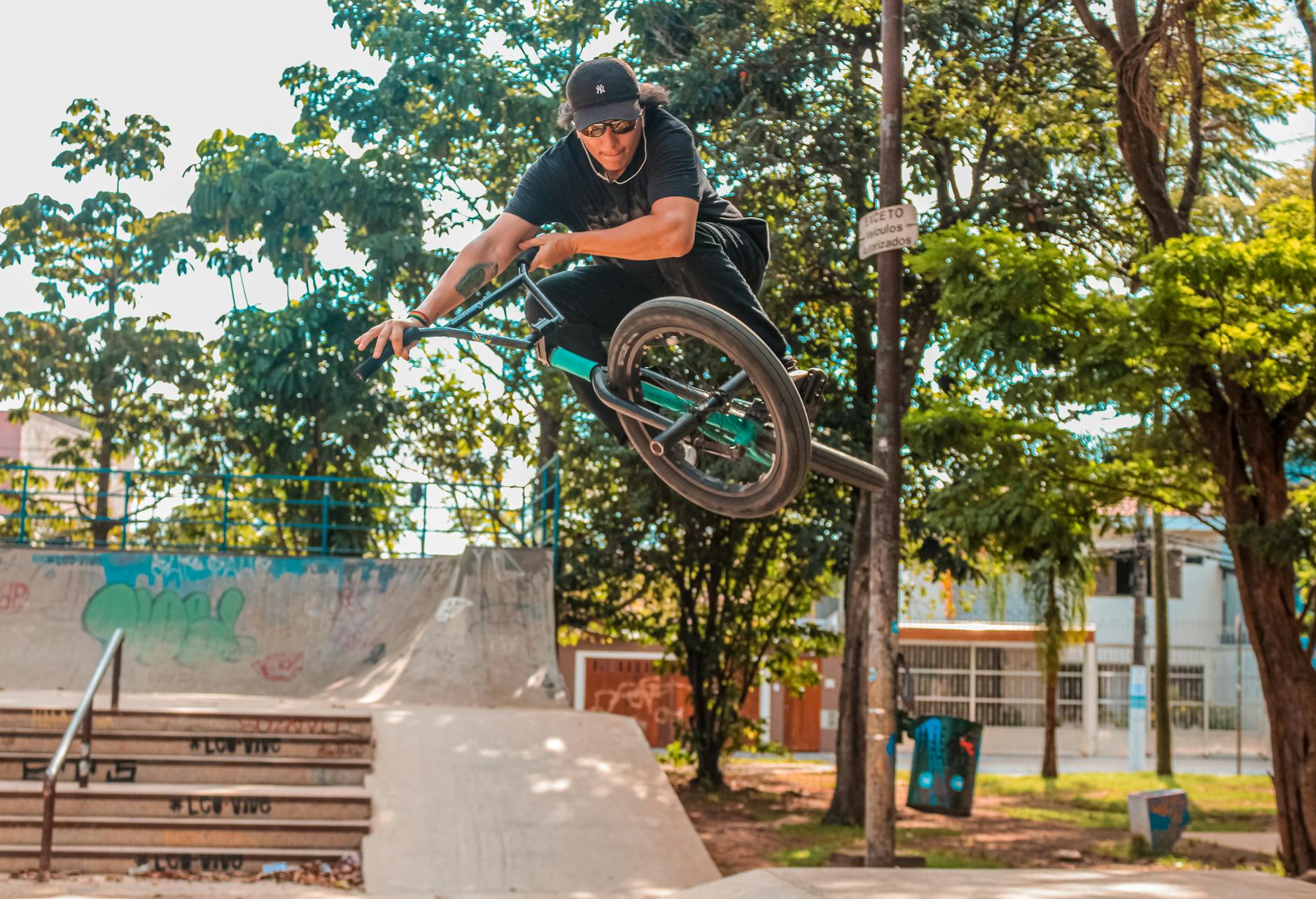
Freestyle parks take a different approach from racing tracks and indoor facilities, focusing on creative riding, tricks, and technical skills rather than speed and racing competition. Chandler Bike Park in Arizona is a standout example, offering a 25,000-square-foot facility specifically designed with ramps, rails, and skate features for all skill levels, with intentional design focused on allowing riders to learn and develop skills progressively.
This design philosophy means beginners aren’t overwhelmed by advanced features while experienced riders have plenty of technical challenges to work on. Burlington Bike Park in Washington State provides another quality freestyle option with well-designed jump lines, pump tracks, and a foam pit, giving riders multiple progression pathways within a single facility. The foam pit is a crucial feature for freestyle parks because it allows riders to attempt tricks and combinations they’re not yet confident with on solid landing surfaces, reducing the injury risk inherent in learning new skills.
How Do You Choose Between Outdoor, Indoor, and Freestyle Facilities?
The best choice depends on three main factors: your riding goals, your location, and the time of year. If you’re focused on BMX racing and competing, outdoor racing tracks like Chula Vista, Black Mountain, or Whitney Mesa are essential for developing race-specific skills like gate starts, technical turns, and high-speed rhythm sections. If you’re in a northern climate where winter makes outdoor riding difficult, or if you want year-round progression in a controlled environment, indoor parks like Mega Cavern, Ray’s, or Lumberyard offer unmatched consistency and coaching opportunities.
Freestyle parks like Chandler Bike Park make sense if you’re learning tricks, street skills, or want a community-focused experience where the emphasis is on personal progression rather than competition times. One practical consideration: many riders benefit from training at multiple types of facilities throughout the year. A racer might spend summer months at outdoor tracks building competitive fitness, then shift to indoor parks during winter to work on technical skills and conditioning. Likewise, a freestyle-focused rider might occasionally visit a racing track to understand how racers train and develop overall bike handling.
What Skill Levels Can Actually Ride at These Parks?
This is where the American BMX park network excels: the better facilities genuinely accommodate all skill levels, not just in theory but in actual facility design. Whitney Mesa BMX explicitly welcomes beginners to the sport, which matters because some competitive tracks can feel unwelcoming to newer riders despite technically being open to them. Facilities designed with progression in mind typically include a beginner’s section or “pump track” where newer riders can develop fundamental skills without navigating full-sized jumps or competitive race conditions. One limitation to understand: even beginner-friendly parks expect you to understand basic bike handling and have a functioning BMX or jump bike.
If you’re completely new to BMX riding, starting at a freestyle park like Chandler Bike Park or an indoor facility with coaching available (like Daniel Dhers’ complex) gives you a better learning environment than showing up at a serious racing track. Most quality parks offer coaching programs, beginner clinics, or at minimum mentorship opportunities where more experienced riders help newer community members progress safely. The indoor parks explicitly design progression into their layouts. Cranx in Syracuse, for example, uses terrain specifically arranged to take riders from beginner pump tracks through intermediate jump lines to advanced park sections, allowing you to stay at a facility as you improve rather than needing to find increasingly difficult parks as you progress.
What Amenities and Facilities Should You Look For?
Beyond the dirt or concrete, quality BMX parks offer amenities that make the riding experience better and safer. Foam pits appear in most premium indoor facilities and the better freestyle parks, serving as a critical tool for learning tricks without the injury risk of falling on hard surfaces. Pump tracks—smooth, banked terrain designed for rhythm and flow without jumps—appear in nearly all modern facilities and allow riders to build fundamental fitness and bike handling before progressing to jumps.
Professional coaching and clinics distinguish some parks from others. The Daniel Dhers complex, for instance, brings world-class expertise to accessible training, while facilities in major metropolitan areas typically host more frequent coaching opportunities. Facilities like Mega Cavern and Ray’s Indoor Bike Park have enough size and trail variety that riders of wildly different skill levels can all find appropriate terrain on the same visit without interfering with each other, which matters if you’re planning to bring friends or family members with varying experience levels.
Where Is BMX Park Development Headed in the United States?
The BMX park network in the United States continues to expand and improve. A new USA BMX facility opened in Port St. Lucie, Florida, in 2025, sanctioned by USA BMX and indicating ongoing investment in competitive racing infrastructure.
The growth of indoor facilities over the past decade shows that year-round riding is becoming the expected standard rather than a luxury, with major cities increasingly offering multiple indoor options that cater to different riding styles. The convergence of racing, freestyle, and progression-focused park design means newer facilities tend to be hybrid spaces accommodating multiple disciplines rather than single-purpose venues. This evolution serves the BMX community well, as most riders eventually develop interest in multiple aspects of the sport even if they start with one particular focus.
Conclusion
The United States offers exceptional BMX park options for every skill level and riding style, from world-class racing facilities like Chula Vista BMX Track and Whitney Mesa BMX that draw international competition, to innovative indoor parks like Mega Cavern and Lumberyard that enable year-round progression, to creative freestyle facilities like Chandler Bike Park designed specifically to help riders learn and develop skills. The geographic distribution of quality parks means you can find excellent riding opportunities in nearly every region without needing to plan expensive travel specifically around park access.
Your next step is identifying which type of facility matches your current goals—racing, freestyle progression, or general skill development—and locating the highest-quality park of that type within reasonable distance from your location. Start with a visit, talk to the community at your chosen park, and understand what coaching or progression pathways they offer. The BMX community remains remarkably welcoming to riders at all levels, and the parks themselves reflect that inclusive spirit through their design and management.


