Spring is the ideal time to replace your bike chain because winter riding conditions accelerate wear dramatically, and a fresh chain at the start of the riding season protects your drivetrain components for the months of heavy use ahead. The combination of road salt, grit, wet conditions, and cold-weather lubricant breakdown means that a chain ridden through winter often shows more wear than one used for twice the mileage in dry summer conditions. Replacing it now prevents that worn chain from grinding down your cassette and chainrings, components that cost five to ten times more than the chain itself. Consider a commuter who rides year-round in the Pacific Northwest.
After a winter of daily riding through rain and road debris, their chain might measure 0.75 percent elongation””past the point where continued use damages other drivetrain parts. Swapping the chain in March, before logging another thousand spring miles, saves them from needing a new cassette by June. This timing also means the replacement happens when bike shops have full inventory and shorter wait times, before the summer rush strips shelves bare. This article explores the specific reasons winter is so hard on chains, how to assess whether yours needs replacement, what factors affect chain longevity, and how to time your replacement for maximum drivetrain life. We will also cover the preparation and installation process, along with expert guidance on choosing the right chain for your riding style.
Table of Contents
- How Does Winter Riding Affect Your Bike Chain’s Lifespan?
- Signs Your Chain Needs Replacement Before Spring Riding Season
- Why Drivetrain Component Costs Make Timely Chain Replacement Essential
- Spring Maintenance Timing and Shop Availability Advantages
- Chain Quality Differences and Selection Considerations
- Matching Chain Replacement with Overall Spring Bike Preparation
- How to Prepare
- How to Apply This
- Expert Tips
- Conclusion
- Frequently Asked Questions
How Does Winter Riding Affect Your Bike Chain’s Lifespan?
Winter conditions create a perfect storm of chain-destroying factors. Road salt acts as an abrasive that works its way between the chain’s pins and rollers, accelerating internal wear even when the exterior looks clean. Water washes away lubricant while simultaneously introducing corrosive elements into the chain’s moving parts. Studies of chain wear rates show that winter miles can cause two to three times more chain elongation compared to equivalent summer mileage in dry conditions. The temperature itself compounds these problems.
Cold weather causes lubricants to thicken and migrate away from critical contact points, leaving metal-on-metal contact during those first few pedal strokes of each ride. Riders in climates with freeze-thaw cycles face additional challenges””water enters the chain during warmer moments, then expands when frozen, physically stressing the chain’s internal components. A chain that started November measuring under 0.5 percent wear can easily reach 0.75 percent by March. Comparison data from cycling mechanics reveals a stark difference in replacement frequency. Riders who store their bikes for winter typically get 3,000 to 5,000 miles from a chain, while year-round commuters in wet or salted conditions often see chains reach replacement threshold in 1,500 to 2,000 miles. This disparity explains why spring assessment matters regardless of whether you rode through winter or left your bike hanging in the garage””both scenarios warrant inspection before the high-mileage season begins.
Signs Your Chain Needs Replacement Before Spring Riding Season
chain wear is measured as elongation, expressed as a percentage stretch from the original length. A new chain measures exactly 12 inches across 12 complete links. As the pins and rollers wear against each other, this measurement gradually increases. Most manufacturers recommend replacement at 0.5 percent elongation for optimal drivetrain longevity, with 0.75 percent as the absolute maximum before cassette damage becomes likely. A chain checker tool provides instant, accurate measurement for under fifteen dollars””one of the best investments a home mechanic can make. Without a dedicated tool, the manual measurement method using a ruler also works: measure from any pin center to a pin center 12 inches away.
If the second pin sits at 12 and 1/16 inches, the chain has reached approximately 0.5 percent wear. At 12 and 1/8 inches, the chain is at 1 percent elongation and has already damaged your cassette. However, if your bike uses a 10, 11, or 12-speed drivetrain, the tolerances tighten considerably. Modern narrow chains running on closely-spaced cogs have less margin for wear before shifting performance degrades. An 8-speed chain might shift acceptably at 0.75 percent elongation, but an 11-speed chain at the same wear level will ghost shift and skip under load. For higher-speed drivetrains, treat 0.5 percent as your replacement point, not a suggestion.
Why Drivetrain Component Costs Make Timely Chain Replacement Essential
The economics of chain replacement become clear when examining component prices. A quality chain costs between 25 and 75 dollars depending on speed count and material. A cassette for the same drivetrain runs 50 to 300 dollars. Chainrings, depending on your crankset configuration, range from 30 dollars for a single ring to 200 dollars or more for a matched set. Running a worn chain essentially trades a 40-dollar part for 300 dollars in additional damage. The mechanical explanation is straightforward: as the chain elongates, it no longer meshes correctly with the original tooth profile of your cassette and chainrings.
The elongated chain rides higher on the teeth, wearing them into a distinctive shark-fin profile. Once this wear pattern develops, even a new chain will not mesh correctly with the damaged cogs. The new chain skips and jumps because the tooth spacing no longer matches the chain’s pitch. A specific example illustrates this principle. A rider ignores chain replacement until reaching 1 percent elongation, riding an additional 500 miles beyond the recommended replacement point. Those miles saved roughly 10 dollars in chain life but caused 150 dollars in cassette damage and resulted in two weeks of poor shifting before the problem became obvious. The math never favors delaying chain replacement.
Spring Maintenance Timing and Shop Availability Advantages
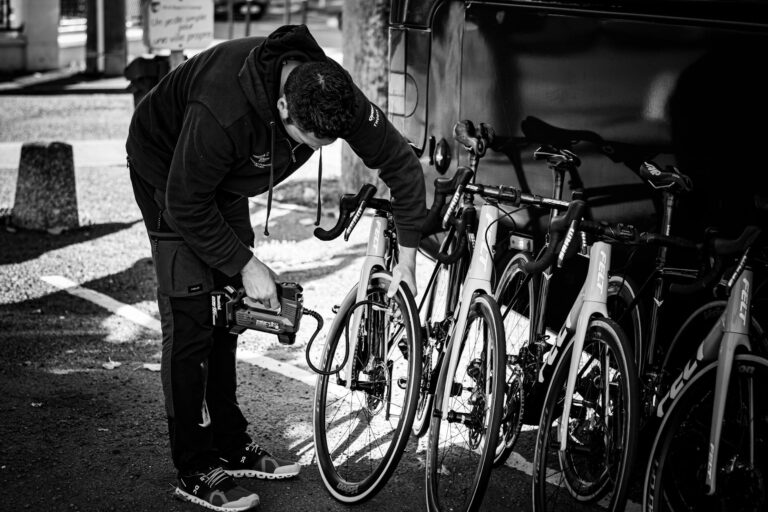
Bike shop workflow follows predictable seasonal patterns. January and February see the lowest customer volume, with mechanics often performing tune-ups on their own bikes. March brings increased activity but manageable wait times. By May, many shops have two-week backlogs for standard service, and chain inventory in popular sizes becomes spotty. Scheduling chain replacement in March or April means same-day or next-day service at most shops, full selection of chain options in stock, and mechanics who have time to notice other issues during the work.
A spring chain swap often uncovers brake pad wear, cable stretch, or bearing issues that benefit from attention before they become roadside failures. The mechanic replacing your chain might notice your rear brake pads are down to the wear indicators, a problem easier to address now than during a summer ride. For home mechanics, spring timing offers practical advantages too. Working in a garage or driveway becomes pleasant rather than a cold-fingered ordeal. Lubricants and degreasers perform better at moderate temperatures. The first warm Saturday of spring is an ideal chain replacement day, combining necessary maintenance with the psychological boost of preparing your bike for the riding season ahead.
Chain Quality Differences and Selection Considerations
Not all chains perform equally, and spring replacement presents an opportunity to evaluate whether your previous chain choice served you well. Entry-level chains use solid pins and standard steel plates, lasting 1,500 to 2,500 miles under average conditions. Mid-range chains feature hollow pins and nickel-plated surfaces that resist corrosion, extending life to 2,500 to 4,000 miles. Premium chains add hardened coatings and tighter manufacturing tolerances, potentially lasting 4,000 to 6,000 miles. The cost-per-mile calculation sometimes favors cheaper chains replaced more frequently, particularly for wet-weather riders.
A 25-dollar chain lasting 2,000 miles costs 1.25 cents per mile. A 70-dollar chain lasting 5,000 miles costs 1.4 cents per mile. However, this calculation ignores labor time and the increased risk of riding on a marginally worn cheap chain while waiting for the next replacement. One important limitation: premium chains only deliver their longevity advantage with proper maintenance. A 70-dollar chain cleaned monthly and re-lubricated appropriately will outlast a neglected chain of any price. Riders who rarely clean their drivetrains see minimal benefit from expensive chains and should direct that budget toward more frequent replacements of economical options.
Matching Chain Replacement with Overall Spring Bike Preparation
Chain replacement fits naturally into a broader spring maintenance routine. The same session that installs a new chain should include cassette inspection, cable tension adjustment, and derailleur limit screw verification. A new chain on a bike with stretched cables and misadjusted derailleurs will not shift well, potentially leading to false conclusions about chain quality. For example, a rider installs a new chain but skips the derailleur adjustment. The bike shifts poorly, grinding in some gears and hesitating in others.
The rider assumes the new chain is defective, when actually the old chain’s elongation had masked cable stretch that now affects shifting with the correctly-sized new chain. Fifteen minutes of cable adjustment solves the problem entirely. Spring also presents an opportunity to evaluate your lubricant choice. Wet lubricants that served well in winter rain attract too much dust and grit in dry conditions. Switching to a dry or wax-based lubricant when installing the spring chain prevents the new chain from accumulating the grinding paste that accelerates wear.
How to Prepare
- **Identify your drivetrain speed count.** Count the cogs on your rear cassette””this number determines your chain compatibility. An 11-speed cassette requires an 11-speed chain; mixing speeds causes poor shifting and accelerated wear.
- **Check your cassette and chainring condition.** Run your finger backward across the cassette teeth. If they feel hooked or pointed rather than symmetrical, the cassette needs replacement alongside the chain. Installing a new chain on a worn cassette causes immediate skipping.
- **Determine your chain’s quick-link or pin type.** Modern chains use reusable quick-links (also called master links) while some older chains require a special connecting pin. Note which type your current chain uses and purchase the matching connector if not included with the new chain.
- **Gather necessary tools.** You need a chain breaker tool, chain checker, needle-nose pliers for quick-link installation, and degreaser with rags for cleaning the drivetrain before installing the new chain.
- **Clean your drivetrain thoroughly.** A new chain on dirty cogs and chainrings immediately picks up contamination. Degrease the cassette, chainrings, and derailleur pulleys before the new chain goes on.
How to Apply This
- **Size the new chain properly.** New chains come longer than needed and must be shortened. The standard method: wrap the chain around the large chainring and largest cog, bypassing the rear derailleur. Add two links to this length, then remove the excess. Alternatively, count links on your old chain if it was properly sized and match that number.
- **Route the chain correctly through the rear derailleur.** The chain must pass on the correct side of the derailleur cage tab””a small metal protrusion between the upper and lower pulleys. Routing the chain on the wrong side causes grinding, noise, and potential derailleur damage.
- **Connect the chain using the appropriate method.** For quick-links, thread each half through the chain ends, pull the chain taut, and apply pressure by holding the brakes and pressing the pedal forward. The link clicks into locked position. For connecting pins, use a chain tool to press the pin through until the engagement marks line up.
- **Test shifting through all gears under load.** Ride the bike up a moderate incline, shifting through every gear combination. Listen for skipping, grinding, or hesitation. If the bike skips in one gear, that specific cog may be worn and require cassette replacement.
Expert Tips
- Keep your old chain for emergency trail repairs. Even a worn chain functions as a temporary solution if your new chain breaks mid-ride. Wrap it around your seat tube and secure with a zip tie.
- Do not lubricate a factory-fresh chain immediately. New chains come pre-lubricated with a high-quality coating. Adding lubricant before the first ride wastes money and can actually dilute the factory treatment.
- Record your mileage at installation. Knowing exactly when you installed the chain allows accurate wear rate calculation, helping you predict future replacements and compare chain brands objectively.
- If your chain skips only in your most-used gear after replacement, that single cog is worn. Some cassettes allow individual cog replacement rather than full cassette purchase.
- Avoid mixing chain brands with quick-link brands unless compatibility is explicitly confirmed. A Shimano quick-link may not lock reliably on a SRAM chain, creating a potential failure point at the worst possible moment.
Conclusion
Spring chain replacement combines practical necessity with optimal timing. Winter conditions demand more from chains than any other season, and the damage accumulates invisibly until a chain checker reveals the wear.
Replacing the chain before spring miles compound the problem protects expensive cassettes and chainrings while ensuring crisp shifting when the roads finally clear and the riding season begins in earnest. The investment in a new chain””typically 30 to 50 dollars for most recreational and commuter bikes””returns value through extended drivetrain life, improved shifting performance, and the confidence that comes from knowing your equipment is ready for the increased mileage ahead. Schedule the replacement early in spring before shop backlogs develop, or tackle it as a satisfying home maintenance project on the first pleasant weekend of the season.
Frequently Asked Questions
How long does it typically take to see results?
Results vary depending on individual circumstances, but most people begin to see meaningful progress within 4-8 weeks of consistent effort. Patience and persistence are key factors in achieving lasting outcomes.
Is this approach suitable for beginners?
Yes, this approach works well for beginners when implemented gradually. Starting with the fundamentals and building up over time leads to better long-term results than trying to do everything at once.
What are the most common mistakes to avoid?
The most common mistakes include rushing the process, skipping foundational steps, and failing to track progress. Taking a methodical approach and learning from both successes and setbacks leads to better outcomes.
How can I measure my progress effectively?
Set specific, measurable goals at the outset and track relevant metrics regularly. Keep a journal or log to document your journey, and periodically review your progress against your initial objectives.
When should I seek professional help?
Consider consulting a professional if you encounter persistent challenges, need specialized expertise, or want to accelerate your progress. Professional guidance can provide valuable insights and help you avoid costly mistakes.
What resources do you recommend for further learning?
Look for reputable sources in the field, including industry publications, expert blogs, and educational courses. Joining communities of practitioners can also provide valuable peer support and knowledge sharing.