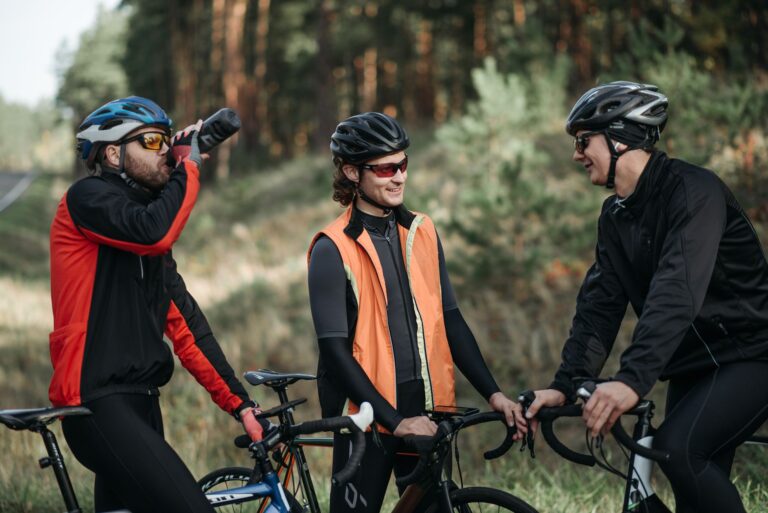
A white front light and a red rear light keep a cyclist visible on dark December commutes. A second small light at each end adds backup when one lamp fails or fades. Here, visibility means drivers and walkers can spot you early, not only that you can see the road.
December brings early darkness, low glare, rain, and dirty spray. Those conditions shrink reaction time at junctions and overtakes. A clear light setup helps others judge your speed and position.
Table of Contents
- What colors go front and rear?
- Should the lights stay steady or flash?
- Where should lights sit on the bike?
- How do cold and rain change battery care?
- What else helps drivers notice you?
- Frequently Asked Questions
What colors go front and rear?
Use a white lamp facing forward and a red lamp facing rear. Those colors match what other road users expect from traffic. Keep the beams pointed straight ahead and straight behind. Avoid odd colors or extra white lamps at the back.
They can confuse drivers about your direction. If you add more lamps, keep the same color pattern. Check aim before a night ride. A front lamp tipped too high blinds others. A rear lamp hidden by a bag or coat loses its purpose.
Should the lights stay steady or flash?
Use a steady front lamp to see potholes, wet leaves, and curbs. Flash alone makes the road harder to read. A steady beam also helps drivers track your line. For the rear, many riders pair one steady lamp with one flashing lamp.
The steady lamp shows position while the flash draws attention. If you use one rear lamp, choose steady in traffic. Flash can annoy on dark paths or in groups. Switch to steady on a trail or when riding close behind others. Keep flash for busy streets with many distractions.
Where should lights sit on the bike?
Mount the front lamp on the handlebar or fork, centered and firm. That spot stays aimed while you steer. Mount the rear lamp on the seatpost or rack, facing back. Keep lamps clear of bags, locks, fenders, and long coats.
A blocked lamp may look fine from above yet vanish from driver eye height. Step back several paces and look from car height. Add side visibility with spokes, tires, or pedals that catch light. Side lamps or small amber markers help at cross streets. Cross traffic often sees you from the side first.
How do cold and rain change battery care?
Cold drains small batteries faster and dims output near the end. Charge more often in winter and carry a backup rear lamp. Start each commute with a full charge. Pick lamps with simple mounts and clear charge signals.
You want fast removal for charging indoors. A lamp left cold on the bike may start weak. Store and charge indoors at room temperature. Cold starts and short winter days punish a half-charged lamp. A full indoor charge gives a more honest run time.
- Wipe the lens and charge contacts dry after wet rides
- Carry a small backup rear lamp or spare cells
- Run steady on the brightest practical mode that lasts the whole trip
- Recharge after every dark commute, not when the lamp fades
What else helps drivers notice you?
Keep reflectors clean and in place. A white front reflector, red rear reflector, and pedal reflectors work when lamps dim. Mud and road film dull them fast. Wear bright or reflective bands on moving parts.
Ankles, knees, and wrists catch headlights as you pedal and signal. A reflective vest helps, but moving bands show motion sooner. Clean the lamp lens during dirty rides. Spray from wet roads coats the lens and cuts output. A quick wipe at a stop restores the beam.
Frequently Asked Questions
Can I ride with only a flashing front lamp?
A steady front lamp works better because it lights the road and shows a clear line. Add flash only as a second front lamp on busy roads.
Why does my rear light fade halfway home in winter?
Cold and an incomplete charge shorten run time. Charge indoors after each ride and carry a small backup rear lamp.