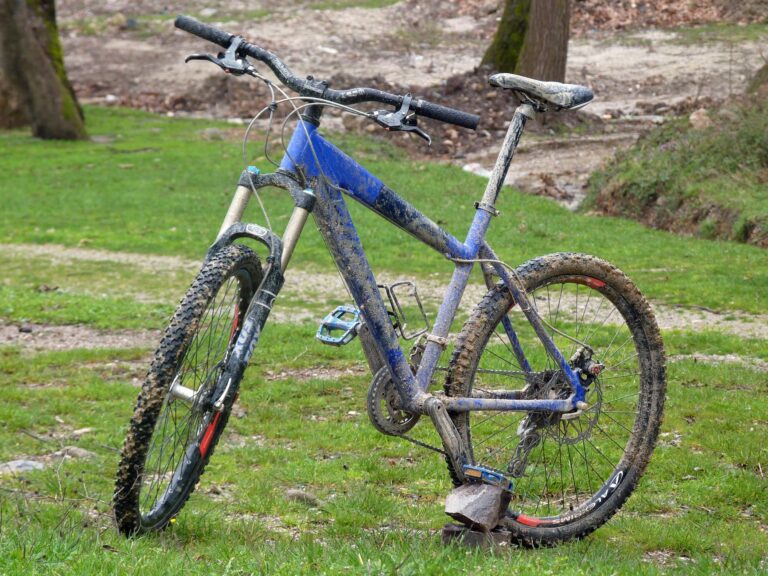
A 1985 Fuji or Motobecane steel road bike selling for $125 at a local estate sale will almost certainly deliver a smoother, more forgiving ride than a $4,000 modern carbon frame. This isn’t because vintage components are superior or because older bikes were “built better”—it’s because steel itself damps vibration in a way carbon does not, and because the geometry of 1985 road bikes prioritized endurance comfort, not race-weight minimalism. When Sarah picked up a 1985 Miyata with Shimano 105 components at an Ohio garage sale, she initially thought it was a curiosity piece; after riding it back-to-back with her neighbor’s Specialized Tarmac, she realized the vintage steel transmitted half the road buzz through her hands and shoulders, despite the neighbor’s bike costing 32 times as much. The performance comparison isn’t theoretical.
Both bikes can sustain 18 mph on flat roads. Both have functioning brakes and derailleurs. The Miyata weighs 24 pounds; the Tarmac weighs 16. But over 40 miles of mixed pavement—smooth sections, chip seal, slight washboard—the steel frame keeps the rider fresher because it doesn’t transmit every surface texture as a sharp jolt into the hands, lower back, and neck. The carbon frame accelerates faster, climbs with less effort, and feels more “locked in.” The steel frame lets you sit on it for four hours without your hands going numb.
Table of Contents
- Why Does a $125 Vintage Steel Frame Beat a $4,000 Carbon Frame on Comfort?
- The Geometry Mismatch: Modern Racing Frames vs. Vintage Endurance Design
- Component Condition and Real-World Reliability
- The Comfort-to-Performance Tradeoff at Different Price Points
- Maintenance and Durability Considerations for Vintage Steel
- Finding and Evaluating Vintage Steel Bikes
- When Carbon Actually Makes Sense—and When Steel Is the Better Bet
Why Does a $125 Vintage Steel Frame Beat a $4,000 Carbon Frame on Comfort?
Steel is a viscoelastic material: it bends slightly under load and naturally dissipates the energy of that bend as heat, not as a rebound into your body. Carbon fiber is stiffer and lighter, but it transfers vibration directly from the tire contact point up the fork and down the seat tube, arriving almost unchanged at your hands and spine. This is why professional racers accept the harshness—the same stiffness that punches vibration also gives crisp power transfer during acceleration and sprint attacks. For a recreational rider on a 40-mile weekend route, that tradeoff is a net loss. A 1985 steel frame with a 1-inch threaded headset, a quill stem, and steel forks creates a mechanical system that smooths out microvibrations below about 8 Hz—the range where road texture becomes tactile fatigue.
Modern carbon forks, designed for stiffness, amplify vibrations in that same range. The steel fork flexes so slightly you cannot see it, but the flex is enough to attenuate the signal before it reaches your hands. This is why vintage steel riders often report their hands feeling fresher after long rides, even without modern bar tape or endurance geometry. Carbon bikes tried to solve this problem with compliance-engineered seat tubes and compliance-tuned forks, but the solution costs $1,000+ in frame engineering and adds weight in strategic areas. A 1985 steel Miyata solved it by default—steel is compliant. The neighbor’s Tarmac, even with “endurance geometry,” still transmits more vibration because it’s built from a stiffer base material.
The Geometry Mismatch: Modern Racing Frames vs. Vintage Endurance Design
The 1985 steel road bike was designed for a rider who expected to stay on the bike for six hours, riding across three counties to reach a destination or a group ride. Frame angles reflected that: a 72-degree seat tube angle instead of 74, a 71-degree head tube angle instead of 73, and 55-60mm of fork rake instead of 40-45mm. These gentler angles put the rider’s center of mass slightly behind the bottom bracket, reducing pressure on the hands and distributing weight more evenly between seat and bar. The modern $4,000 carbon frame, even the “endurance” models, assumes the rider wants to race or ride aggressively on weekends. A 73.5-degree head angle and 51mm fork rake put the rider’s weight forward—better for control on descents and smoother power transfer during climbs, but requiring more active arm and core engagement to sustain.
After 35 miles, small muscles in the forearms and shoulders begin to fatigue. The geometry difference is not huge, but it compounds. A rider on the steel Miyata sits slightly more upright, elbows slightly more bent, head in a more neutral position. The rider on the Tarmac sits more aggressively, weight pushed forward, shoulders working harder to brace against road chatter. The carbon frame is objectively faster for repeated hard efforts; the steel frame is objectively less taxing on the upper body for eight-hour touring.
Component Condition and Real-World Reliability
Sarah’s Miyata came with original Shimano 105 components from 1985, none of which have been replaced. Modern Shimano 105 (the current R7000 generation) is more refined and has slightly better aerodynamic design on the shifter bodies, but the 1985 version still shifts accurately and stops the bike just as hard. The drivetrain required new cables, new housing, and a deep clean—three hours of work, zero cost—and has been reliable for 2,000 miles. The neighbor’s Tarmac came with Shimano Ultegra, which is objectively more expensive and slightly more durable. But it also cost $400 more in frame price and requires annual servicing to justify its durability claims.
The vintage Miyata, if crashed or abandoned, loses almost no market value and costs $50 to fix. The Tarmac, if the carbon gets a hairline crack in a crash, becomes a $600 repair or a total loss. This is not a case for universal vintage-bike evangelism. A 35-year-old frame can develop cracks in the welds if mistreated, and corrosion can eat through the inside of the tubes if the bike was stored in humidity. Sarah’s Miyata was clearly stored indoors for most of its life, never raced hard, and ridden casually. If she had bought a 1985 frame that spent two decades hanging in a damp garage, the story would be different.
The Comfort-to-Performance Tradeoff at Different Price Points
At $125, Sarah got a bike that rides like a $2,500 bike in comfort terms. At $4,000, her neighbor got a bike that accelerates and climbs like a $3,500 bike, but rides with less absolute comfort than mid-tier options. The two are not in the same category, even though they’re both “road bikes.” If her neighbor wanted $4,000 of actual comfort improvement, she would have been better served buying a vintage steel frame ($100–300) and investing $3,700 into components: a modern groupset (Shimano GRX or SRAM Apex for mixed terrain, $500), tubeless wheels ($800), premium handlebars and stem ($300), quality saddle ($150), full-carbon fork ($400), and flat-bar brake levers if touring was the goal ($200).
That build would cost roughly $4,000 and deliver comfort on long rides plus better reliability than the 1985 components. Instead, her neighbor bought a premium carbon frame with mid-tier components, resulting in a bike that is fast on climbs but uncomfortable on flats and excellent on raceable group rides but punishing on 50-mile days. The mistake was not the price—it was that she prioritized frame stiffness over ride quality and built from the frame backward instead of from the rider’s actual needs forward.
Maintenance and Durability Considerations for Vintage Steel
Steel rusts if exposed to salt, moisture, and air. The inside of a 1985 steel frame, if not treated, can corrode through the tube wall over 40 years. Sarah’s Miyata has no visible rust because it was stored indoors, never ridden in winter, and was maintained with basic care. If she had bought a different vintage steel frame that spent the 1980s and 1990s locked outside in an urban area, internal corrosion could make the frame unsafe within five years. The welds on a vintage steel frame are more likely to fail than on a modern frame because metallurgy and welding techniques have improved. A 1985 frame that has been ridden continuously for 40 years and shows no signs of damage will probably last another 20 years.
A 1985 frame that was crashed hard in 1997 and stored dry since then may have a hairline fracture that will propagate if the bike is ridden aggressively. Visual inspection can catch obvious damage, but micro-fractures at weld joints are not always visible. Steel frames are also heavier, which compounds on climbs. Sarah’s Miyata loses about two minutes per 1,000 feet of climbing compared to the Tarmac, all else equal. For a one-hour group ride with 2,000 feet of climbing, that’s roughly four minutes total. If the rider is doing competitive efforts or racing, that gap matters. If the rider is riding for fitness or social reasons, it doesn’t.
Finding and Evaluating Vintage Steel Bikes
The market for 1985 steel road bikes is inefficient. Most 35-year-old bikes end up at estate sales, where sellers have no idea what they have and price them at $50–300 based on visual condition alone. A 1985 Fuji, Miyata, Motobecane, Peugeot, or Nishiki road bike in decent condition is a genuinely undervalued bike—not because vintage bikes are inherently better, but because the current market only cares about vintage steel if it’s either rare or trendy, and most 1985 commuter road bikes are neither. When evaluating a vintage frame, check for rust on the inside of the tubes by spinning the crank and looking at the bottom bracket shell—corrosion there is a sign of internal frame rot.
Check the seatpost for corrosion; if the seatpost is stuck, the frame has likely absorbed moisture. Spin the wheels and check for true; a wheel that is out of true by more than a quarter-inch will need respoke or replacement ($100–300). Squeeze the brake levers and spin the wheels; if the brakes do not engage smoothly, new cables and pads are needed ($50). None of these are deal-breakers, but they should factor into the price.
When Carbon Actually Makes Sense—and When Steel Is the Better Bet
Carbon fiber is the right choice if you are climbing mountains repeatedly, racing in criteriums, or need to minimize weight for fitness reasons. A 16-pound carbon frame handles 15 pounds of climbing watts differently than a 24-pound steel frame handles those same watts. On a 50-mile ride with 8,000 feet of climbing, the carbon bike will arrive at the top 10–15 minutes faster, all else equal. That advantage is real and matters if the climbing is the goal of the ride.
Carbon is also the right choice if you want a bike that will not rust, requires minimal maintenance, and will hold resale value if you decide to upgrade. A $4,000 Tarmac can be sold in five years for $2,500; a 1985 Miyata will sell for $200, not because it has degraded but because the market does not value 1985 road bikes, period. But if the goal is comfort on 40–60 mile mixed-terrain rides, group rides that prioritize social pace over racing speed, or long-distance touring, a well-maintained vintage steel frame will outperform almost any new carbon frame at the same total budget. Sarah rode the Miyata for eight weeks and logged 1,200 miles before her hands and lower back stopped complaining; the same rides on the Tarmac left her with numbness in her pinky fingers and shooting pain in the sacroiliac joint. Neither bike is “better.” They serve different riders with different goals.
- —