Norco has released a completely redesigned Fluid trail bike for 2026 (Generation 3), featuring a new 6066 aluminum frame replacing the previous 6061 alloy to reduce weight while maintaining durability and strength. The updates maintain the bike's value positioning—starting at $2,299 for a complete build—while targeting riders across progression levels seeking full-suspension trail performance without premium component pricing. Norco positioned the Gen 3 Fluid as proof that competitive trail performance doesn't require expensive components. The redesign balances geometry refinement, practical maintenance features, and wheel-size flexibility against a modest budget, making it a direct choice for riders shopping under $4,000 for a full-suspension option.
Table of Contents
- Frame and Suspension Geometry
- Frame Features and Maintenance
- Sizing and Rider Fit
- Weight and Frame-Level Gains
- Pricing and Who This Bike Targets
- Frequently Asked Questions
Frame and Suspension Geometry
The 2026 Fluid maintains 130mm rear suspension travel and 140mm fork travel with VPS (Virtual Pivot Suspension) geometry, an approach designed to deliver traction and composure across varied trail conditions. VPS is Norco's suspension platform that uses a virtual pivot point to optimize the suspension curve—meaning the bike stays composed through both small bumps and larger impacts without requiring manual adjustment as you ride.
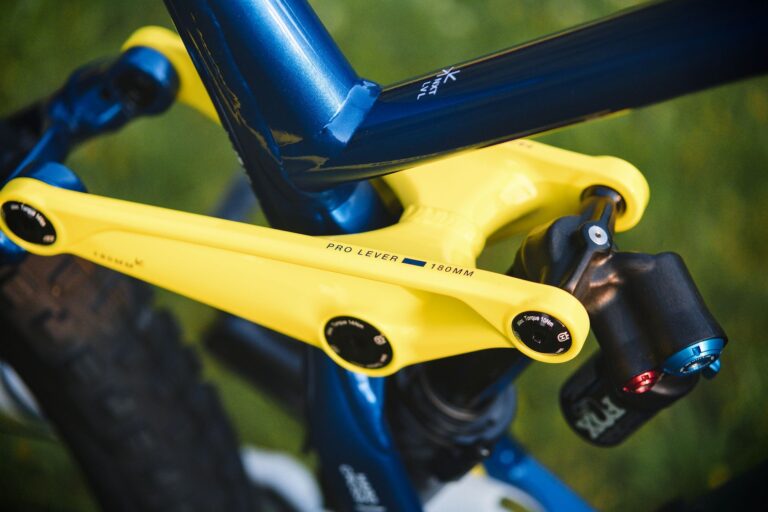
A new link-arm flip chip is the most visually notable update: it allows riders to toggle between 29-inch and mixed-wheel setups (29" front / 27.5" rear) without compromising suspension geometry. This means you can experiment with wheel sizes to match trail conditions or terrain preference—larger front wheel for momentum and rollover, smaller rear for maneuverability—while keeping the frame's performance characteristics intact.
Frame Features and Maintenance
The 2026 Fluid adds fully guided internal cable routing with nylon tubing, simplifying maintenance and improving longevity, a practical upgrade that protects brake and shifter cables from mud and weather. The frame also includes a UDH (Universal Derailleur Hanger) dropout—a standardized attachment point that accepts any modern rear derailleur—protective chainstay, seat-stay, and downtube guards to reduce damage from rocks and impacts, and a top-tube accessory mount for lights or bags. These design choices prioritize longevity and everyday practicality over minimalist weight savings, signaling that Norco expects owners to ride these bikes hard and maintain them themselves rather than treating them as disposable platform upgrades.
Sizing and Rider Fit
The redesigned fluid is available in five sizes (S1–S5) fitting riders from approximately 5'0" to 6'6", with slightly reduced reach (S3 reaches from 480mm down to 472mm) and lower stack height compared to Generation 2. Shorter reach means the bike assumes a slightly more upright, less stretched-out position, which can feel more controlled and less fatiguing on technical descents if you prefer that posture. Check your inseam and typical trail-riding position when sizing up: the reduction isn't dramatic enough to disqualify a size you would have chosen before, but it's worth test-riding if you're between sizes or prefer a more spacious bar reach.
Weight and Frame-Level Gains
Claimed complete bike weights now start at 35.2 lbs (S3), though some higher-build models weigh slightly more than outgoing generation equivalents despite frame-level weight savings from the new 6066 aluminum. This is a common real-world caveat: manufacturing tolerances, component choice, and suspension fluid can offset frame-level gains.
If weight is critical for your riding style, inspect the spec sheet closely and calculate the actual component weights rather than relying solely on manufacturer claims. A lighter frame matters most if you're upgrading from an older or heavier reference point, not if you're comparing adjacent generations where build costs shift toward other areas.
Pricing and Who This Bike Targets
Norco offers three complete 2026 Fluid buildout options at $2,299, $2,899, and $3,899. The entry-level build provides functional components suitable for learning advanced trail technique; mid-tier and premium builds add lighter wheels, wider tires, and more durable drivetrains for riders who session technical terrain regularly. At these price points, you're shopping in a segment where full-suspension options from direct-to-consumer brands and larger OEMs compete heavily, making the Fluid's value proposition dependent on frame durability and parts availability over pure component prestige.
Frequently Asked Questions
Can I really switch between 29-inch and mixed-wheel setups without affecting suspension?
Yes. The flip chip adjusts the link arm to maintain suspension geometry (travel, progression curve) when you swap wheel sizes. You won't notice a handling penalty, though mixed-wheel setups do change how the bike feels—larger front wheel rolls faster, smaller rear wheel steers quicker. Test both before committing to one.
How much lighter is the new 6066 frame than the old 6061?
Norco hasn't published a direct weight comparison, but 6066 alloy is inherently denser and stronger than 6061, allowing thinner wall sections for equivalent durability. Real-world weight savings vary by size and build spec. Don't assume a lighter frame alone means a lighter complete bike.
Is the reach reduction a problem if I'm upgrading from an older Fluid?
Only if you already felt cramped or preferred a stretched position. Most riders adapt quickly to 8–12mm less reach. If you're between sizes, test ride before ordering.