Riding a bike safely in heavy urban traffic comes down to one core principle: assume every driver might not see you, and ride accordingly. This means wearing bright, reflective clothing, using white front lights and red rear lights at night, and constantly adjusting your position and speed to stay visible and out of danger zones. A cyclist in a busy downtown area should expect to encounter buses, delivery trucks, taxi drivers shifting lanes suddenly, car doors opening from parked vehicles, and pedestrians stepping into bike lanes—and navigate these hazards by being defensive, predictable, and alert rather than trusting that other road users will notice you. This article covers the specific techniques that reduce crash risk, the intersections where most urban cycling accidents happen, how to avoid the blind spots of large vehicles, why road conditions matter more in cities, and how to choose routes and equipment that give you the best chance of staying safe.
Urban cycling has become increasingly popular, but the statistics underscore why safety can’t be casual. Nearly 81% of bicyclist deaths occur in urban areas, and roughly 120,000 emergency room visits happen annually due to bicycle accidents in the U.S., with approximately 1,000 cyclist deaths per year. In New York City alone, bicyclist fatalities accounted for over 10% of all traffic deaths in 2025. These numbers aren’t abstract—they reflect real crashes that happen at intersections, along major roads with heavy traffic, and on streets where infrastructure lags behind cycling adoption.
Table of Contents
- Master the Intersections Where Most Urban Crashes Occur
- Visibility and Lighting in Urban Settings
- Avoiding the Blind Spots of Buses and Large Trucks
- Maintaining Safe Distance From Parked Cars and Doors
- Road Conditions and Weather Hazards in Cities
- Choosing Routes and Bike Infrastructure That Protect You
- Equipment Maintenance and Bike Fit in Urban Cycling
- Conclusion
- Frequently Asked Questions
Master the Intersections Where Most Urban Crashes Occur
Nearly 75% of urban cycling crashes happen at intersections, which makes intersection navigation the single most critical skill for safe city cycling. When you approach an intersection in heavy traffic, your instinct should be to slow down, look for eye contact with drivers waiting to turn, and assume that a driver looking at their phone or a side mirror has no idea you’re there. This isn’t paranoia—it’s defensive cycling. Even when you have a green light or the legal right of way, a left-turning car, a delivery van backing up, or a pedestrian stepping off the curb can create a collision in seconds. The mechanics of intersection safety are straightforward but require constant practice. Position yourself where drivers can see you—not hidden behind an SUV, not squeezed between a car and the curb. If you’re at a red light on a bike, stay far enough back that drivers in the left-turn lane can see you in their mirror.
When the light turns green, wait a half-second before accelerating; many drivers don’t look twice and will turn left directly into the bike lane. Watch for car doors opening from parked vehicles in the intersection approach, and track the driver’s head position to see if they’re looking toward oncoming traffic or seem distracted. If you’re uncertain whether a driver has seen you, assume they haven’t. The challenge in heavy traffic is that intersections move quickly and your margin for error shrinks. You might have a 10-second window between a green light turning red and a column of traffic surging through. riding too fast to clear an intersection before traffic arrives can put you in a position where you can’t stop or swerve if something unexpected happens—a pedestrian crossing against the light, a delivery truck blocking your path, or a car making a sudden lane change. The safer approach is to control your speed, stay alert, and be willing to brake hard if needed.
Visibility and Lighting in Urban Settings
The top two factors in fatal bicycle crashes are bicyclist failure to yield right-of-way and lack of visibility, and while yielding decisions are under your control, visibility depends on both what you wear and what you have on your bike. During the day, bright colors matter more than most cyclists realize; a neon yellow or orange jersey, a white or bright colored helmet, and reflective tape on your frame and backpack all increase the likelihood that a driver will notice you in their peripheral vision or mirror. At night, lights are non-negotiable. A white front light and a red rear light are not optional accessories—they’re essential safety equipment. The front light should be bright enough that drivers can see you from at least two car lengths away, and the rear light should pulse or flash to grab attention. However, lights and visibility have limits.
A driver distracted by their phone won’t see your lights. A driver making a quick turn won’t look for a bike light. Visibility helps, but it’s not a complete solution; it’s one layer of defense. A 2026 guide to urban cycling safety emphasizes that wearing high-visibility clothing and using lights can reduce your risk, but it doesn’t eliminate the hazard of drivers who simply aren’t paying attention. Distracted driving is the leading cause of severe bicycle accidents, so even with perfect visibility, you still have to ride defensively and watch for the tell-tale signs of an inattentive driver—a weaving car, someone holding their phone, a driver staring straight ahead without scanning mirrors. Reflectors on your pedals, shoes, and wheel spokes add an extra layer by catching headlights from perpendicular traffic, which is especially important at intersections where a driver turning left or right might not see a light pointed straight ahead. Some riders choose to use additional lights on their helmet or on their ankles, which works well in congested urban environments where driver eye level can vary widely depending on vehicle type.
Avoiding the Blind Spots of Buses and Large Trucks
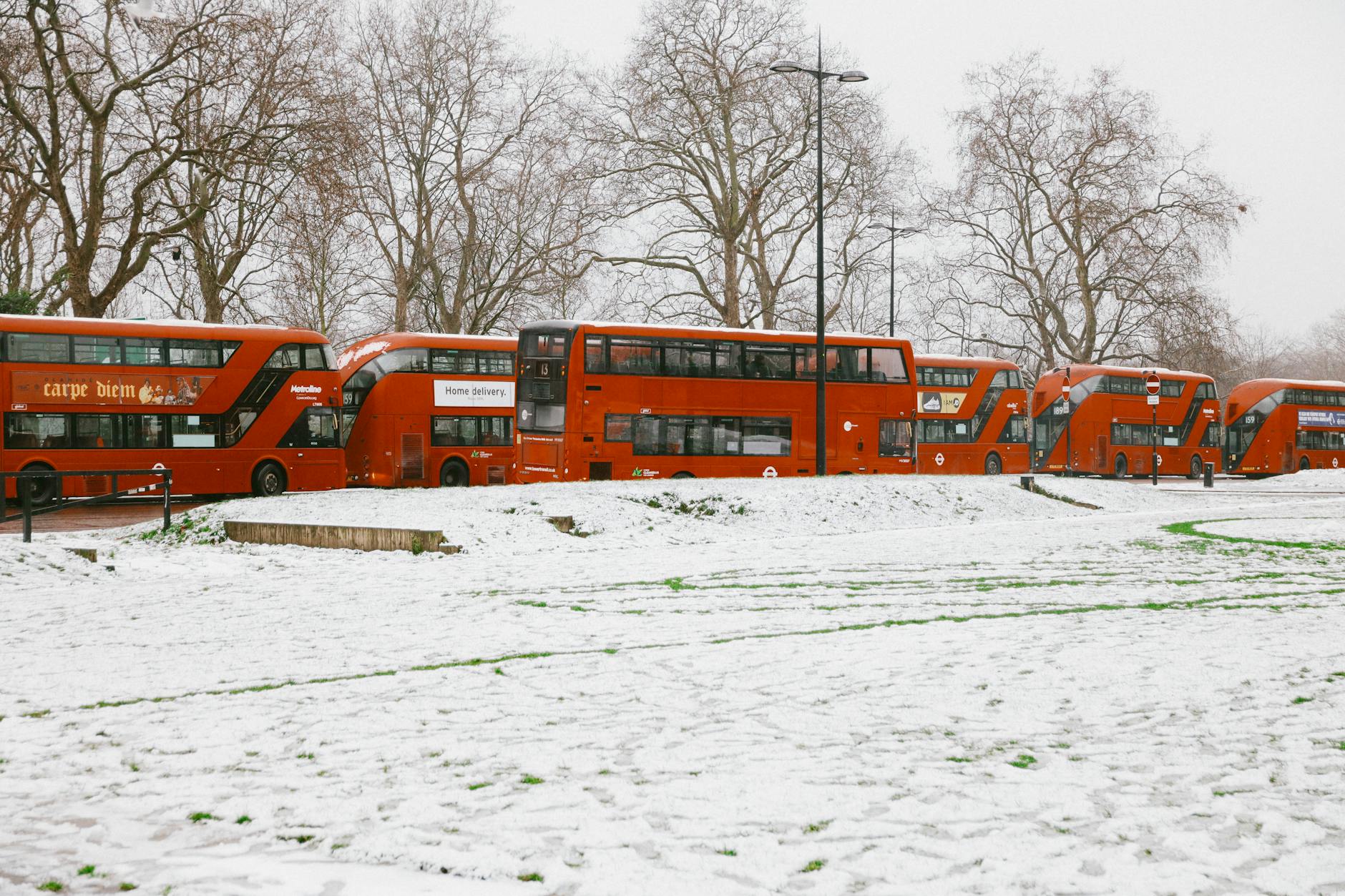
One of the most dangerous positions for a cyclist in heavy traffic is directly alongside a large vehicle, especially a bus or delivery truck. These vehicles have significant blind spots—areas that the driver cannot see from any mirror. A bus driver sitting several feet above traffic cannot see a cyclist next to the rear wheels, and a truck driver can’t see you in the side mirror if you’re positioned between the rear of the cab and the trailer. Never ride alongside a bus or truck at an intersection or while it’s preparing to turn; instead, drop back several lengths or move ahead and to the side, giving the vehicle plenty of space. The specific risk is that a large vehicle turning left or right will swing wide and crush a cyclist in the turn radius. This happens regularly in cities, and it’s nearly impossible to survive.
A truck making a right turn might swing left first to get more angle, moving directly into your lane without warning. If you’re riding behind a truck in traffic and the brake lights haven’t come on yet, the driver may be about to turn; assume that’s happening and move to the side immediately. Similarly, if a bus is stopped at a red light and you’re on the bike lane, never position yourself directly beside the rear wheels where the driver can’t see you; wait until it moves and you can see clearly around it. The hardest part of this rule to follow is resisting the urge to filter ahead in traffic when a bus is stopped. Many cyclists will squeeze past a stopped bus to get ahead, which is exactly the position you should avoid when the light is about to change. A bus pulling from a stop into traffic doesn’t see cyclists on its side, and the driver is focused on merging into traffic, not on checking the near-side blind spot. Wait, or move far ahead to where the driver can see you clearly.
Maintaining Safe Distance From Parked Cars and Doors
A “dooring” incident—being struck by an opening car door—is one of the most preventable urban cycling accidents, yet it happens constantly because riders don’t maintain enough distance from parked cars. The recommended distance is at least 6 feet from the line of parked vehicles, which gives you reaction time if a door swings open. In practice, this is often hard to maintain on a narrow bike lane, but it’s worth fighting for. If you can’t get 6 feet away from parked cars, slow down. A door that opens suddenly is not an obstacle you can weave around at speed; you need to be able to brake or move instantly. The mechanics of a dooring are deceptively dangerous.
A car door swinging at even 30 mph when a cyclist is also moving forward creates a combined impact speed that can throw you into traffic or under a following vehicle. You can’t always predict who will open a door; some people look, many don’t. What you can predict is where doors are likely to open—on the driver’s side of a parked car, especially if there’s someone in the driver’s seat, and in neighborhoods where street parking is common. Look for signs of occupancy: people sitting in the car, a recently closed door, exhaust visible, interior light on. If you’re unsure, assume the car is occupied and give it extra space. The comparison is worth making: maintaining 6 feet of clearance from parked cars means you might lose a few seconds, but dooring injuries can be catastrophic. You’re trading time for safety, and in heavy urban traffic where you’re already navigating chaos, those extra feet are well worth it.
Road Conditions and Weather Hazards in Cities
Urban roads present hazards that rural cycling doesn’t: metal grates in storm drains that can swallow a wheel, oil slicks from stopped traffic, wet leaves that pile up between parked cars, and potholes that fill with water. Wet pavement reduces tire traction significantly, and a bike that handles well in dry conditions becomes unpredictable in the rain. Wet metal surfaces—bridge expansion joints, steel plates covering underground work, manhole covers—become extremely slippery, especially when your tire is at an angle. In heavy traffic where you might be leaning hard to avoid a car, losing traction is dangerous. The specific warning is that you cannot brake as hard on wet pavement, and your cornering speed has to drop. If you ride in a heavy downpour at the same speed as you would on a dry day, you’re relying entirely on the assumption that you won’t need to brake hard. In urban cycling, you almost certainly will.
A pedestrian stepping into the bike lane, a delivery truck double-parked in your path, or a car door opening—these scenarios demand instant stopping power. Wet conditions remove margin for error; they turn a survivable crash into a serious one. Slow down when it rains, increase your braking distance, and avoid leaning hard into turns if you’re on slick surfaces. Another consideration is the specific urban hazard of debris accumulation. In cities, debris tends to pile up where traffic is heaviest—in bike lanes alongside parked cars, in intersection approaches, and on bridges. A wheel catching a piece of sharp metal or catching the edge of a pothole can cause a sudden loss of control that’s particularly dangerous in traffic. Before you accelerate hard or make a quick turn, look ahead for these hazards, especially after rain or heavy winds.
Choosing Routes and Bike Infrastructure That Protect You
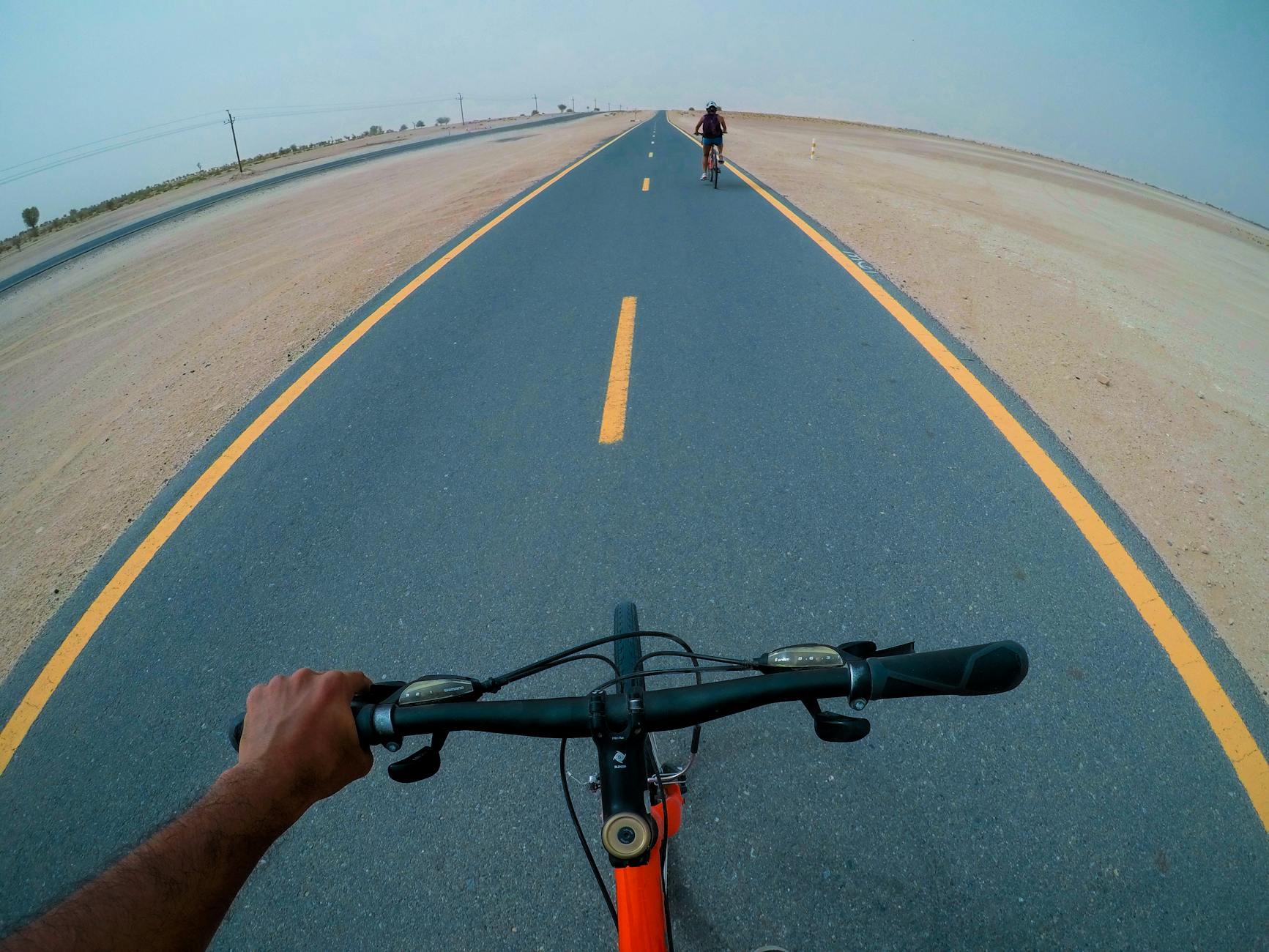
One statistic illustrates the importance of infrastructure: 80% of urban bicyclist deaths occur on roadways with no bike lanes. This isn’t because experienced cyclists are forced into traffic; it’s because most cyclists on those streets are less cautious, less visible, and more exposed. When you have a choice between a road with a protected bike lane and one without, always take the protected lane, even if it’s slightly longer. A road with a painted bike lane but no physical barrier is better than no protection at all, though drivers still treat it as part of the travel lane sometimes. In heavy traffic, your route choice determines your safety profile. A street with a dedicated bike path separated from traffic is infinitely safer than one where you’re riding inches from car doors and bumpers. A staggered intersection design that moves bikes through separately from cars is safer than one where you have to cross six lanes of traffic simultaneously.
Spend time learning the safest routes in your city, not just the fastest. The best route is often one that avoids major arterial roads entirely; 65% of bicyclist deaths occur on major and minor arterial roads, despite these roads representing only 10% of the national roadway system. This means heavy traffic concentrates danger. Some cities have begun improving bike infrastructure specifically because the statistics became impossible to ignore. If your city has a bike map or a “low-stress” bike network, use it. These routes are designed to separate bikes from high-volume traffic, and they typically involve smaller streets, traffic-calmed neighborhoods, and dedicated paths. The time savings from taking the direct route on a major road aren’t worth the risk; a few extra minutes is a fair trade for staying alive.
Equipment Maintenance and Bike Fit in Urban Cycling
Before every ride in heavy traffic, do a quick safety check: ensure your brakes are responsive and have adequate pad thickness, check that your tires are properly inflated, and confirm that your bike fits you well. A bike that’s too large for your frame is harder to control, especially when you need to brake hard or make a quick maneuver. You should be able to straddle the frame with both feet flat on the ground and have an inch or two of clearance; if you can’t, the bike is too big. In an emergency stop or collision avoidance situation, a bike that fits poorly puts you in a worse position to control it. Brake maintenance is critical and non-negotiable. Wet urban roads mean you’ll be braking harder and more often, and brake pads that are worn thin or wet won’t stop you as quickly as you need.
Check your pads monthly, clean your rims if they’re dirty, and test your brakes in a safe area before you ride in traffic. E-bikes have added complexity; e-bike injuries nearly doubled from 2021 to 2022, with approximately half of all e-bike injury cases from 2017-2022 occurring in 2022 alone. The power assistance on e-bikes means they accelerate and coast differently, and braking feels different too. If you’re new to e-bikes, practice braking in a safe area until the feel becomes automatic. Tire choice matters in cities, where punctures from broken glass or metal fragments are common. Thicker tires or puncture-resistant tires reduce flats, which means fewer roadside stops in traffic where you’re vulnerable. A flat tire while you’re trying to walk your bike on a busy sidewalk next to parked cars is a crisis; preventing flats is worth the slight rolling resistance cost.
Conclusion
Safe urban cycling isn’t about being fearless—it’s about being hyperaware of the hazards, riding with the assumption that every driver might miss you, and maintaining the margins of distance, speed, and visibility that let you survive mistakes. The combination of techniques covered here—defensive positioning at intersections, maintaining distance from parked cars and blind spots, using lights and reflective clothing, choosing safer routes, and maintaining your equipment—form a comprehensive approach that significantly reduces your risk of being in the 1,000 cyclist deaths that happen each year in the U.S., or the 120,000 who end up in emergency rooms. The statistics are sobering, but they also show that safe cycling is possible when you approach the road with intention and respect for the forces at work around you. Start with one change if you’re not already practicing all of these habits: if you’re riding without lights, get lights.
If you’re not wearing bright colors, add a vest. If you’re filtering past stopped buses, stop. If you’re maintaining less than 6 feet from parked cars, move further out or slow down. The goal is to reach a point where riding in heavy urban traffic feels controlled and predictable, not chaotic. That control comes from understanding where crashes happen, recognizing the specific hazards of your city, and riding in a way that gives other road users a chance to see you and gives you the space to react if something goes wrong.
Frequently Asked Questions
Is it better to ride in the bike lane even if cars are parked in it?
No. A parked car in the bike lane means you either need to merge into traffic to get around it or ride closer than 6 feet to car doors, both of which increase risk. If the bike lane is consistently blocked, report it to your city’s transportation department; the issue is widespread enough to warrant infrastructure fixes.
Should I wear a helmet in heavy urban traffic?
Yes. Helmet use significantly reduces head injury risk in crashes. In urban crashes where you’re more likely to hit a car or parked vehicle rather than fall on pavement, a helmet becomes even more critical. There’s no downside to wearing one.
Is it safe to ride on sidewalks to avoid traffic?
In heavy urban traffic, sidewalk riding shifts the hazard from cars to pedestrians and parked car doors. Pedestrians don’t expect fast-moving vehicles on the sidewalk, and cars pulling in or out of driveways won’t see you. A bike lane or street is safer; if neither exists, slow down significantly on the sidewalk and be extremely cautious at corners and driveways.
What should I do if a car door opens in front of me?
If you have time and space, swerve around it. If you don’t, brake hard and try to slow as much as possible before impact. Your goal is to minimize impact speed, which reduces injury severity. This is why maintaining distance from parked cars is so critical—it gives you reaction time.
How much visibility equipment do I really need?
At minimum: a white front light and a red rear light, plus bright clothing during the day. Reflectors on wheels and pedals add safety with minimal cost or weight. In heavy traffic, more is better; if you can add reflective tape to your frame or wear a reflective vest, do it.
Is cycling in rain more dangerous than sunshine?
Yes, significantly. Wet brakes are less effective, tires lose traction, and visibility is worse for drivers. Slow down, increase your braking distance, and avoid making sharp turns on slick surfaces. If conditions are severe, consider alternative transportation.


