Combining cycling with other forms of exercise is one of the most effective strategies for building overall fitness, reducing injury risk, and breaking through performance plateaus. The key is strategic cross-training—selecting complementary activities that address cycling’s gaps while giving your cycling-specific muscles adequate recovery. Most cyclists see the biggest gains by pairing cycling with strength training 2-3 times weekly, flexibility work 3-4 times weekly, and occasional high-intensity activities that differ from their normal cycling intensity. A runner who adds cycling knows immediately how to cross-train; cyclists often miss the same principle in reverse.
The real benefit isn’t just fitness variety. Cycling alone develops the quadriceps, hamstrings, and glutes exceptionally well but tends to neglect upper body strength, core stability, and lateral movement capacity. Someone riding 12 hours weekly will develop imbalances and movement dysfunction without targeted strength training. By adding complementary exercises, you distribute stress across more muscle groups, recover better between hard efforts, and actually improve your cycling performance while doing less cycling-specific work.
Table of Contents
- Why Cross-Training With Cycling Creates Better Athletes Than Cycling Alone
- Recovery and Overtraining Risks When Mixing High-Intensity Activities
- Building a Complementary Strength and Mobility Routine Around Cycling
- Practical Weekly Scheduling and Timing of Different Exercise Types
- Common Mistakes and Advanced Programming Considerations
- Nutrition and Recovery Requirements for Multi-Activity Training
- Long-Term Progression and Staying Healthy With Diverse Training
- Conclusion
- Frequently Asked Questions
Why Cross-Training With Cycling Creates Better Athletes Than Cycling Alone
cycling is an excellent cardiovascular activity, but it’s limited in scope. The pedaling motion happens in a single plane—up and down, with minimal lateral movement or rotational demand. Your glutes and quads fire repeatedly while your hip abductors, external rotators, and single-leg stability receive minimal stimulus. This creates predictable imbalances: many cyclists develop tight hip flexors, weak glute medius, and poor thoracic mobility. Adding strength training, swimming, or even regular hiking forces your body to work in different planes and stabilize in unfamiliar ways.
The evidence shows cross-trained cyclists improve faster. A cyclist who adds 2-3 weekly strength sessions typically sees a 5-8% power improvement within 12 weeks while reducing training stress compared to someone adding more miles. The reason is efficiency: strength work makes each pedal stroke more powerful and economical, so you need fewer miles to achieve the same training stimulus. Running once weekly improves your VO2 max differently than cycling does, hitting different metabolic pathways and demanding higher lactate thresholds. For serious cyclists, this variety is what separates steady improvement from plateaus.
Recovery and Overtraining Risks When Mixing High-Intensity Activities
Here’s where most cyclists make mistakes: they view cross-training as additional fitness work and stack it on top of their cycling, creating a dangerous volume problem. If you’re currently riding 10 hours weekly with 2 hard days, you cannot then add 3 strength sessions and 2 running sessions without consequences. Your central nervous system will be constantly stimulated, your hormonal recovery will suffer, and you’ll crash within 6-8 weeks. Overtraining shows up as elevated resting heart rate, persistent soreness, immunity tanking, and paradoxically, worse cycling performance despite more work.
The fix is understanding that cross-training replaces some cycling volume, not adds to it. A well-structured week might look like: 2 cycling days (one hard, one easy), 2 strength days (lower body focused), 1 running day, 1 yoga or mobility day, and 1 complete rest. This totals 7 days with roughly equivalent training stress to a cyclist doing 8-10 cycling days weekly alone. Your total stress is similar but distributed more broadly, creating more resilience. The warning: mixing multiple high-intensity activities in the same week—hard cycling, hard running, and heavy strength work—almost guarantees overtraining within 3-4 weeks unless you’re very experienced and managing volume meticulously.
Building a Complementary Strength and Mobility Routine Around Cycling
Strength training deserves special attention because it’s the most common missing piece. Cyclists benefit enormously from lower body focused work that emphasizes single-leg stability and hip strength. Exercises like Bulgarian split squats, single-leg deadlifts, lateral lunges, and Nordic hamstring curls address the exact deficiencies cycling creates. These shouldn’t be heavy bodybuilding work—moderate weights, higher reps, and controlled tempo work better because cycling isn’t a max-strength sport. Two 45-minute sessions weekly, done on your easy cycling days, will yield noticeable improvements in power, stability, and injury resilience.
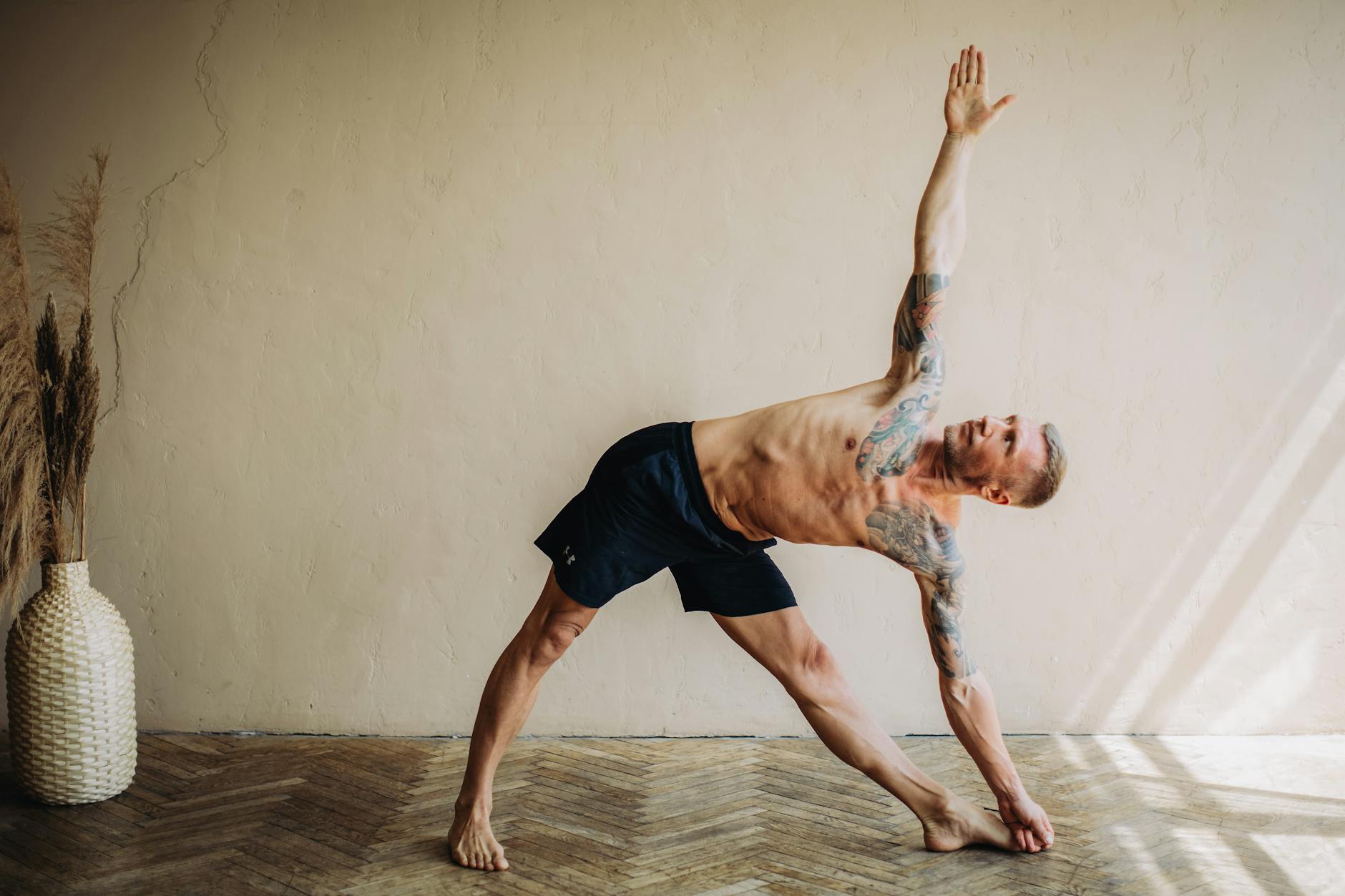
Upper body work and core stability matter more than cyclists realize. Your spine needs stability during hard efforts, and your upper body stabilizes you during climbing and sprinting. Push-ups, rows, overhead presses, and anti-rotation exercises (Pallof presses, dead bugs) should comprise 25-30% of your strength work. Flexibility and mobility often get skipped but prevent the dysfunction that leads to injuries. Twenty minutes of focused yoga, foam rolling, or dedicated stretching 3-4 times weekly will address hip flexor tightness, thoracic rotation limitations, and ankle mobility issues before they become injuries. The limitation: mobility gains require consistency and can take 6-8 weeks to materialize, so it’s easy to skip when chasing fitness gains.
Practical Weekly Scheduling and Timing of Different Exercise Types
The timing of cross-training around your cycling matters significantly. Your hardest cycling efforts should be your primary focus—schedule strength work and running on easy cycling days or separate from hard cycling sessions. If you do a hard cycling session in the morning, an evening strength session works fine. But don’t do a hard cycling effort followed by a hard run the same day unless you’re intentionally building race-specific fitness and accepting higher injury risk. Most cyclists find success with a pattern like Monday (hard cycling), Tuesday (strength), Wednesday (easy cycling), Thursday (running), Friday (strength), Saturday (long, easy cycling), Sunday (rest).
Comparing two approaches: some cyclists do long ride + brick session (hard ride followed immediately by running/climbing), which is sport-specific but neurologically demanding and requires careful recovery. Others separate them entirely, cycling hard one day and running hard another, which is less specific but more sustainable and lower injury risk. The brick approach suits experienced athletes racing cyclocross or triathlon. The separated approach suits most cyclists seeking fitness and longevity. Consider your goals: if you’re training for a century ride, race pace doesn’t matter much and general fitness is your real goal—separation works better. If you’re racing bikes seriously, some specificity work makes sense.
Common Mistakes and Advanced Programming Considerations
The biggest mistake is treating running and cycling as equal intensities and combining them casually. A 5-mile run at moderate effort creates different stress than a 20-mile bike ride at the same feel. Running’s impact creates systemic stress, while cycling’s continuous tension creates metabolic stress differently. A runner adding cycling should keep initial cycling efforts short and easy—10 miles maximum—until their body adapts to the pedaling motion. A cyclist doing their first serious running should resist the urge to do a full 5 miles; start with 20-minute efforts and build gradually or you’ll develop runner’s knee within 2-3 weeks.
Advanced cyclists sometimes implement block periodization where they emphasize different modalities in different training phases. You might do a “strength block” where 40% of training is strength work and cycling is reduced, a “power block” with more climbing and intervals, and a “endurance block” focusing on long easy rides. This prevents adaptation and addresses different adaptations cyclically. However, this requires careful planning and works best if you’re training for specific events. The warning: this complexity creates opportunities for mistakes if you’re not experienced with periodization. Most cyclists see better results from consistent, moderate cross-training year-round than from fancy block periodization.

Nutrition and Recovery Requirements for Multi-Activity Training
Adding diverse exercise modalities increases your total training stress, which means your nutrition and recovery demands increase substantially. You cannot simply eat what you ate while cycling exclusively and expect good recovery when you’ve added running and strength work. Your daily carbohydrate needs might increase 30-50%, and your protein needs shift higher to support muscle recovery from different stimulus. Tracking total calorie and macro intake matters more—some athletes find they’re underfueling without realizing it because the hunger cues from cycling alone differ from multi-activity training. Sleep becomes non-negotiable.
The nervous system stress from varied, intense training cannot be managed with poor sleep. Aim for 8-9 hours nightly when doing serious cross-training. Recovery tools like massage, contrast water therapy (hot/cold), and foam rolling gain real value when you’re training across multiple modalities because different activities create different muscle fatigue patterns. An example: cycling creates deep quad and glute fatigue while running creates calf and anterior tibial tension. Addressing all of it prevents imbalances from compounding. Some athletes feel better with an active recovery day combining easy cycling with mobility work rather than complete rest.
Long-Term Progression and Staying Healthy With Diverse Training
The long-term advantage of cross-training is injury prevention and sustainable improvement over years. Cyclists who do only cycling and push mileage aggressively often hit injury walls at years 3-5 when accumulated stress finally produces an overuse injury. Those who’ve built strength, mobility, and varied their movement patterns throughout their training tend to stay healthy and improve steadily through decades of training. The body adapts to single-stimulus training in months, but varied stimulus keeps adaptation fresh and progress consistent.
Planning several years ahead helps. A cyclist at year 5 of experience can handle volume and intensity that would break down someone at year 1. That progression looks like: years 1-2 (focus on building solid cycling foundation, add basic strength), years 2-4 (introduce running or hiking, add sport-specific strength), years 4+ (refine periodization, experiment with advanced cross-training combinations). This progression builds resilience and teaches you what your body tolerates. Looking forward, evidence keeps mounting that lifelong athletes who’ve done consistent cross-training age better and maintain performance better than specialists who’ve only done one sport.
Conclusion
Combining cycling with other forms of exercise isn’t about doing more training—it’s about distributing training stress more intelligently across different systems, recovering better, and building more resilient, well-rounded fitness. The practical framework is simple: keep cycling as your primary focus, add 2-3 weekly strength sessions targeting the muscles and movement patterns cycling neglects, incorporate flexibility work 3-4 times weekly, and experiment with complementary activities like running or swimming once weekly. This totals roughly the same training stress as cycling-only programs but produces better overall fitness, less injury risk, and faster improvements. Start by assessing what your cycling is missing.
If you feel strong on the bike but weak climbing stairs or handling single-leg balance, strength work is your priority. If you feel stiff and move awkwardly off the bike, mobility work is foundational. If you lack aerobic capacity or hit intensity ceilings, adding running or rowing can help. Give any new cross-training activity at least 4-6 weeks at modest volume before deciding if it works for you, because initial awkwardness and soreness don’t reflect long-term benefit. The cyclists improving most aren’t necessarily doing the most cycling—they’re the ones training most intelligently across multiple modalities.
Frequently Asked Questions
How much should I reduce my cycling if I add cross-training?
Plan to reduce cycling volume by 15-25% when adding 2-3 weekly strength sessions plus one additional activity like running. This keeps total training stress stable while distributing it more broadly. If you’re currently riding 10 hours weekly, dropping to 7-8 hours while adding cross-training typically improves performance.
Is it better to strength train before or after cycling?
After an easy cycling day works best because your muscles are already activated but not fatigued. Avoid heavy strength work immediately after hard cycling efforts because you lack the neural capacity to train heavy when fatigued from a hard ride. Separate them by 6+ hours or do strength on completely off-bike days.
How long does it take to see improvements from cross-training?
Strength and mobility improvements appear within 3-4 weeks but are subtle. More noticeable improvements in cycling performance typically show at 8-12 weeks when the fitness gains compound. Full benefits of balanced training take 4-6 months to become obvious.
Can I cross-train more than 2-3 times weekly alongside cycling?
Not sustainably unless you’re significantly reducing cycling volume or you’re an experienced, well-recovered athlete. Most cyclists find that 2-3 cross-training days plus 4-5 cycling days per week is the realistic maximum. Adding more than that requires reducing cycling substantially.
What’s the best cross-training activity for cyclists?
There’s no single best activity—it depends on your deficiencies. Strength training addresses the most common gaps for cyclists. Swimming and rowing build different upper body and core strength. Running improves VO2 max differently but creates impact stress. Start with strength training, then add what your body needs.
Should I do cross-training year-round or only in off-season?
Year-round consistency produces better results than sporadic off-season work. Building strength and mobility takes months, so stopping for racing season and restarting afterward wastes time. Maintain a baseline of strength work (2 sessions weekly) year-round and adjust intensity based on racing schedule.


