The right tire choice depends entirely on where and how you ride. Start by identifying your primary riding style—commuting on pavement, off-road trails, gravel roads, or mixed terrain—because tires optimized for one surface will perform poorly on another. A road cyclist needs thin, high-pressure tires that roll smoothly on asphalt, while a mountain biker needs wider, knobby tires for traction on loose dirt. Your bike’s frame also dictates options: road bikes have narrow tire clearance, while mountain bikes and gravel bikes accept wider, more versatile tires.
This article covers how to assess your riding needs, decode tire specifications, evaluate tread patterns, and select tires that match your budget and maintenance preferences. The most common mistake riders make is buying tires based on brand reputation alone, ignoring the specific tread and dimensions required for their actual riding conditions. A high-end tire is worthless if it’s designed for conditions you don’t ride in. The choice boils down to three factors: tire width and diameter (determined by your bike and rim compatibility), tread pattern (shaped by terrain and weather), and rubber compound (which affects durability, rolling resistance, and grip).
Table of Contents
- What Tire Size and Width Do You Actually Need?
- Tread Patterns and Why They Matter for Different Terrains
- Matching Tire Choice to Your Specific Riding Style
- Balancing Tire Pressure, Comfort, and Pinch Flats
- Puncture Resistance, Durability, and When to Replace Tires
- Budget, Value, and When to Compromise
- Long-Term Tire Strategy and Riding Evolution
- Conclusion
- Frequently Asked Questions
What Tire Size and Width Do You Actually Need?
Your bike’s specifications already limit your options significantly. Check the sidewall of your current tire and your bike’s manual or frame for the maximum tire width your bike can accommodate. Road bikes typically accept tires from 23mm to 32mm wide, while gravel bikes handle 35mm to 50mm, and mountain bikes range from 2.0 inches to 2.6 inches wide (roughly 50mm to 65mm). The tire diameter must match your rim size—common options are 700c for road and gravel bikes, and 26″, 27.5″, or 29″ for mountain bikes. Mismatching rim and tire sizes doesn’t just perform badly; it can cause the tire to slip off the rim under load.
Wider tires offer more grip and comfort because they can run at lower pressures and absorb impact better, but they add rolling resistance on smooth pavement. A commuter on mixed surfaces might choose a 40mm gravel tire that tolerates both asphalt and the occasional dirt shoulder, while a pure road racer would go narrower to minimize friction. The practical takeaway: wider isn’t always better. Test your bike’s maximum tire clearance by measuring the gap between your frame, seat stays, and current tire. Then leave 5mm of clearance on each side to account for mud buildup and manufacturing tolerances.
Tread Patterns and Why They Matter for Different Terrains
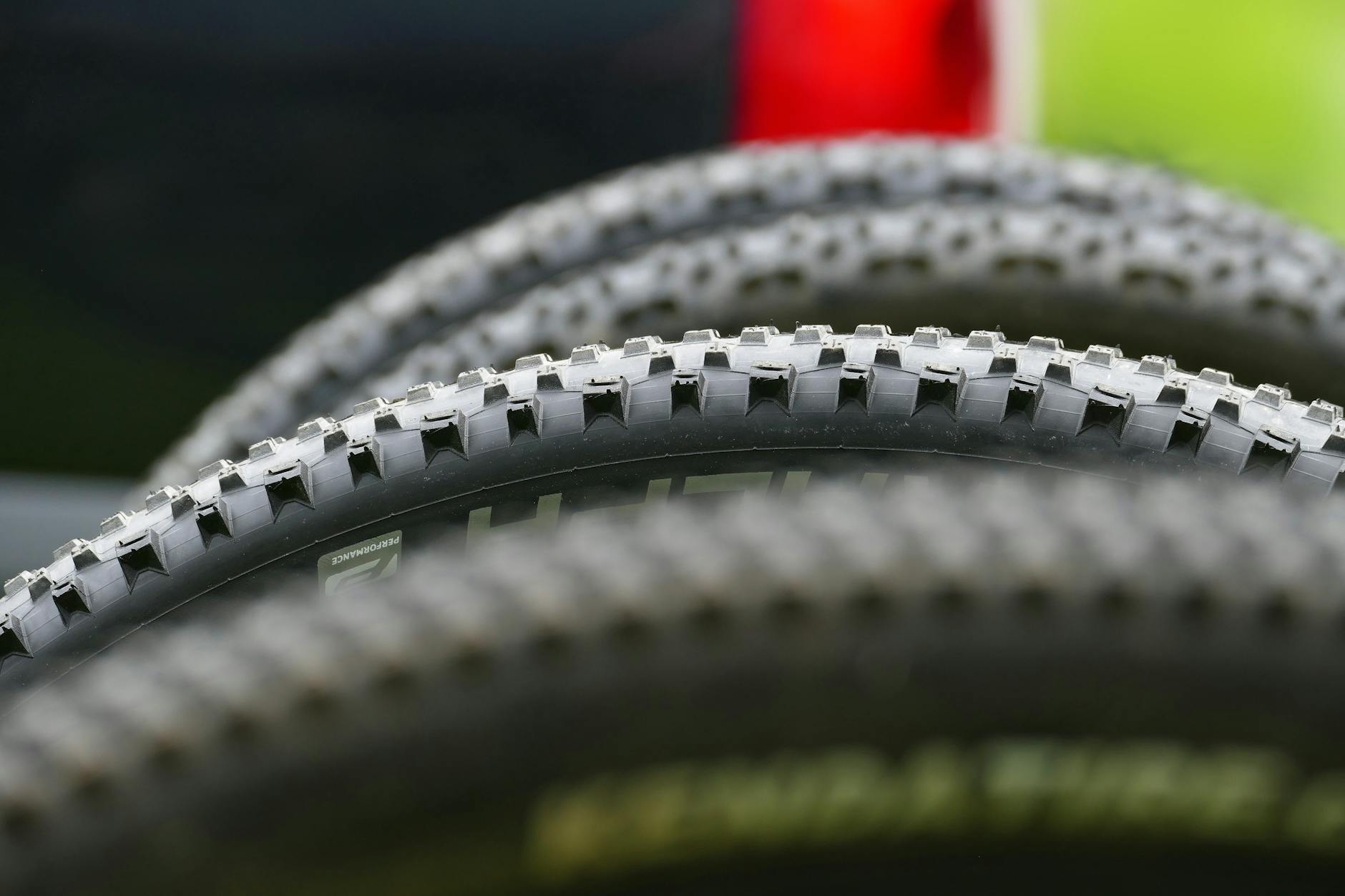
Tread is the pattern of grooves and knobs on the tire surface, and it’s the single most important factor for off-road traction. Knobby tires, common on mountain bikes, dig into soft surfaces—dirt, sand, mud—to prevent slipping. The larger and more pronounced the knobs, the more aggressive the tire, and the better it grips loose terrain. However, aggressive knobs create significant rolling resistance on pavement and wear quickly if you ride on roads. Conversely, smooth tires (slicks) roll efficiently on asphalt but offer almost no grip on dirt.
Tread patterns also address weather conditions. Tires with small, densely packed knobs or sipes (thin slits in the rubber) channel water away, improving wet grip on slippery surfaces. Road tires often skip deep tread entirely, relying instead on a fine tread or microstructure in the rubber. A critical limitation to understand: even the best mountain tire won’t grip ice or snow reliably. If winter riding is part of your routine, you need tires specifically designed for cold conditions, with compounds that stay flexible in low temperatures and tread patterns that bite through ice.
Matching Tire Choice to Your Specific Riding Style
A road cyclist commuting on smooth pavement should prioritize rolling resistance and durability. Narrow tires (25-32mm) with minimal tread are the standard. Brands like Continental Grand Prix and Vittoria Corsa are popular, but any road tire with a thin, supple casing and puncture-resistant belt will work. A gravel or adventure cyclist who splits time between pavement and dirt needs a compromise tire. A 40-45mm tire with a semi-slick pattern—smooth center for rolling on pavement, small edge knobs for dirt grip—balances both worlds.
Schwalbe G-One and Kona Puncheur tires exemplify this category. Mountain bikers should match tread aggressiveness to their typical terrain. Trail riding on packed dirt benefits from moderate knobs that don’t overdrive rolling resistance; enduro or downhill riding demands aggressive, full-cover knobs. A rider who spends 80% of their time on hardpack trails but occasionally hits loose sections should avoid full downhill tires that will wear out quickly on packed surfaces. Similarly, commuters who encounter gravel or dirt roads shouldn’t buy slick tires despite the efficiency temptation. One flat on an unsuitable tire wastes far more time than the minor rolling resistance penalty of a more versatile option.
Balancing Tire Pressure, Comfort, and Pinch Flats
Tire pressure directly influences grip, rolling resistance, and comfort, and it varies by tire width and rider weight. A 160-pound rider on a 28mm road tire will need different pressure than a 200-pound rider on the same tire. Higher pressure reduces rolling resistance and increases speed but also reduces grip and comfort, particularly on rough surfaces. Lower pressure improves grip and absorbs bumps but increases the risk of pinch flats—when the tire compresses enough that the rim impacts the tube or tubeless tire, creating two puncture holes on opposite sides. The fundamental tradeoff: find the lowest pressure that doesn’t cause pinch flats during hard riding or rough terrain.
Road cyclists typically run 80-130 psi depending on tire width and conditions. Gravel riders often drop to 40-60 psi for comfort and grip on unpaved surfaces. Mountain bikers might run 30-50 psi to improve traction and bump absorption. Your tire’s sidewall prints a pressure range; always stay within those limits. Many riders underestimate how much pressure matters. Dropping a road tire from 100 psi to 90 psi can noticeably improve comfort and wet grip without sacrificing much speed, yet many riders never experiment.
Puncture Resistance, Durability, and When to Replace Tires
Tire durability is determined by rubber compound, casing construction, and puncture-protection layers. Premium tires use thicker, high-quality rubber and add belts or protective layers (like Kevlar) to resist sharp objects. Budget tires save money but wear out faster and puncture more easily. A touring cyclist or commuter who values reliability should prioritize puncture resistance even if it costs more and rolls slightly slower. Schwalbe Marathon tires, for example, are famous for durability in commuting contexts, even though they’re heavier and slower than road-specific tires.
Replacement timing depends on riding volume and surface. Road tires typically last 2,000-4,000 miles before rubber hardening reduces grip. Mountain tires last 1,000-2,000 miles depending on terrain—soft dirt wears them faster than hardpack. One critical warning: a flat or puncture doesn’t necessarily mean the tire is finished. Small cuts and punctures can be repaired with plugs or patches, but sidewall damage, large cuts, or leaks that don’t hold air after repair indicate a tire must be replaced. Continuing to ride a damaged tire can blow out unexpectedly, and a blowout at speed is far more dangerous than stopping to fix or replace the tire.
Budget, Value, and When to Compromise
Tire prices range from budget options at $20-30 per tire to premium racing tires at $80-150. The law of diminishing returns applies strongly here. A $50 tire will outlast and outperform a $25 tire in almost every metric. A $100 tire might only be 10-15% better than the $50 option, and the improvement matters most to racers and serious enthusiasts. For most riders, mid-range tires ($40-70) offer excellent value. Buying tires online is significantly cheaper than local bike shops, though shipping costs must be factored in.
A commuter replacing tires annually might justify spending more upfront for durability, avoiding multiple smaller purchases over time. One underutilized option: buying slightly older or previous-season models. Last year’s Schwalbe tire is functionally identical to this year’s version but may cost 20-30% less. If you don’t care about the latest tread design or color, the savings are substantial. Conversely, buying the absolute cheapest tire because it’s on sale is false economy. A $20 tire that punctures twice means two repairs plus lost time, whereas a $50 tire that punctures once likely pays for itself in convenience alone.
Long-Term Tire Strategy and Riding Evolution
Your tire choice now shouldn’t lock you into a particular riding style forever. Many cyclists start with one-tire-does-all options—a 35-40mm gravel tire, for example—then specialize as their riding becomes more focused. A commuter might initially buy a durable utility tire, then add a lighter, faster tire for weekend rides. Maintaining two or three sets of wheels with different tire types lets you optimize for specific conditions without buying entire new wheelsets.
This strategy requires space and money upfront but becomes cost-effective over years of riding. As you log more miles, you’ll develop intuition about what your tires are doing and why. Tire selection becomes less about following recommendations and more about understanding your bike’s feel in different conditions. Experiment within your constraints: if your bike accepts tires from 28-32mm, try the 32mm option in wet conditions to see if the extra grip matters to you. The “best” tire doesn’t exist; the best tire is the one matched to your riding conditions, skill level, and priorities.
Conclusion
Choosing the right bike tires starts with understanding three fixed constraints: what sizes your bike accommodates, what terrain you primarily ride, and your budget. Within those boundaries, tread pattern determines grip on different surfaces, tire width affects rolling resistance and comfort, and pressure tuning balances speed with durability and safety. The most common mistake is ignoring the first constraint and buying whatever popular tire you hear about, then discovering it doesn’t fit your bike or suit your riding. Begin your selection process by checking your bike’s specifications, honestly assessing your riding conditions, and researching tires in that size and intended use category.
Read reviews focused on your specific conditions—a tire praised for gravel might be mediocre for commuting. Don’t hesitate to ask experienced riders on local forums what they use and why. Once you’ve selected a tire, experiment with pressure to find the sweet spot for your weight and riding style. Tire choice isn’t permanent; you can always try something different next season as your priorities and riding patterns evolve.
Frequently Asked Questions
How do I know if my bike can fit wider tires?
Check your current tire size on the sidewall, then look at your bike’s manual or frame documentation for maximum tire width. Measure clearance between your frame and tire in the tightest spot (usually near the seat tube or chainstays). If you have a few millimeters to spare, you might fit a slightly wider tire. When in doubt, test-fit the tire on your rim before fully committing.
Can I use road tires on a gravel bike?
Technically yes if they fit your rim size and your bike’s clearance allows it, but they’re not ideal. Road tires lack the grip and durability for frequent unpaved riding and will wear out quickly on gravel. The efficiency gain on smooth pavement isn’t worth sacrificing grip and puncture resistance on the surfaces you’ll encounter.
How often should I replace my bike tires?
Road tires typically last 2,000-4,000 miles; mountain tires 1,000-2,000 miles depending on terrain. Instead of a calendar schedule, replace tires when they show visible wear—hardened or shiny rubber, flattened tread, or persistent punctures. Some riders replace annually regardless; others get 2-3 years from a set. Your riding volume and terrain dictate the answer.
What’s the difference between clincher, tubular, and tubeless tires?
Clincher tires (the most common type) use a separate inner tube and hook beads that grip the rim. Tubular tires are sewn shut and glued to the rim, offering a supple ride but requiring glue expertise. Tubeless tires seal directly to the rim without a tube, reducing puncture risk and allowing lower pressures. For most riders, clinchers are practical; tubeless is growing in popularity but requires compatible wheels and more maintenance knowledge.
Why do some tires cost three times more than others?
Premium tires use higher-quality rubber compounds that grip better and last longer, thicker protective belts against punctures, and optimized tread designs tested extensively. Budget tires save money on materials and R&D. Most riders notice a real difference between budget and mid-range tires; the jump from mid-range to premium shows mainly in edge performance and longevity that matter most to racers or high-mileage riders.


