Bicycles reduce traffic congestion in cities by removing cars from the road, requiring far less physical space per commuter, and enabling faster point-to-point travel during peak hours in dense urban areas. A single lane of protected bike infrastructure can move five to ten times more people per hour than a lane dedicated to private automobiles, which means that even modest shifts from driving to cycling can produce outsized relief on congested corridors. In Bogotá, Colombia, the expansion of the Ciclovía network and permanent protected bike lanes helped cut average commute times on parallel roads by roughly 15 percent during morning rush hours, a result that has been studied and replicated in cities from Copenhagen to Guangzhou. The math is straightforward: a parked car takes up around 150 square feet of city space, while a parked bicycle needs about 6 square feet.
Multiply that difference across thousands of daily commuters and the impact on street capacity becomes enormous. This article explores the specific mechanisms through which cycling eases urban gridlock, from the space efficiency of bikes to the role of infrastructure investment and policy. It also examines the limitations of cycling as a congestion solution, the conditions under which bike commuting works best, and the tradeoffs cities face when reallocating road space. Whether you are a city planner evaluating options, a commuter considering a switch, or simply curious about why some cities flow better than others, the sections below lay out what the evidence actually shows.
Table of Contents
- Why Do Bicycles Take Up So Much Less Road Space Than Cars?
- How Much Congestion Can Cycling Realistically Reduce?
- What Role Does Bike Infrastructure Play in Reducing Urban Gridlock?
- How Cities Can Reallocate Road Space From Cars to Bikes
- When Cycling Fails to Reduce Congestion and Common Pitfalls
- Bike-Sharing Programs and Their Effect on City Traffic Patterns
- The Future of Cycling as a Congestion Solution
- Conclusion
- Frequently Asked Questions
Why Do Bicycles Take Up So Much Less Road Space Than Cars?
The fundamental reason bicycles reduce congestion is geometry. A moving cyclist occupies roughly 50 square feet of dynamic road space, while a moving car at urban speeds requires between 300 and 1,000 square feet depending on following distance and speed. This means a standard 12-foot traffic lane carrying cars at typical city speeds moves about 600 to 1,600 people per hour, while the same width dedicated to a two-way protected bike lane can move 7,000 to 12,000 cyclists per hour. These are not theoretical numbers. The Dutch research institute CROW has documented throughput on Amsterdam’s busiest cycling corridors consistently exceeding 8,000 riders per hour on a single bidirectional path during peak periods. The space advantage extends beyond the road itself. Cars need to be stored at both ends of every trip, and parking infrastructure consumes a staggering amount of urban land.
In many American cities, there are between three and eight parking spaces for every registered vehicle. Each of those spaces could instead hold 10 to 15 bicycles, or it could be repurposed for sidewalks, bus lanes, or commercial use. When a commuter switches from driving to cycling, the congestion benefit is therefore doubled: the road gets less crowded and the parking demand shrinks. There is also a throughput advantage at intersections, which are the true bottleneck of urban traffic flow. Cars accelerate slowly from stops, require wide turning radii, and create long queues at signals. Bicycles accelerate quickly, queue in tighter formations, and can clear intersections in shorter signal cycles. Copenhagen’s traffic engineers have timed their signal progressions along major corridors like Nørrebrogade to create a “green wave” at 20 kilometers per hour, the average cycling speed, which allows large groups of cyclists to flow through multiple intersections without stopping while cars on cross streets wait.

How Much Congestion Can Cycling Realistically Reduce?
The congestion relief from cycling depends heavily on context, and it is important to be honest about where cycling works as a transportation solution and where it does not. Studies from European cities with mature cycling infrastructure show that each percentage point increase in cycling mode share corresponds to roughly a 2 to 3 percent reduction in peak-hour vehicle delay on parallel routes. In cities like Copenhagen, where about 30 percent of all commutes happen by bicycle, the municipality estimates that cycling prevents approximately 48,000 car trips per day, which translates to measurable reductions in travel time across the road network. However, if a city has sprawling, low-density development patterns with trip distances averaging 15 to 20 miles, cycling will not meaningfully reduce congestion on its own. The effective range for regular bike commuting tops out at about 5 to 7 miles for most riders, though e-bikes extend that to roughly 10 to 15 miles.
This means cycling is primarily a congestion solution for dense urban cores and inner suburbs, not for exurban commute patterns. Cities like Houston or Phoenix, where development is spread across enormous distances, will see limited congestion benefit from cycling unless it is paired with transit connections that handle the longer portions of trips. The relationship between cycling and congestion is also nonlinear. Traffic engineers know that road networks operate well below capacity until they approach a tipping point, typically around 85 to 90 percent of theoretical capacity, at which point small additions of vehicles cause disproportionate delays. This means removing even a small number of cars through mode shift to cycling can produce dramatic congestion relief if the network is near that tipping point. A 5 percent reduction in vehicle trips on an oversaturated corridor can reduce delay by 20 percent or more, a phenomenon that explains why relatively modest cycling investments sometimes produce surprisingly large congestion benefits.
What Role Does Bike Infrastructure Play in Reducing Urban Gridlock?
Protected bike lanes are the single most effective tool for converting potential cyclists into actual cyclists, and the infrastructure investment required is remarkably small compared to road-widening or transit projects. New York City’s installation of protected bike lanes on Ninth Avenue in Manhattan in 2007 provides a well-documented case study. After the lane was installed, cycling volumes on the corridor increased by 75 percent, injuries to all road users (including pedestrians and drivers) decreased by 50 percent, and travel times for motor vehicles on the same street did not increase, because the lane reorganization also reduced conflicts and double parking. The type of infrastructure matters enormously. Painted bike lanes without physical separation produce almost no measurable increase in cycling ridership, because most potential riders do not feel safe using them.
Protected lanes separated by concrete curbs, flexible bollards, or parked cars produce ridership increases of 50 to 200 percent within the first two years of installation. This pattern has been observed in city after city, from Seville, Spain, which went from nearly zero cycling to an 8 percent mode share within three years of building a connected protected network, to Montréal, where the expansion of the REV network on major boulevards tripled cycling volumes on those corridors. Network connectivity is equally critical. Isolated bike lanes that do not connect to one another produce minimal mode shift because they force cyclists back into mixed traffic for portions of their trip, negating the safety benefit. The cities that have seen the largest congestion impacts from cycling have built connected, grid-like networks of protected infrastructure rather than scattered individual lanes. Sevilla’s success came specifically because the city built 80 kilometers of connected, bidirectional protected lanes in a single rapid buildout rather than adding lanes one at a time over decades.
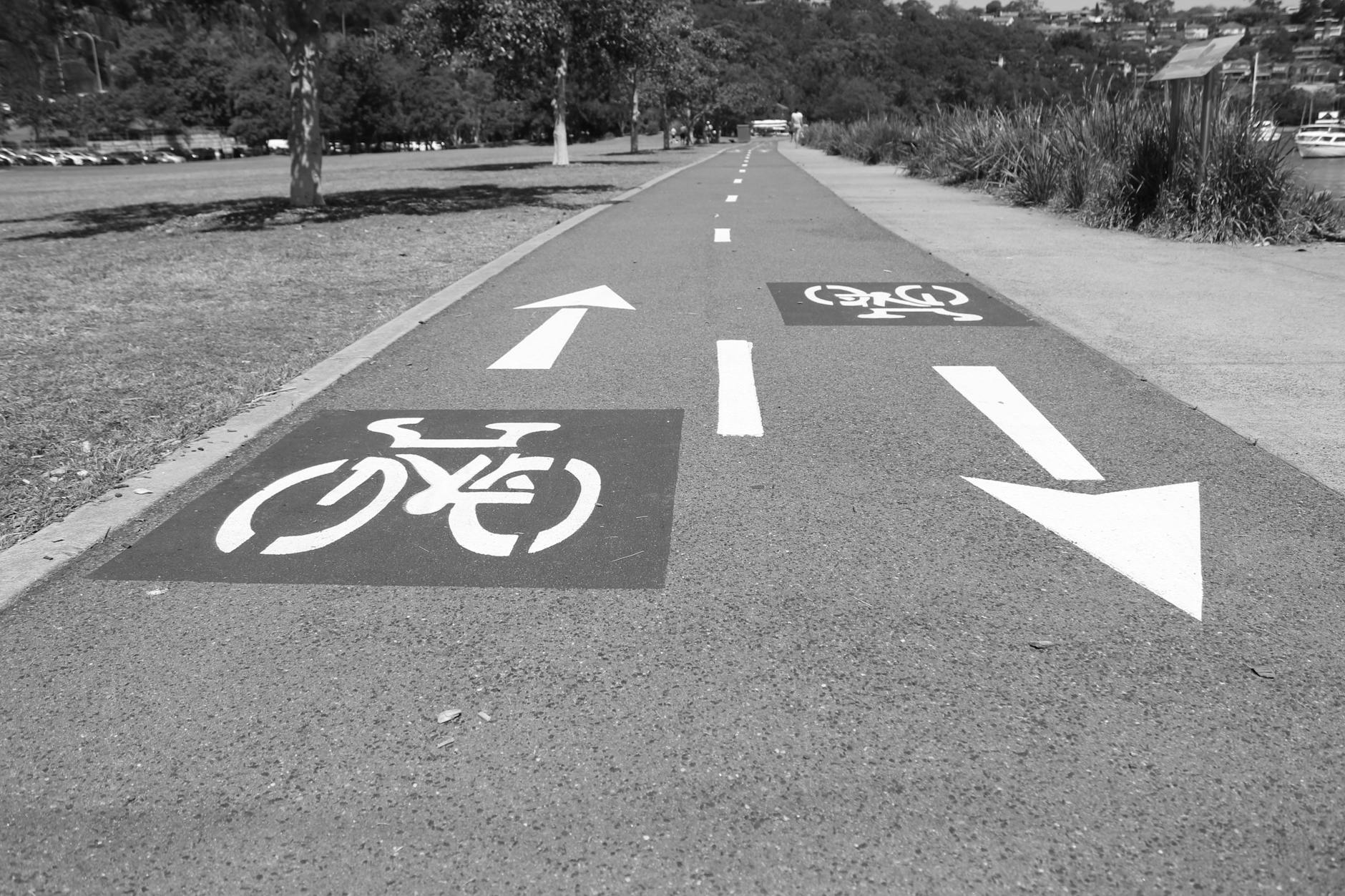
How Cities Can Reallocate Road Space From Cars to Bikes
Reallocating road space is the most politically contentious aspect of promoting cycling for congestion reduction, and it involves genuine tradeoffs that deserve honest discussion. When a city converts a lane of car traffic to a protected bike lane, the remaining car lanes do carry fewer vehicles in the short term. The question is whether the mode shift that the bike lane induces eventually compensates for the lost car capacity, and the evidence from most implemented projects is that it does, usually within one to two years. Paris offers a useful comparison. When Mayor Anne Hidalgo’s administration removed car lanes along the Seine and on the Rue de Rivoli to create protected cycling corridors, opponents predicted traffic chaos. In practice, traffic volumes on the affected streets dropped by 30 percent, while cycling volumes increased by 60 to 70 percent. Some car traffic diverted to other routes, some shifted to transit, and some simply disappeared as drivers chose to cycle or combine cycling with transit.
Total person-throughput on the corridors increased even as vehicle throughput decreased. The tradeoff, however, is real for people who must drive, including delivery vehicles, tradespeople, and people with mobility limitations. Effective reallocation requires accommodating those needs through loading zones, accessible parking, and last-mile delivery solutions rather than pretending they do not exist. The cost comparison is striking. A mile of protected bike lane typically costs between 500,000 and 3 million dollars to build, depending on the city and the level of separation. A mile of urban freeway lane costs between 50 million and 200 million dollars. Even a mile of added surface street lane costs 5 to 10 million dollars. On a per-commuter-moved basis, cycling infrastructure is roughly 10 to 50 times more cost-effective at reducing congestion than road expansion, though the two serve different trip types and distances.
When Cycling Fails to Reduce Congestion and Common Pitfalls
There are several conditions under which investments in cycling fail to reduce congestion, and cities should be clear-eyed about them. The most common pitfall is building cycling infrastructure that does not connect to where people actually need to go. A beautiful bike trail along a river is a recreational amenity, not a transportation facility. If bike lanes do not connect residential neighborhoods to employment centers, schools, and commercial districts, they will attract recreational riders on weekends but will not pull commuters out of cars during rush hour. Weather and topography present real limitations that advocates sometimes minimize. Cycling mode share drops significantly in cities with extreme heat, sustained cold, or heavy precipitation, though the magnitude of the drop varies with cultural expectations and infrastructure quality.
Minneapolis and Oulu, Finland, both maintain meaningful winter cycling rates because they prioritize snow clearance on bike infrastructure, but these rates are still well below summer peaks. Hilly terrain also suppresses cycling, though the rapid adoption of e-bikes is eroding this barrier. San Francisco, once considered too hilly for practical cycling, has seen ridership increase substantially since e-bikes became widely available. Another common failure is treating cycling promotion as a substitute for managing car traffic rather than as a complement to it. Building bike lanes while simultaneously expanding free parking and widening highways sends contradictory signals and produces minimal mode shift. The cities that have achieved significant congestion reduction through cycling have paired infrastructure investment with demand management for cars, including congestion pricing, parking reform, and restrictions on through traffic in residential areas. Without these complementary policies, new bike infrastructure may attract some riders but will not produce the critical mass needed to noticeably reduce vehicle congestion.

Bike-Sharing Programs and Their Effect on City Traffic Patterns
Bike-sharing systems have proven particularly effective at reducing congestion during peak commute hours because they eliminate the “last mile” barrier that prevents many people from combining cycling with public transit. In cities with well-integrated bike-share networks, commuters can take a train or bus for the long-distance portion of their trip and then grab a shared bike for the final one to three miles, eliminating the need to drive the entire distance. London’s Santander Cycles program handles over 10 million trips per year, and Transport for London estimates that approximately 40 percent of those trips replace what would otherwise be car or taxi journeys, directly reducing vehicle traffic in central London.
The dockless bike-share and e-bike-share models that have proliferated since 2017 have extended cycling’s congestion-reduction potential by making bikes available in areas without fixed docking stations and by flattening hills with electric assist. However, poorly managed dockless systems can create their own form of congestion, with bikes blocking sidewalks and cluttering public spaces. Cities that have implemented permit systems with fleet caps and parking requirements, such as Portland and Washington, D.C., have generally achieved the congestion benefits of shared bikes without the sidewalk clutter that gave early dockless systems a bad reputation.
The Future of Cycling as a Congestion Solution
The next decade is likely to see cycling become an even more effective congestion tool as e-bikes continue to replace car trips across longer distances and hillier terrain. Global e-bike sales already outnumber electric car sales by a wide margin, and the trend is accelerating. In the Netherlands, e-bikes now account for over 50 percent of all new bicycle sales, and the average trip distance on e-bikes is roughly 50 percent longer than on conventional bicycles, which means they are replacing car trips that traditional bikes could not.
Cargo e-bikes represent a particularly promising frontier for congestion reduction because they can replace not only commute trips but also errands, school runs, and small-scale deliveries that currently require cars or vans. Cities that invest in wider bike lanes to accommodate cargo bikes and that adjust zoning to allow micro-distribution hubs for delivery companies will capture congestion benefits that extend well beyond the traditional commuter use case. The cities that treat cycling infrastructure as a serious transportation investment, rather than a recreational afterthought, will be the ones that move the most people with the least congestion, cost, and environmental damage.
Conclusion
Bicycles reduce traffic congestion through basic physics and geometry: they take up far less space per person than cars, move more people per lane-hour, create less delay at intersections, and require minimal parking. The evidence from cities worldwide confirms that protected cycling infrastructure, when built as a connected network and paired with sensible car traffic management, produces measurable reductions in vehicle congestion at a fraction of the cost of road expansion. E-bikes and bike-sharing programs are extending these benefits to longer trips and more diverse populations, making cycling relevant as a congestion solution in cities that would not have considered it a decade ago.
The path forward for any city serious about congestion reduction should include building connected networks of protected bike infrastructure that link residential areas to employment and commercial centers, integrating bike-sharing with public transit, and honestly confronting the tradeoffs involved in reallocating road space. Cycling will not solve congestion in every context, and it should not be oversold as a universal fix. But in dense urban areas where trip distances are manageable, it remains the most space-efficient, cost-effective, and scalable way to move large numbers of people without gridlock.
Frequently Asked Questions
How many car trips can realistically be replaced by bicycle trips?
Studies from multiple cities suggest that 30 to 50 percent of urban car trips are under 3 miles, a distance easily covered by bicycle in 10 to 20 minutes. Not all of these trips can be replaced due to cargo needs, physical ability, or weather, but even converting 10 to 15 percent of short car trips to bike trips produces meaningful congestion relief in dense areas.
Do bike lanes actually make car traffic worse by removing road space?
In most documented cases, no. While car capacity on the specific street may decrease, the induced mode shift and reduced conflicts typically result in stable or improved travel times within one to two years. New York City’s Department of Transportation has consistently found that streets with protected bike lanes show equal or faster car travel times compared to before installation.
Can cycling reduce congestion in cities with extreme weather?
Yes, but to a lesser degree than in temperate climates. Cities like Minneapolis, Oulu (Finland), and Montreal maintain winter cycling rates of 10 to 30 percent of their summer peaks by prioritizing snow and ice removal on bike infrastructure. E-bikes with studded tires and weather-appropriate clothing extend the feasible season, but winter cycling requires more commitment from both riders and city maintenance crews.
How do e-bikes change the congestion equation compared to regular bicycles?
E-bikes roughly double the practical commuting range from about 5 to 7 miles to 10 to 15 miles and make hilly terrain accessible to average riders. This means e-bikes can replace car trips that conventional bikes cannot, extending congestion benefits to a larger geographic area and a wider range of commuters, including older riders and those carrying cargo.
What is the most cost-effective cycling investment a city can make for congestion reduction?
Building a connected network of protected bike lanes along the highest-demand commute corridors produces the largest congestion return per dollar spent. Isolated recreational trails or painted sharrows on busy streets produce minimal mode shift. The key is connectivity and protection from traffic, not total miles of paint on pavement.


