Starting a bike co-op in a garage and repairing thousands of bicycles for low-income families isn’t just a one-person story—it’s become a movement across American cities. From Brooklyn’s Bike Plant to Fort Collins’ pioneering model, community-minded cyclists have launched grassroots operations that have kept thousands of bikes from landfills while providing free or low-cost repairs to families who otherwise couldn’t afford them. These garage-based operations transform a simple workspace into a hub where access to transportation becomes equitable, not a luxury tied to income level. The scale of impact is real.
Fort Collins Bike Co-op alone has kept thousands of bicycles out of landfills. Brooklyn’s Bike Plant, founded in 2021, has given away tens of thousands of dollars in repairs to migrant and low-income New Yorkers. Mechanical Gardens Bike Co-op in NYC has helped thousands of residents learn repair skills while accessing affordable transportation. When one person or a small group commits to this work, the ripple effect extends far beyond the initial garage workspace—it touches families who suddenly have a reliable way to get to work, school, and medical appointments.
Table of Contents
- How a Garage Becomes a Community Repair Hub
- The Real Mechanics of Serving Low-Income Families
- From Donation to Distribution—The Inventory Challenge
- Teaching Repair as Community Building
- Scaling the Model—When Success Creates New Problems
- The Worker-Owned Cooperative Model
- The Future of Neighborhood Bike Infrastructure
- Conclusion
How a Garage Becomes a Community Repair Hub
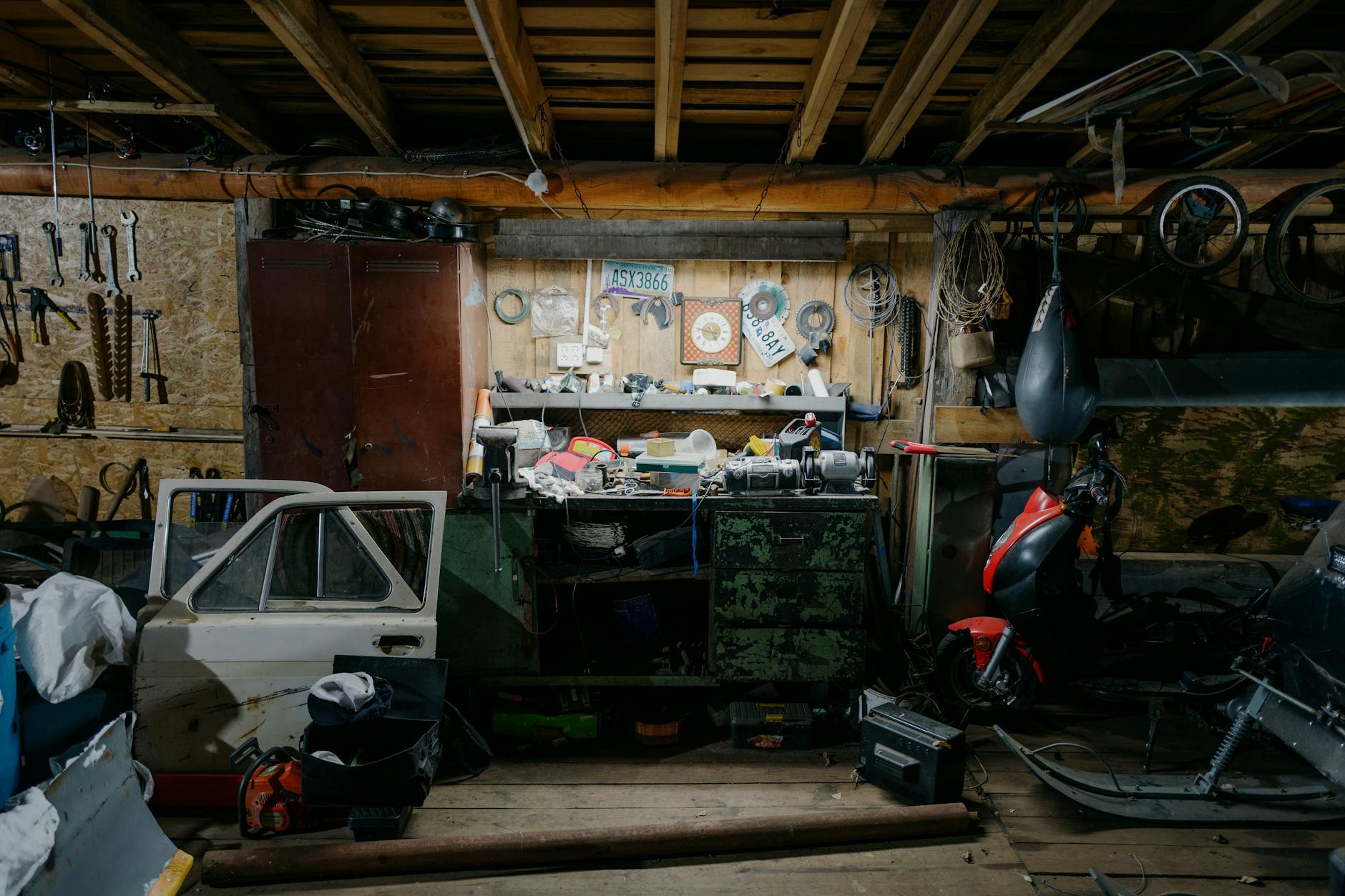
The garage-based bike co-op model thrives because it requires minimal startup capital and maximum heart. A dedicated space, basic tools, donated or salvaged bikes, and volunteers willing to learn and teach—that’s the foundation. What makes it work is the decision to prioritize repair over profit, access over gatekeeping. Gate City Bike Coop exemplifies this philosophy by giving away bikes and accessories at no cost to low-income residents, recognizing that transportation barriers are structural, not personal failings. The workflow follows a simple but powerful pattern: bikes arrive through donations, local drop-offs, or curbside collections. Volunteers learn to diagnose mechanical issues, replace worn components, and troubleshoot complex problems.
The learning happens in real time—the person fixing the bike teaches a neighbor, who teaches someone else. This multiplier effect is why co-ops matter; they don’t just provide a service, they build mechanical literacy in communities where that knowledge isn’t easily accessible. One limitation worth noting: garage-based operations hit physical capacity ceilings. Limited square footage means limited volunteer workspace, which caps the number of simultaneous repairs. A thriving co-op eventually outgrows the garage, forcing hard decisions about expansion, relocation, or tightening focus. Brooklyn’s Bike Plant navigated this by evolving into a worker-owned model, which brought new legal and operational complexity but also sustainability.
The Real Mechanics of Serving Low-Income Families
Low-income families often face what economists call the “poverty penalty”—paying more for less reliable services because they can’t afford upfront costs or transportation to mainstream shops. A flat tire becomes a crisis when you can’t afford a $75 repair. A broken chain means missing work, losing income, or accumulating childcare complications. Bike co-ops eliminate this penalty by making repair free or nominal ($0–$15 per bike in many cases), with the understanding that a working bicycle is often the difference between financial stability and unraveling. Mechanical Gardens Bike Co-op in Manhattan has served thousands since 2015, targeting neighborhoods where public transit is inconsistent and car ownership is financially prohibitive. A single working bike can serve multiple family members—someone rides it to their job, another to school, someone else to the food bank.
Over the course of a year, that one bike absorbs thousands of miles that might otherwise require paid transportation or time diverted from income-generating work. The catch: co-ops depend entirely on donated materials and volunteer labor. When donations dry up—say, after a harsh winter when fewer people cull their closets—operations slow. When a key volunteer burns out, gaps appear. Many co-ops are perpetually understaffed and undersupplied, meaning they can serve urgent needs but not aspirational ones. A family needing a kids’ bike might wait weeks. Someone needing multiple repairs might be triaged behind someone facing homelessness.
From Donation to Distribution—The Inventory Challenge
Successful co-ops develop sorting systems that would rival small businesses. Donated bikes arrive in varying condition: some need only minor tuning, others are partial wrecks that need complete rebuilds to become safe. Co-ops learn to disassemble bikes beyond repair and harvest components for future projects. A frame too rusted for riding becomes tubing; wheels stripped of spokes become teaching tools. Nothing wastes. Fort Collins Bike Co-op has perfected this harvesting model, operating as a second-hand ecosystem. They’ve kept thousands of bikes in circulation precisely because they refuse to treat unsalvageable donors as trash. Instead, they become parts libraries.
A volunteer learning to rebuild a rear wheel pulls spokes from three “dead” wheel sets and understands how the ecosystem works. The next week, they’re installing those same spokes on a bike heading to a family that needs it. Distribution creates its own ethical complexity. How do you decide who gets the limited inventory? Some co-ops use a first-come, first-served model; others require participation in classes or volunteer hours; still others use eligibility criteria (income level, employment status, family size). Each approach has tradeoffs. First-come favors the connected and informed. Classes can exclude working parents without childcare. Eligibility screening feels bureaucratic and deterring. No model is perfect.

Teaching Repair as Community Building
The skills component distinguishes co-ops from straightforward donation programs. A co-op doesn’t just give you a bike; it teaches you how to maintain it, troubleshoot basic issues, and potentially earn money as a freelance mechanic. Mechanical Gardens and similar operations offer this hidden curriculum—participants leave not just with transportation but with agency. They can fix a problem instead of being victimized by it. This education model also builds social connection. A volunteer repairing bikes alongside neighbors creates relationships that extend beyond the work. You meet your neighbor. You help someone fix their child’s bicycle.
That child now has wheels to get to school. The social texture matters as much as the mechanical output. Co-ops become informal community centers, not vending machines. The tradeoff is time and consistency. Proper skills teaching requires experienced mentors available at predictable hours. A garage co-op running on volunteer labor often can’t guarantee consistent instruction. A person showing up on Saturday might find the mechanic on break, or a newer volunteer who’s still learning. This inconsistency is real and frustrating for people trying to build skills intentionally. Some co-ops address this by scheduling structured workshops; others accept that learning happens ad hoc and imperfectly.
Scaling the Model—When Success Creates New Problems
As co-ops prove their impact, the pressure to scale arrives. More bikes. More families. More demand. This is where many garage operations hit a wall. You can fit three volunteer repair stands in a two-car garage. You can’t fit fifteen. The founder who loved the intimacy of knowing every person served suddenly manages strangers. The careful sorting and careful distribution that worked with 200 bikes annually becomes impossible with 2,000. Bike Plant in Brooklyn faced this challenge directly. By 2023–2024, demand far exceeded capacity.
The response was organizational evolution: transitioning to worker-owned co-op status meant hiring paid staff (even if modestly), establishing formal roles, and creating systems that didn’t depend on one person’s energy. This brought stability and professionalism but also formality, hierarchy, and complexity that many founders find alienating. The warning here is stark: sustainable scaling usually requires professional infrastructure that strips away the scrappy garage appeal. You hire a manager. You rent proper space. You file taxes differently. You have liability insurance. The soul of the operation—the neighbor helping neighbor ethos—often survives this transition, but the *feeling* changes. You’re no longer a garage operation run by friends. You’re an organization. Some people thrive in that transition. Others don’t.

The Worker-Owned Cooperative Model
Some co-ops have chosen to become worker-owned cooperatives, where staff share decision-making and profits (when they exist). This model theoretically aligns incentives—mechanics benefit when the co-op thrives—and ensures accountability to the community being served, not to distant shareholders. Bike Plant’s transition to worker ownership exemplifies this approach. The practical effect is real but imperfect.
Worker-owned structures are harder to form and navigate legally than traditional nonprofits. Staff must build consensus on decisions, which takes time. Profits are often thin, so the benefit of ownership can feel more symbolic than material. But when it works, it creates jobs with dignity in communities that often lack them. A person who grew up poor, learned mechanics at a co-op, and now owns a stake in a cooperative enterprise has experienced social mobility that transcends the bicycle.
The Future of Neighborhood Bike Infrastructure
As cities grapple with transportation equity and climate goals, bike co-ops have evolved from scrappy side projects to recognized infrastructure. Some cities now fund them through community development budgets. Some bike shops partner with co-ops rather than competing. Some high schools integrate co-ops into their curriculum. The model isn’t niche anymore—it’s increasingly seen as essential to the solution.
The next frontier is deepening this integration. Imagine co-ops partnering with food banks, youth employment programs, or medical clinics—places where transportation access directly affects outcomes. Imagine subsidized bike mechanics working part-time for the co-op while attending trade school, building skilled workers while serving the community. These aren’t fantasies. Some operations are already experimenting with this synthesis.
Conclusion
The story of a person starting a bike co-op in a garage and repairing thousands of bikes isn’t one founder’s singular achievement—it’s a distributed movement where many people, in many cities, have made the same choice: to prioritize access and community over profit. From Mechanical Gardens in Manhattan to Fort Collins to Brooklyn’s Bike Plant, the pattern is consistent. Start small. Serve a need. Let the work grow organically. Scale thoughtfully when the moment demands it.
The bikes repaired number in the thousands across these operations because the decision was never about the numbers. It was about showing up, learning, teaching, and trusting that a working bicycle changes someone’s life. The barrier to starting is intentionally low: a garage, some tools, donated bikes, and people willing to volunteer. If you have those things and the commitment to prioritize people over paperwork, you have everything needed to begin. The question isn’t whether it’s possible. The question is whether your neighborhood has one yet.