Two degrees of derailleur hanger misalignment won’t necessarily destroy your drivetrain, but it will degrade shifting performance in ways that are difficult to diagnose and expensive to overlook. When your derailleur hanger—the small hook that holds your rear derailleur in place—sits even slightly out of true, your bike won’t shift properly no matter how perfectly you adjust the limit screws or index the cable tension. The acceptable tolerance for derailleur hanger misalignment is up to 4 millimeters horizontally and vertically, which translates to approximately 0.75 degrees of angular deviation from true. Two degrees would be roughly three times the acceptable tolerance, and at that level, you’re looking at compromised shifting, accelerated wear on your cassette and chain, and a mounting frustration every time you try to change gears.
The real issue isn’t that 2 degrees will suddenly snap your drivetrain, but rather that it will create a cascade of problems that most cyclists attribute to other causes. Riders often spend hours adjusting their derailleur, replacing their cables, and even swapping components when the actual culprit is simply a bent hanger. According to Park Tool and Shimano specifications, misaligned hangers cause skipping, missed shifts, and poor shifting performance that cannot be fixed by adjusting limit screws or indexing alone. The wear isn’t dramatic or sudden—it’s the slow erosion of your drivetrain’s efficiency and lifespan.
Table of Contents
- Why Your Derailleur Hanger Matters More Than You Think
- Understanding Tolerance Specifications and What They Mean
- The Real-World Impact on Your Drivetrain Performance
- How to Identify Whether Your Hanger Is Actually Bent
- Tools and Professional Alignment Methods
- Inspection Frequency and Maintenance Intervals
- Prevention Strategies and Long-Term Drivetrain Health
- Conclusion
Why Your Derailleur Hanger Matters More Than You Think
Your derailleur hanger is a small, aluminum piece that bolts directly to your frame and holds the derailleur mechanism. It’s one of the most vulnerable components on your bike because it sticks out and has no protection. A crash, a bike falling over, or even running over a stick on the trail can bend it. Unlike other drivetrain parts that you can replace, your hanger is often frame-specific, and a bent hanger is typically not worth repairing—it’s easier to replace than to true.
The hanger’s job is straightforward: it positions your derailleur in the exact plane of your cassette. If that position is off, the derailleur’s pulleys won’t align with the cogs properly. This misalignment forces the chain into awkward angles as it shifts, increases friction, and puts mechanical stress on the derailleur, the cassette, and the chain itself. A bent hanger turns your drivetrain into a system fighting against itself, where each gear change is a compromise rather than a precision movement. Over time, this struggle wears everything faster than normal use ever would.
Understanding Tolerance Specifications and What They Mean
The professional standard, according to Park Tool, is to keep horizontal deviation under 3 millimeters when measured at the 6, 9, and 12 o’clock positions on your rear wheel. Shimano and Park Tool specifications allow up to 4 millimeters of acceptable misalignment in both horizontal and vertical directions. That 4-millimeter tolerance at the rim works out to roughly 0.75 degrees of angular deviation—a very small angle, but enough to allow normal riding without noticeable performance loss. The challenge is that these tolerances are for “acceptable” performance, not ideal performance.
At 2 millimeters of misalignment, most riders won’t notice a problem. At 4 millimeters, shifts will start to become sluggish, and you might notice occasional hesitation when moving between some gears. Beyond 4 millimeters, shifting becomes noticeably poor, and you’re in the territory of premature wear on your drivetrain components. The tolerance exists because manufacturing and riding conditions aren’t perfect, but exceeding it means accepting degraded performance.
The Real-World Impact on Your Drivetrain Performance
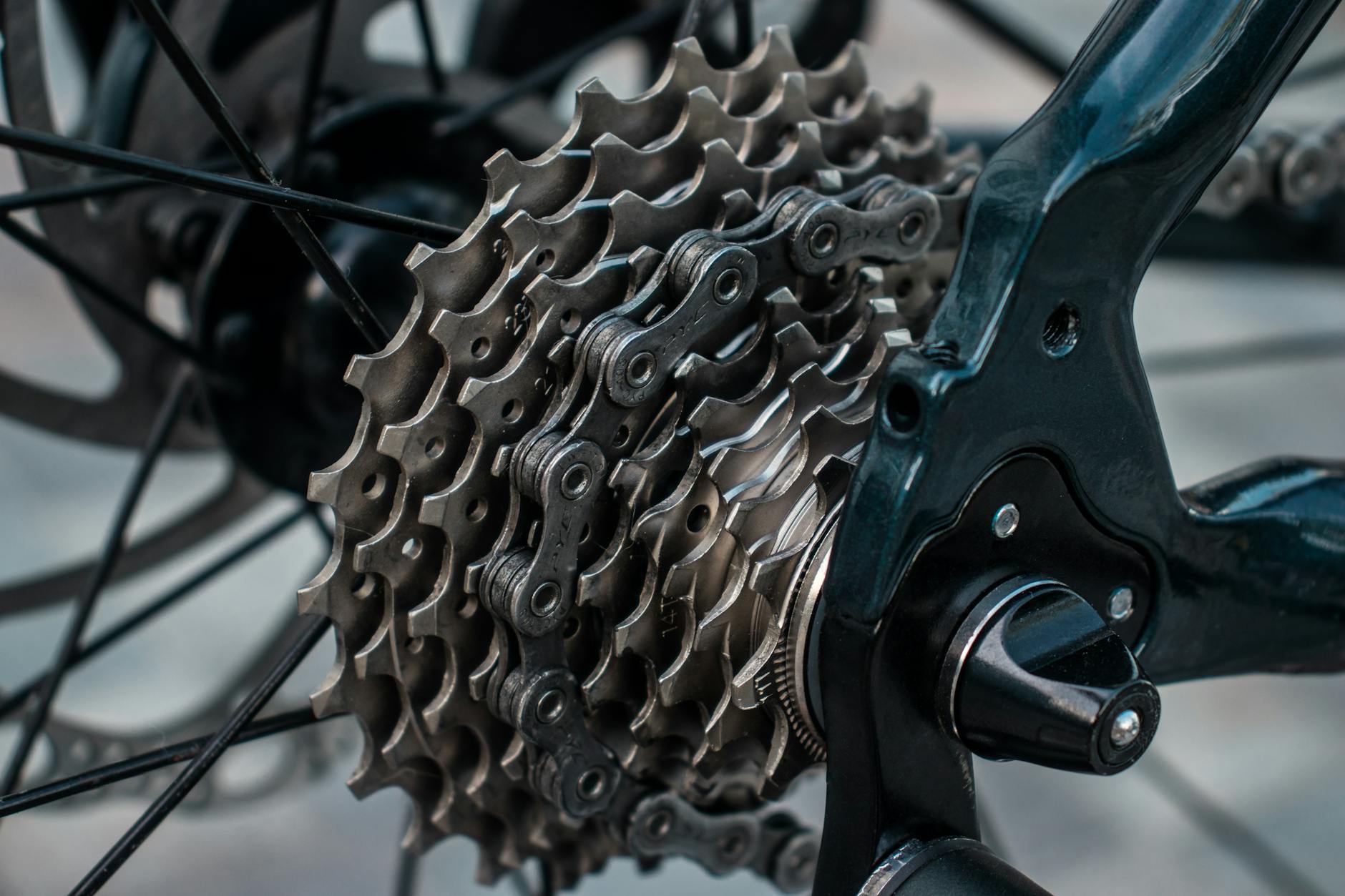
When your derailleur hanger sits 2 degrees out of true, the consequences are cumulative. The derailleur’s pulleys—which should sit perfectly centered between the cogs—instead approach each gear from a slightly wrong angle. This means the chain takes a longer, more contorted path as it transitions between cogs. Misaligned hangers cause skipping, where the chain momentarily loses contact with the cog. They cause missed shifts, where you shift the lever but the chain stays on the current gear.
They cause sluggish shifts, where the chain slowly crawls to the next cog instead of snapping smartly. The wear pattern is uneven and accelerated. Your cassette will develop flat spots or premature tooth wear on specific cogs—usually the ones that require the greatest lateral chain movement. Your chain will wear faster because it’s constantly running at a slight angle, and the derailleur’s pulleys will wear unevenly. In a worst-case scenario on a full-suspension mountain bike after a significant crash, a bent hanger combined with other impact damage could require replacing the entire cassette, chain, and derailleur, not just the hanger. That’s a four-figure repair when a 30-dollar hanger replacement could have been the entire fix.

How to Identify Whether Your Hanger Is Actually Bent
The first symptom most riders notice is that their shifting has deteriorated despite proper cable tension and limit-screw adjustment. Your derailleur won’t stay in a particular gear, or it shifts cleanly in one direction but sluggishly in the other. You might hear the chain scraping against the derailleur cage on certain gears, even though the limit screws should prevent that. These signs suggest a hanger alignment problem rather than a cable or adjustment issue.
The definitive test requires a derailleur hanger alignment tool, which is essential for any serious cyclist or bike shop. Without one, you can use a simple visual check: spin your wheel slowly while watching the rear derailleur from behind the bike. The derailleur cage should stay perfectly parallel to the plane of the cassette and wheel. If it appears to tilt inward or outward, or if the gap between the cage and the cogs is uneven, your hanger is likely bent. A bent hanger is almost impossible to true by eye or with simple tools, which is why professional alignment tools exist.
Tools and Professional Alignment Methods
The Park Tool DAG-2.2 is the industry standard hanger alignment gauge, featuring replaceable threaded tips that work with different hanger types and a precise measurement indicator. It mounts directly onto the rotor and shows any deviation from true as the wheel rotates. The Wolf Tooth Pack Hanger Alignment Tool uses a simpler, quicker method: you position the handle parallel to the seat tube, align the indicator rod with the hanger, and you’re done—no rotor required.
These professional tools cost between thirty and eighty dollars, which seems expensive until you’re facing a sixty-dollar hanger replacement plus labor or a potential four-figure drivetrain overhaul. Many bike shops include hanger alignment checks as part of routine maintenance or after any crash. If you’re doing your own wrenching and your bike has had any impact, a hanger alignment check should be non-negotiable before you troubleshoot anything else. The tools are precise enough to detect misalignment well before it reaches the 2-degree threshold where serious problems emerge.
Inspection Frequency and Maintenance Intervals
Park Tool recommends checking derailleur hanger alignment every 500 to 1,000 miles or after any crash or hard impact. For trail riders, gravel cyclists, or anyone who rides rough terrain, leaning toward the more frequent end makes sense. For road cyclists on smooth pavement with no crashes, every 1,000 miles is reasonable. If you’ve had any kind of incident—dropping your bike, a low-speed crash, even running over something solid—stop and check your hanger immediately, because that’s when they get bent.
The good news is that if your hanger is bent, you simply replace it rather than trying to true it. Aluminum hangers, which are standard, aren’t meant to be straightened. If your hanger is bent beyond tolerance, a replacement is usually cheaper and faster than any attempt at repair. Some frame manufacturers offer extra hangers specifically for this reason, so if you have a spare that came with your bike, keep it accessible. A bent hanger is one of the few major drivetrain issues where replacement is genuinely the right answer, not adjustment.
Prevention Strategies and Long-Term Drivetrain Health
The best way to manage derailleur hanger alignment is to never bend it in the first place. This means handling your bike carefully, using a kickstand or leaning it properly against something stable, and being mindful during transport. For serious riders, a small frame bag or protective case during travel can prevent hangers from bending during shipping or car transit.
If you ride in crash-prone situations—whether that’s racing, technical trail riding, or urban commuting—a hanger is cheap insurance compared to replacing cassettes and chains. Long-term drivetrain health depends on keeping your hanger true and everything else properly maintained. Once you’ve confirmed your hanger is aligned, the rest of your drivetrain care—proper cable tension, limit-screw adjustment, regular cleaning, and timely component replacement—will keep shifting smooth and performance optimal. A true hanger makes the difference between a drivetrain that responds immediately to every shift command and one that fights you with every change of gears.
Conclusion
Two degrees of derailleur hanger misalignment won’t instantaneously destroy your drivetrain, but it will degrade performance in ways that are frustrating and costly to overlook. The acceptable tolerance is roughly 0.75 degrees, and anything beyond 4 millimeters of misalignment will create shifting problems that no amount of barrel-adjuster tweaking will fix. Understanding this distinction between “acceptable” and “broken” helps you diagnose drivetrain issues correctly and address the actual problem instead of chasing endless adjustments.
If you suspect your hanger is bent, the next step is simple: get it checked with a professional alignment tool or have a bike shop verify it for you. If it’s bent beyond tolerance, replace it. The investment in a new hanger and verification is minimal compared to the cost of accelerated drivetrain wear and the frustration of compromised shifting. Regular hanger alignment checks—especially after crashes or impacts—keep your drivetrain running at peak performance and extend the lifespan of expensive components.