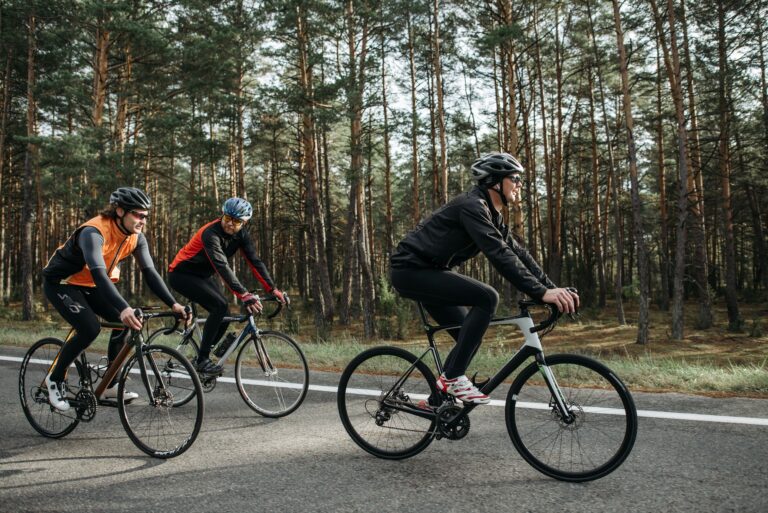
Cyclists can start sprint training safely with short small-ring leg-speed sprints, then progress to rolling-speed gear drills and structured intervals. Sprint training means brief maximal efforts that develop acceleration, top speed, and repeatability. This guide shows starting form, first workouts, and progression steps. It helps road riders and indoor riders build speed without skipping control or recovery.
Table of Contents
- How should you warm up and start?
- What does safe sprint form look like?
- How do you progress to full-speed sprints?
- How do you build repeatable sprint power?
How should you warm up and start?
Wattbike advises about a 20-minute warm-up and starting sprint training with leg-speed work to reach optimum RPM before chasing maximal power, as described in the beginner's sprint training guide. Use easy spinning, a few rising cadence spins, and full recovery before the first hard effort.
Velo / Outside describes beginners starting with 6x50m small-ring sprints with no gear changes, winding to about 120rpm while standing, with easy spinning for 2-3 minutes between reps, in its sprint technique guide. Stay seated or stand only to practice balance, then stand for the short sprint portion.
- Warm up fully, then ride easy in the small ring.
- Sprint 50m standing without shifting, aiming for smooth 120rpm leg speed.
- Spin easy 2-3 minutes, repeat up to six times, and stop if form fades.
What does safe sprint form look like?
Velo / Outside reports safe sprint form rocks the bike side-to-side while the torso stays straight on target. Keep your head up, eyes forward, and hands secure on the drops or hoods. The same Velo / Outside technique account says riders pull up with the arm opposite the driving pedal so arm force adds to leg power at high cadence.
Time the pull with each downstroke rather than yanking the bars. Practice on a quiet straight road with no traffic behind you. If the front wheel wanders, the gear is too big or the effort is too long.
How do you progress to full-speed sprints?
Velo / Outside describes progressing by jumping from rolling speed in a turnable gear, for example 53×17 from 20mph, winding it to 110-120rpm then shifting once. Rest 3-5 minutes between efforts so each sprint stays sharp. Later sessions use faster entries with two shifts.
Start the sprint seated at speed, stand to wind the gear, shift once while driving, then finish through the line. Use one or two quality sprints per session at first. Add another rep only when speed, cadence, and control stay consistent.
How do you build repeatable sprint power?
British Cycling Insight Zone recommends following a structured progressive plan rather than random sprints, using old-school Russian Steps intervals to build sprint speed and repeated-sprint ability, in its indoor training sessions guide. Pick set days, record gears and recoveries, and repeat the same workout before making it harder. TrainingPeaks reports low-cadence maximal efforts stress fast-twitch fibers and torque for sprinting, so sprinters can add short low-cadence sprints and muscle-tension intervals, often at the end of a long endurance ride, in its cycling cadence guide.
Keep these efforts short, controlled, and well separated by easy riding. TrainingPeaks and Hunter Allen define neuromuscular power as maximal sprint power, partly genetic but trainable. Beginners should therefore track peak power and expect individual differences in sprint response.