The data is stark: at least 65% of triathletes lose 15 or more minutes during transitions, with bike setup being one of the most significant culprits. This isn’t a small margin—it’s the difference between a personal record and a frustrating race experience. A triathlete arriving at the bike rack with an improperly positioned bike, loose components, or tangled cables can spend five to ten minutes just getting the bike sorted before even clipping into the pedals. For someone targeting a specific finish time, these wasted minutes represent the equivalent of running an entire extra mile in poor form. The problem compounds across the athlete population because most triathletes don’t treat the transition itself as something that demands the same training attention as the swim, bike, or run.
You wouldn’t show up to a workout without checking your shoe laces, yet many athletes set up their bikes in transition in ways they’ve never actually practiced. A typical scenario: a rider places their bike with the handlebars turned at an awkward angle, then spends valuable seconds wrestling it into position while wet. Another common loss happens when aerobars aren’t properly mounted or have shifted during transport, requiring mid-transition adjustments that should have been done at home. Understanding how and why poor bike setup costs so much time isn’t just about shaving seconds—it’s about recognizing that transition efficiency is actually a skill that compounds across every triathlon you race. Small setup improvements made once can save you minutes repeatedly.
Table of Contents
- Why Does Poor Bike Setup Create Such Massive Transition Time Loss?
- The Hidden Mechanical Issues That Eat Transition Time
- Positioning and Accessibility: The Setup Variables You Control
- Pre-Race Preparation: The Practical Steps That Prevent Time Loss
- Common Setup Mistakes That Waste the Most Time
- The Role of Gear Preparation and Equipment Limits
- Moving Toward Faster Transitions: A Systems Approach
- Conclusion
- Frequently Asked Questions
Why Does Poor Bike Setup Create Such Massive Transition Time Loss?
The bike transition is uniquely unforgiving because of the overlap between logistics and mechanics. Unlike the swim-to-bike transition where you’re simply moving from water to solid ground, setting up a bike that won’t perform requires getting multiple elements right in quick succession: the bike needs to be accessible, positioned at the right angle, mechanically sound, and adjusted to your body. A single oversight cascades. If your seat is set too low because it shifted during transport, you might not notice until you’re already on the bike, forcing you to stop and adjust mid-transition.
If your pedals are clipped to your shoes but your shoes are placed too far from the bike, you’ve created a puzzle you must solve quickly while fatigued and disoriented. Research from triathlon coaching data shows that the average time to get from the run-off area to actually pedaling ranges from three to seven minutes for well-prepared athletes and eight to fifteen minutes for those with setup issues. That spread isn’t random variance—it directly correlates with how thoroughly the athlete prepared their station beforehand. A triathlete who spent five minutes laying out their bike the night before and practicing their transition routine saves more time than one who just “figures it out” race morning. The worst losses happen to those who also swap equipment at the last minute, use a new pair of shoes, or haven’t verified that components are secure.
The Hidden Mechanical Issues That Eat Transition Time
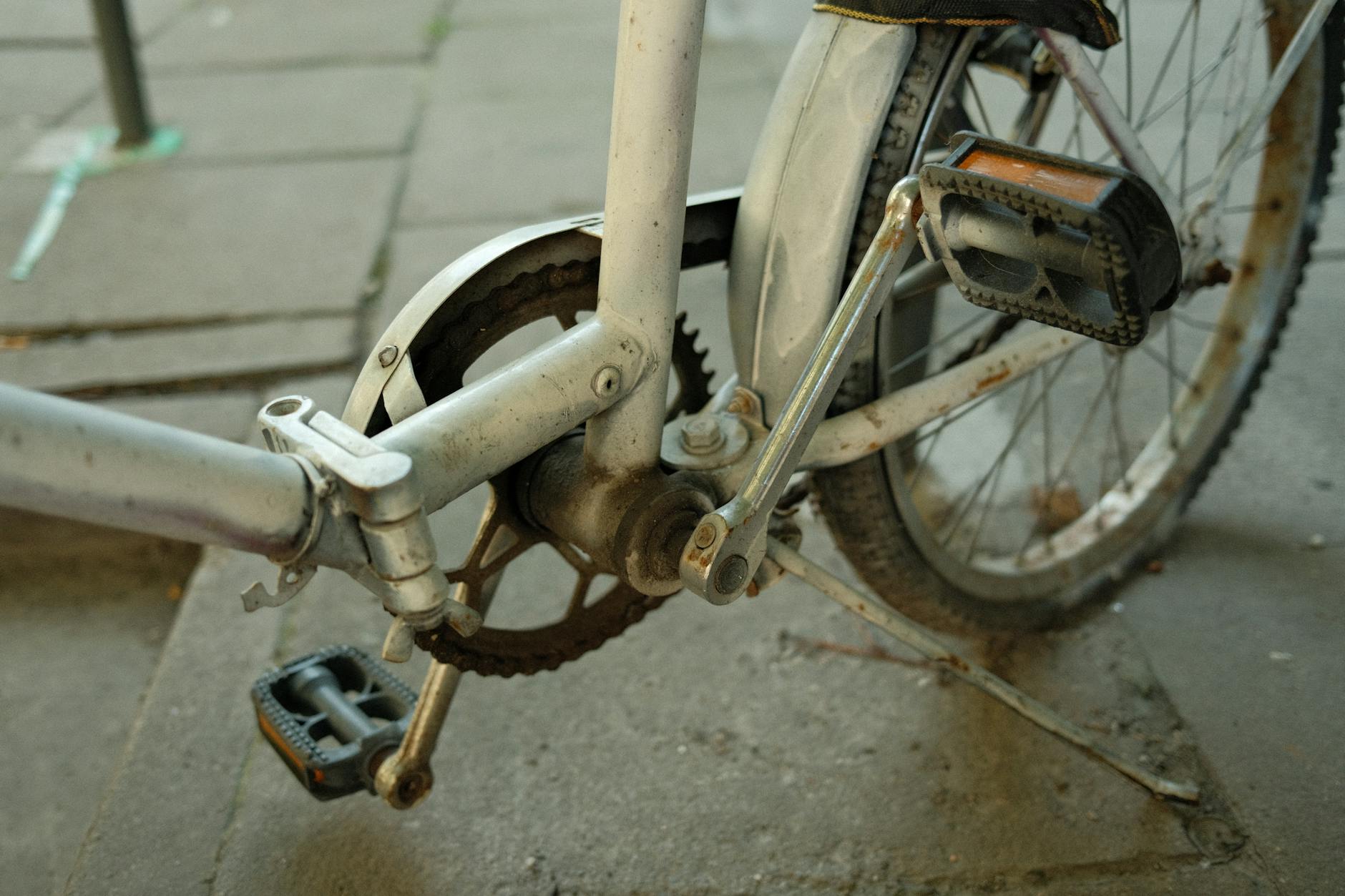
Many triathletes overlook mechanical problems that only become apparent during transition. A brake cable that’s slightly loose might mean the brake rubs when you mount the bike, forcing you to stop and re-center the wheel. Handlebars that aren’t perfectly perpendicular to the frame become apparent when you’re trying to get in and out of the transition zone smoothly. A chain that was left on the big ring and outer cog from your last ride creates an unstable situation that can drop the chain entirely when you clip in, turning a smooth transition into a repair job. The limitation here is that many of these mechanical gremlins are invisible until you’re actually mounting the bike under race-day stress.
A bike that works perfectly fine on a casual ride might feel different when you’re tired, wet, and moving quickly. This is why race rehearsal through practice transitions matters so much—you discover problems before they cost you time when it matters. An athlete who does even one complete practice transition (swim to bike to run) will catch issues that remain hidden with static bike checks. A common warning sign that often gets ignored is any rubbing, squeaking, or hesitation you notice during a casual pre-race check. Don’t assume it will go away or fix itself in the heat of competition.
Positioning and Accessibility: The Setup Variables You Control
How you position your bike in the transition zone dramatically affects how quickly you can access it, mount it, and get moving. A bike leaned against the rack at a severe angle requires you to swing it out and around before you can mount—adding two to three seconds. A bike positioned with the handlebars pointing perpendicular to the rack requires an extra step to rotate them parallel before mounting. An athlete who sets their bike with the seat at hip height and the pedals positioned consistently (many use the “6 o’clock” rule where the pedal starting position mimics the minute hand on a clock) can mount and clip in with a single motion.
The most efficient transition setup uses the rack itself as part of your mounting system. Instead of fighting gravity or geometry, you position your bike so that the act of taking it off the rack naturally guides you into the mounting position. This means the handlebars should be aligned with the direction you’ll be moving, the seat should be positioned for comfortable mounting, and the frame should be stable enough that you don’t need a second hand to hold it. An athlete switching from a heavy, rigid steel frame to a lighter carbon bike might find that their practiced mounting technique doesn’t work with the new bike’s geometry—a limitation that’s best discovered during a practice transition, not during the actual race.

Pre-Race Preparation: The Practical Steps That Prevent Time Loss
The difference between a two-minute transition and a twelve-minute transition often comes down to whether you’ve done a full practice run the day before. This means setting up your exact transition layout, practicing your swim exit, running to the bike, mounting and clipping in, then immediately running a short distance with the bike to practice the run exit. You don’t need to do the entire race distance—even a 30-second run with the bike in hand is enough to catch positioning issues and build muscle memory. A specific example: a triathlete preparing for their first Olympic-distance race spent ten minutes setting up their transition station race morning, checking every detail.
They used that same setup with a time trial bike the next week and lost an additional three minutes because the new bike’s saddle position had shifted half an inch from their practiced setup. They either needed to practice the transition with the specific bike they’d race with, or build in an adjustment buffer for any equipment changes. Compare this to an athlete who treats their transition bike as a fixed setup that never changes—they can reliably deliver a three-minute transition because every variable is controlled. The tradeoff is reduced flexibility if you want to swap bikes or components, but the consistency is worth it for most racers.
Common Setup Mistakes That Waste the Most Time
The most common setup error is placing the bike with the brake lever facing directly at you or the helmet positioned in a way that requires you to reach awkwardly to grab it. These small physical inefficiencies seem minor until you’re executing the action 50 times in your mind as you approach transition, and then executing it while fatigued. Another frequent mistake is attaching shoes to pedals without first confirming that the shoe position and pedal angle will actually work for your foot size and flexibility. A tight pedal entry point created by poor cleat positioning can cost two to three seconds per entry and feels twice as long when you’re gassed.
A warning worth heeding: if any element of your transition setup feels rushed or improvised on race day, that’s your signal that you’ve skipped the practice phase. Common sense might suggest you can figure it out in the moment, but the actual mechanics of quickly executing transitions are learned behaviors. Your brain is already processing fatigue, emotion, and orientation—it doesn’t have bandwidth to problem-solve novel bike positioning challenges. The worst time loss happens when athletes attempt to make compromises or adjustments during the transition itself, discovering that their bike won’t work the way they imagined it would.

The Role of Gear Preparation and Equipment Limits
How you pack and transport your bike to the race venue sets up the entire transition. A bike transported in a soft case versus a hard case versus with the wheels still attached arrives in different mechanical states. If your derailleur got bumped during transport, if your handlebars rotated, or if your seat shifted, you’re now burning transition time to diagnose and fix problems that could have been prevented. Some athletes use specific bike transport practices—removing the pedals, wrapping components in foam, or using a dedicated bike travel bag—because they’ve learned the hard way that arrival condition determines transition success.
An example of the transportation impact: an athlete flew to their race with a bike in a hard case and spent seven minutes in transition trying to remember exactly where the derailleur had settled after the flight. On the drive to their next race, they loaded the bike more carefully, checked all components at the hotel, and completed the transition in three minutes. The same equipment, same athlete, different preparation. The mechanical limit here is that bikes will shift and settle in new ways depending on how they’re transported, and there’s no substitute for checking everything the morning of the race.
Moving Toward Faster Transitions: A Systems Approach
Improving transition time isn’t about finding a magic product or single technique—it’s about building a system where every element is consistently repeatable. The athletes who hit sub-three-minute transitions aren’t necessarily faster runners or swimmers; they’ve simply engineered their transition setup to eliminate variables. They use the same bike, the same shoes, the same helmet, the same rack position, and the same mounting technique every single time.
Looking forward, more triathletes are benefiting from video analysis of their transitions. Recording your practice transition from multiple angles reveals inefficiencies that feel fine in the moment but are obvious on video—an awkward body position when mounting, a delayed moment of clipping in, a fumble reaching for a helmet. The integration of transition-specific coaching and training into triathlon programming is becoming more common because the data is clear: an athlete who reduces their transition time by five minutes can often achieve the same overall result while swimming, biking, or running slower. Transition becomes part of the overall race strategy rather than an afterthought.
Conclusion
The 65% of triathletes losing 15 or more minutes in transition due to bike setup issues represent a massive opportunity for improvement. These losses aren’t inevitable—they result from skipped practice, insufficient preparation, and overlooking small mechanical and positional details. By treating transition setup with the same precision and practice attention you’d give to any training session, you can reliably reduce your transition time by five to ten minutes, which translates into either a faster overall race or the luxury of running more conservatively and still hitting your goal. Start by doing one complete practice transition at least a week before your race.
Set up your gear exactly as you will on race day, execute the full sequence, and identify what needs to be adjusted. Then verify once more the morning of the race that every component is exactly where you left it. This combination—one good practice session plus one thorough pre-race check—eliminates most of the mechanical losses that plague so many athletes. Your transition won’t be where you make your race, but it’s certainly where you can lose it.
Frequently Asked Questions
How much time can I realistically save by improving my bike setup?
Most athletes with significant transition issues can save five to ten minutes by working through a proper setup and practicing beforehand. This translates to shaving 5-10 minutes off your total race time, which is substantial.
What’s the single most important thing to do before race day?
Do a complete practice transition the week before your race. Swim to bike to run, even if abbreviated. This catches mechanical issues and builds muscle memory better than any amount of static bike checking.
Should I always use the same bike, or is it okay to swap equipment?
Consistency is easier than adaptation. If you must swap bikes or components, practice your transition with the exact equipment you’ll race with. Never introduce new gear race morning.
How do I know if my bike is positioned correctly in the rack?
Your bike should be accessible without rotating or swinging it awkwardly, your handlebars should align with your direction of movement, and the seat should be at a height where mounting feels natural. Practice mounting several times to confirm.
What’s the biggest mistake people make with aerobars or aero equipment?
Installing or adjusting aerobars only partway through race season, then discovering in transition that they’re uncomfortable or positioned incorrectly. Get aero equipment sorted weeks in advance.
Can I cut transition time by using different shoes or pedal systems?
You can, but only if you’ve practiced extensively with them. Any new equipment introduces variables that will cost you time until they’re automatic. Stick with proven setups on race day.


