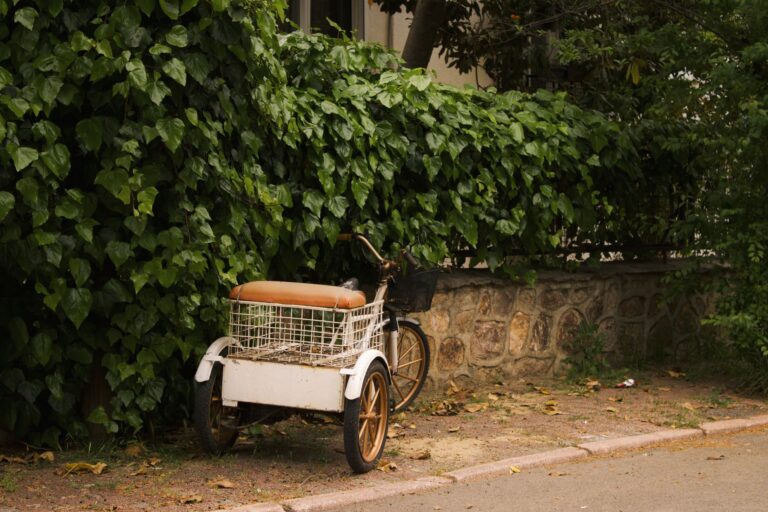
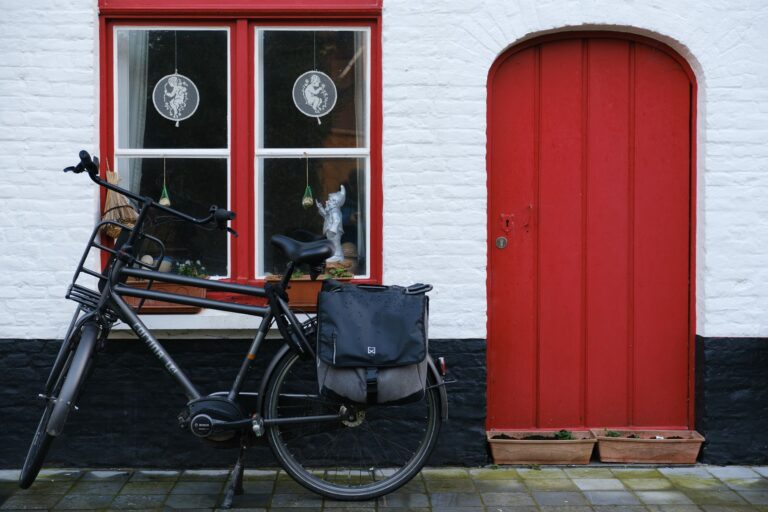
A roadster bike, an upright city bike built for comfortable everyday riding, stays reliable when you dial in fit, keep tires, chain and brakes in range, and add lights for night riding. This guide shows how to set it up, maintain core parts, choose practical upgrades, and accept its comfort-for-speed tradeoff. It covers saddle setup, tire checks, chain and brake-pad replacement points, and night-visibility gear. It also explains where an upright roadster helps and where it costs extra effort.
Table of Contents
- Set saddle height and position
- Hold tire pressure in the printed range
- Replace chain and brake pads on time
- Add lights because reflectors are not enough
- Know what a roadster trades away
Set saddle height and position
Set saddle height so the leg is almost straight with heel on the pedal at bottom dead center. That heel method produces slight knee bend when you pedal with the ball of the foot. The Specialized Bicycle Components support page explains this method in Specialized bike-fit guidance.
Start with the saddle centered on its rails. Then adjust fore-aft so the forward knee sits over the pedal spindle, known as KOPS. Cycling Weekly links that position to comfort, injury risk, and pedaling efficiency for commuters and recreational riders.
- Raise or lower in small steps, then test with a short ride.
- Keep the seatpost above its minimum-insertion marks.
- Tighten the clamp to hold position without forcing past the marks.
Hold tire pressure in the printed range
Inflate tires to within the permitted pressure range printed on the tire sidewall. Check pressure at least monthly with a gauge. Schwalbe technical information gives that range and check interval in Schwalbe technical information.
Under-inflation increases wear and handling risk. Over-inflation reduces traction. A monthly check catches slow leaks before handling changes.
Replace chain and brake pads on time
Measure chain wear with a gauge. Park Tool chain-checker guidance sets replacement at or before 0.5% elongation for 11- to 13-speed chains, 0.75% for 5- to 10-speed chains, and 1.0% for single-speed and hub-gear chains, as detailed in Park Tool chain-checker guidance. A worn chain degrades shifting and wears cogs and chainrings.
Replace disc-brake pads when friction material is under about 1 mm thick. Bike24's repair guide, citing manufacturer specs, lists 2.5 mm as the minimum total thickness for Shimano pad plus backing plate. Squeaking or weak stopping also signals replacement.
- Check chain length with a gauge, not by eye.
- Check pad material thickness at both ends of the pad.
- Replace pads that look glazed, contaminated, or unevenly worn.
Add lights because reflectors are not enough
U.S. bicycles other than sidewalk bikes must be sold with wide-angle front, rear, wheel, and pedal reflectors plus working brakes under CPSC rules. The U.S. Consumer Product Safety Commission guidance describes those sale requirements in U.S.
Consumer Product Safety Commission guidance. For night riding, add a front white light. Also add a rear light and reflective clothing. Reflectors alone are limited after dark, especially on unlit streets and in rain.
Know what a roadster trades away
A classic upright roadster favors comfortable all-day city riding. Its sit-up bars, steel frame, hub gears, and rack and pannier capacity suit short trips, errands, and steady commuting. The road.cc review of the Trek Portland links that setup to relaxed urban use.
The same features add weight, rolling resistance, and wind exposure. Long or fast trips then take more effort than on a lighter drop-bar bike. Choose the roadster for comfortable loads around town and expect extra work on windy or long routes.