The most common bicycle theft prevention mistakes are weak locks, poor anchor points, and leaving bikes in predictable spots. Cyclists who fix those three problems keep their bikes far safer.
Theft prevention means making your bike slower and riskier to steal. Thieves look for speed and cover, so your goal is to slow them down and draw attention. A U-lock, a rigid U-shaped metal lock, resists cutting better than a thin cable.
Table of Contents
- Why Do Thin Locks Fail Alone?
- Where Should You Anchor Your Bike?
- How Do You Lock Frame and Wheels Together?
- What Goes Wrong at Home and Work?
- How Do You Make a Bike Recoverable?
Why Do Thin Locks Fail Alone?
Many riders use only a thin cable lock for quick stops. Those cables cut easily with small hand tools and signal that the bike is an easy target. A thief can snip the cable, ride away, and leave little evidence.
Use a strong primary lock for the frame, then add a cable only as backup. Lock the U-lock or heavy chain through the rear triangle and a fixed object. Save the light cable for securing a front wheel or helmet.
Where Should You Anchor Your Bike?
A strong lock fails when it attaches to a weak object. Short posts, loose railings, wooden fences, and signs with removable bolts allow a thief to lift the bike free. Scaffolding, thin trees, and rusted racks also bend or break.
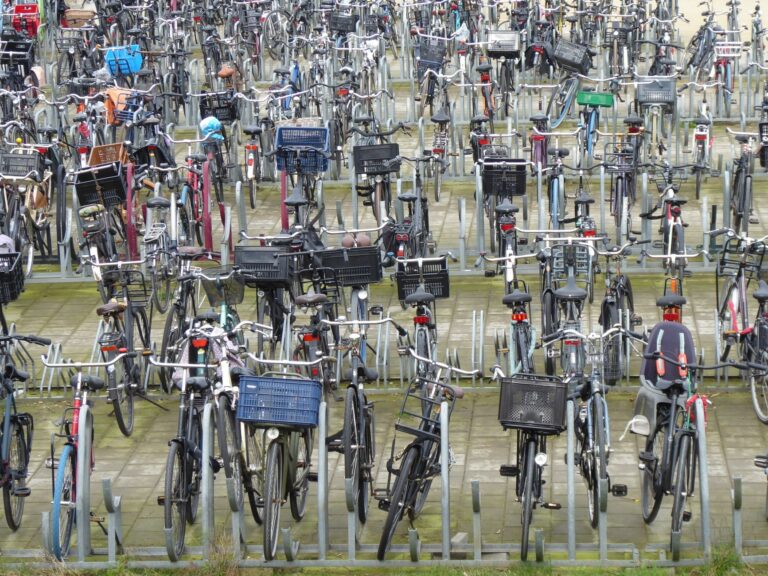
Choose a fixed steel bike rack or solid post set in concrete. Check that the object cannot be unbolted, lifted, or cut. In public, park where people pass often and lights reach at night, and vary the spot so the bike does not become a planned target.
How Do You Lock Frame and Wheels Together?
Many thefts take only a wheel because the lock passes through the wheel alone. Always capture the frame first, then include a wheel.
Leave little slack so tools have less room to work. Tight placement matters more than neat placement. A lock held high inside the frame is harder to strike or lever than one resting on the pavement.
- Pass the main lock through the rear wheel inside the rear triangle and around the rack.
- Run a cable or second lock through the front wheel and frame.
- Face the keyhole down and keep the lock off the ground.
- Remove lights, bags, and computers before you walk away.
What Goes Wrong at Home and Work?
Many bikes disappear from garages, porches, shared halls, and unlocked sheds. An open garage door, a bike left by an apartment stairwell, and a balcony within reach all invite quick grabs. Workplaces create the same risk when bikes sit all day by an unlocked back door.
Lock the bike even indoors if others can enter the space. Anchor it to a wall mount, floor anchor, or heavy furniture. Keep it out of sight from windows and doorways, shut and latch access points, and avoid posting storage details or travel plans where strangers can see them.
How Do You Make a Bike Recoverable?
A lock cannot prove ownership after a theft. Write down the serial number, usually stamped under the bottom bracket where the pedals meet the frame. Take clear photos of the frame, parts, and any marks, and keep the purchase receipt with your records.
Register the bike with a local or national bike registry if one serves your area. Use a discreet mark under the seat or on a part to aid identification. Store photos and the serial number where you can reach them if you need to file a report.