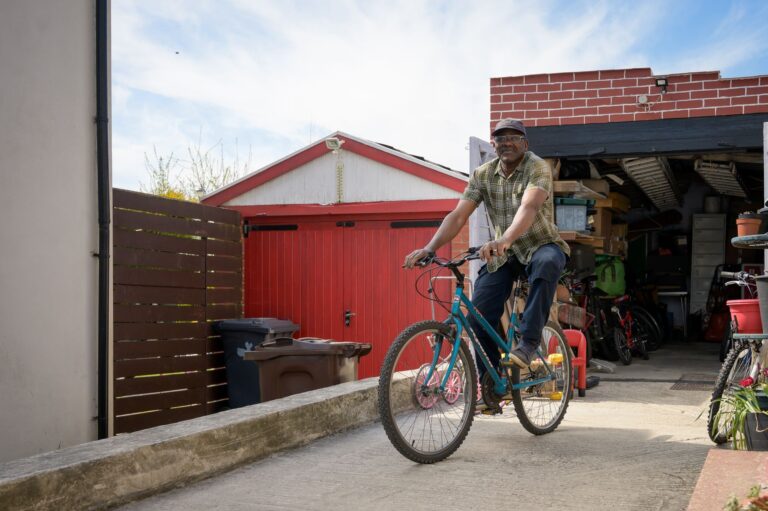
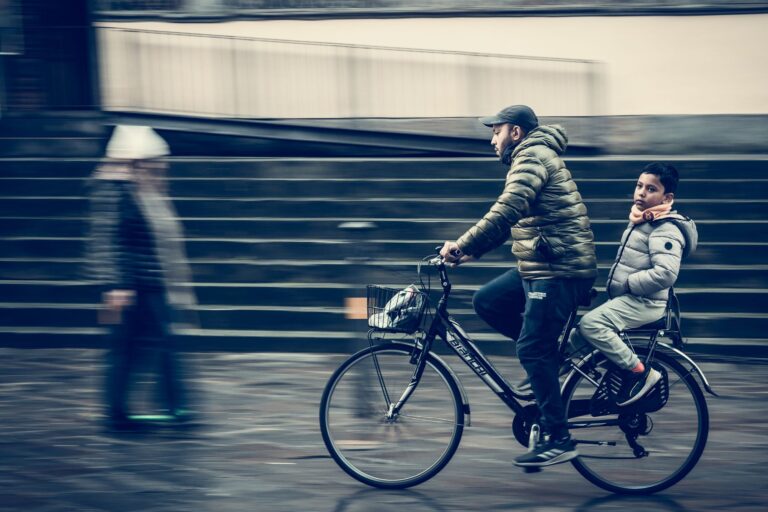
Bike commuting—regular travel by pedal bicycle between home and another destination—works best with a low-traffic route, a reliable bike, visible gear, and a repeatable arrival routine. Plan the trip around safety first, then solve parking, clothing, weather, and minor repairs before your first full commute. The fastest driving route may be a poor cycling route. A slightly longer trip can be the better choice when it replaces high-speed traffic with quiet streets, bike lanes, or paths.
Table of Contents
- Choose a route for exposure, not distance
- Set up the bike and essential gear
- Ride predictably around traffic
- Solve parking and arrival logistics
- Prepare for delays and understand the limits
Choose a route for exposure, not distance
Map at least two possible routes and compare their traffic volume, vehicle speed, intersections, and available cycling space. NHTSA advises cyclists to reduce exposure to motor traffic and notes that the safest route may be away from it entirely in its bicycle-safety guidance. Prefer separated bike lanes where the network makes them practical. These lanes use a physical buffer between bicycles and motor vehicles.
FHWA cites evidence that adding flexible delineators to a conventional lane reduced bicycle–vehicle crashes by up to 53 percent, though that result does not guarantee the same reduction on every street in its discussion of separated bicycle lanes. Test the route before relying on it for work or another fixed appointment. Check where bike facilities end, where turns require a lane change, and whether construction or heavy traffic creates difficult sections. Keep a backup route for closures or conditions that make the preferred route uncomfortable.
Set up the bike and essential gear
Use a bike that fits you and has functioning brakes. Before leaving, confirm that the brakes operate and that nothing essential has loosened or stopped working. A dependable bike matters more for daily travel than accessories that do not solve a specific commuting problem. Wear a properly fitted bicycle helmet on every ride.
Helmets reduce the risk of head and brain injury in crashes, and bicycle helmets sold in the United States must meet CPSC minimum performance standards, according to the CDC's bicycle-safety overview. For daytime visibility, use bright clothing and reflective gear. In reduced visibility, equip the bike with a white front light, a red rear light, and reflectors. Check your state's lighting rules before riding at night because most states require active lights and reflectors. Add equipment that addresses the demands of your route:.
- Fenders for wet roads and road spray
- A rack for carrying work or school items
- Weather gear suited to expected conditions
- Flat-repair supplies that match the bike
- Spare work clothes stored at the destination when possible
Ride predictably around traffic
When riding on a roadway, travel with traffic and follow the rules motorists follow. Obey signs and signals, look behind before turning or changing lanes, signal your intentions, and avoid distractions. Do not assume that visibility equipment guarantees a driver has noticed you. NHTSA says active lighting improves motorists' detection of cyclists but cannot overcome driver distraction.
At intersections and lane changes, combine lights and reflective gear with positioning, observation, and predictable movement. The consequences of mistakes can be severe. NHTSA recorded 1,103 bicyclist deaths in U.S. traffic crashes during 2024, while CDC estimates roughly 120,000 nonfatal crash-related emergency-department visits in a typical year. Route choice and visibility reduce exposure, but they do not remove crash risk.
Solve parking and arrival logistics
Confirm bicycle parking before making the commute part of your schedule. Look for indoor or covered storage when available, and lock the bike to an immovable object. If the destination's parking arrangement is unclear, ask the property manager, employer, or school before arriving with the bike.
Plan what happens after the ride as carefully as the ride itself. The League of American Bicyclists recommends arranging secure destination parking and keeping weather gear and spare work clothes available in its commuting guidance. Create a simple arrival routine: park and lock the bike, remove anything that should not remain outside, change clothes if needed, and set wet gear where it can dry. Allow extra time on the first few trips until that routine becomes predictable.
Prepare for delays and understand the limits
Carry flat-repair supplies, but also decide what you will do if the bike cannot be ridden. A practical backup might involve walking to transit, arranging a pickup, or securing the bike and returning with tools. Keep any essential access card, identification, phone, and work items separate from equipment that stays on the bike.
This guide and the cited injury figures primarily address pedal bicycles. CDC currently counts e-bicycle injuries as motorcycle injuries, so its bicycle statistics do not cleanly describe e-bike commuting risk. E-bike riders can use the same route, visibility, parking, and daily-planning framework, but should not treat those figures as a precise estimate of their own risk.