When the first protected intersection opened in the United States in 2016, it was a watershed moment for bicycle infrastructure—yet that moment also exposed a stark reality. In the span of just two years, from 2016 to 2017, the entire country built exactly 12 protected intersections. The first four appeared in Austin, Salt Lake City, Davis, California, and Bend, Oregon in 2016. Eight more followed in 2017, landing in Atlanta, Berkeley, Chicago, San Francisco, College Station, Texas, and a handful of other cities. Since then, the pace has barely accelerated.
This statistic—12 protected intersections after two years of pioneering work—captures everything wrong with how America has approached cycling safety: we have the proof that protected intersections work, we have the examples to copy, and yet most cities with serious bike commuting simply don’t have them. The gap between where we are and where we need to be is almost incomprehensible. To put it in perspective, if every major U.S. city built just one protected intersection per year, we would still be playing catch-up for decades. Meanwhile, over 130,000 cyclists are injured in on-road accidents annually in the U.S., and more than 27 percent of these injuries occur at intersections—the exact places where protected infrastructure makes the biggest difference.
Table of Contents
- What Are Protected Intersections and Why Do They Matter?
- The Massive Infrastructure Gap Holding America Back
- The Safety Crisis That Protected Intersections Are Supposed to Fix
- Learning From the Cities That Got It Right
- Why Cities Hesitate, Even When the Evidence Is Clear
- The New Wave of Cities Building Protected Infrastructure
- What Comes After the Twelve
- Conclusion
What Are Protected Intersections and Why Do They Matter?
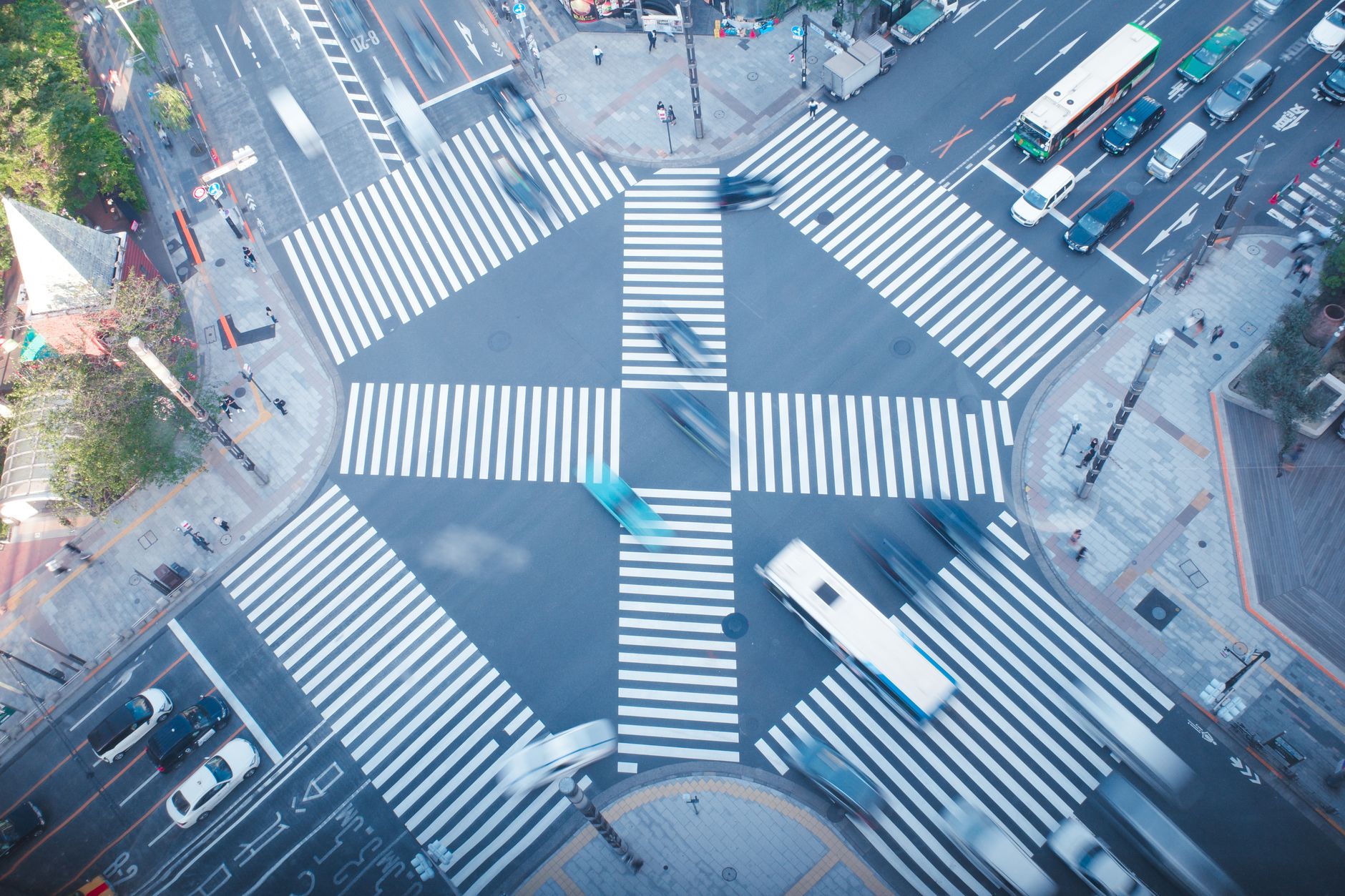
A protected intersection is not simply a bike lane that happens to cross a street. It’s a complete redesign of how cyclists, pedestrians, and vehicles interact at the point where multiple roads meet. In a true protected intersection, cyclists travel in their own space at the edge of the street, but that space is physically separated from both vehicle traffic and pedestrian sidewalks. Traffic signals, curbs, or raised medians create a buffer.
When a cyclist approaches a traffic light, they approach in their own dedicated zone, making them visible to turning vehicles and preventing the “right hook” crash—one of the most common and deadly intersection accidents. This might sound like an obvious safety feature, yet standard American intersections force cyclists to either mingle with car traffic in a painted bike lane (which offers no protection) or dismount and walk like pedestrians (which defeats the purpose of cycling). Protected intersections solve both problems by acknowledging that cyclists need their own space, just as sidewalks give pedestrians their own space. The result is dramatic: cities that have built protected intersections report significant reductions in injury crashes, and riders report feeling far more confident using their bikes for transportation rather than recreation.
The Massive Infrastructure Gap Holding America Back
Despite the proven safety benefits, the United States has lagged shockingly far behind in building protected intersections. Europe has built hundreds. Copenhagen, Amsterdam, and other cities with serious cycling cultures have so thoroughly integrated protected intersections into their street networks that they’ve moved on to addressing even finer points of design. Meanwhile, American cities are still wrestling with the basic question: should we build one? The barriers are real but surmountable. Cost is one factor—protected intersections require redesigned street surfaces, new curbs, and often traffic signal modifications.
But cost alone doesn’t explain the gap. The deeper problem is institutional inertia. Traffic engineers trained decades ago learned to design streets around cars. Protected intersections require a philosophical shift: acknowledging that not everyone drives, and that people on bicycles deserve infrastructure just as much as people in vehicles. Many cities haven’t made that shift yet. They’ve added paint stripes and called it a day, offering cyclists a painted lane that offers no protection when a delivery truck double-parks or a car turns across it.
The Safety Crisis That Protected Intersections Are Supposed to Fix
The statistics on cycling injuries in America paint a picture of a crisis that infrastructure policy has failed to address. Every year, more than 130,000 cyclists are injured in on-road accidents. That number has remained stubbornly stable for years, suggesting that incremental improvements like painted lanes aren’t moving the needle. What’s particularly alarming is where these injuries cluster: over 27 percent occur at intersections. This is no accident. Intersections are where the most dangerous interactions happen—where cars turn across bike lanes, where cyclists have to suddenly merge into traffic, where visibility is worst and speeds are highest at crucial moments. Washington D.C.
offers a concrete example of what happens when a city commits to safer infrastructure. Between 2021 and 2024, crash rates for cyclists dropped by 39 percent. During that same period, the city increased protected bike lanes by 38 percent. The correlation isn’t coincidental. When cyclists have dedicated, protected space, especially at intersections, they get hurt less. It’s that simple. And yet, the lesson hasn’t spread. Most American cyclists still navigate intersections the way they did in 1990—in painted lanes or worse, in traffic itself.
Learning From the Cities That Got It Right
Austin, Salt Lake City, Davis, and the other early adopters didn’t invent protected intersections from scratch. They copied designs already proven in Europe and Canada. What they did was take the risk of being first, implementing these designs in the American context and proving that they work here too. Since then, a handful of other cities have followed: Berkeley and San Francisco in California, Chicago in the Midwest, Atlanta in the Southeast. These aren’t marginal improvements. Riders in these cities report being dramatically more likely to bike for transportation.
Businesses near protected intersections see increased foot traffic. And injury rates drop. The tragedy is how slowly this learning has spread. You would think that once a dozen cities proved protected intersections work, adoption would accelerate. Instead, many American cities seem to have shrugged. They’ll invest in a nice trail or a scenic greenway, but the dangerous, utilitarian business of getting across town on a bike—the place where infrastructure actually saves lives—gets put off indefinitely. The protected intersections that exist today remain isolated islands in a sea of unprotected infrastructure.
Why Cities Hesitate, Even When the Evidence Is Clear
If protected intersections are so effective, why doesn’t every city build them? Part of the answer involves the same forces that slow most safety improvements: inertia, competing priorities, and the false comfort of feeling like the status quo is acceptable. Car drivers don’t clamor for protected bike lanes. Small business owners sometimes worry about losing parking. Elected officials juggle budgets where every dollar is claimed by urgent-sounding needs. Protected intersections end up in the “nice to have” category rather than the “must do” category. There’s also a catch-22 embedded in American cycling culture. Protected intersections are most valuable for utility cyclists—people commuting to work, running errands, moving through the city. But you don’t build utility cycling culture without protected infrastructure.
Most Americans who ride bikes today do so recreationally on trails. They don’t use bikes for daily transportation because it feels too dangerous. A handful of protected intersections can’t shift that dynamic alone. You need a network. You need consistency. But building that network requires cities to make a leap of faith, committing to infrastructure before a cycling culture has fully materialized. Some cities are willing to make that leap. Most are not.
The New Wave of Cities Building Protected Infrastructure
The stagnation isn’t permanent. As of 2025, momentum is building in unexpected places. Albuquerque, Las Vegas, Phoenix, and Tucson have all announced plans to build or expand protected intersections as part of broader active transportation initiatives. These are not traditionally bike-friendly cities. They’re hot, car-dependent, sprawling. If protected intersections can work in Phoenix and Las Vegas, the argument that they’re only for cold-weather cities or dense walkable neighborhoods falls apart.
What’s driving this new momentum is partly the same force that drove the first wave: federal funding. The Bipartisan Infrastructure Law and state transportation budgets have made money available specifically for cycling infrastructure. Cities that might not have made the investment on their own can now afford it. But there’s also a cultural shift. A new generation of elected officials, planners, and advocates has decided that 130,000 injuries a year is unacceptable. They’re looking at what Austin and Copenhagen did and asking: why can’t we do that here?.
What Comes After the Twelve
The next phase of protected intersection adoption in America will determine whether we’re building a real shift in how cities design streets or just creating scattered monuments to good intentions. The critical number isn’t 12 anymore—it’s whether we hit 50 cities with meaningful protected intersection networks, or whether we’re content with isolated examples that serve local cyclists but don’t change the broader culture. The future of American cycling infrastructure depends less on inventing new designs (they already exist) and more on building political will to implement them.
Every city that builds a protected intersection makes it easier for the next city to justify the investment. Every injury prevented becomes evidence for the next budget hearing. The crisis isn’t that we don’t know how to fix the problem. The crisis is that most cities haven’t decided to.
Conclusion
The protected intersection crisis isn’t a mystery. It’s a choice. We have proof that protected intersections work—proven in Austin, Salt Lake City, Davis, Chicago, San Francisco, Washington D.C., and a dozen other cities. We have evidence that they reduce injuries dramatically. We have examples to copy. And yet, most American cyclists still navigate dangerous intersections in painted lanes or no lanes at all. The statistic of 12 protected intersections built in the first two years of American adoption tells us everything: we were willing to pioneer, but not willing to build.
That pattern is only just beginning to change, with new cities in the Southwest committing to protected infrastructure. The question now is whether those early wins will catalyze the next wave or whether protected intersections will remain an exotic amenity reserved for a handful of forward-thinking cities. For individual cyclists, the answer is practical: if you live in or near Austin, Salt Lake City, Chicago, San Francisco, or one of the other cities with protected intersections, use them and support their expansion. If you don’t, advocate for them. Show your city leaders the evidence from Washington D.C., the examples from Europe, the data on injury reduction. The infrastructure isn’t hard to build. The will to build it is the scarce resource.
You Might Also Like
- The Cycling Infrastructure Inequality Crisis Explained in One Statistic: Low-Income Neighborhoods Have 72% Fewer Bike Lanes
- The Bike-to-School Safety Crisis Explained in One Statistic: Only 10% of Children Bike to School vs 48% in 1969
- The E-Bike Fire Safety Crisis Explained in One Statistic: 268 Fires in 2025 Up 150% From 2022


