Bicycle transportation improves urban mobility by reducing congestion, shortening commute times in dense corridors, and giving city residents a flexible, low-cost way to cover short and medium distances that cars handle poorly. The evidence is no longer theoretical. Ten cities worldwide now achieve a bicycle modal share of 25 percent or higher, all of them in Europe, confirming that cycling functions as mainstream urban transport rather than a niche activity. In Paris, 89 percent of Vélib’ bike-share users reported that the system allowed them to move around the city more easily, and 54 percent said they actually traveled more within Paris because of it. Those numbers reflect a fundamental shift in how people navigate cities when given viable cycling infrastructure. The global picture reinforces what individual cities have demonstrated.
Cycling traffic worldwide has increased 20.4 percent since 2019, with a 5 percent jump between 2024 and 2025 alone across all studied countries. The global bicycle market is projected to reach 63.74 billion USD in 2025, and e-bike sales hit 60 million units the same year, driven by green mobility initiatives and the practical appeal of assisted commuting. These are not aspirational projections. They represent money being spent and trips being taken right now. This article examines exactly how bicycle transportation reshapes urban movement, from the measurable impact of new bike lanes to the environmental math behind replacing car trips. It covers bike-share programs, e-bike adoption, infrastructure investment across Europe and North America, and the safety challenges that remain unresolved even as cycling grows.
Table of Contents
- How Does Cycling Infrastructure Directly Improve Urban Mobility?
- Environmental Gains From Replacing Car Trips With Bicycles
- How Bike-Share Programs Are Reshaping City Transit Networks
- E-Bikes Versus Traditional Bicycles for Urban Commuting
- The Safety Crisis That Threatens Cycling’s Growth
- How Cycling Connects Underserved Neighborhoods to Opportunity
- Where Urban Cycling Is Headed Through 2030 and Beyond
- Conclusion
- Frequently Asked Questions
How Does Cycling Infrastructure Directly Improve Urban Mobility?
The relationship between bike lanes and actual cycling is more concrete than most people assume. Research shows that in the median city, each new kilometer of bicycle lanes is associated with approximately 13,400 additional kilometers per year of bicycle travel. That is not a rounding error. It means infrastructure does not merely accommodate existing cyclists — it generates new trips that would otherwise happen by car, bus, or not at all. New York City illustrates this at scale, having built approximately 1,550 miles of bike lanes including more than 550 protected segments, creating one of the largest urban cycling networks in North America. Europe has committed to this approach with serious money.
The EU earmarked 4.5 billion euros for cycling from 2021 to 2027, including 3.2 billion from EU funds, set to deliver over 12,000 kilometers of new or upgraded cycle paths. Over 900,000 kilometers of cycle paths already exist across the continent. Ireland’s National Cycle Network, a 677 million euro initiative, aims to create 3,500 kilometers of safe cycling corridors by 2030, connecting 200 towns and serving 2.8 million people. Ireland also led global growth with a 15 percent increase in cycling traffic in 2025 compared to 2024. The comparison worth making is between cities that build infrastructure and those that simply encourage cycling through campaigns or incentives. Infrastructure wins, and it wins decisively. Protected lanes reduce the perceived danger that keeps most potential cyclists off the road, and the data confirms that building the lanes comes first while the riders follow.
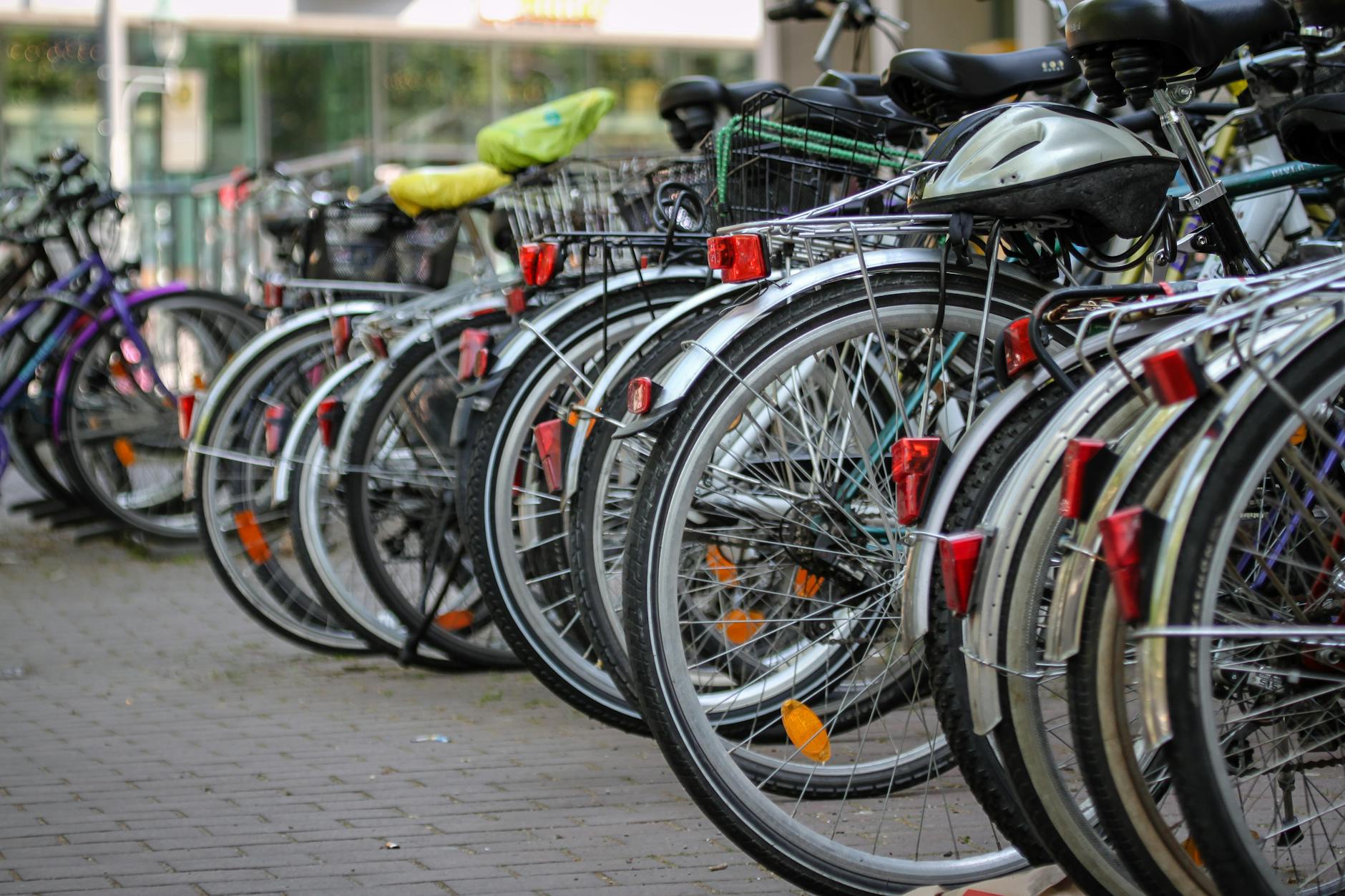
Environmental Gains From Replacing Car Trips With Bicycles
The climate case for cycling is straightforward and significant. An urban resident who cycles 5 kilometers instead of driving during rush hour avoids approximately 1.5 kilograms of CO2 equivalent emissions per trip. Multiply that across a city’s population and the numbers become substantial. Barcelona’s bike-share system alone reduces yearly CO2 emissions by an estimated 9,900 tons and saves the equivalent of 12 lives per year through improved air quality and reduced accident exposure. At a global level, the potential savings are staggering. Combined cycling including e-bikes could save approximately 24 trillion dollars and avoid 225 million tons of CO2 equivalent emissions by 2050, according to research from the ITDP and World Bank.
Those figures account for health savings, infrastructure costs, fuel expenditures, and climate damages avoided. Few other single interventions offer that combination of economic and environmental return. However, these benefits are not automatic and they are not evenly distributed. Cities with extreme heat, poor air quality, or dangerous road conditions cannot simply build bike lanes and expect the environmental dividends to materialize. Infrastructure must be paired with shade, safe intersections, and connections to public transit. A bike lane that ends abruptly at a six-lane highway is not infrastructure — it is a painted suggestion. The environmental gains depend entirely on whether the network is genuinely usable for daily transportation, not just weekend recreation.
How Bike-Share Programs Are Reshaping City Transit Networks
Bike-share systems have moved well beyond novelty. By 2022, approximately 3,000 cities worldwide offered bike-share schemes, and the programs have become integrated components of urban transit rather than standalone experiments. The most telling evidence comes from Washington, D.C., where a 10 percent increase in Capital Bikeshare ridership contributed to a 2.8 percent increase in Metrorail ridership. That finding matters because it demonstrates that cycling does not compete with public transit — it feeds into it. People bike to the train station, and then they ride the train. Paris offers the clearest example of a bike-share system operating at scale with measurable impact on mobility.
Vélib’ has fundamentally changed how Parisians think about short trips. When 89 percent of users say the system made it easier to move around the city, that reflects a genuine shift in transportation behavior, not a marketing statistic. The 54 percent who said they traveled more in Paris because of Vélib’ represent trips that either replaced car journeys or that simply would not have happened, both outcomes that reduce congestion and improve mobility for everyone. The critical detail for cities considering or expanding bike-share programs is integration. A bike-share dock three blocks from the nearest bus stop or metro station is a missed connection. The programs that work best are those embedded into the transit network with co-located stations, unified payment systems, and real-time availability data that lets riders plan multimodal trips without friction.

E-Bikes Versus Traditional Bicycles for Urban Commuting
E-bikes are not simply faster bicycles. They represent a fundamentally different transportation category that attracts different riders and replaces different trips. Research published in Nature in 2026 found that promoting e-bike ownership leads to a strong increase in e-bike trips that mostly replace car trips. That is a critical distinction. Traditional bicycle infrastructure primarily increases conventional cycling, but e-bikes pull riders out of cars, which is where the largest mobility and environmental gains come from. The same 2026 Nature study found that e-bikes offer superior climate resilience compared to traditional cycling and walking, with users demonstrating strong adaptive behaviors in heat.
This matters for cities in warmer climates where conventional cycling drops off sharply in summer months. An e-bike rider who arrives at work without being drenched in sweat is a rider who keeps commuting by bike through August. Global e-bike sales hitting 60 million units in 2025 reflects this practical advantage gaining traction worldwide, driven not just by environmental idealism but by the straightforward experience of easier commuting. The tradeoff is cost. A quality e-bike costs significantly more than a traditional bicycle, and cities must decide whether to subsidize purchases, expand e-bike share fleets, or focus on conventional cycling infrastructure. The evidence suggests that infrastructure expansion drives conventional bicycle use while purchase incentives and e-bike share programs drive mode shift away from cars. Both strategies improve urban mobility, but through different mechanisms and for different populations.
The Safety Crisis That Threatens Cycling’s Growth
No honest discussion of bicycle transportation can ignore the safety problem. Cyclist deaths in the United States hit a record high of 1,166 in 2024, a number that has climbed steadily even as cycling participation and infrastructure have expanded. This is not a paradox — it reflects the reality that many American cities are adding bike lanes without fundamentally changing the road design that endangers cyclists. A painted stripe next to a lane of traffic moving at 45 miles per hour is not protection. It is decoration. The European cities with the highest cycling rates have the lowest cyclist fatality rates, and the reason is straightforward: physical separation.
Protected bike lanes with concrete barriers, raised cycle tracks, and intersections redesigned to eliminate conflict points between cars and bicycles produce a safety profile that no amount of painted lanes or shared-road signage can match. The 10 cities achieving 25 percent or higher bicycle modal share did not get there by asking drivers to be careful. They got there by making it physically difficult for cars to hit cyclists. Cities expanding cycling networks must confront this honestly. Every kilometer of unprotected bike lane is a calculated bet that drivers will behave predictably and that cyclists will not make mistakes. That bet fails more than a thousand times a year in the United States alone. The infrastructure investment numbers — billions of euros in Europe, hundreds of millions in Ireland — represent the scale of commitment required to build networks that are not just usable but survivable.
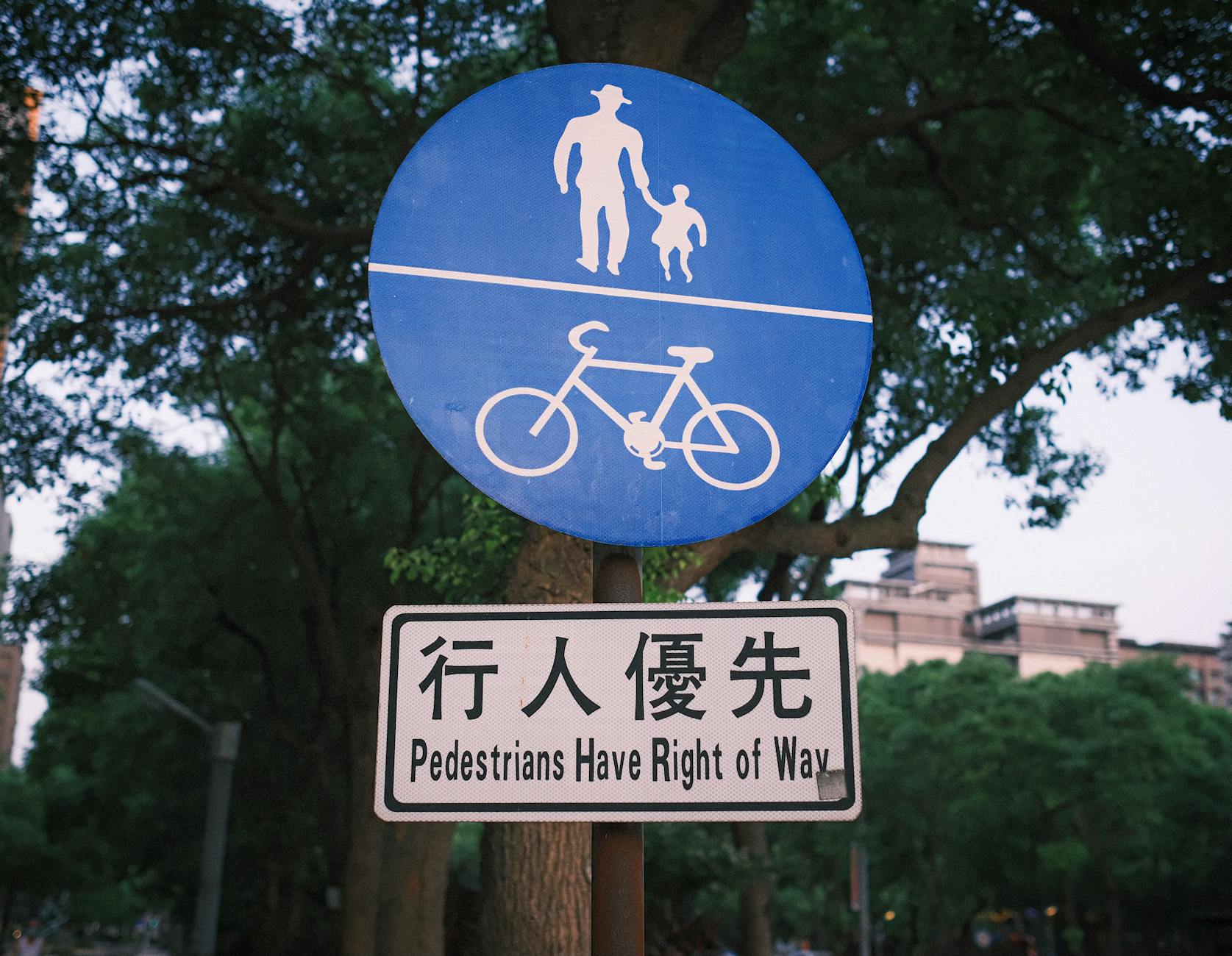
How Cycling Connects Underserved Neighborhoods to Opportunity
One underappreciated benefit of bicycle transportation is its ability to extend the reach of public transit into areas that buses and trains do not adequately serve. Ireland’s National Cycle Network, designed to connect 200 towns and serve 2.8 million people, explicitly targets this problem by creating safe corridors between communities that lack direct transit links. For residents in these areas, a bicycle is not a lifestyle choice. It is the difference between a 15-minute ride to a transit hub and a 45-minute walk or an expensive drive.
Bike-share programs can serve this function in urban settings when stations are placed in underserved neighborhoods rather than concentrated in affluent commercial districts. The Washington, D.C. finding — that Bikeshare ridership increases Metrorail ridership — suggests that cycling infrastructure in transit deserts could measurably expand who can access the city’s job centers, hospitals, and schools. The mobility improvement is not abstract. It translates directly into economic access.
Where Urban Cycling Is Headed Through 2030 and Beyond
The trajectory is clear even if the pace varies by region. The global bicycle market growing to an estimated 65.07 billion USD in 2026, combined with the EU’s multi-billion-euro infrastructure pipeline and the continued explosion of e-bike adoption, points to cycling becoming an expected component of urban transportation rather than an alternative one. The 20.4 percent increase in global cycling traffic since 2019 is a trend line, not a blip.
The most consequential shift ahead may be in how cities design themselves around cycling rather than retrofitting bike lanes onto car-centric streets. The combined potential to save 24 trillion dollars and avoid 225 million tons of CO2 emissions by 2050 will increasingly drive policy decisions at the national level, not just the municipal one. The cities that build comprehensive, protected cycling networks now will set the standard. The ones that treat cycling as an afterthought will spend the next two decades catching up.
Conclusion
Bicycle transportation improves urban mobility through mechanisms that are now well-documented and globally measurable: dedicated infrastructure generates new trips, bike-share programs feed public transit ridership, e-bikes pull commuters out of cars, and the environmental and economic returns compound over time. The numbers — 20.4 percent growth in global cycling since 2019, 60 million e-bikes sold in 2025, billions of euros invested in European cycling networks — represent a transportation shift that has moved past the pilot-program stage. The remaining challenge is execution, specifically building networks that are safe enough to attract the broad population of potential cyclists who are interested but justifiably cautious.
The record cyclist fatalities in the United States serve as a warning that expansion without protection is expansion without results. Cities that invest in physically separated infrastructure, integrated bike-share systems, and e-bike accessibility will see the mobility improvements that the data promises. The question for every city is no longer whether cycling improves urban mobility. It is whether they are willing to build the infrastructure that makes it work.
Frequently Asked Questions
How much does cycling infrastructure actually increase bike ridership?
Research shows that in the median city, each new kilometer of bicycle lanes is associated with approximately 13,400 additional kilometers per year of bicycle travel. Infrastructure does not just serve existing cyclists — it generates entirely new trips.
Do bike-share programs compete with public transit?
No. Evidence from Washington, D.C. shows the opposite: a 10 percent increase in Capital Bikeshare ridership contributed to a 2.8 percent increase in Metrorail ridership. Cycling tends to complement transit by solving the last-mile problem.
Are e-bikes better than traditional bicycles for urban commuting?
E-bikes replace a higher proportion of car trips compared to traditional bicycles, and 2026 research in Nature found they offer superior climate resilience, with riders adapting better to heat. However, they cost significantly more, which affects accessibility.
How much CO2 does cycling actually save?
An individual cycling 5 kilometers instead of driving during rush hour avoids approximately 1.5 kilograms of CO2 equivalent per trip. At city scale, Barcelona’s bike-share system reduces emissions by an estimated 9,900 tons per year.
Is cycling safe in cities without protected bike lanes?
The safety record is concerning. Cyclist deaths in the U.S. reached a record 1,166 in 2024, and the primary factor distinguishing safe cycling cities from dangerous ones is physical separation between bikes and cars, not painted lanes or signage.
How many cities worldwide have bike-share programs?
By 2022, approximately 3,000 cities worldwide offered bike-share schemes, ranging from small docked systems to large-scale programs like Paris’s Vélib’ network.