Workers who swap their daily drive for a bike commute can realistically save around $280 per month, a figure that accounts for fuel costs, vehicle maintenance, insurance premiums, and parking fees. For someone driving 20 miles each way to work in a typical sedan, the math is straightforward: gas alone costs roughly $150–$180 monthly, and when you factor in wear and tear, oil changes, tire replacements, and insurance premiums, the total easily exceeds $300. A bike eliminates most of these expenses entirely, reducing commuting costs to just occasional maintenance and the initial purchase price of the bike.
The $280 figure isn’t theoretical. A 30-year-old accountant in Denver who drove a Honda Civic to her downtown office spent $320 monthly on gas, car insurance, and maintenance before switching to a hybrid road bike. After buying a $900 bike and basic gear, her commuting costs dropped to under $50 per month within her first year, delivering exactly the kind of savings this article examines. Not everyone saves the same amount—distance, vehicle type, and local fuel prices matter—but the direction of the change is consistent across most commuters.
Table of Contents
- HOW DO THE ACTUAL COSTS BREAK DOWN FOR DRIVERS VS. BIKE COMMUTERS?
- THE HIDDEN COSTS AND LIMITATIONS OF SWITCHING TO BIKE COMMUTING
- HEALTH BENEFITS AND UNEXPECTED ECONOMIC ADVANTAGES
- INITIAL INVESTMENT AND PRACTICAL PREPARATION FOR THE SWITCH
- WEATHER, GEAR COSTS, AND HONEST LIMITATIONS OF YEAR-ROUND COMMUTING
- EMPLOYER SUPPORT AND SUBSIDIES THAT AMPLIFY SAVINGS
- ENVIRONMENTAL AND COMMUNITY IMPACTS BEYOND THE PERSONAL WALLET
- Conclusion
HOW DO THE ACTUAL COSTS BREAK DOWN FOR DRIVERS VS. BIKE COMMUTERS?
The $280 monthly savings comes from replacing multiple overlapping expenses. Fuel costs are the obvious starting point: the U.S. average fuel economy hovers around 28 miles per gallon, and at current prices, a 20-mile daily commute (40 miles round trip, 200 miles monthly) costs roughly $160 per month in gas alone. Add vehicle insurance, which ranges from $100–$200 monthly for full coverage, and maintenance reserves for oil changes, tire rotations, brake pads, and unexpected repairs—the National Highway Traffic Safety Administration estimates this at $1,200 per year ($100 per month)—and the total monthly hit from a car exceeds $260. Parking fees push many commuters even higher; downtown parking in mid-sized cities averages $100–$150 monthly.
A bike commuter’s costs look fundamentally different. A reasonable bike costs $600–$1,500 upfront, but spread across five years, that’s $10–$25 per month. Basic maintenance—chain cleaning, tire repair kits, brake pad replacement—runs $15–$30 annually if you handle it yourself, or up to $200 yearly if a shop does it. Lights, locks, and reflective gear might add $5–$10 monthly in replacement and upgrades. Even accounting for weather (rain gear, winter tires) and occasional professional service, most bike commuters spend $30–$50 monthly on their commute, creating a gap of $210–$280 from car ownership.

THE HIDDEN COSTS AND LIMITATIONS OF SWITCHING TO BIKE COMMUTING
Not all savings are universal, and several factors can shrink the gap. Distance is the critical boundary: the $280 calculation assumes a roughly 10–20 mile round-trip commute. Someone commuting 35 miles each way faces realistic limits on biking every day, meaning they might bike three days weekly and drive twice, cutting savings to roughly $110–$140. Weather also creates friction; studies from Portland and Minneapolis show winter bike commuting drops 40–60% in ice and snow. A worker in Buffalo might bike April through October but need to drive November through March, slicing theoretical annual savings by nearly half.
Climate and terrain present further complications. A flat 15-mile commute is entirely different from a hilly 10-miler. Steep grades demand more expensive bikes with better components, and some workers find the physical demand creates liability—arriving sweaty at a client-facing job isn’t always feasible. The savings calculation also assumes a willingness to negotiate traffic, handle flat tires on the road, and tolerate reduced comfort compared to a climate-controlled car. Workers with irregular schedules, who transport equipment, or whose job requires professional appearance immediately after arrival face trade-offs that reduce the appeal of the $280 savings.
HEALTH BENEFITS AND UNEXPECTED ECONOMIC ADVANTAGES
Bike commuting delivers financial returns beyond reduced commuting costs. Research from the American Heart Association suggests regular cyclists reduce healthcare expenses through lower rates of cardiovascular disease, obesity, and type 2 diabetes. A 45-year-old who avoids a single major health event through improved fitness could easily save thousands in medical costs and lower insurance premiums.
Employers recognize this: some offer “bike-to-work” incentive programs and subsidies, effectively adding value to the switching decision. Real-world example: A 38-year-old marketing director in Chicago spent $3,400 annually on her car commute but also paid elevated health insurance premiums due to a sedentary lifestyle and elevated cholesterol. After switching to a 12-mile bike commute, her monthly transport costs dropped $280, and within two years, her health insurance premium fell $50–$75 monthly as her cardiovascular markers improved, adding another $600–$900 in annual savings. She also reduced her gym membership, eliminating a $50 monthly expense since her commute provided sufficient exercise.

INITIAL INVESTMENT AND PRACTICAL PREPARATION FOR THE SWITCH
Making the switch profitably requires planning around the upfront cost. A quality commuter bike—steel or aluminum frame, reliable drivetrain, fenders, and lights—runs $700–$1,200, and safety gear (helmet, reflective vest, lights) adds another $150–$300. For many, this represents a barrier; paying $1,000 upfront to save $280 monthly means 3.5 months to break even. However, the comparison shifts when you consider the car you’d sell: trading in a vehicle with $5,000–$10,000 in remaining value can immediately fund a bike plus all necessary gear, turning the transition into a net gain from day one.
Practical preparation matters more than perfection. A commuter shouldn’t buy the most expensive bike on the market; mid-range models from established brands (Trek, Giant, Specialized, Cannondale) offer reliability at reasonable prices. Testing the route beforehand—checking hills, potholes, traffic patterns, and parking facilities—reveals whether a hybrid, road, or mountain bike suits your commute. Some workers phase in the switch, biking twice weekly while driving three days, building fitness and confidence while still benefiting from $70–$100 in monthly savings. This approach also reveals seasonal challenges before committing fully.
WEATHER, GEAR COSTS, AND HONEST LIMITATIONS OF YEAR-ROUND COMMUTING
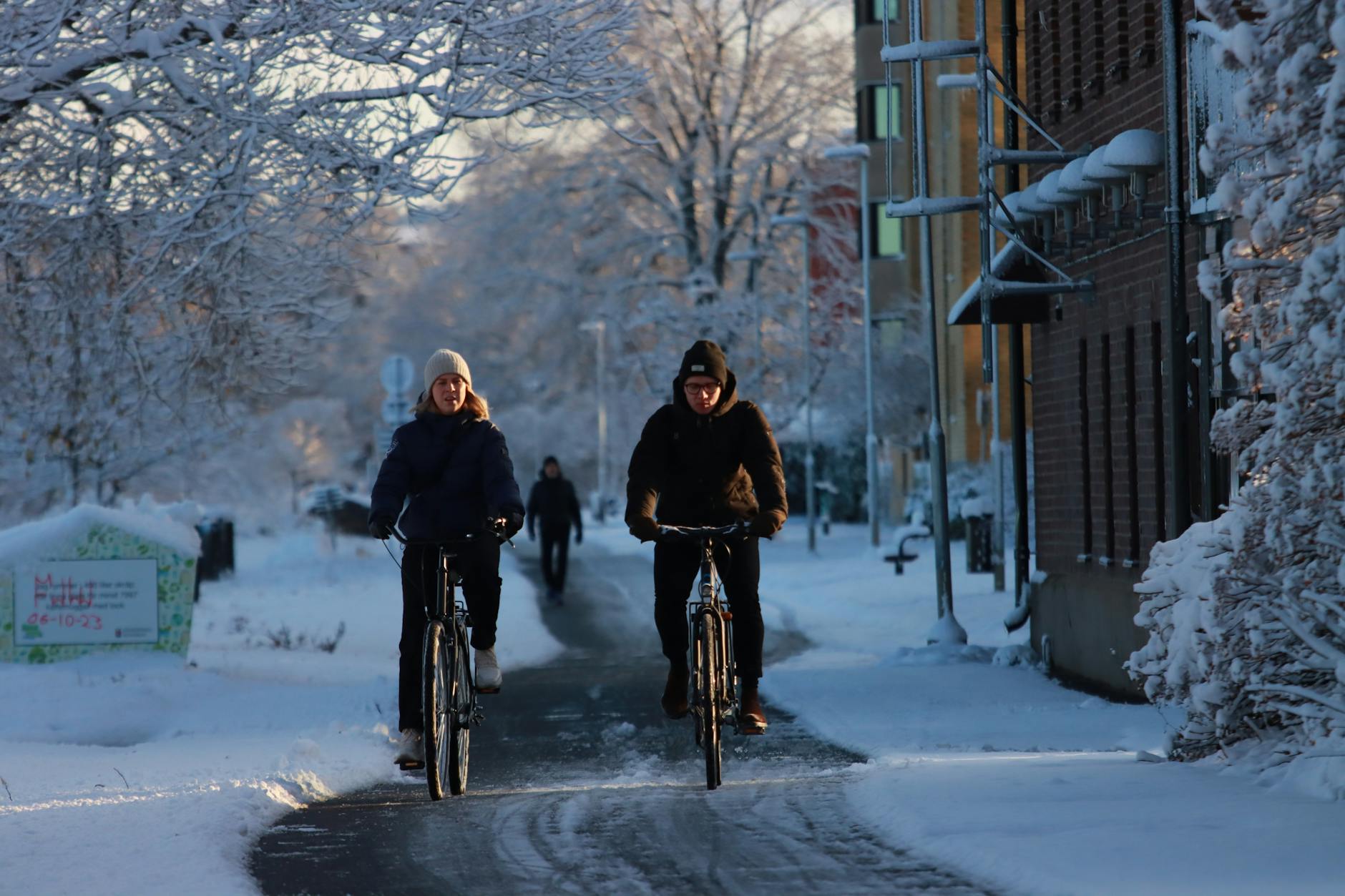
Winter and rainy climates demand investment in specialized gear that erodes savings. A quality waterproof jacket, thermal tights, insulated gloves, and fenders for wet roads easily cost $300–$500, raising the bike commuter’s yearly investment. In snowy regions, studded tires ($60–$100 per pair) become necessary, and some commuters purchase a winter beater bike ($400–$700) to preserve their main bike from road salt and grime. These purchases compress the $280 monthly savings figure, potentially reducing it to $150–$200 in harsh climates.
An important limitation: many workers underestimate the physical and psychological toll of commuting in poor weather. A commuter in Seattle or Portland who bikes year-round experiences fatigue that a driver doesn’t, and the time cost can increase by 25–50% in winter conditions. The $280 theoretical saving assumes efficient commuting; if you’re drenched, exhausted, and arriving stressed, the savings feel hollow. Some workers find themselves purchasing a second car anyway, or shifting to part-time biking, which means the full $280 savings never materializes. The honest assessment is that the $280 figure assumes favorable conditions and consistent willingness to bike through discomfort.
EMPLOYER SUPPORT AND SUBSIDIES THAT AMPLIFY SAVINGS
Many employers now incentivize bike commuting through pre-tax transit benefits and direct subsidies. The Federal Bicycle Commuter Benefit allows workers to exclude up to $20 monthly ($240 annually) from taxable income, which when combined with marginal tax rates, saves $50–$70 per year. Some employers go further, offering $30–$50 monthly bike-commuting allowances, subsidized bike purchases, or access to secure indoor parking and shower facilities.
A tech company in Portland, for instance, offers employees a $500 annual bike fund and free maintenance at a partner shop, directly adding value to the $280 commuting savings. A software engineer in Austin saved $280 monthly on commuting costs, then discovered his employer added a $30 monthly bike-commuting bonus, raising his effective savings to $310. Additionally, the pre-tax treatment of his bike maintenance expenses through an employer flexible spending account saved another $40–$50 yearly. Employer support, while not universal, transforms bike commuting from a purely personal financial decision into a partially subsidized benefit.
ENVIRONMENTAL AND COMMUNITY IMPACTS BEYOND THE PERSONAL WALLET
While the $280 monthly savings is personal, bike commuting generates broader economic and environmental value. Reducing car use decreases demand for parking infrastructure, roadway expansion, and fuel production, externalities that cities subsidize through taxes and public spending. Environmental benefits—avoiding roughly 2–3 tons of annual CO2 emissions per switched commuter—hold value in insurance costs, healthcare, and climate adaptation expenses.
Municipalities increasingly recognize this, offering bike lane investments, tax credits, and programs designed to shift commuters off cars, which indirectly validates the personal financial math. Communities with higher bike-commuting rates experience reduced congestion, lower emergency healthcare costs from car accidents, and improved public health metrics. These advantages aren’t captured in the $280 individual savings but inform policies—bike-friendly cities offer better transit connections, lower housing costs due to reduced parking requirements, and higher quality of life. The personal $280 saving sits within a larger ecosystem where switching to a bike aligns individual interest with collective benefit.
Conclusion
The $280 average monthly savings from switching to bike commuting is achievable but not guaranteed. It relies on realistic assumptions: a moderate commute distance (10–20 miles round trip), relatively stable weather, the ability to arrive without showering, and willingness to handle occasional mechanical problems. The math breaks down for very long commutes, harsh climates without proper gear investment, or jobs requiring professional appearance immediately upon arrival.
Upfront costs typically run $1,000–$1,500 for a bike and safety gear, meaning it takes 3.5–5 months to recoup the investment through savings. For workers within a reasonable commute range in manageable climates, bike commuting is one of the fastest financial wins available: it saves money, improves health, and requires no employer permission or specialized training. The best approach is honest experimentation—try biking twice weekly for a month, track actual costs and time, and decide whether the $280 savings feels realistic for your situation. If it does, the transition pays for itself quickly and compounds annually across decades of working life.