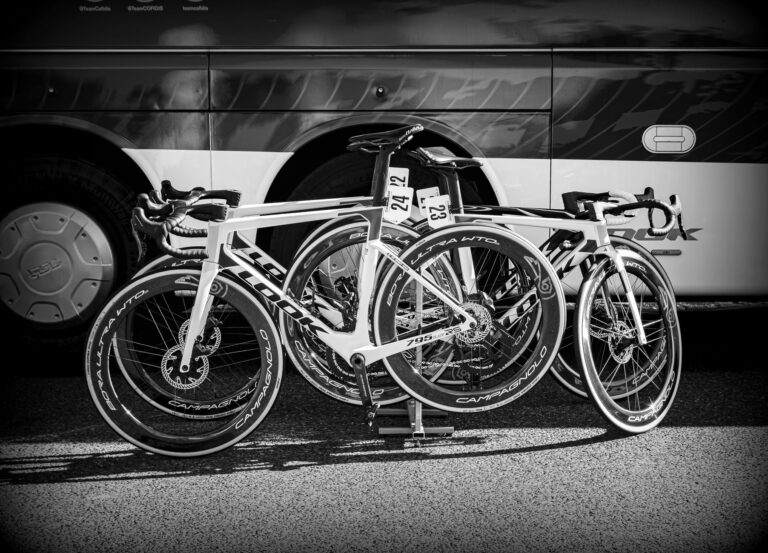
A gravel bike differs from a road bike mainly in wider tires, steadier handling, and lower gearing for loose surfaces. A road bike prioritizes light weight and fast response on smooth pavement. A gravel bike is a drop-handlebar bike made for unpaved roads, dirt paths, and mixed-surface rides. A road bike is a drop-handlebar bike made for paved speed, climbing, and long group rides.
Table of Contents
- How do tires and wheels change the ride?
- How does frame geometry feel on the road?
- What is different about gears and brakes?
- Which bike fits your riding?
How do tires and wheels change the ride?
Gravel bikes accept much wider tires, typically with tread for grip on gravel and dirt. Road bikes use narrower, smoother tires that roll fast on asphalt but slip and pinch more easily off pavement. Wider tires run at lower pressure, which smooths vibration and improves traction.
That comfort matters on washboard gravel, broken pavement, and long mixed rides. Most gravel bikes also use sturdier wheels and frames with extra clearance for mud. Road bikes keep clearances tight to save weight and improve aerodynamics.
How does frame geometry feel on the road?
Gravel frames usually have a longer wheelbase, slacker head angle, and taller front end. Those traits make steering calmer on loose descents and rough ground. Road frames place the rider lower and farther forward for efficient pedaling.
That position helps sprinting, climbing, and holding speed in a paceline. Handling follows the same split. A gravel bike feels stable and forgiving when the surface shifts, while a road bike feels sharp and quick when cornering on pavement.
What is different about gears and brakes?
Gravel bikes commonly use lower gears for steep, loose climbs and loaded riding. Many use a single front chainring for simplicity and mud clearance, while others keep two rings for wider range. Road bikes use taller gears that suit fast flats, descents, and steady climbs.
Close gear steps help riders hold a precise cadence at higher speeds. Both styles now use disc brakes, but gravel setups favor consistent stopping in dust, mud, and rain. Gravel bikes also add mounts for racks, fenders, and extra water for longer routes.
Which bike fits your riding?
Choose a gravel bike if most rides include dirt roads, towpaths, forest tracks, or rough city streets. It also suits commuting, bikepacking, and winter riding where stability and tire volume help.
Choose a road bike if most rides stay on pavement and speed matters. It is the better tool for club rides, centuries, hill climbs, and racing.
- Mainly smooth pavement and group rides: road bike
- Mixed pavement and gravel, or one bike for everything: gravel bike
- Rough tracks, loads, or bikepacking: gravel bike with wide tires
- Test both with the tires you would actually use, since tires shape the ride more than labels do