Bicycles, the two-wheeled mode of transportation that has been a staple in our lives since childhood. Whether we’re riding to school, going on a leisurely ride around the neighborhood, or using it as a means of exercise, bicycles have become an integral part of our daily routine. But have you ever stopped and wondered, how does this seemingly simple machine work? Don’t worry, we’ve got you covered. In this article, we’ll delve into the science behind how bicycles work.
The Balance of Forces
The most basic principle behind the functioning of a bicycle is the balance of forces. When we ride a bicycle, we are constantly battling against two opposing forces – gravity and momentum. Gravity tries to pull us down while momentum propels us forward. The key to maintaining balance lies in the center of gravity.
When we sit on a bicycle, our center of gravity shifts forward, and to counter this, we must steer in the opposite direction. This creates a pendulum-like motion that keeps us upright and moving forward.
The Friction Factor
Now, let’s talk about the road beneath our bicycles. To move forward, the wheels must be in contact with the ground, and it is the friction between the wheels and the road that allows us to move forward. But too much friction can slow us down, and too little can make us slip.
This is where the design of the wheels comes into play. The tires are made with a rubber compound that provides the perfect amount of friction to grip the road and also absorb shock. The treads on the tires also play a vital role in providing traction on different surfaces.
Gearing Up for Speed
Have you ever wondered how you are able to go faster by simply pedaling harder? This is where the gears come into play. Bicycles have a system of gears that allow us to adjust the resistance while pedaling. The larger gear at the front and the smaller gear at the back creates a higher gear ratio, allowing for faster speeds with less pedaling effort.
On the other hand, the smaller gear at the front and the larger gear at the back creates a lower gear ratio, allowing us to pedal easier but at a slower speed. This system of gears makes it possible for us to ride comfortably, whether we are going uphill or downhill.
The Power of Pedals
Now that we understand the basics of how bicycles work, let’s talk about how we actually make it move. The power behind a bicycle lies in the pedals. As we push down on the pedals, we transfer our energy to the crankshaft, which is connected to the chain. The chain then rotates the rear wheel, propelling us forward.
But what happens when we stop pedaling? The momentum of the bicycle keeps it moving forward until friction and air resistance slow it down. This is why it’s important to keep pedaling even when going downhill – to maintain our speed and balance.
The Aerodynamics Advantage
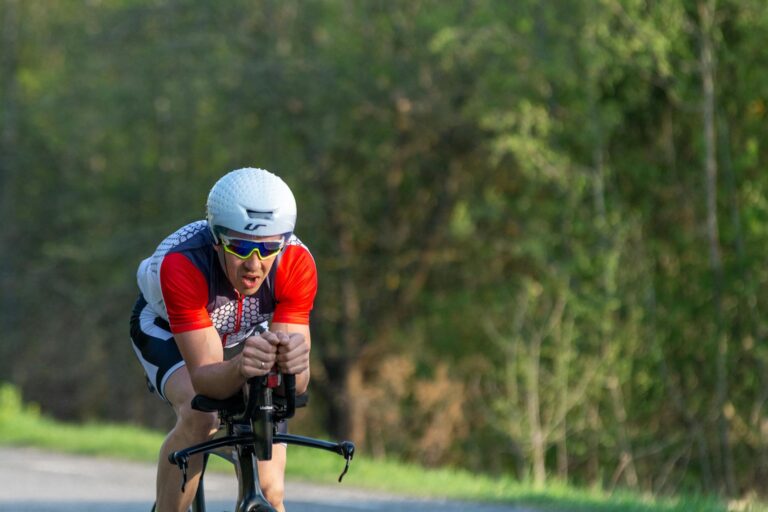
We’ve all seen professional cyclists wearing tight-fitting clothes and helmets with pointy shapes. This is because they understand the importance of aerodynamics in riding a bicycle. Air resistance can greatly affect a cyclist’s speed, and by reducing their wind resistance, they can go faster with less effort.
Another important factor in aerodynamics is the frame of the bicycle itself. The shape and design of the frame can greatly impact its speed and maneuverability. This is why manufacturers are constantly coming up with new designs and materials to make the perfect bike.
Innovation and Technology
With the advancement of technology, bicycles have evolved into high-tech machines. From lightweight materials to electronic gear systems, there’s no limit to what engineers and designers can come up with.
One such innovation is the use of carbon fiber in bike frames. This material is not only lightweight but also incredibly strong, making for a faster and more durable bike. Electronic gear systems also make it easier to switch between gears, making for a smoother ride.
So there you have it, the science behind how bicycles work. From the balance of forces to the power of pedals, it’s truly amazing how this simple machine can take us to great speeds and distances. Next time you hop on your bicycle, take a moment to appreciate the intricate workings that make it all possible. Keep pedaling and enjoy the ride!