Road bike aero positions represent one of the most significant yet underutilized opportunities for cyclists to gain free speed without increasing power output. At speeds above 15 mph, aerodynamic drag accounts for roughly 80-90% of the total resistance a cyclist faces, making body positioning on the bike far more impactful than equipment upgrades or weight reduction. Understanding how to adopt and maintain aerodynamic positions can save minutes over the course of a long ride or race, translating directly into faster times and more efficient energy expenditure. The physics behind cycling aerodynamics are straightforward but often misunderstood. A cyclist’s body creates approximately 70-80% of the total aerodynamic drag in the rider-bike system, while the bicycle itself accounts for the remaining 20-30%.
This means that even marginal improvements in how a rider positions themselves can yield substantial time savings. Professional cyclists and triathletes have long understood this relationship, investing heavily in wind tunnel testing and aerodynamic optimization. However, the principles they employ are accessible to recreational riders willing to make adjustments to their riding style and bike setup. This article explores the science behind aerodynamic drag on road bikes, examines specific positions and techniques for reducing wind resistance, and provides practical guidance for implementing these changes safely and effectively. Readers will learn how to evaluate their current position, make meaningful adjustments, and develop the flexibility and core strength necessary to maintain aero positions over extended periods. Whether preparing for a time trial, seeking faster group ride speeds, or simply wanting to ride more efficiently, the information presented here offers a framework for meaningful aerodynamic improvement.
Table of Contents
- What Makes a Road Bike Position More Aerodynamic?
- Understanding Aerodynamic Drag and Power Savings on the Bike
- Key Road Bike Positions for Reducing Wind Resistance
- How to Optimize Your Bike Fit for Better Aerodynamics
- Common Mistakes When Trying to Achieve an Aero Position on a Road Bike
- Building the Flexibility and Core Strength for Sustained Aero Riding
- How to Prepare
- How to Apply This
- Expert Tips
- Conclusion
- Frequently Asked Questions
What Makes a Road Bike Position More Aerodynamic?
The aerodynamics of cycling follow the same principles that govern aircraft and automobiles: drag increases with the square of velocity, meaning that doubling your speed quadruples the aerodynamic resistance you face. A rider traveling at 25 mph encounters four times the drag of a rider at 12.5 mph. This exponential relationship explains why aerodynamic positioning becomes increasingly important as speed increases, and why time trialists and professional racers obsess over every detail of their riding posture. Frontal area””the size of the “hole” a cyclist punches through the air””serves as the primary determinant of aerodynamic drag.
Reducing frontal area by lowering the torso, tucking the head, and narrowing the elbow position can decrease drag by 20-30% compared to an upright riding position. The coefficient of drag, which describes how smoothly air flows around an object, also plays a role. Sharp angles and loose clothing create turbulence that increases resistance, while smooth, streamlined shapes allow air to flow more efficiently around the body. Several key factors contribute to a more aerodynamic road bike position:.
- **Torso angle**: Flattening the back toward horizontal reduces the frontal area presented to the wind. Professional riders often achieve torso angles of 5-15 degrees below horizontal during time trials, though recreational riders typically find angles of 15-30 degrees more sustainable.
- **Head position**: The head represents a significant source of drag due to its rounded shape. Tucking the chin and looking up through the eyebrows rather than lifting the entire head can reduce drag measurably.
- **Arm placement**: Drawing the elbows inward and keeping forearms parallel or converging slightly creates a narrower profile. Wide elbows dramatically increase frontal area.

Understanding Aerodynamic Drag and Power Savings on the Bike
The relationship between aerodynamic drag and power output follows predictable mathematical models that help quantify the benefits of position improvements. At 20 mph on flat ground, a typical road cyclist expends approximately 150-180 watts to overcome aerodynamic resistance alone. Reducing drag by just 10% at this speed can save 15-18 watts””energy that can either increase speed or be conserved for later in the ride. Wind tunnel testing and computational fluid dynamics have produced extensive data on the power savings available through position optimization.
Research conducted at facilities like the A2 Wind Tunnel and Specialized’s Win Tunnel has demonstrated that amateur cyclists can save between 20 and 60 watts through position changes alone, without any equipment modifications. These savings compound over distance: a rider who saves 30 watts through better aerodynamics traveling at 25 mph gains approximately 1 minute per 10 miles compared to their previous position. The practical implications of these savings extend beyond pure speed: professional time trialists have refined their positions to the point where they face approximately 0.20-0.22 CdA (coefficient of drag times frontal area), while recreational road cyclists typically measure between 0.30-0.40 CdA in standard road positions. This gap represents a significant opportunity for improvement.
- **Reduced fatigue**: Maintaining a given speed with less power output allows riders to finish with more energy reserves, improving performance in the final stages of rides or races.
- **Climbing efficiency**: While aerodynamics matter less at lower climbing speeds, the energy saved on flat and rolling sections leaves more available for ascents.
- **Group riding dynamics**: A more aerodynamic position allows riders to take longer, more effective pulls at the front of pacelines, benefiting the entire group while expending proportionally less energy.
Key Road Bike Positions for Reducing Wind Resistance
Multiple distinct positions exist for improving aerodynamics on a road bike, each suited to different circumstances and offering varying degrees of drag reduction. Understanding when and how to employ these positions allows riders to optimize their aerodynamics throughout a ride while maintaining control and safety. The drops position””hands on the lower portion of the handlebars””represents the most aerodynamic option available on a standard road bike. This position lowers the torso by 5-10 centimeters compared to riding on the hoods, narrowing the frontal area significantly.
Effective use of the drops requires bending the elbows to bring the forearms closer to horizontal and rolling the shoulders forward to flatten the back. Many riders fail to gain the full benefit of riding in the drops because they keep their arms straight, negating much of the height reduction. The hoods position with a low, flat back offers a compromise between aerodynamics and comfort. By consciously dropping the chest toward the top tube while maintaining hand contact with the brake hoods, riders can achieve roughly 80% of the aerodynamic benefit of the drops while retaining easier access to braking and shifting. This position works well for sustained efforts where the full commitment of the drops isn’t practical.
- **Supertuck (historical note)**: Previously used for descending, this position””sitting on the top tube with arms tucked””has been banned by the UCI in professional racing due to safety concerns. Recreational riders should be aware that while effective for reducing drag, this position compromises bike control and carries significant crash risk.
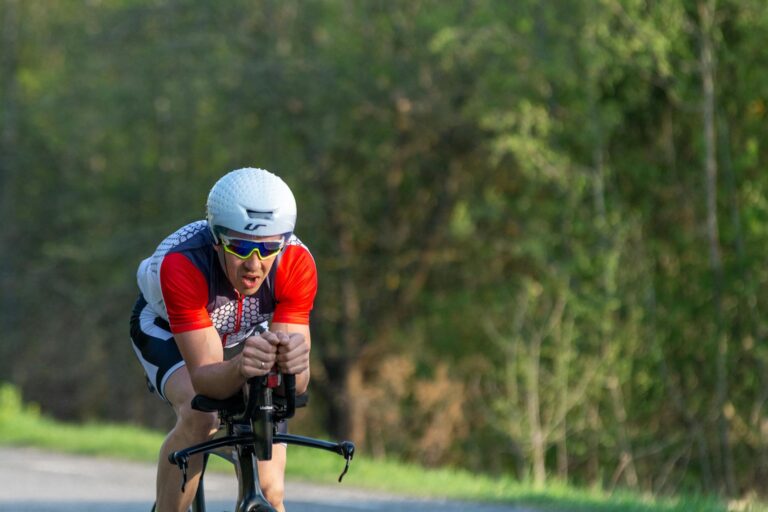
- **Aero bars and extensions**: For time trials and triathlons, clip-on aero bars transform a road bike into a more aerodynamic machine. These bars allow riders to rest their forearms on pads while extending their hands forward, significantly reducing frontal area.
How to Optimize Your Bike Fit for Better Aerodynamics
Achieving sustainable aerodynamic positions requires a bike fit that balances aggressive geometry with the rider’s flexibility, power output, and comfort. A position that looks aerodynamic in photographs means nothing if it cannot be maintained throughout a ride or if it compromises pedaling efficiency. Professional bike fitting has evolved to incorporate aerodynamic considerations alongside traditional biomechanical factors. Modern fitters often use a combination of motion capture technology, power measurement, and aerodynamic modeling to find positions that maximize speed per watt expended.
Key fit parameters for aerodynamic optimization include saddle height and setback, handlebar reach and drop, and the width and angle of the handlebars themselves. Handlebar width deserves particular attention, as many stock bikes come with handlebars sized for comfort rather than aerodynamics. Bars that match shoulder width or are slightly narrower can reduce frontal area while maintaining adequate control. Some riders find that bars 2-4 centimeters narrower than their shoulder measurement provide the best combination of aerodynamics and handling stability.
- **Stem length and angle**: A longer stem with negative rise places the hands further forward and lower, flattening the torso angle. However, excessive reach can compromise handling and create back strain.
- **Saddle position**: A slight forward saddle position can help rotate the pelvis to achieve a flatter back, though this must be balanced against knee tracking and power production considerations.
- **Headset spacers**: Removing headset spacers and flipping the stem to a negative angle represents the most common method for lowering the front end. Changes should be made gradually””no more than 10mm at a time””to allow the body to adapt.
- **Handlebar shape**: Modern compact and shallow-drop handlebars allow riders to access the drops more easily, encouraging use of this more aerodynamic position.
Common Mistakes When Trying to Achieve an Aero Position on a Road Bike
The pursuit of aerodynamic efficiency often leads cyclists into counterproductive habits that either fail to provide the expected benefits or actively harm performance and safety. Recognizing these common errors helps riders avoid wasted effort and potential injury. Perhaps the most prevalent mistake involves making position changes too quickly without allowing the body to adapt. Dramatic reductions in handlebar height or increases in reach place new demands on the hamstrings, hip flexors, lower back, and neck muscles. Riders who slam their stem overnight frequently develop overuse injuries or abandon the position entirely after a few uncomfortable rides.
Gradual adaptation over weeks or months produces better long-term results than aggressive immediate changes. Sacrificing power output for aerodynamics represents another frequent error. An aerodynamic position that reduces a rider’s sustainable power by 15% may actually result in slower times despite the drag reduction. The optimal position maintains at least 95% of a rider’s power output while achieving meaningful aerodynamic gains. This balance point varies between individuals based on their flexibility, core strength, and riding discipline.
- **Ignoring head position**: Riders often focus on torso angle while neglecting the head, which can account for 10-15% of total drag. Lifting the head to see the road creates significant additional resistance, while tucking too aggressively compromises safety.
- **Tight clothing isn’t always better**: While loose, flapping clothing creates drag, overly tight clothing can restrict breathing and muscle movement. Form-fitting but comfortable apparel provides the best balance.
- **Overlooking helmet selection**: An aerodynamic position paired with a standard ventilated helmet leaves significant gains on the table. Aero road helmets can save 10-20 watts at race speeds.

Building the Flexibility and Core Strength for Sustained Aero Riding
Adopting and maintaining aerodynamic positions places substantial demands on the body that many cyclists underestimate. The ability to hold a low, flat-backed position for extended periods requires specific flexibility in the posterior chain and robust core stability to support the spine and pelvis. Hip flexor and hamstring flexibility directly limit how flat a rider can position their back while maintaining an efficient pedaling motion. Tight hamstrings pull the pelvis into a posterior tilt, rounding the lower back and actually increasing drag while creating potential for injury.
A consistent stretching routine targeting the hamstrings, hip flexors, piriformis, and thoracic spine can gradually improve the range of motion necessary for aggressive positions. Core stability exercises””planks, dead bugs, bird dogs, and similar movements””build the endurance necessary to maintain spinal position throughout a ride. The goal isn’t maximum strength but sustained low-intensity activation over hours of effort. Many successful cyclists incorporate 15-20 minutes of core work three to four times per week, focusing on holding positions rather than dynamic movements.
How to Prepare
- **Document your current position**: Take photographs or video from the side and front while riding on a trainer. Note your current handlebar height relative to the saddle, stem length, and typical riding posture. This baseline allows objective comparison after making changes.
- **Assess your flexibility**: Perform simple tests for hamstring flexibility (seated forward fold), hip flexor length (Thomas test), and thoracic mobility (seated rotation). Identifying limitations before changing position helps set realistic expectations and target areas for improvement.
- **Establish power baselines**: Record your sustainable power output in your current position using either a power meter or a smart trainer. This data provides a reference point for ensuring position changes don’t compromise power production.
- **Gather necessary tools and parts**: Basic position adjustments require Allen keys, a torque wrench, and potentially new stems or spacer configurations. Having everything on hand prevents interrupting the process for parts acquisition.
- **Create an adaptation schedule**: Plan position changes in small increments over several weeks. A typical progression might include 5mm drops in handlebar height every two weeks, with monitoring for discomfort or power loss at each stage.
How to Apply This
- **Start with body position before bike changes**: Before modifying your bike, practice achieving a lower, flatter back through conscious effort while riding in your current setup. Focus on bending the elbows, dropping the chest, and tucking the head. Many riders find significant aerodynamic gains through technique alone.
- **Make one change at a time**: Alter a single variable””stem height, stem length, or saddle position””and ride with the new configuration for at least one week before evaluating results. Multiple simultaneous changes make it impossible to identify what works and what doesn’t.
- **Test under controlled conditions**: Evaluate position changes on a consistent route or indoor trainer where variables like wind and terrain don’t confound results. Track both power output and perceived exertion to ensure the position remains sustainable.
- **Refine based on feedback**: After the adaptation period, assess comfort, power output, and speed. Positions that create persistent pain or significant power loss should be rolled back partially or abandoned. Successful changes can be followed by additional incremental adjustments.
Expert Tips
- **Use your peripheral vision**: Learning to see the road through your eyebrows rather than lifting your head to look forward keeps your head tucked while maintaining awareness. Practice this skill on safe, familiar roads before applying it in traffic or group rides.
- **Focus on steady power, not position, in crosswinds**: Aerodynamic positions make riders more susceptible to being blown off line by gusts. When crosswinds are present, prioritize bike control over extreme aerodynamics by keeping a slightly higher posture and ready access to the brakes.
- **Shave your legs for marginal but real gains**: Wind tunnel testing has confirmed that leg hair creates measurable drag. At 25 mph, shaved legs can save approximately 5-10 watts””a small but genuine advantage for those seeking every available benefit.
- **Practice position changes on the trainer**: Indoor riding provides a safe environment to experiment with tucked positions, build muscle endurance, and develop the kinesthetic sense for what an aerodynamic position feels like without the risks of outdoor riding.
- **Consider professional wind tunnel or track testing**: For serious competitors, a wind tunnel session (typically $300-600 per hour) or velodrome testing provides definitive data on what positions work best for your specific body type and bike setup.
Conclusion
The pursuit of aerodynamic efficiency on a road bike rewards those willing to invest time in understanding the underlying principles and systematically applying them to their riding. The potential gains are substantial””far greater than most equipment upgrades can provide””and accessible to any rider willing to make gradual, thoughtful changes to their position and technique. From the casual cyclist seeking easier rides to the competitive racer chasing personal records, improved aerodynamics offers a path to riding faster without working harder.
Developing an effective aero position is ultimately a personal journey that balances physics, physiology, and practical constraints. The optimal position for any individual depends on their flexibility, power output characteristics, riding discipline, and comfort requirements. By starting with the fundamentals””lower torso, tucked head, narrow elbows””and progressively refining through experimentation and assessment, riders can find positions that work for their unique circumstances. The time invested in this process pays dividends across every ride, making aerodynamic optimization one of the most valuable skills a cyclist can develop.
Frequently Asked Questions
How long does it typically take to see results?
Results vary depending on individual circumstances, but most people begin to see meaningful progress within 4-8 weeks of consistent effort. Patience and persistence are key factors in achieving lasting outcomes.
Is this approach suitable for beginners?
Yes, this approach works well for beginners when implemented gradually. Starting with the fundamentals and building up over time leads to better long-term results than trying to do everything at once.
What are the most common mistakes to avoid?
The most common mistakes include rushing the process, skipping foundational steps, and failing to track progress. Taking a methodical approach and learning from both successes and setbacks leads to better outcomes.
How can I measure my progress effectively?
Set specific, measurable goals at the outset and track relevant metrics regularly. Keep a journal or log to document your journey, and periodically review your progress against your initial objectives.
When should I seek professional help?
Consider consulting a professional if you encounter persistent challenges, need specialized expertise, or want to accelerate your progress. Professional guidance can provide valuable insights and help you avoid costly mistakes.
What resources do you recommend for further learning?
Look for reputable sources in the field, including industry publications, expert blogs, and educational courses. Joining communities of practitioners can also provide valuable peer support and knowledge sharing.