The best bike lock options for kids at school are lightweight cable locks and compact U-locks designed for young riders, typically in the $15-40 price range. Cable locks offer flexibility and ease of use for elementary-age children, while small-format U-locks provide better security for older kids whose bikes might be targeted by more determined thieves.
A combination lock is generally preferable to a keyed lock for children, since lost keys are a common frustration””one parent I spoke with recalled her son losing three sets of lock keys in a single school year before switching to a four-digit combination model. This article covers the different lock types suitable for school bike parking, how to balance security with a child’s ability to actually use the lock, and the role that school bike rack design plays in theft prevention. We will also address teaching kids proper locking technique, what to do when locks fail, and how to set realistic expectations about bike security at school.
Table of Contents
- What Are the Best Bike Lock Types for Kids at School?
- Combination Locks Versus Keyed Locks for Young Riders
- How School Bike Rack Design Affects Lock Effectiveness
- Teaching Children Proper Bike Locking Technique
- The Role of Bike Registration and Identification
- Setting Realistic Expectations About School Bike Security
- Conclusion
What Are the Best Bike Lock Types for Kids at School?
Cable locks remain the most popular choice for children’s bikes at school, primarily because of their light weight and simple operation. A coiled cable lock typically weighs under a pound and can be easily carried in a backpack or wrapped around the seat post. For a child riding a $150-300 bike to elementary school, a basic cable lock provides a reasonable deterrent against opportunistic theft, which accounts for most bike theft at schools. U-locks offer substantially more security than cable locks but come with tradeoffs. A standard adult U-lock weighs two to four pounds and may be awkward for a younger child to carry and manipulate.
However, manufacturers have introduced compact U-locks with smaller shackles that weigh closer to one pound and fit children’s bikes more easily. These work well for middle school and high school students whose bikes may be left unattended for longer periods and in higher-traffic areas. Chain locks represent a middle ground but are rarely ideal for kids. While they offer better cut resistance than cables, even lightweight chains add considerable weight to a child’s commute. The exception might be a child who rides the same route daily and can leave the chain locked at the school bike rack permanently, though many schools prohibit this practice.
Combination Locks Versus Keyed Locks for Young Riders
The combination versus key decision often matters more than the lock type itself when equipping children. Combination locks eliminate the key-loss problem entirely, and most children age seven and older can reliably remember a four-digit code. Some parents set the combination to match the last four digits of a family phone number or another memorable sequence. However, combination locks have a significant limitation: children sometimes share their codes with friends, either intentionally or by allowing others to watch them unlock. Keyed locks provide slightly faster operation once mastered and remove the code-sharing vulnerability.
The practical downside is substantial, though. Schools report that lost bike lock keys are among the most common items turned into lost-and-found boxes. If your child uses a keyed lock, keeping a spare key at home or in the school office is advisable. Some families attach the key to the child’s backpack with a retractable lanyard, though this creates its own risk if the backpack is left unattended. For children under ten, a combination lock is usually the better choice despite its limitations. For older children who have demonstrated responsibility with keys””perhaps already carrying a house key””a keyed lock becomes more viable.
How School Bike Rack Design Affects Lock Effectiveness
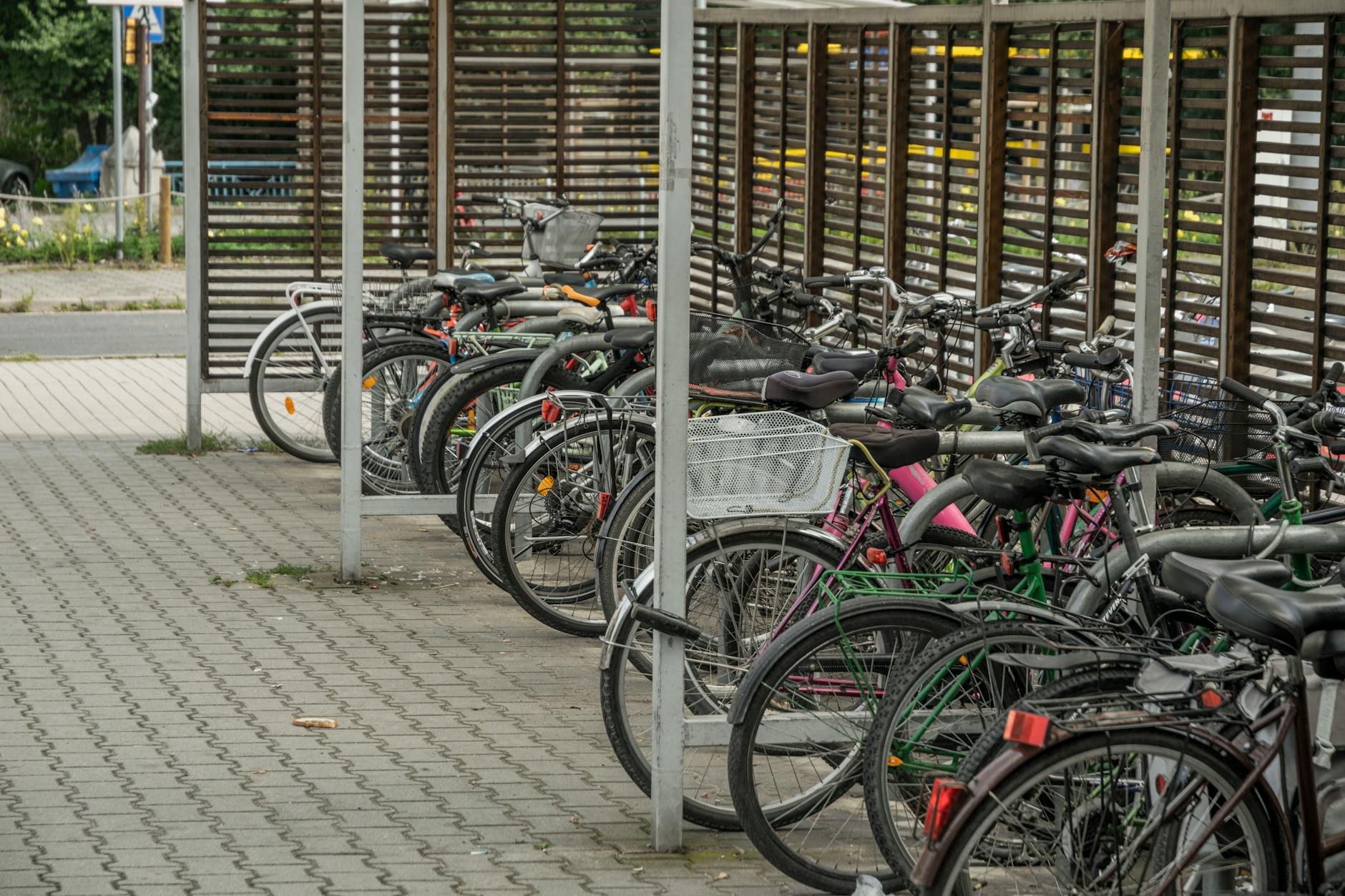
The type of bike rack installed at a school significantly impacts which locks work well. Traditional wave racks and wheel-bender racks””the kind where you slot your front wheel into a metal frame””only allow you to lock the wheel, not the frame. A thief can simply remove the wheel and walk away with the rest of the bike. Parents should visit the school to assess the rack situation before purchasing a lock. Inverted-U racks, sometimes called staple racks, allow both the frame and wheel to be secured.
If your child’s school has these, a U-lock becomes much more practical since the child can loop it through the frame and around the rack. Some newer schools have installed covered bike parking with higher-quality racks, reflecting growing attention to active transportation for students. If your school has inadequate racks, this might be worth raising with the administration or parent-teacher organization. When rack quality is poor, a longer cable lock actually provides more options than a U-lock. The cable can be threaded through both wheels and the frame, then around whatever fixed object is available, even if that object is not an ideal bike rack.
Teaching Children Proper Bike Locking Technique
Purchasing a quality lock accomplishes little if the child does not use it correctly. The most common mistake children make is locking only the front wheel to the rack, leaving the frame unsecured. Spend time practicing at home before the first day of riding to school. Have your child demonstrate the complete process: approaching the rack, positioning the bike, threading the lock through frame and wheel, securing it to the rack, and scrambling the combination or removing the key. A useful comparison: locking a bike is like buckling a seatbelt. It should become automatic, something done without thinking every single time. Some families establish a rule that the child texts or tells a parent when they have locked their bike at school, creating accountability during the learning period. This habit-building phase typically takes two to three weeks of consistent riding. Children should also learn to position the lock with the keyhole or combination dial facing downward, making it slightly harder for someone to tamper with. While this precaution matters more in high-theft areas, building good habits early serves children well as they eventually commute to jobs and college.
## Common Lock Failures and How to Prevent Them Even good locks fail, and understanding the common failure modes helps set appropriate expectations. Cable locks can be cut with bolt cutters in seconds””this is not a flaw but a fundamental limitation of the design. They deter casual theft but not determined theft. If your child’s school has experienced organized bike theft, cable locks are insufficient regardless of brand or price. Combination locks sometimes jam when dirt or debris enters the mechanism. Periodic cleaning with a dry cloth and occasional lubrication helps prevent this. More commonly, children simply forget their combinations, especially after summer break or an extended absence. Writing the combination somewhere secure at home””not in the child’s backpack where a thief could find it””prevents the need to cut off your own lock. U-lock shackles can become stuck if the lock is damaged from being dropped repeatedly, a realistic concern with children. Cheaper U-locks are more prone to this problem. If your child tends to be rough with equipment, investing in a mid-range rather than entry-level U-lock may save frustration later.
The Role of Bike Registration and Identification
Locks prevent theft, but registration and identification help with recovery when theft occurs. Many police departments maintain bike registries where you can record the serial number, make, model, and color of your child’s bike. This information is essential for recovery if the bike is stolen and later found.
The serial number is typically stamped on the bottom of the bottom bracket, where the pedal cranks meet the frame. Taking clear photographs of your child’s bike, including any distinctive features or accessories, creates additional documentation. Some families use engraving tools to mark a phone number on an inconspicuous part of the frame. While these measures do not prevent theft, they improve the small but real chance of getting a stolen bike back.
Setting Realistic Expectations About School Bike Security
No lock is theft-proof, and school bike parking presents inherent vulnerabilities. Bikes sit unattended for six or more hours in locations that are often unsupervised. Theft rates at schools vary dramatically by location, and parents should ask school administrators or other cycling families about the local situation. Some schools have essentially zero bike theft; others see multiple thefts per year.
The practical goal is not perfect security but appropriate security. A $20 cable lock on a $200 kids’ bike is proportional. Spending $80 on a premium U-lock for that same bike makes less sense financially, though it might make sense emotionally if the bike has sentimental value or if your child would be devastated by theft. Ultimately, parents must weigh the replacement cost of the bike against the cost and inconvenience of more secure locking solutions.
Conclusion
Choosing a bike lock for a child riding to school involves balancing security, usability, and cost. For most families, a combination cable lock in the $15-30 range provides adequate protection for elementary and middle school riders, while older students with more valuable bikes benefit from compact U-locks.
The lock itself matters less than consistent, correct use””teaching your child to lock properly every time is the single most important theft prevention measure. Beyond the lock purchase, assess your school’s bike parking infrastructure, register the bike with local authorities, and maintain realistic expectations about security. Bike theft at school, while frustrating, is relatively uncommon at most locations, and the health and independence benefits of cycling to school far outweigh the theft risk for most families.