Truing a bike wheel at home requires checking where the rim wobbles, then adjusting spoke tension to pull the rim back into alignment””loosening spokes on the side the rim bends toward and tightening spokes on the opposite side. You can accomplish this with just three basic tools: a spoke wrench that fits your nipples (most commonly a 3.23mm or 3.45mm size), a piece of chalk or tape to mark problem areas, and your bike itself flipped upside down or mounted in a repair stand. The process involves spinning the wheel slowly, identifying where the rim deviates from straight, and making quarter-turn adjustments to adjacent spokes until the wobble disappears. For example, if you notice your front wheel rubbing against the brake pad on the left side during a specific part of each rotation, that section of rim needs to be pulled rightward.
You would loosen the spoke or spokes on the left side of that section by a quarter turn, then tighten the spoke or spokes on the right side by the same amount. This balanced approach moves the rim without significantly changing overall wheel tension. Most minor wobbles from hitting potholes or curbs can be corrected in under fifteen minutes once you understand the relationship between spoke tension and rim position. This article covers the complete process from identifying what type of truing your wheel needs, through the actual adjustment technique, to checking your work and knowing when a wheel is beyond home repair. We will also address radial truing (hop), dish alignment, and the signs that indicate you should take the wheel to a professional instead.
Table of Contents
- What Basic Tools Do You Need to True a Bike Wheel at Home?
- Understanding Lateral and Radial Runout in Wheel Truing
- The Step-by-Step Process for Lateral Wheel Truing
- Maintaining Even Spoke Tension While Truing
- When Wheel Truing Cannot Fix the Problem
- Checking Wheel Dish During Home Truing
- Developing Your Wheel Truing Skills Over Time
- Conclusion
What Basic Tools Do You Need to True a Bike Wheel at Home?
The essential tool for wheel truing is a spoke wrench, and getting the correct size matters more than brand or price. Spoke nipples come in several sizes””the most common being 3.23mm (also called 0.127 inch), 3.30mm, and 3.45mm””and using a wrench that does not fit precisely will round off the nipple flats, making future adjustments difficult or impossible. If you are unsure which size your wheels use, take the wheel to a bike shop and ask them to check, or purchase a multi-size spoke wrench that includes the three common sizes. Park Tool, Pedro’s, and DT Swiss all make reliable spoke wrenches ranging from five to fifteen dollars. Beyond the spoke wrench, you need a way to identify where the rim deviates. Professional mechanics use a truing stand with indicator arms that show exactly where the rim moves laterally, but at home, you can use your brake pads as reference points.
Flip the bike upside down or mount it in a work stand, then adjust one brake pad so it sits approximately two millimeters from the rim. As you spin the wheel, the rim will move toward or away from this reference point, showing you where corrections are needed. A piece of masking tape attached to the frame or fork, positioned close to the rim, works equally well. One often-overlooked tool is penetrating oil or light lubricant. Spokes and nipples can corrode together over time, especially on wheels exposed to rain or road salt. Applying a drop of oil where each spoke enters its nipple””then waiting ten minutes before attempting adjustments””prevents stuck nipples from rounding off or twisting the spoke itself. This is particularly important on wheels more than a few years old or any wheel that has not been serviced recently.
Understanding Lateral and Radial Runout in Wheel Truing
Lateral runout is what most people think of when they picture a wheel out of true””the rim wobbling side to side as it rotates. This is the most common form of wheel deviation and the easiest to correct at home. Radial runout, sometimes called hop, is when the rim moves up and down, creating a section that is either closer to or farther from the hub than the rest of the wheel. Radial problems are harder to fix and often indicate more serious damage. When you spin your wheel against a reference point, you need to identify which type of problem you are dealing with. Watch the gap between the rim and your reference: if the rim moves left and right but maintains a consistent distance from the hub, you have lateral runout.
If the rim maintains a consistent side-to-side position but seems to jump up or down at certain points, you have radial runout. Many out-of-true wheels have some combination of both, and in these cases, you should address lateral truing first. However, if you notice significant radial runout””where the rim moves more than three or four millimeters up and down””this often indicates a bent rim rather than a spoke tension problem. A bent rim cannot be corrected by spoke adjustment alone; the aluminum or carbon itself is deformed. Attempting to true a bent rim by dramatically changing spoke tension will create a wheel with wildly uneven spoke tension that will quickly go out of true again or suffer spoke breakage. In this case, the wheel needs rim replacement or should be retired entirely.
The Step-by-Step Process for Lateral Wheel Truing
Begin by positioning your wheel so you can spin it freely while observing the rim against a fixed reference point. Spin the wheel slowly and watch where the rim deviates from your reference. Mark these spots with chalk, a grease pencil, or small pieces of tape so you can work on them systematically. Most wheels will have one or two primary wobble zones rather than continuous deviation around the entire circumference. For each marked section, identify the spokes involved. Look at where the spokes attach to the hub””they alternate between the left and right hub flanges.
If the rim deviates to the left in a particular section, you need to either loosen the spokes pulling left or tighten the spokes pulling right (or both, in equal amounts). Start with quarter-turn adjustments only. Spoke nipples tighten in the counterclockwise direction when viewed from the outside of the rim””the opposite of normal bolt convention””because you are essentially turning a nut that is threaded onto the spoke from the inside. After each adjustment, spin the wheel and check your progress. Overcorrection is the most common mistake; if you adjust too aggressively, you will simply create a new wobble in the opposite direction. Work gradually, checking after every quarter turn. For a wobble that affects four to six spokes, you might tighten the two center spokes on one side by a quarter turn each and the two outer spokes by an eighth turn each, tapering your adjustment to blend smoothly into the already-true sections of the rim.

Maintaining Even Spoke Tension While Truing
Spoke tension is the hidden variable that separates a properly trued wheel from one that will immediately go out of true again. Every spoke in a wheel should be within a reasonable tension range””not all identical, but close enough that no individual spoke is slack or dramatically overtightened. When you true a wheel by only loosening spokes, you reduce overall wheel tension. When you only tighten, you increase it. The professional approach is to do both: loosen the spokes pulling toward the wobble and tighten the spokes pulling away from it in equal measure. You can check spoke tension without specialized tools by plucking spokes like guitar strings and listening to the pitch. All spokes on the same side of the wheel should produce a similar tone.
A spoke that sounds notably lower is loose; one that sounds notably higher is overtight. On rear wheels, the drive side spokes will naturally be tighter than non-drive side spokes due to dish requirements””this is normal. What you want to avoid is one loose spoke surrounded by tight ones, or vice versa, as these tension irregularities create weak points. The tradeoff in home truing is between perfection and practicality. A professional wheel builder with a tensiometer can bring every spoke to within five percent of the target tension. At home, you are working by feel and sound. This means your trued wheel may not stay true as long as a professionally built one, but it will certainly ride better than a wobbling wheel and keep you on the road until you can get professional service if needed.
When Wheel Truing Cannot Fix the Problem
Some wheel problems masquerade as simple truing issues but actually require more serious intervention. A wheel that went out of true after impact””hitting a deep pothole, landing a drop poorly, or crashing””may have damage beyond spoke tension issues. Before spending time truing, inspect the rim carefully. Run your fingers along both sidewalls feeling for flat spots, cracks, or dents. Visually check that the rim joint (where the two ends of the rim extrusion meet) has not separated. Any cracking or significant deformation means the rim needs replacement. Broken spokes present another limitation. A single broken spoke creates an obvious wobble that cannot be fully corrected by adjusting the remaining spokes.
You can bring the wheel closer to true as a temporary measure, but the missing spoke means uneven stress distribution that will cause additional spoke failures. If you find a broken spoke, the wheel needs that spoke replaced before proper truing can occur. Replacing a spoke requires removing the tire and rim tape to access the nipple hole, which adds complexity beyond basic truing. Wheels that repeatedly go out of true despite proper adjustment often have underlying spoke or nipple issues. Corroded nipples may not hold their position under riding stress. Spokes with damaged threads””often caused by using the wrong size wrench””cannot maintain proper tension. Wind-up, where the spoke twists during tightening rather than the nipple turning freely, creates residual stress that releases later and detunes the wheel. If you have trued the same wheel multiple times in a short period, these deeper issues likely need professional attention.
Checking Wheel Dish During Home Truing
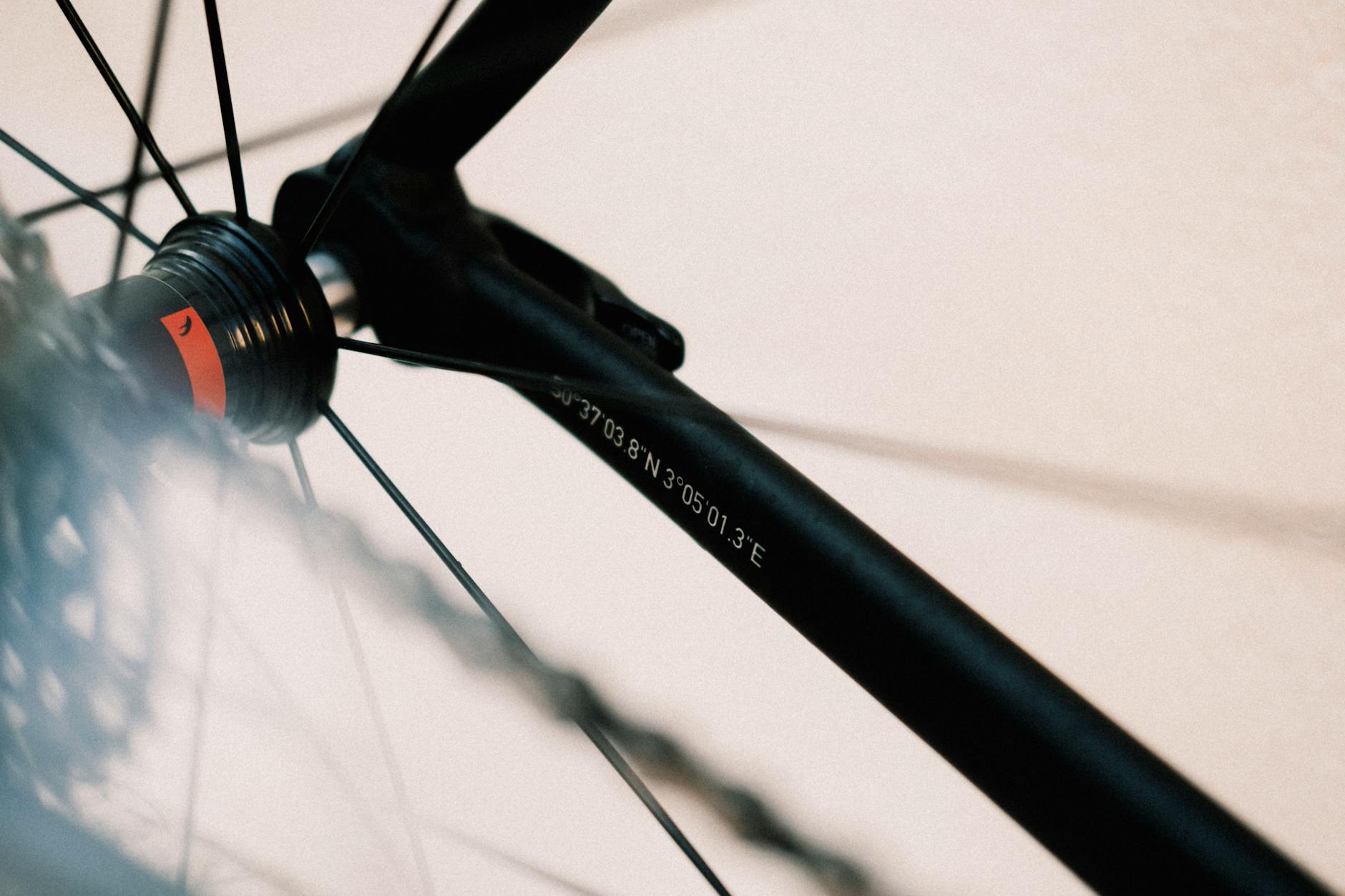
Wheel dish refers to the rim being centered between the axle locknuts””the points where the wheel sits in the frame dropouts. A properly dished wheel sits centered in the frame with equal clearance on both sides. If you only loosen spokes while truing, or only work on one side of the wheel, you can inadvertently pull the rim off-center, creating a wheel that rubs the chainstay on one side while having excessive clearance on the other.
The simplest home check for dish is reinstalling the wheel in the frame after truing, then measuring the gap between the rim and chainstay or seatstay on both sides. If the measurements differ by more than two or three millimeters, the wheel needs dish correction. This involves uniformly tightening all the spokes on one side and loosening all the spokes on the other side””typically by an eighth or quarter turn each””then rechecking. For example, if the rim sits three millimeters closer to the right chainstay than the left, tightening all left-side spokes by an eighth turn and loosening all right-side spokes by an eighth turn should center it.
Developing Your Wheel Truing Skills Over Time
Like most mechanical skills, wheel truing improves dramatically with practice. Your first attempt may take an hour and produce mediocre results; after truing a dozen wheels, you will work faster and achieve better outcomes. Consider practicing on old wheels before working on your primary riding wheels.
Many bike shops or co-ops have discarded wheels available cheaply or free that make excellent practice pieces without consequences if you make mistakes. Keep notes on your truing sessions, especially regarding which spoke wrench size fits your various wheels and any particular tendencies those wheels have. Some wheels consistently develop wobbles in the same location due to manufacturing variations or riding patterns. Understanding your specific equipment helps you address problems more efficiently and recognize when a wheel is reaching the end of its serviceable life.
Conclusion
Truing a bike wheel at home is an accessible skill that requires minimal tools and can save significant money over professional service for routine maintenance. The fundamental concept””adjusting spoke tension to move the rim laterally””remains simple even as the execution requires patience and attention to detail. Working in small increments, maintaining overall spoke tension balance, and knowing when damage exceeds what truing can fix are the keys to successful home wheel maintenance.
For most recreational and commuting cyclists, the ability to correct minor wobbles extends the intervals between professional service and keeps bikes rideable when a shop visit is not immediately convenient. However, wheels with structural damage, broken spokes, or persistent truing problems benefit from professional evaluation. Building the judgment to distinguish between these situations is as valuable as the mechanical skill itself.