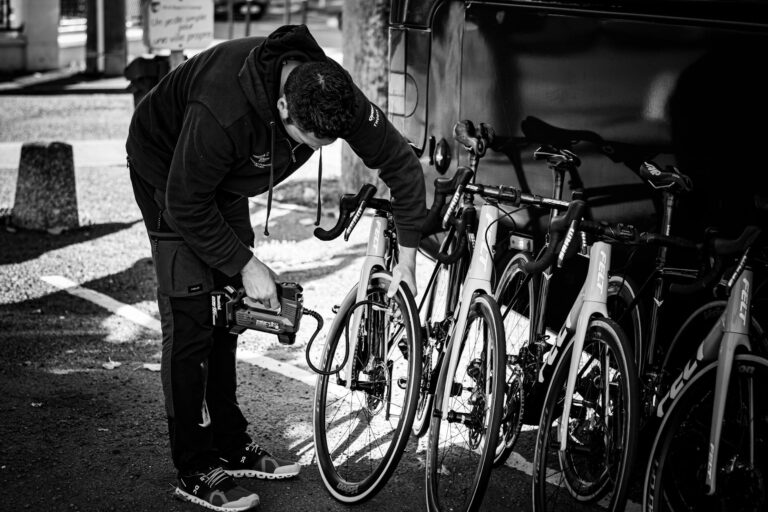
Preparing your bicycle for the spring riding season involves a systematic inspection and maintenance routine that addresses the effects of winter storage: checking tire pressure and condition, lubricating the drivetrain, inspecting brake pads and cables, cleaning accumulated grime, and testing all components before your first ride. A bicycle that sat in a cold garage for four months will have lost significant tire pressure, developed stiff cables, and accumulated dried lubricant that no longer protects moving parts. For example, a road bike stored at 80 PSI in November might read 40 PSI by March, and riding on underinflated tires not only feels sluggish but risks pinch flats and rim damage on the first pothole you encounter. Beyond these fundamental checks, spring preparation should include examining your frame for cracks or damage that may have occurred during end-of-season rides, assessing whether your cables and housing need replacement after a full year of use, and evaluating your brake pads for wear indicators.
Many cyclists overlook the headset and bottom bracket during spring prep, but these bearing assemblies can develop play or rough spots during storage, especially in humid environments. This article covers the complete process from initial inspection through test rides, including specific guidance on drivetrain cleaning, brake adjustment, wheel truing, and recognizing when professional service is necessary. The time investment for thorough spring preparation ranges from one to three hours depending on your bicycle’s complexity and condition, though riders who performed proper end-of-season storage will find the process significantly faster. Skipping this maintenance ritual leads to premature component wear, poor shifting performance, reduced braking power, and potentially dangerous mechanical failures on rides far from home.
Table of Contents
- What Steps Are Essential When Preparing Your Bicycle for Spring Riding?
- Deep Cleaning Your Drivetrain Before the First Spring Ride
- Brake System Inspection and Adjustment for Safe Spring Cycling
- Wheel Truing and Bearing Assessment for Smooth Riding
- Addressing Cable and Housing Wear After Winter Storage
- Checking Frame and Component Torque Specifications
- How to Prepare
- How to Apply This
- Expert Tips
- Conclusion
- Frequently Asked Questions
What Steps Are Essential When Preparing Your Bicycle for Spring Riding?
The essential steps begin with a complete visual inspection before touching any tools. Walk around your bicycle examining the frame for cracks, dents, or paint bubbling that might indicate corrosion beneath the surface. Carbon fiber frames deserve particular attention around the bottom bracket, head tube, and dropout areas where stress concentrations occur. Check that quick releases or thru-axles are present and functioning, as these small components sometimes get separated during storage. Look at your wheels for broken spokes, rim cracks, or wobbles visible even when stationary. Tire inspection comes next, and it reveals more than you might expect. Beyond checking pressure with an accurate gauge, examine the sidewalls for dry rot or cracking that develops in cold, dry storage conditions.
Run your fingers around the tread feeling for embedded glass, wire, or debris that partially penetrated during your last ride and will complete the puncture on your first spring outing. For comparison, a tire stored properly in a climate-controlled space at moderate pressure maintains pliability, while the same tire left in a freezing garage at full pressure often develops checking cracks along the sidewalls that compromise structural integrity. After tires, assess the drivetrain by slowly rotating the cranks backward while watching the chain move through the rear derailleur. Listen for grinding, clicking, or stiff links. Shift through all gears without riding, noting any hesitation or chain skip. A well-maintained drivetrain moves silently and shifts crisply, while a neglected one announces its problems audibly. Squeeze both brake levers checking for firm engagement without pulling to the handlebar, and spin each wheel watching for side-to-side wobble that indicates the need for truing.

Deep Cleaning Your Drivetrain Before the First Spring Ride
The drivetrain accumulates the most damaging contamination of any bicycle system, and spring represents the ideal time for thorough cleaning rather than simply adding fresh lubricant over old grime. Old lubricant mixed with road debris forms an abrasive paste that accelerates chain and cassette wear far beyond what clean components experience. A properly cleaned and lubricated drivetrain can last twice as long as one that receives only cursory maintenance, representing significant cost savings given that quality chains cost $30-60 and cassettes run $40-150. Begin by removing the rear wheel for better access to the cassette. Apply a dedicated drivetrain degreaser to the chain, chainrings, cassette, and derailleur pulleys, allowing it to penetrate for several minutes. use a chain cleaning device or stiff brush to scrub the chain, rotating it through multiple cycles until the solvent runs relatively clean.
Clean between cassette cogs with a rag or specialized cassette brush, removing the black paste that accumulates between sprockets. Wipe down the chainrings and derailleur pulleys, paying attention to the guide pulley where debris tends to pack tightly. However, if your bicycle has been stored in a particularly humid environment or shows signs of surface rust on the chain, standard cleaning may prove insufficient. Surface rust indicates oxidation that has already begun compromising chain integrity. In these cases, evaluate whether the chain has stretched beyond service limits using a chain wear indicator tool. A chain measuring 0.5% wear or more on a 11 or 12-speed drivetrain should be replaced rather than cleaned, as continued use will rapidly wear the expensive cassette. Riders who only used their chain for one season before storage can typically clean and reuse it, while chains with two or more seasons of use often benefit from replacement regardless of visible condition.
Brake System Inspection and Adjustment for Safe Spring Cycling
Brake systems require careful spring inspection because degradation often occurs invisibly during storage. Cable-actuated rim brakes may develop internal cable corrosion where moisture accumulated inside housing, creating friction that makes levers feel stiff and reduces braking power. Hydraulic disc brakes can develop air bubbles in the lines as temperature fluctuations cause fluid expansion and contraction, resulting in a spongy lever feel. Both systems deserve thorough evaluation before trusting them on descents or in traffic. For rim brakes, start by examining pad condition. Most quality pads include wear indicator grooves that disappear when replacement is necessary. Check that pads contact the rim squarely, not rubbing the tire or extending below the rim edge. Squeeze the lever firmly and observe whether the pads toe in slightly at the front, which prevents squealing and improves modulation.
Inspect the cable from lever to caliper, looking for frayed strands near the anchor bolt or rust spots along the housing. If the cable feels sticky when you pull and release the lever, replacement is warranted rather than simple lubrication. Disc brakes demand different inspection criteria. Check pad thickness by looking through the caliper gap or removing the wheel for direct measurement. Most pads should be replaced when material thickness reaches 1.5mm or less. Examine the rotor for scoring, bluing from heat, or visible wobble as you spin the wheel. Hydraulic systems showing lever mushiness need bleeding, a process requiring specific tools and fluid type for your brake brand. For example, Shimano systems use mineral oil while SRAM and most other manufacturers use DOT fluid, and mixing these damages seals permanently. If you lack bleeding equipment and experience, spring brake service represents one area where professional attention often proves worthwhile.
Wheel Truing and Bearing Assessment for Smooth Riding
Wheels take abuse throughout the riding season and often develop issues that reveal themselves during spring inspection. Minor spoke tension irregularities cause wobbles that affect braking, handling, and tire wear. Bearing systems in hubs can develop play or rough spots, particularly if water ingress occurred during wet autumn rides. Addressing these issues now prevents progressive damage that turns minor adjustments into expensive repairs. Spin each wheel while watching the gap between the rim and brake pads or frame. Side-to-side wobble greater than 1-2mm indicates the need for truing. Place a finger lightly against the frame near the rim as a reference point to detect subtle irregularities.
Vertical hop, where the rim moves up and down, suggests a more serious issue that may require professional attention or wheel replacement. For lateral wobble, identify the high spots, then tighten spokes on the opposite side or loosen spokes on the same side by quarter-turn increments until the wobble decreases. Work slowly, as overcorrection creates new problems. To check hub bearings, grip the tire at the top and attempt to rock the wheel side to side. Any clicking or movement indicates loose bearings that need adjustment. Spin the wheel and listen for grinding sounds that indicate contaminated or damaged bearings. Cup-and-cone hubs can be adjusted and repacked with grease by home mechanics with appropriate tools, while cartridge bearing hubs typically require bearing replacement when problems develop. Most riders can expect three to five years of service from quality hub bearings under normal conditions, though riders who frequently wash their bikes with high-pressure water or ride through deep puddles may experience shorter bearing life.
Addressing Cable and Housing Wear After Winter Storage
Cables and housing deteriorate during winter storage even without use, making spring the appropriate time for replacement on bicycles more than two years old. Internal cable corrosion creates shifting problems that frustrate riders all season, while housing compression at high-stress points causes indexing issues that no amount of barrel adjuster tweaking resolves. Many cyclists blame derailleur adjustment when cables and housing are the actual culprits. Examine housing carefully where it curves near the head tube, enters frame stops, and approaches derailleurs. Look for cracks, kinks, or sections where the outer housing has separated to reveal the inner liner. Pull exposed cable sections through your fingers checking for frayed strands or kinked spots that catch as you move along the length.
If the cable feels rough or catches anywhere, replacement is necessary. As a comparison point, new cable and housing shifts with a light, crisp action, while old cable and housing feels mushy and imprecise regardless of derailleur adjustment quality. Replacement involves more than simply swapping components. Use appropriate housing types for each function: brake housing uses helical wire construction for compression resistance, while shift housing uses parallel strands for precise index shifting. Cutting housing cleanly requires sharp cable cutters followed by deburring the end and ensuring the inner liner is open. Route housing with gentle curves that minimize friction, and cut lengths that allow full steering without binding. Warning: avoid the common mistake of cutting housing too short, which pulls cables tight when the handlebars turn, causing ghost shifting or brake activation during cornering.

Checking Frame and Component Torque Specifications
Beyond cleaning and lubricating, spring preparation should include verification that bolted connections remain properly secured. Components can loosen during transport, storage, or from normal use during the previous season. Riding with loose stem bolts risks sudden handlebar movement, while loose seat post clamps allow the saddle to drop unexpectedly. A systematic torque check takes fifteen minutes and prevents potentially serious accidents. Use a torque wrench appropriate for bicycle work, typically reading 1-25 Nm with 0.5 Nm resolution.
Check stem face plate bolts, stem clamp bolts, handlebar clamp bolts, seatpost clamp bolts, saddle rail clamps, crank arm bolts, chainring bolts, brake caliper mounting bolts, and derailleur mounting bolts. Reference manufacturer specifications rather than assuming standard values, as carbon components often require significantly lower torque than aluminum equivalents. For example, a typical aluminum stem uses 5-6 Nm for face plate bolts, while some carbon handlebars specify 4 Nm maximum to prevent crushing. Spring is also the appropriate time to apply fresh grease or carbon assembly compound to contact points if you disassemble components during inspection. Steel and aluminum parts benefit from anti-seize grease that prevents corrosion bonding, while carbon-to-carbon and carbon-to-metal interfaces require specialized carbon assembly compound that increases grip without damaging the material. A seatpost that slides too easily in the frame suggests the need for fresh compound rather than additional torque, which risks cracking the frame or post.
How to Prepare
- **Conduct visual inspection**: Walk around the bicycle examining the frame for damage, checking that all components are present and properly attached, and noting any obvious problems requiring attention. Look for cracks, rust, loose bolts, and missing parts before proceeding with cleaning.
- **Clean the drivetrain thoroughly**: Apply degreaser to the chain, cassette, chainrings, and derailleur pulleys. Scrub all components until grime is removed, then rinse or wipe clean and allow to dry completely before lubrication.
- **Inspect and inflate tires**: Check sidewalls for cracking and tread for embedded debris. Inflate to recommended pressure indicated on the tire sidewall, recognizing that proper pressure depends on rider weight and riding surface. Warning: never exceed the maximum pressure rating, as over-inflation causes tire blowouts and can damage carbon rims.
- **Evaluate and adjust brakes**: Check pad wear and alignment for rim brakes, or pad thickness and rotor condition for disc brakes. Test lever feel and adjust cable tension or bleed hydraulic systems as needed to restore firm, responsive braking.
- **Check shifting performance**: Shift through all gears while rotating the cranks, adjusting barrel adjusters to eliminate hesitation or noise. If adjustment fails to restore crisp shifting, evaluate cable and housing condition for replacement.
How to Apply This
- **Perform a short test ride before committing to long routes**: Ride around your neighborhood checking shifting, braking, and handling. Listen for unusual sounds and feel for vibrations that suggest loose components. This controlled test reveals problems in a low-consequence environment.
- **Establish a pre-ride check routine**: Before each ride, squeeze both brake levers, verify quick releases or thru-axles are secure, check tire pressure by feel, and ensure lights and accessories are attached. This thirty-second habit prevents most mechanical problems from causing ride-ruining failures.
- **Clean your bicycle after wet or dirty rides**: Spring riding often involves wet roads, mud, and salt residue from winter road treatment. Rinsing the frame and drivetrain after messy rides prevents contamination from causing premature wear.
- **Monitor chain wear monthly during riding season**: Use a chain wear indicator tool to check for stretch. Replacing chains before they reach 0.5% wear on modern drivetrains prevents the chain from damaging the cassette and chainrings, which cost significantly more than a new chain.
Expert Tips
- Replace handlebar tape during spring preparation if it shows wear, as fresh tape improves grip and comfort while giving the bicycle a renewed appearance.
- Do not lubricate your chain immediately after degreasing; wait until all solvent has evaporated, as residual degreaser dilutes fresh lubricant and allows it to migrate off the chain.
- Consider replacing tires proactively if they have more than 3,000 miles on them, even without visible wear, as rubber compounds degrade and lose grip over time regardless of tread depth.
- Check pedal bearings by wiggling the pedal body while holding the axle stationary; any play indicates bearing wear that will worsen rapidly under riding loads.
- Inspect your saddle rails for cracks or bending, particularly on lightweight saddles, as metal fatigue from the previous season may have created failure points that will break under load.
Conclusion
Spring bicycle preparation protects both your investment and your safety while ensuring enjoyable rides when warm weather arrives. The systematic process of inspection, cleaning, adjustment, and testing reveals problems before they strand you far from home or cause accidents. Tire inflation, drivetrain cleaning, brake inspection, and component torque verification form the foundation of spring service, with wheel truing, cable replacement, and bearing assessment addressing areas that often go overlooked.
The investment of one to three hours at season’s start pays dividends throughout the riding year. Well-maintained components last longer, shift more precisely, brake more powerfully, and generally make riding more enjoyable. Riders who establish spring preparation as an annual ritual not only save money on premature component replacement but develop mechanical skills that prove valuable when problems occur during rides. If inspection reveals issues beyond your comfort level, professional service remains available, but most riders can handle fundamental spring preparation with basic tools and careful attention to detail.
Frequently Asked Questions
How long does it typically take to see results?
Results vary depending on individual circumstances, but most people begin to see meaningful progress within 4-8 weeks of consistent effort. Patience and persistence are key factors in achieving lasting outcomes.
Is this approach suitable for beginners?
Yes, this approach works well for beginners when implemented gradually. Starting with the fundamentals and building up over time leads to better long-term results than trying to do everything at once.
What are the most common mistakes to avoid?
The most common mistakes include rushing the process, skipping foundational steps, and failing to track progress. Taking a methodical approach and learning from both successes and setbacks leads to better outcomes.
How can I measure my progress effectively?
Set specific, measurable goals at the outset and track relevant metrics regularly. Keep a journal or log to document your journey, and periodically review your progress against your initial objectives.
When should I seek professional help?
Consider consulting a professional if you encounter persistent challenges, need specialized expertise, or want to accelerate your progress. Professional guidance can provide valuable insights and help you avoid costly mistakes.
What resources do you recommend for further learning?
Look for reputable sources in the field, including industry publications, expert blogs, and educational courses. Joining communities of practitioners can also provide valuable peer support and knowledge sharing.