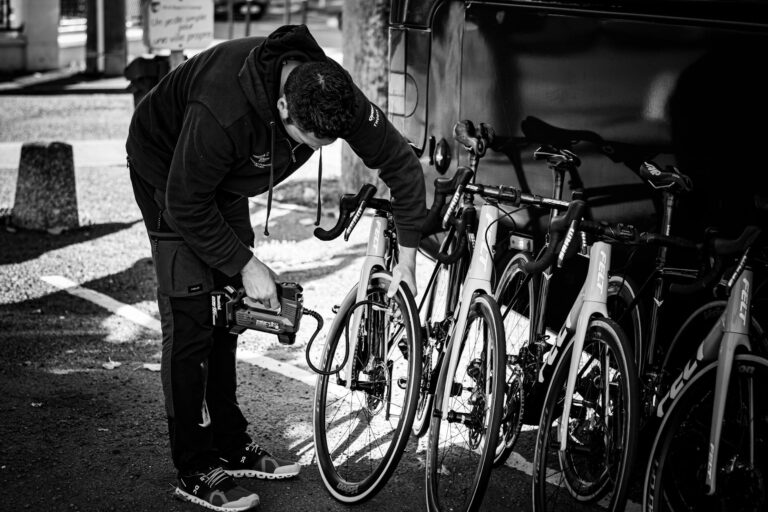
To lubricate your bike chain for smooth spring rides, start by cleaning the chain thoroughly with a degreaser to remove winter grime, let it dry completely, then apply a quality chain lubricant drop by drop to each link while slowly rotating the pedals backward. After applying, wipe off excess lubricant with a clean rag and let the chain sit for at least a few hours””preferably overnight””before riding. This process prevents the sticky buildup that attracts dirt and ensures the lubricant penetrates the internal rollers where it actually matters.
A cyclist who skips the cleaning step and simply adds fresh lube over a dirty chain creates an abrasive paste that accelerates wear, potentially cutting chain life by half compared to properly maintained drivetrains. Spring riding presents unique challenges because your chain has likely endured months of either winter road salt, indoor trainer sweat, or complete neglect sitting in a cold garage. The temperature fluctuations of early spring also mean morning dew and afternoon warmth create moisture cycles that promote corrosion. Beyond the basic lubrication process, this article covers how to choose between wet and dry lubricants for spring conditions, signs that your chain needs more than just lube, common mistakes that damage drivetrains, and a step-by-step preparation and application guide that works for road bikes, mountain bikes, and commuters alike.
Table of Contents
- Why Does Proper Spring Chain Lubrication Matter for Cyclists?
- Choosing the Right Chain Lubricant for Variable Spring Weather
- How Winter Storage Affects Your Chain Condition
- Signs Your Chain Needs Replacement, Not Just Lubrication
- Maintaining Optimal Lubrication Throughout the Spring Season
- Tools and Supplies for Effective Chain Maintenance
- How to Prepare
- How to Apply This
- Expert Tips
- Conclusion
- Frequently Asked Questions
Why Does Proper Spring Chain Lubrication Matter for Cyclists?
Chain lubrication directly affects shifting performance, pedaling efficiency, and component longevity. A well-lubricated chain can reduce drivetrain friction by 3-5 watts compared to a dry or poorly maintained chain””a difference recreational riders might not notice on flat ground but certainly feel during long climbs or headwinds. More importantly, a clean, properly lubricated chain prevents the accelerated wear that occurs when metal contacts metal without adequate protection between the pins, rollers, and plates. spring specifically demands attention because winter storage conditions vary dramatically. A bike stored in a heated basement may have dried-out lubricant that has lost its protective properties, while one kept in an unheated garage might show surface rust on the chain.
Bikes ridden through winter carry residual road treatment chemicals that continue corroding metal even after visible dirt is wiped away. The difference matters: a chain that measures 0.5% wear (half a percent elongation) still has thousands of miles left, but one that reaches 0.75% wear starts damaging cassette teeth, turning a fifteen-dollar chain replacement into a hundred-dollar cassette replacement. The compounding effect of spring neglect becomes apparent by summer. Riders who properly clean and lubricate their chains in March typically see that chain last through fall. Those who skip spring maintenance and ride on compromised lubrication often find themselves replacing chains by July””and sometimes cassettes along with them because the worn chain has already damaged the cogs.
Choosing the Right Chain Lubricant for Variable Spring Weather
Spring weather rarely cooperates with simple lubrication choices. Morning rides might start with wet pavement from overnight rain, transition through dry midday conditions, and end with an unexpected afternoon shower. This variability makes lubricant selection more nuanced than simply picking “wet” or “dry” formulas. Wet lubricants use thicker, more viscous formulas that resist being washed away by rain and wet roads. They typically last longer between applications and provide excellent protection during extended wet conditions. However, their sticky nature attracts road grit, sand, and debris, creating an abrasive mixture that accelerates wear unless cleaned regularly.
For spring commuters who ride regardless of weather forecasts and can’t clean their chains after every wet ride, wet lube remains practical despite its drawbacks. If you ride primarily on dry days with only occasional rain and can apply lubricant before known wet rides, dry lube offers cleaner operation. Dry lubricants apply wet but evaporate to leave a waxy or Teflon-based coating that resists dirt accumulation. Chains stay visibly cleaner, and the lubricant doesn’t fling onto frames and clothing. The limitation appears during sustained wet conditions: dry lubes wash off within minutes of riding through rain or puddles, leaving the chain vulnerable. Some riders adopt a hybrid approach for spring, using dry lube as their default and carrying a small bottle of wet lube for mid-ride application if rain starts unexpectedly. Ceramic-infused lubricants claim advantages of both types but cost significantly more and show diminishing returns for riders who aren’t racing at elite levels.
How Winter Storage Affects Your Chain Condition
The state of your chain after winter depends entirely on how and where the bike spent those months. Understanding your specific situation helps determine whether spring maintenance requires simple lubrication or more extensive intervention. Bikes stored on indoor trainers present a particular challenge that surprises many cyclists. Sweat dripping onto the drivetrain during indoor sessions is highly corrosive due to its salt content””sometimes more damaging than road salt because it contacts components repeatedly over months. Chains used extensively on trainers often show pitting and discoloration even when they appear adequately lubricated. Wax-based lubricants perform better in trainer environments because they don’t attract sweat the way oil-based lubes do, but many riders don’t realize this until damage is done.
Bikes that sat unused through winter face different issues. Lubricant doesn’t last forever, even without riding. Oil-based lubricants slowly evaporate and oxidize, losing their protective properties over months of storage. Chains on neglected bikes may look fine but run dry internally, where the critical bearing surfaces exist between the pin and roller. A chain that feels smooth when wiggled by hand might be completely dry where it matters, ready to wear rapidly once loaded under pedaling forces. The fix is straightforward””clean and re-lubricate””but the inspection is essential. Chains that overwintered outdoors or in humid conditions may have actual rust that simple lubrication cannot address.
Signs Your Chain Needs Replacement, Not Just Lubrication
Lubrication solves many chain problems but cannot reverse wear or corrosion. Recognizing when a chain has passed the point where maintenance helps prevents wasting lubricant on a chain that needs replacement and protects your cassette and chainrings from accelerated damage. Chain wear is measured as elongation””the stretching that occurs as internal components wear against each other. A new chain measures exactly 12 inches across 12 complete links. A worn chain measures progressively longer as the metal wears. Most mechanics recommend replacement at 0.5% elongation for expensive 11 and 12-speed drivetrains, or 0.75% for more robust 8 and 9-speed systems.
For example, a cyclist who checks their chain and finds 0.6% wear should replace it regardless of how smoothly it runs; continued use at that wear level will damage the cassette. Chain wear checkers cost under ten dollars and pay for themselves quickly. Visible damage also indicates replacement need. Stiff links that don’t flex freely through the derailleur, even after cleaning and lubrication, suggest internal corrosion or damage that lubrication cannot resolve. Rust that has pitted the surface””not just surface oxidation that wipes away””indicates compromised metal integrity. Twisted or bent plates from crashes or severe cross-chaining create shifting problems that no lubricant addresses. When in doubt, the cost of a new chain is minimal compared to the cassette, chainring, and derailleur pulley wear that a damaged chain accelerates.
Maintaining Optimal Lubrication Throughout the Spring Season
A single spring tune-up lubrication rarely lasts the entire season. Establishing a maintenance rhythm based on your riding patterns keeps the drivetrain protected without excessive product use or unnecessary cleaning sessions. Mileage-based intervals work well for consistent riders. Most lubricants provide adequate protection for 100-200 miles of dry riding or 50-100 miles of wet riding before reapplication is needed. However, these guidelines assume the chain started clean and received proper lubricant application. A rider covering 50 miles weekly on dry roads might lubricate every other week, while someone commuting 20 miles daily through variable spring weather may need weekly attention.
Listening to the chain helps: audible squeaking or grinding during pedaling indicates inadequate lubrication, while visible black grime accumulation suggests wet lube is attracting excessive dirt. The tradeoff between over-lubrication and under-lubrication favors slight excess. A chain with too much lubricant runs messily and attracts dirt but continues protecting metal surfaces. An under-lubricated chain wears rapidly and damages other components. However, chronic over-lubrication without cleaning creates problems too””the buildup eventually affects shifting precision and can contaminate brake rotors on disc brake bikes. Wiping the chain exterior with a rag after each ride removes surface contamination without stripping the internal lubrication, extending intervals between full cleaning and relubrication.

Tools and Supplies for Effective Chain Maintenance
Assembling the right supplies before starting makes the maintenance process efficient and thorough. Quality tools don’t require significant investment but meaningfully improve results compared to improvised alternatives. A chain cleaning device””the plastic reservoir with internal brushes that clamps around the chain””removes more contamination more quickly than brushes alone. Combined with a quality degreaser, these devices strip winter grime in minutes rather than the extended scrubbing required with rags and brushes. For example, a rider attempting to clean a heavily soiled chain with only rags might spend thirty minutes and still leave residue in the rollers, while the same chain through a cleaning device takes five minutes and reaches internal surfaces.
However, these devices must be emptied and cleaned themselves after each use; leaving dirty degreaser in them between uses contaminates subsequent cleanings. Beyond the cleaning device, useful supplies include a dedicated chain degreaser (not WD-40, which is a solvent and water displacer, not a lubricant), clean lint-free rags, your chosen chain lubricant, and a chain wear checker. Nitrile gloves keep hands clean during degreasing. A repair stand or method of elevating the rear wheel makes chain rotation easier, though propping the bike against a wall and backpedaling works adequately. Some cyclists add a chain quick link in their kit for easy removal, allowing chains to be dropped into degreaser baths for thorough cleaning, though this level of maintenance isn’t necessary for routine seasonal lubrication.
How to Prepare
- **Shift to the middle of the cassette and middle chainring** to reduce chain tension, making rotation and access easier. If your bike has a clutch derailleur, disengage the clutch for smoother chain movement during cleaning.
- **Apply degreaser liberally to the chain** while slowly backpedaling, ensuring the product contacts all surfaces. Let the degreaser sit for 2-3 minutes to dissolve accumulated lubricant and grime, but don’t let it dry completely.
- **Run the chain through a cleaning device** or scrub with a stiff brush, continuing to backpedal. Focus on the side plates and rollers where contamination accumulates. Repeat with fresh degreaser if the runoff remains heavily discolored.
- **Rinse the chain with water** to remove degreaser residue, which can interfere with fresh lubricant adhesion. A spray bottle works for controlled application without soaking other components.
- **Dry the chain thoroughly** using clean rags and air drying. Some cyclists use compressed air to speed drying, but patience works equally well. The chain must be completely dry before lubricant application””water trapped in the rollers prevents lubricant penetration and promotes internal rust.
How to Apply This
- **Position the lubricant bottle at the chain’s lower run** between the rear derailleur and crankset, where the chain moves slowest and lubricant has time to penetrate. Apply one drop to each link’s roller while slowly backpedaling””you should complete several full rotations of the chain.
- **Continue backpedaling for 30-60 seconds after application** to work the lubricant into the internal surfaces. Shift through all gears several times to distribute lubricant across cassette and chainring interfaces.
- **Wait at least 5 minutes**, preferably several hours or overnight, before wiping excess. This waiting period allows lubricant to penetrate internal surfaces; wiping immediately removes product before it reaches where protection matters most.
- **Wipe the exterior of the chain firmly with a clean rag** while backpedaling. The goal is removing all surface lubricant””internal lubrication remains protected. A properly lubricated chain should look nearly dry on the outside while remaining protected inside the rollers.
Expert Tips
- Apply lubricant the night before planned rides rather than immediately before. This gives the product time to penetrate and allows excess to be wiped away without rushing.
- Do not lubricate a wet chain or apply lubricant in rainy conditions. Water prevents penetration and dilutes the lubricant, reducing effectiveness significantly compared to dry application.
- Mark your chain with a permanent marker on one outer plate to track complete rotations during cleaning and lubricating, ensuring you’ve treated every link exactly once.
- Store lubricant bottles upright and at room temperature. Cold lubricant applies unevenly, and bottles stored on their sides may leak or clog.
- Clean the derailleur pulleys when cleaning the chain. These small wheels accumulate the same grime and spread contamination back to freshly cleaned chains if ignored.
Conclusion
Proper spring chain lubrication combines thorough cleaning with careful application and appropriate product selection for your riding conditions. The process””cleaning with degreaser, drying completely, applying lubricant drop by drop, waiting, then wiping excess””takes minimal time compared to the extended chain and component life it provides. Riders who establish this routine in spring set themselves up for a full season of quiet, efficient drivetrain performance rather than the gradual degradation that culminates in expensive component replacement.
The key understanding is that lubrication alone cannot substitute for cleaning, and more lubricant does not mean better protection. A thin layer of quality lubricant on clean bearing surfaces outperforms heavy application over contaminated components. Combined with periodic wear checks using an inexpensive chain checker, this maintenance approach keeps drivetrains running smoothly and prevents the cascade of damage that worn chains inflict on cassettes and chainrings. Starting the spring season with attention to your chain pays dividends through every mile that follows.
Frequently Asked Questions
How long does it typically take to see results?
Results vary depending on individual circumstances, but most people begin to see meaningful progress within 4-8 weeks of consistent effort. Patience and persistence are key factors in achieving lasting outcomes.
Is this approach suitable for beginners?
Yes, this approach works well for beginners when implemented gradually. Starting with the fundamentals and building up over time leads to better long-term results than trying to do everything at once.
What are the most common mistakes to avoid?
The most common mistakes include rushing the process, skipping foundational steps, and failing to track progress. Taking a methodical approach and learning from both successes and setbacks leads to better outcomes.
How can I measure my progress effectively?
Set specific, measurable goals at the outset and track relevant metrics regularly. Keep a journal or log to document your journey, and periodically review your progress against your initial objectives.
When should I seek professional help?
Consider consulting a professional if you encounter persistent challenges, need specialized expertise, or want to accelerate your progress. Professional guidance can provide valuable insights and help you avoid costly mistakes.
What resources do you recommend for further learning?
Look for reputable sources in the field, including industry publications, expert blogs, and educational courses. Joining communities of practitioners can also provide valuable peer support and knowledge sharing.