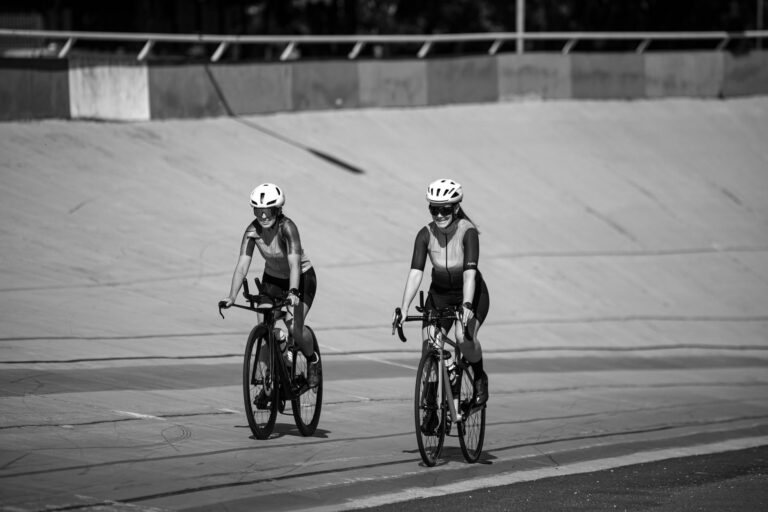
Inspect a track bike by checking the frame for damage, the wheels for alignment, the fixed drivetrain for secure parts, any brakes for safe operation, and the fit for control. A track bike uses a fixed gear, so the pedals turn whenever the rear wheel turns, and many purpose-built models lack brakes. Confirm where you intend to ride before judging the bike. A brakeless machine may suit a velodrome but be unsafe or unlawful on public roads, while aggressive track geometry can feel awkward in traffic.
Table of Contents
- Check the frame and fork for damage
- Test the wheels, tires, and bearings
- Examine the fixed drivetrain
- Decide whether the brake setup suits the ride
- Confirm fit, handling, and total cost
Check the frame and fork for damage
Start with a clean frame in bright light. Dirt, stickers, frame protectors, and fresh paint can hide cracks, dents, corrosion, or poor repairs. Ask the seller before removing anything attached to the bike. inspect the head tube, fork crown, bottom bracket shell, seat cluster, chainstays, and rear dropouts.
These areas carry heavy loads or commonly suffer crash damage. Warning signs include: Minor paint chips may be cosmetic, but damage near a joint deserves caution. Carbon damage and bent aluminum are especially difficult to judge by appearance alone; if the seller cannot explain suspicious marks, budget for a professional inspection or leave the bike. Check that the seatpost moves and that the stem, pedals, and bottom bracket are not seized. A low purchase price loses its appeal when routine fit adjustments require cutting or replacing stuck components.
- Cracks, rippled paint, or dark lines around welds and joints
- Dents, sharp creases, bent tubes, or mismatched alignment
- Rust bubbling through paint or collecting inside steel tubes
- Soft spots, exposed fibers, bulges, or cloudy damage on carbon
- A fork that sits visibly off-center relative to the frame
Test the wheels, tires, and bearings
Lift each wheel and spin it. The rim should pass the frame or fork with a consistent gap, without side-to-side wobble or repeated vertical hops. A small deviation may be trued, but a dented rim, cracked carbon, or damaged braking surface can require replacement. Hold the rim and push it gently from side to side. Play at the hub suggests loose or worn bearings, while grinding during rotation points to contamination, damage, or excessive adjustment.
Inspect spokes for uneven tension, bends, corrosion, and cracks around the rim holes. track bikes use rear-facing horizontal dropouts so the wheel can slide to set chain tension. Confirm that the axle sits straight, the axle nuts tighten fully, and the tire does not drift toward a chainstay when you press hard on the pedals. Check tire sidewalls for cuts, dry cracking, exposed casing, or bulges. Verify that both tires clear the frame throughout a full rotation; tight track-bike clearances may prevent fitting wider tires for rough streets.
Examine the fixed drivetrain
Rotate the cranks slowly and watch the chain. It should run smoothly without tight links, severe rust, or large changes in tension. Because chainrings and cogs are rarely perfectly round, set tension at the tightest point while retaining slight vertical movement in the chain. Confirm that the rear hub has a fixed cog and a proper lockring.
The lockring uses a thread that resists loosening when the rider pushes backward on the pedals; a loose or missing lockring can let the cog unwind during braking pressure. Look along the chain from behind to assess chainline—the alignment between the chainring and rear cog. A visibly angled chain can run noisily, wear quickly, and derail. Also check for: During a careful test ride, listen for clicks and feel for slipping or pulsing through the pedals. Do not coast instinctively: on a fixed-gear bike, stopping your legs abruptly can lift you from the saddle or make the rear wheel skip.
- Hooked or sharply worn chainring and cog teeth
- Loose crank arms or chainring bolts
- Side-to-side movement at the bottom bracket
- Damaged axle threads or rounded axle nuts
- Pedals that bind, wobble, or show crash damage
Decide whether the brake setup suits the ride
Many velodrome-specific track bikes have no brakes because riders control speed through the fixed drivetrain in a closed environment. That does not make a brakeless bike appropriate for traffic, hills, wet roads, or local public-road requirements. If brakes are installed, squeeze each lever firmly before riding. The lever should not reach the handlebar, the cable should move freely, and both pads should contact the rim or rotor squarely. Replace frayed cables, hardened pads, leaking hydraulic parts, and contaminated braking surfaces.
If the bike has no brakes, inspect whether the fork and frame are designed to accept them. Never assume a hole can safely be drilled into a fork crown or frame bridge. A replacement fork, suitable front brake, lever, cable, and compatible wheel may substantially change the cost and handling. For street use, a dependable hand-operated front brake provides braking independent of leg strength, chain condition, and rear-wheel traction. Check the rules where you ride before buying, since bicycle equipment requirements vary by location.
Confirm fit, handling, and total cost
A track bike often has quick steering, a high bottom bracket, short tire clearances, and little provision for accessories. These traits work on a velodrome but can reduce comfort or practicality on broken pavement and longer rides. Stand over the top tube with safe clearance, then check saddle height and reach. With your hands in the normal riding position, you should be able to steer, look ahead, and reach any brake lever without locking your elbows or straining your back. Confirm that the seatpost and stem offer enough adjustment without exceeding their minimum-insertion marks.
Take a short test ride in a clear, level area if the bike is mechanically safe. Check that you can start, turn, slow, stop, and control pedal speed without your knees striking the bars. Toe overlap—your shoe touching the front tire during a sharp turn—is common on compact track geometry and matters more during slow street maneuvers. Price the bike only after listing necessary work. Include tires, chain, cog, lockring, bearings, brake equipment, pedals, and fit parts; reject the purchase if structural damage remains uncertain or the bike cannot be made suitable for its intended setting.