Most common kids bike problems can be fixed at home with basic tools and about thirty minutes of your time. The typical issues””flat tires, loose handlebars, squeaky brakes, wobbly wheels, and slipping chains””all have straightforward solutions that don’t require a bike shop visit or specialized equipment. A set of hex wrenches, a screwdriver, a tire pump with a pressure gauge, and perhaps a bottle of chain lube will handle ninety percent of what goes wrong with a child’s bicycle. Take the classic scenario: your kid comes home and announces the bike “feels weird.” That vague complaint usually traces back to one of five culprits.
Last week it might have been a loose stem bolt that made the handlebars rotate independently from the front wheel. This week it could be brake pads that have worn down to nothing. These problems look intimidating if you’ve never worked on a bike, but the mechanical simplicity of children’s bicycles actually makes them ideal learning projects for parents who want to pick up basic repair skills. This article walks through the most frequent repairs you’ll encounter, from reinflating tires and patching tubes to adjusting brakes and truing wheels. We’ll cover what tools you actually need, which problems are genuinely easy fixes, and when you should admit defeat and visit a professional mechanic.
Table of Contents
- What Tools Do You Need to Fix Kids Bike Problems at Home?
- Fixing Flat Tires and Patching Inner Tubes
- Adjusting and Replacing Brake Pads
- Tightening Loose Handlebars and Stems
- Fixing a Slipping or Dropped Chain
- When to Replace Rather Than Repair Components
- Truing a Wobbly Wheel
- Maintaining Kids Bikes to Prevent Future Problems
- Conclusion
What Tools Do You Need to Fix Kids Bike Problems at Home?
The good news about children’s bikes is that they use simple hardware. Most bolts on a kids bike are either 4mm, 5mm, or 6mm hex heads, so a basic set of Allen wrenches covers your primary needs. Add a Phillips head screwdriver, an adjustable wrench, tire levers, a floor pump with a pressure gauge, and you’re equipped for most repairs. The entire toolkit costs less than a single bike shop service visit. Specialized tools do exist for certain jobs, but you can often improvise. A proper chain breaker tool costs around ten dollars and makes chain repairs much easier, but you won’t need it unless the chain actually breaks rather than just slipping.
Spoke wrenches come in different sizes depending on the nipple dimensions, and buying the wrong size will round off the nipples and create bigger problems. If you’re unsure, take the wheel to a shop and ask them to identify the correct spoke wrench size before you purchase one. One worthwhile investment is a basic bike repair stand. Flipping a bike upside down works in a pinch, but a stand that holds the bike at working height with the wheels free to spin makes every adjustment dramatically easier. Entry-level stands run about forty dollars and fold flat for storage. However, if you’re only doing occasional repairs on a single child’s bike, working with the bike upside down on the grass is perfectly adequate.
Fixing Flat Tires and Patching Inner Tubes
Flat tires account for probably half of all kids bike repairs, and they’re among the easiest to fix once you’ve done it a few times. The process involves removing the wheel, prying one side of the tire off the rim with tire levers, pulling out the inner tube, finding the hole, patching it or replacing the tube, and reassembling everything. The whole job takes about fifteen minutes with practice. Finding the puncture requires inflating the tube slightly and either listening for escaping air or submerging the tube in water and watching for bubbles.
Mark the hole with a pen, rough up the area around it with sandpaper or the metal scraper included in patch kits, apply rubber cement, wait for it to get tacky, and press on the patch firmly for thirty seconds. Glueless patches exist and work reasonably well for emergency repairs, but traditional vulcanizing patches create a more permanent seal. However, if the tube has a hole at the seam where it was manufactured, or if the valve stem is leaking, patching won’t help””you need a new tube. Similarly, if you find multiple punctures or the tube has been patched several times already, replacement makes more sense than continuing to repair degraded rubber. Tubes cost between five and eight dollars, so keeping a spare on hand saves future headaches.
Adjusting and Replacing Brake Pads
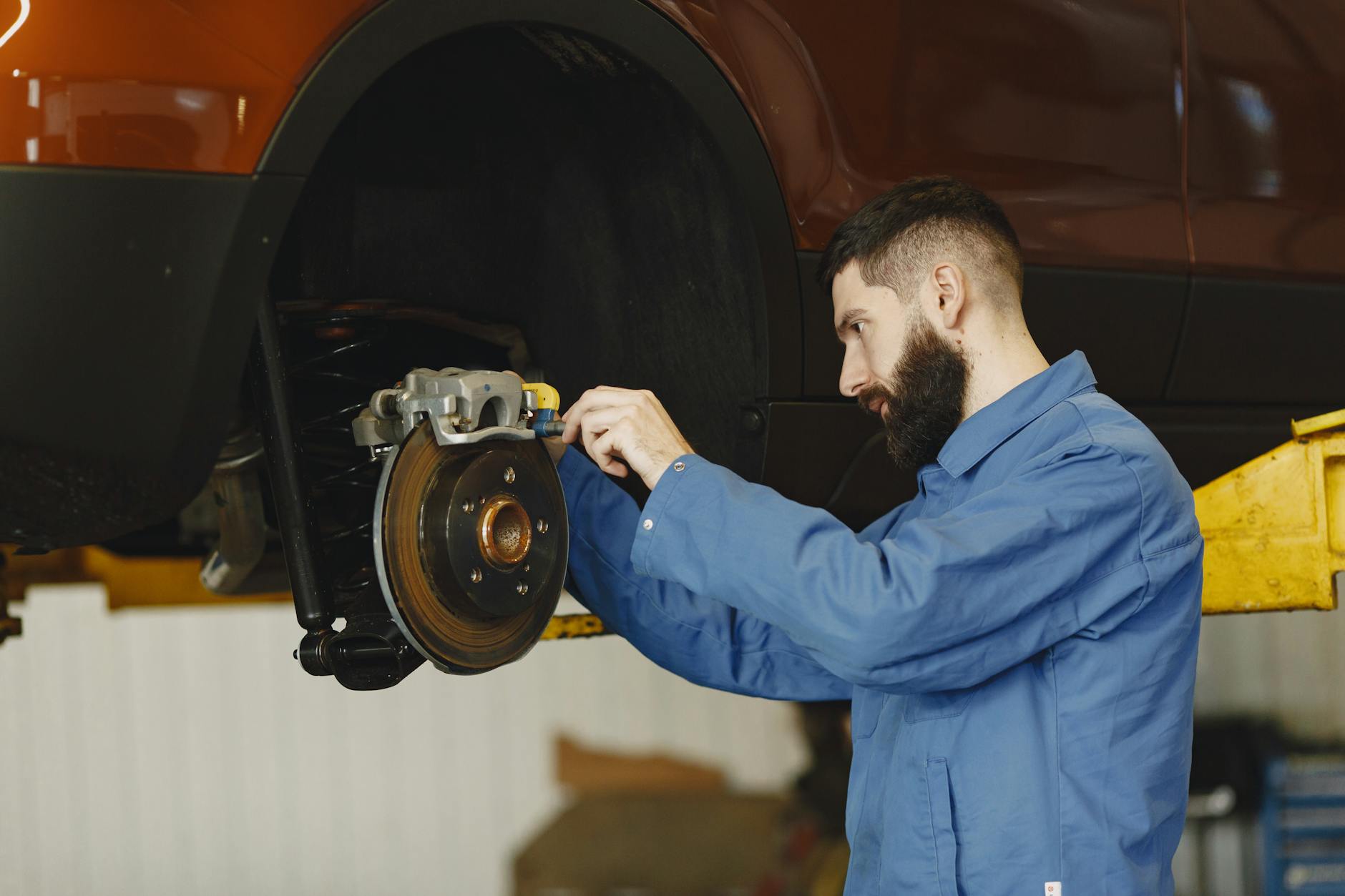
Kids destroy brake pads faster than adults because they tend to drag brakes constantly rather than applying them in controlled bursts. When braking becomes weak or produces a grinding metal-on-metal sound, worn pads are the likely cause. Inspect the pads by looking at them from above””they should have visible grooves or texture. If they’re worn smooth or you can see metal showing through, replacement is overdue. Brake pad replacement on most kids bikes with rim brakes involves loosening a single bolt, sliding out the old pad, inserting the new one with the closed end facing forward, and retightening. The tricky part is alignment: the pad must strike the rim squarely without touching the tire above or slipping below the rim’s braking surface.
Most pads have a small amount of adjustability in their mounting hardware to dial in the position. Some mechanics recommend “toeing in” the pads slightly so the front edge contacts the rim a split second before the rear edge, which can reduce squealing. Disc brakes on higher-end kids bikes require different techniques. The pads wear in a similar fashion but live inside a caliper that’s harder to inspect visually. If disc brakes start making noise or losing power, the pads might need replacement, but the rotor could also be contaminated with oil or the caliper might need realignment. Disc brake work gets complicated quickly, and this is one area where a shop visit often makes sense unless you’re comfortable with the system.
Tightening Loose Handlebars and Stems
A handlebar that rotates unexpectedly when your child is riding represents a genuine safety hazard, yet the fix usually involves nothing more than tightening one or two bolts. The handlebar assembly has two key connections: the stem clamps onto the steerer tube of the fork, and the handlebar clamps into the stem. Looseness at either point causes that alarming rotation. Modern kids bikes typically use threadless headsets with a stem that wraps around the steerer tube and secures with pinch bolts on the side. First, loosen these pinch bolts slightly. Then tighten the top cap bolt””the one on top of the stem pointing straight down””until you feel slight resistance.
This preloads the headset bearings. Finally, align the stem with the front wheel and tighten the pinch bolts firmly. The top cap bolt sets the bearing tension; the pinch bolts actually hold everything in place. Older bikes might have threaded headsets with a quill stem that inserts into the steerer tube. These have a single expander bolt on top that, when tightened, wedges the stem inside the tube. If this style of stem keeps slipping despite proper tightening, the expander wedge might be damaged or the steerer tube could be worn. Quill stems also have minimum insertion lines marked on them””if the stem is raised beyond this line, it lacks sufficient material inside the tube to grip safely and the assembly needs replacement.
Fixing a Slipping or Dropped Chain
Chains that slip under pedaling load or fall off entirely frustrate kids and parents alike. The causes vary, but on single-speed kids bikes, the usual culprit is either a stretched chain, a chain that’s too loose, or worn sprocket teeth. Multi-speed bikes add derailleur adjustment to the list of possibilities. For single-speed and coaster brake bikes, chain tension adjustment happens at the rear axle. Loosen the axle nuts on both sides, pull the wheel backward to take up slack until the chain has about half an inch of vertical play at its midpoint, then retighten the axle nuts while keeping the wheel centered in the frame. This sounds simple, but getting the wheel perfectly straight while maintaining correct tension takes some fiddling.
If you overtighten, the chain binds and pedaling becomes difficult. Derailleur-equipped kids bikes require limit screw adjustments when chains fall off repeatedly. The high and low limit screws on the rear derailleur control how far the mechanism can swing in each direction. If the chain falls off the smallest cog toward the frame, the high limit screw needs tightening. If it falls off the largest cog toward the spokes, the low limit screw is the adjustment. These are small Phillips head screws usually marked H and L. Quarter-turn adjustments are enough””overcorrection prevents the derailleur from reaching the outer gears at all.

When to Replace Rather Than Repair Components
Not every problem merits repair. Kids outgrow bikes quickly, and spending significant money or time fixing components on a bike that will be passed down or donated in six months doesn’t always make sense. Understanding when replacement beats repair helps you allocate resources intelligently. Tires with cracked sidewalls, dry-rotted rubber, or damaged beads should be replaced rather than continually patching tubes that flat because debris enters through degraded tire casings. A new kids bike tire costs ten to twenty dollars and lasts years under normal use.
Similarly, brake cables that are frayed, rusted, or kinked won’t perform reliably no matter how well you adjust the brakes””new cables cost a few dollars and transform braking feel. Chains stretch over time, and a chain that has elongated beyond wear limits will accelerate sprocket wear; a chain checker tool provides definitive measurement, but if the chain looks rusty and stiff, replacement is smart regardless. However, certain components on cheap kids bikes aren’t worth replacing at all because the bike itself has limited remaining value. Bottom brackets on department store bikes sometimes fail within a year or two, and replacing them costs nearly as much as the bike originally sold for. In these cases, the honest assessment is that the bike has reached end of life and a replacement bike””ideally a better-quality used one from a brand like Woom, Prevelo, or Cleary””represents better value than repair.
Truing a Wobbly Wheel
Wheels that wobble side to side while spinning have tension imbalances in their spokes. Minor wobbles of a few millimeters are cosmetic, but significant wobbles can cause brake rub and affect handling. Truing a wheel means adjusting spoke tension to pull the rim back into alignment””a task that intimidates many people but follows logical principles once you understand them. The process requires a spoke wrench matched to your nipple size and patience. Spin the wheel and identify where it deviates most. To pull the rim to the right, tighten spokes that connect to the right-side hub flange or loosen spokes connecting to the left.
Work in small increments””quarter turns or less””and affect multiple spokes in the problem area rather than cranking hard on a single one. Professional wheelbuilders use truing stands with precise indicators, but acceptable results come from using the brake pads as reference guides. If the rim no longer rubs the pads at any point during rotation, you’ve succeeded. Certain situations exceed home repair capability. A rim with a visible flat spot from impact damage won’t true properly because the metal itself is deformed. Wheels with multiple broken spokes need professional attention because replacing spokes often requires removing the tire, tube, and rim tape to access the nipples from inside. If spoke breakage is recurring, the wheel may have fundamental tension problems or the spokes themselves may be substandard and due for complete replacement.
Maintaining Kids Bikes to Prevent Future Problems
Preventive maintenance dramatically reduces how often you’ll need to make repairs. A few minutes of attention monthly keeps small issues from becoming major failures. The basics include keeping tires inflated to the pressure listed on the sidewall, lubricating the chain every few weeks with bicycle-specific lubricant, and wiping down the frame to prevent dirt accumulation in moving parts. Check bolt tightness periodically, especially on components kids interact with directly. Handlebar grips, pedals, seat posts, and wheel quick releases or axle nuts should all be secure. Kids crash, drop bikes, and generally subject them to forces adult commuters never encounter. A quick inspection after any significant impact catches problems before they become dangerous.
Teach children to report when something feels different””that feedback often provides early warning of developing issues. Storage matters too. Bikes left outside year-round deteriorate faster than those stored in garages or sheds. UV exposure degrades tires and plastic components. Moisture accelerates rust on chains, cables, and steel frames. If outdoor storage is unavoidable, a simple bike cover extends component life significantly. Indoor storage, even in a corner of the garage, provides the best protection and keeps bikes ready to ride rather than requiring rehabilitation each spring.
Conclusion
Home repair of kids bikes requires modest tools, basic mechanical understanding, and willingness to learn through doing. The problems that strand most children’s bicycles””flat tires, loose parts, brake issues, chain troubles””all have solutions accessible to anyone patient enough to work through them. Each successful repair builds skills transferable to future bikes and saves money that would otherwise go to shop labor charges.
Start with the straightforward fixes like tire inflation and bolt tightening, then work up to brake adjustments and chain maintenance as your confidence grows. Accept that some repairs exceed home capability and don’t hesitate to consult professionals when safety-critical components need attention beyond your skill level. A well-maintained kids bike provides years of reliable service and, perhaps more importantly, teaches children that mechanical problems are solvable rather than reasons to give up.