Learning how to descend safely on a road bike at high speeds is one of the most critical skills any cyclist can develop, yet it remains one of the least practiced aspects of the sport. While most riders spend countless hours working on their climbing ability, cadence, and endurance, the descent often receives minimal attention despite accounting for a significant portion of ride time and presenting the greatest injury risk. Speeds exceeding 40, 50, or even 60 miles per hour are achievable on steep mountain roads, and at these velocities, small errors in technique or judgment can have severe consequences. The physics of high-speed descending present unique challenges that differ fundamentally from flat riding or climbing. Air resistance increases exponentially with speed, requiring different body positioning. Braking distances multiply dramatically, with a bike traveling at 50 mph needing roughly four times the stopping distance of one at 25 mph.
Cornering forces intensify, demanding precise weight distribution and line selection. Road hazards that pose minor annoyances at low speeds””gravel, cracks, wet patches, oil slicks””become genuinely dangerous obstacles when encountered at speed. Understanding these dynamics is the foundation of confident, safe descending. This article provides a comprehensive guide to mastering high-speed descents on a road bike. Readers will learn the fundamental physics governing descending behavior, proper body positioning and weight distribution techniques, strategic braking methods, cornering mechanics, mental preparation approaches, and equipment considerations. Whether you are a recreational rider looking to feel more comfortable on hilly routes or an aspiring racer seeking competitive advantage, these principles apply universally. The goal is not to encourage reckless speed, but to ensure that when speed happens””as it inevitably does on descents””riders possess the knowledge and skills to manage it safely.
Table of Contents
- Why Is Descending on a Road Bike at High Speeds So Challenging?
- Proper Body Position for Safe High-Speed Descending
- Braking Techniques for Controlling Speed on Steep Descents
- How to Corner Safely When Descending at Speed on a Road Bike
- Mental Preparation and Risk Assessment for High-Speed Descents
- Equipment Considerations for Safe High-Speed Descending
- How to Prepare
- How to Apply This
- Expert Tips
- Conclusion
- Frequently Asked Questions
Why Is Descending on a Road Bike at High Speeds So Challenging?
Descending at high speeds on a road bike challenges riders because it compresses decision-making time while amplifying the consequences of errors. At 25 mph, a cyclist has approximately 1.5 seconds to react to an obstacle 50 feet ahead. At 50 mph, that same distance offers only 0.7 seconds””barely enough time for the brain to register a hazard, let alone formulate and execute an avoidance maneuver. This time compression explains why descending feels so much more demanding than other aspects of cycling, even when the physical effort is minimal.
The cognitive load shifts from managing power output and fatigue to continuous threat assessment and rapid decision-making. The sensory experience of high-speed descending also differs markedly from other riding contexts. Wind noise increases substantially, potentially masking sounds that would otherwise provide useful information about approaching vehicles or surface conditions. Peripheral vision becomes less reliable as speed increases, with the brain naturally narrowing focus to the immediate path ahead””a phenomenon that can cause riders to miss hazards approaching from the sides. Vibrations transmitted through the handlebars intensify, requiring stronger grip and potentially causing hand fatigue that diminishes fine motor control precisely when it matters most.
- **Reduced reaction time**: Every 10 mph increase in speed cuts available reaction time by roughly 20 percent, leaving less margin for error identification and correction
- **Exponential braking distance**: Stopping distance increases with the square of velocity, meaning double the speed requires four times the distance to stop completely
- **Intensified consequences**: Falls at 15 mph typically result in road rash and bruises; falls at 45 mph frequently involve broken bones, concussions, and worse
- **Equipment stress**: Wheels, tires, and brakes operate near their performance limits during aggressive descending, increasing the risk of mechanical failure

Proper Body Position for Safe High-Speed Descending
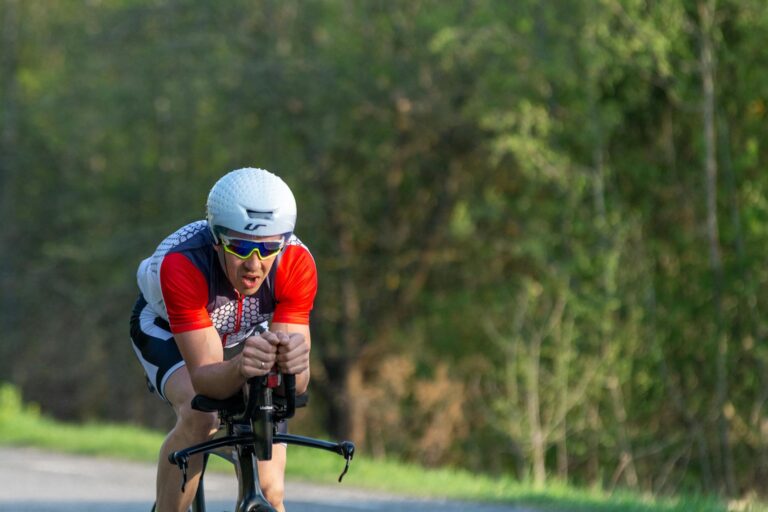
Body position forms the foundation of controlled high-speed descending, affecting aerodynamics, weight distribution, bike stability, and braking effectiveness simultaneously. The optimal descending position differs substantially from normal riding posture. Hands should grip the drops rather than the hoods or tops, providing better leverage on the brake levers and lowering the rider’s center of gravity. Elbows remain slightly bent to absorb road vibrations and provide steering input dampening””locked elbows transmit every bump directly to the shoulders and reduce bike control.
The back flattens somewhat, with the head raised to maintain forward vision while reducing frontal area. Weight distribution requires conscious attention during descents. Many riders instinctively shift their weight rearward when descending, particularly during braking, but this actually reduces front wheel traction precisely when it is needed most for steering and braking. The ideal weight distribution keeps roughly 60 percent of body weight on the front wheel during straight-line descending, achieved by slightly shifting the hips forward on the saddle and keeping the shoulders over or slightly ahead of the handlebars. During braking, resist the natural tendency to slide backward; instead, push the hips back slightly while keeping the chest low to maintain front wheel pressure.
- **Drops position**: Grip the curved portion of the handlebars with hands covering the brake levers for instant access and maximum leverage
- **Knee position**: Light contact between knees and the top tube provides additional lateral stability without restricting necessary bike movement
- **Core engagement**: Moderate abdominal tension stabilizes the torso and allows quick weight shifts without excessive arm input
- **Pedal position**: Level pedals with cranks horizontal provide a stable platform; the outside pedal should drop through corners with weight pressed into it
Braking Techniques for Controlling Speed on Steep Descents
Effective braking on steep, high-speed descents requires techniques that differ significantly from flat-ground stopping. The primary principle is brake modulation rather than binary on-off application. Skilled descenders apply brakes smoothly and progressively, increasing pressure gradually to avoid wheel lockup while distributing braking duty between front and rear wheels appropriately. The front brake provides approximately 70 percent of total stopping power due to weight transfer dynamics, but over-reliance on it risks pitching the rider forward over the handlebars, particularly on very steep grades.
Heat management becomes a genuine concern during extended descending, especially for riders using rim brakes. Continuous braking can raise rim temperatures above 400 degrees Fahrenheit, potentially causing tire blowouts as air pressure inside the tube increases, or degrading brake pad performance as compounds reach their thermal limits. The solution is interval braking: applying strong braking to reduce speed significantly before corners, then releasing brakes completely through the corner and down the following straight until the next braking zone. This technique allows rims and pads to cool between applications while maintaining safe cornering speeds.
- **Progressive application**: Squeeze brake levers gradually rather than grabbing them suddenly; smooth input prevents wheel lockup and maintains tire traction
- **Trail braking**: Light braking continues into corner entry, helping to set front tire grip, but all braking should cease before the apex
- **Brake check zones**: Identify straight sections before corners where speed reduction can happen safely, completing all major braking before turning
- **Dual-wheel braking**: Use both brakes simultaneously with greater pressure on the front; rear-only braking is insufficient at high speeds and promotes skidding
How to Corner Safely When Descending at Speed on a Road Bike
Cornering at speed represents the most technically demanding aspect of high-speed descending, combining precise line selection, appropriate speed entry, body positioning, and bike lean angles in a coordinated sequence that unfolds in seconds. The fundamental principle is that all significant braking must occur before corner entry. Braking while leaned into a corner reduces available tire traction for turning, potentially causing wheel slip and loss of control. This requires accurate speed judgment before each corner, erring toward slightly slower entry speeds until familiarity with a descent develops.
Line selection through corners follows the outside-inside-outside pattern familiar from motorsports, adapted for road cycling’s unique constraints. Enter the corner from the outside of your lane to maximize the radius, apex near the inside, and exit allowing the bike to track naturally toward the outside again. This wider arc reduces the lean angle required at any given speed, providing a larger margin before tires reach their grip limits. On open roads, stay within your lane at all times””the temptation to use the full road width is dangerous and often illegal. Blind corners require particular caution, as oncoming traffic, gravel from runoff, or stopped vehicles may lurk beyond sight lines.
- **Vision**: Look through the corner toward the exit rather than at the road immediately ahead; the bike tends to follow where the eyes point
- **Countersteering**: At speeds above approximately 15 mph, turning requires momentarily pushing the handlebars in the opposite direction to initiate lean
- **Outside pedal down**: Drive weight into the outside pedal while keeping the inside knee pointed slightly into the turn; this lowers the center of gravity
- **Consistent lean angle**: Maintain steady lean throughout the corner rather than making mid-corner adjustments, which unsettle the bike
Mental Preparation and Risk Assessment for High-Speed Descents
The psychological dimension of high-speed descending often determines outcomes more than physical technique. Fear, while a natural and often appropriate response to genuine danger, can paradoxically increase risk when it causes riders to tense muscles, fix vision on immediate obstacles, or make sudden panic inputs. Conversely, overconfidence leads to speed miscalculation, insufficient safety margins, and failure to anticipate hazards. The goal is calibrated confidence””an accurate assessment of personal skill limits matched against current conditions, leaving appropriate margins for the unexpected.
Pre-riding unfamiliar descents at moderate speeds provides invaluable mental preparation, allowing riders to learn corner sequences, identify hazardous surfaces, note drainage grates or road damage, and build a mental map that reduces cognitive load during faster subsequent efforts. When pre-riding is impossible, conservative first descents accomplish the same goal. Many serious descending accidents involve riders encountering unexpected conditions””a hairpin sharper than anticipated, gravel washed across the road, a decreasing-radius curve””at speeds that leave no recovery room. Assuming the worst about unknown corners is simply prudent.
- **Scanning rhythm**: Develop a consistent pattern of looking far ahead for overall line planning, middle distance for imminent hazards, and near field for immediate tire placement
- **Escape routes**: Continuously identify bail-out options””run-off areas, soft shoulders, uphill exits””in case primary lines become blocked
- **Condition assessment**: Evaluate road surface, weather, tire condition, and personal fatigue before committing to aggressive descending speeds
- **Group dynamics**: When descending with others, resist competitive pressure to ride beyond comfort levels; serious accidents frequently involve riders pushing to match faster companions

Equipment Considerations for Safe High-Speed Descending
While technique dominates descending safety, equipment choices matter significantly at extreme speeds. Tires represent the most critical component, with tire pressure, tread compound, and casing quality all affecting available grip. Lower pressures improve cornering traction and absorb surface irregularities but increase rolling resistance and pinch flat risk; high pressures reduce grip and transmit more vibration. Most riders benefit from pressures 5-10 psi lower than their typical flat-ground settings when facing technical descents. Quality tires from reputable manufacturers use rubber compounds optimized for wet and dry grip, providing noticeably more confidence than budget alternatives.
Brake system capability becomes apparent during extended descending. Disc brakes offer superior heat management and consistent wet-weather performance compared to rim brakes, making them increasingly popular among riders who frequent mountainous terrain. However, well-maintained rim brakes with appropriate pads remain entirely adequate for most descending, provided riders use interval braking techniques to manage heat. Whatever brake system is used, regular inspection ensures cables are properly tensioned, pads have adequate material remaining, and rotors or rims are clean and undamaged. Brake failure during a high-speed descent””while rare””represents one of the most dangerous possible mechanical situations.
How to Prepare
- **Check equipment thoroughly**: Inspect tire condition for cuts or wear, verify brake pad thickness and lever feel, confirm wheel trueness and spoke tension, and check that quick releases or thru-axles are properly secured. A pre-descent bike check takes two minutes and eliminates the most common mechanical causes of descending accidents.
- **Research the descent**: Study route maps for gradient, corner types, and total elevation drop. Review online forums, Strava segments, or video footage from other riders who have completed the descent. Understanding what lies ahead reduces surprises and allows mental preparation for challenging sections.
- **Assess current conditions**: Check weather forecasts for rain probability, wind speed and direction, and temperature. Evaluate road surface conditions””recent rain, autumn leaves, gravel from construction, or oil residue from vehicles all dramatically affect grip. Adjust speed expectations accordingly.
- **Warm up appropriately**: Cold muscles respond more slowly and produce less precise movements. Before beginning a major descent, complete at least 15-20 minutes of moderate riding to elevate body temperature and prepare the neuromuscular system for rapid reactions.
- **Set clear intentions**: Decide in advance what type of descent this will be””a maximum-speed effort, a comfortable reconnaissance ride, or something in between. This decision should reflect current physical state, equipment condition, route familiarity, and external conditions rather than ego or competitive pressure.
How to Apply This
- **Start conservatively**: Begin every descent at moderate speed, increasing pace only as confidence and route familiarity develop. The first third of any unfamiliar descent should be treated as reconnaissance regardless of how well the road has been researched.
- **Practice individual skills in isolation**: Before attempting to combine all descending techniques at high speed, practice specific skills””braking zones, cornering lines, body position””at controlled speeds on familiar roads. Skill integration happens naturally once components become automatic.
- **Seek progressive challenges**: Build descending ability systematically by tackling increasingly difficult descents rather than jumping immediately to the most challenging routes. Each successfully completed descent adds to the experience base that enables accurate risk assessment.
- **Debrief after significant descents**: Mentally review what went well and what felt uncertain after completing major descents. Identify specific corners or situations that caused concern, and consider what technique or preparation might address those challenges.
Expert Tips
- **Relax the grip**: Holding handlebars too tightly causes arm pump, reduces reaction ability, and transmits rider tension to the bike. Grip should be firm but not white-knuckled, with arms serving as suspension rather than rigid connections.
- **Breathe deliberately**: High-stress situations trigger breath-holding, which increases muscle tension and reduces cognitive function. Conscious exhaling through corners promotes relaxation and better decision-making throughout the descent.
- **Weight the outside pedal through corners**: This fundamental technique lowers the center of gravity and drives weight into the tire contact patch, increasing available grip significantly. The pressure should feel like standing on that pedal, even while seated.
- **Cover the brakes continuously**: Fingers should rest on brake levers throughout every descent, eliminating the fraction of a second required to move fingers into braking position during emergencies. This reaction time savings translates to feet of stopping distance at high speeds.
- **Accept that conditions dictate speed**: The fastest descenders are not those who take the most risks but those who accurately calibrate speed to conditions. Wet roads, worn tires, unfamiliar routes, or personal fatigue all require significant speed reductions regardless of ego or schedule.
Conclusion
Mastering high-speed descending on a road bike combines technical skill development with psychological preparation and sound equipment choices. The fundamental techniques””proper body position, progressive braking, strategic line selection through corners, and continuous hazard awareness””are learnable by any committed rider willing to practice systematically. What separates confident descenders from anxious ones is not fearlessness but rather competence-based confidence grounded in genuine skill and accurate self-assessment. This confidence builds gradually through deliberate practice on progressively challenging terrain. The ability to descend safely unlocks significant enjoyment in cycling.
Mountain roads offering spectacular views and thrilling terrain become accessible rather than anxiety-inducing. Group rides and events that include significant descents become pleasurable rather than stressful. Training rides in hilly areas gain efficiency as descents transform from white-knuckle survival exercises into active recovery between climbing efforts. Perhaps most importantly, safe descending skills reduce injury risk, keeping riders healthy and able to continue pursuing the sport they love. The time invested in developing these skills pays dividends on every subsequent ride involving meaningful elevation change.
Frequently Asked Questions
How long does it typically take to see results?
Results vary depending on individual circumstances, but most people begin to see meaningful progress within 4-8 weeks of consistent effort. Patience and persistence are key factors in achieving lasting outcomes.
Is this approach suitable for beginners?
Yes, this approach works well for beginners when implemented gradually. Starting with the fundamentals and building up over time leads to better long-term results than trying to do everything at once.
What are the most common mistakes to avoid?
The most common mistakes include rushing the process, skipping foundational steps, and failing to track progress. Taking a methodical approach and learning from both successes and setbacks leads to better outcomes.
How can I measure my progress effectively?
Set specific, measurable goals at the outset and track relevant metrics regularly. Keep a journal or log to document your journey, and periodically review your progress against your initial objectives.
When should I seek professional help?
Consider consulting a professional if you encounter persistent challenges, need specialized expertise, or want to accelerate your progress. Professional guidance can provide valuable insights and help you avoid costly mistakes.
What resources do you recommend for further learning?
Look for reputable sources in the field, including industry publications, expert blogs, and educational courses. Joining communities of practitioners can also provide valuable peer support and knowledge sharing.